Champagne Flute
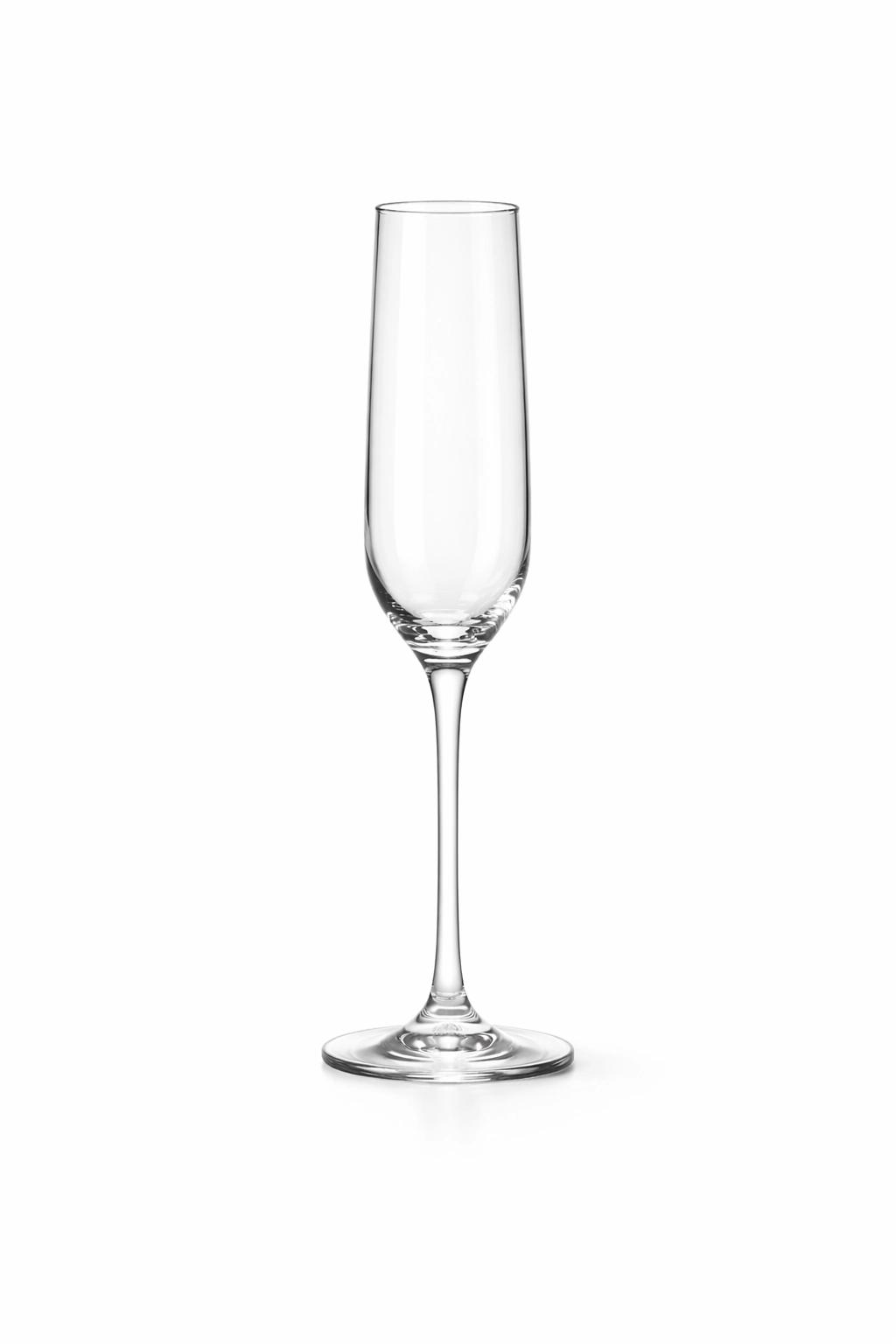
A champagne flute is a tall stemmed glass with a narrow bowl; Urban Bar’s flutes are listed at 19 to 21cl. Its small surface keeps sparkling wine fizzy for longer, so it suits champagne, prosecco and cava, and cocktails topped with them such as the French 75 and the Kir Royale. Fill it to about two-thirds: a 125ml pour of wine sits well in a 180ml flute.
About the Champagne Flute
A Small Surface Keeps the Fizz
Carbon dioxide leaves sparkling wine across its surface. A flute holds the wine in a narrow column, so the surface is small and the wine stays fizzy for longer than in a wide coupe.
For a good champagne drunk on its own, some people prefer a tulip or a white wine glass. The wider bowl gives up a little fizz and lets more of the wine's aroma reach the nose.
Our Sparkling Drinks Fit a 180ml Flute
The French 75 is 30ml of gin, 15ml of lemon and 15ml of syrup, shaken and double strained, then topped with 60ml of champagne: about 135ml. The Kir Royale is 10ml of crème de cassis and 90ml of champagne, and the Champagne Cocktail a sugar cube soaked in Angostura, then 10ml of cognac and 90ml of champagne.
Each leaves room for the foam in a flute of about 180ml. The Bellini, Rossini and Bucks Fizz, at about 150ml, want the full 200ml.
Flute, coupe and white wine glass for sparkling drinks (flute and coupe sizes from Urban Bar’s listings)
Flute
- Usual capacity
- 19 to 21cl (Urban Bar)
- Fizz
- Holds it longest
- Our drinks in it
- French 75, Kir Royale, Champagne Cocktail, Bellini
Coupe
- Usual capacity
- 18 to 23cl (Urban Bar)
- Fizz
- Fades sooner across the wide bowl
- Our drinks in it
- Drinks served up, such as the Old Cuban topped with champagne
White wine glass
- Usual capacity
- Varies
- Fizz
- Fades a little sooner than in a flute
- Our drinks in it
- Good champagne drunk on its own
| Glass | Usual capacity | Fizz | Our drinks in it |
|---|---|---|---|
| Flute | 19 to 21cl (Urban Bar) | Holds it longest | French 75, Kir Royale, Champagne Cocktail, Bellini |
| Coupe | 18 to 23cl (Urban Bar) | Fades sooner across the wide bowl | Drinks served up, such as the Old Cuban topped with champagne |
| White wine glass | Varies | Fades a little sooner than in a flute | Good champagne drunk on its own |
Pour Down the Side, in Two Goes
Tilt the flute and pour down the inside wall. Wine poured into the middle of an upright glass foams up and loses fizz as the foam collapses.
Pour half, let the foam settle, then top up to about two-thirds. In a cocktail the base goes in first and the wine follows slowly; our recipes then give one gentle lift, or none at all for the Kir Royale and the Champagne Cocktail.
Chill the Glass, Clean the Glass
Our recipes chill the flute as well as the wine: in the fridge, briefly in the freezer, or filled with ice water and emptied just before pouring. Shake out the water so it does not dilute the drink.
Detergent left on the glass flattens the bubbles at once. Rinse flutes well in hot water and dry them with a lint-free cloth.
Using the Champagne Flute
Usage
Sparkling wine on its own, and drinks topped with it: our French 75, Kir Royale, Champagne Cocktail, Bellini and Bucks Fizz are all served in a chilled flute. Most come to 100 to 150ml, which leaves room for the foam in a 180 to 200ml glass.
Pro Tip
Build a sparkling cocktail base first and the wine second. For a French 75, the shaken gin, lemon and syrup go into the flute, the champagne follows slowly down the side, and one gentle lift of a bar spoon finishes it.
Professional Tips
- Chill the flute as well as the wine; our recipes chill both.
- Tilt the glass and pour down the inside wall.
- Pour in two goes: let the foam settle, then top up.
- Rinse well after washing; detergent left on the glass flattens the bubbles.
Alternatives
Budget Alternative
Plain glass flutes of about 180ml are cheap from catering suppliers. A white wine glass also works and lets you smell more of the wine.
Premium Option
Thin, light crystal flutes with a bowl that tapers in at the top. They are lovely to drink from; the wine is the same.
Specifications
Material
Glass or crystal
Capacity
19 to 21cl in Urban Bar’s listings; some hold as little as 150ml
Details
Tall, narrow bowl, sometimes tapering in towards the top, on a long, thin stem
More to explore
Common Questions
What size is a champagne flute?
Should I use a flute or a coupe for champagne?
How do you pour into a champagne flute?
Should you chill a champagne flute?
What cocktails are served in a champagne flute?
How much goes into a French 75?
Why does champagne go flat in my glass?
Sources.
Correct as of 18 October 2026.
- Urban Bar, “Umbo Flute 20cl”.
- Urban Bar, “Castello Champagne Flute 21cl”.
- Urban Bar, “Bacci Crystal Champagne Flute 19cl”.
Made with the Champagne Flute
Used In These Cocktails
Show all 14 cocktailsShow fewer
Related Equipment
Updated 18 October 2026