Citrus Zester
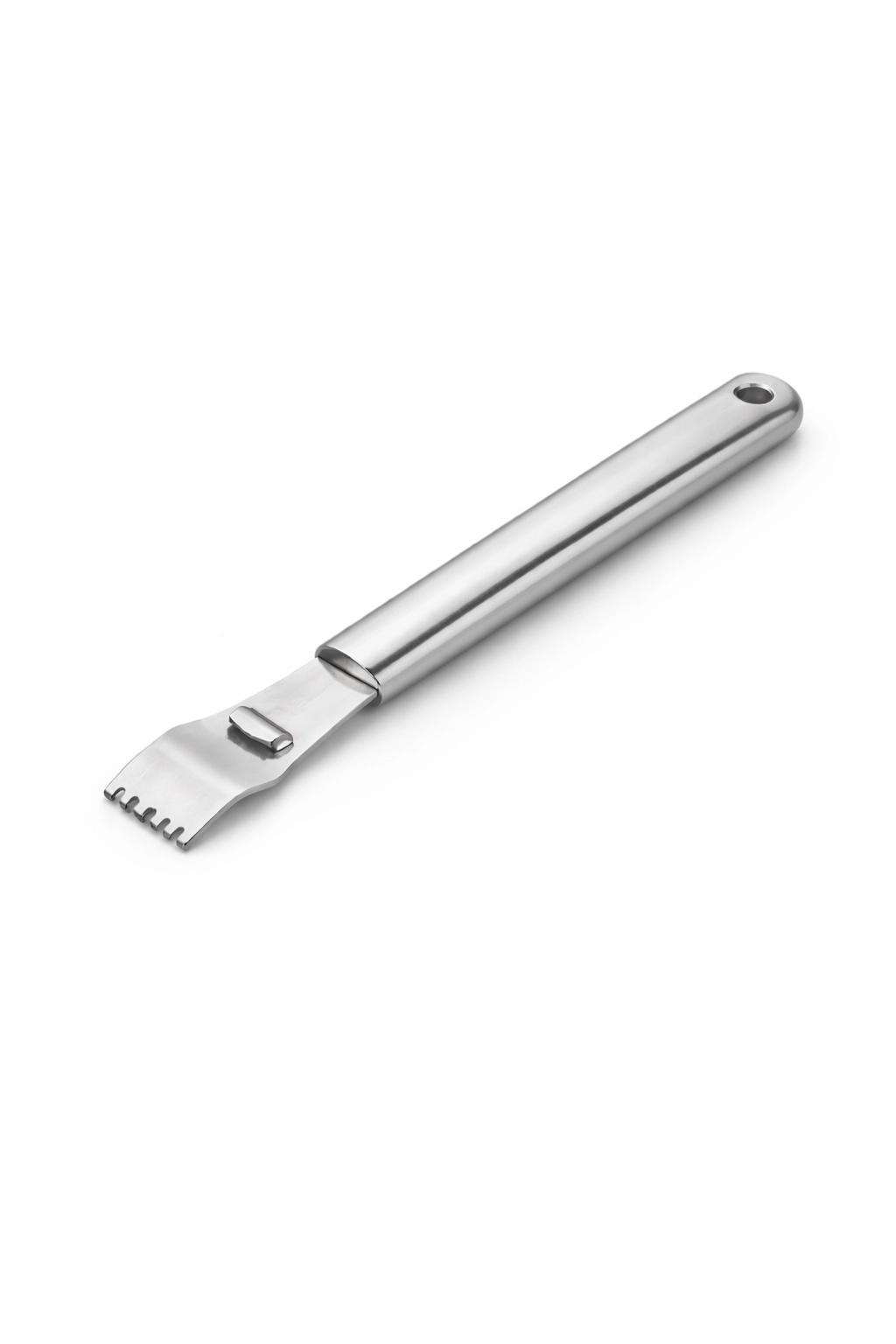
A citrus zester is a small hand tool, about 15 to 20cm long in the ones we use, that lifts the coloured outer skin of a lemon, lime or orange as fine threads or gratings and leaves the bitter white pith behind. In a bar it is for zest as an ingredient: in a cordial, a syrup or an oleo saccharum, or grated lightly over a finished drink. For a wide twist to express over a glass, a Y-peeler does the job instead.
About the Citrus Zester
The Oil Is in the Coloured Layer
Citrus peel has two layers. The thin coloured skin, the flavedo, carries the oil that smells of the fruit. Under it lies the white pith, the albedo, which is bitter.
A zester is made to take the first and leave the second. Depth matters more than sharpness: a sharp tool pressed too hard still reaches the pith.
Classic zester, rasp grater and Y-peeler compared
Classic zester
- What it cuts
- Fine threads, through a row of small holes
- Use it for
- Zest for syrups and cordials; threads on a drink
- Risk
- Tears the peel when blunt
Rasp-style grater
- What it cuts
- A fine, soft grating
- Use it for
- Zest that dissolves into a syrup; grating over a foam
- Risk
- Reaches the pith under heavy pressure
Y-peeler
- What it cuts
- A wide strip of peel
- Use it for
- Twists to express over a drink
- Risk
- Takes pith if pressed too hard
| Tool | What it cuts | Use it for | Risk |
|---|---|---|---|
| Classic zester | Fine threads, through a row of small holes | Zest for syrups and cordials; threads on a drink | Tears the peel when blunt |
| Rasp-style grater | A fine, soft grating | Zest that dissolves into a syrup; grating over a foam | Reaches the pith under heavy pressure |
| Y-peeler | A wide strip of peel | Twists to express over a drink | Takes pith if pressed too hard |
Light Pressure, One Pass
Hold the whole fruit and draw the zester across it once, or move the fruit once across a still rasp. Then turn the fruit, so the next pass meets fresh skin.
Stop as soon as the surface under the blade turns pale. Pith in a short drink or a cordial tastes harsh, and nothing takes it out again.
Zest Is an Ingredient, a Twist Is a Garnish
Most of our recipes finish with a twist, cut with a Y-peeler and expressed over the glass. The zester is for zest you keep: the note on our Vodka Gimlet suggests a home-made cordial of lime juice, sugar and zest, which holds the peel oils a tired bottled one has lost.
Zest into sugar for a syrup or an oleo saccharum, and the sugar draws the oil out of the zest over an hour or two.
Scrub the Fruit, Rinse the Tool
Supermarket lemons and oranges are often waxed, and the wax sits in the layer you are zesting. Choose unwaxed fruit, or scrub waxed fruit under hot water first.
Rinse the zester as soon as you finish. Zest dries into the holes within minutes and is hard to shift once it has.
Using the Citrus Zester
Usage
Zesting lemon, lime or orange into a cordial, a syrup or an oleo saccharum, and grating a little over a finished drink or a foam. One light pass over each patch of skin is enough.
Pro Tip
Zest straight over the bowl of sugar when you make a syrup or an oleo saccharum. The sugar catches the oil that sprays from the peel as well as the zest itself.
Professional Tips
- Zest the fruit before you cut or juice it, while it is whole and firm.
- Use light pressure and one pass, then turn the fruit to fresh skin.
- On a rasp grater, hold the grater still and move the fruit across it.
- Stop as soon as you see white under the blade.
Alternatives
Budget Alternative
A rasp-style grater from a kitchen shop, used lightly, does the same job as a dedicated zester. It gives a finer zest that dissolves readily into a syrup.
Premium Option
A sturdier classic zester with a channel blade on the same head, so one tool lifts fine threads and cuts a thin strip for a spiral.
Specifications
Material
Stainless steel cutting head on a metal, plastic or wooden handle
Capacity
Not applicable; about 15 to 20cm long in the ones we use
Details
Either a classic zester, a short head with a row of small sharpened holes, often with a channel blade beside them, or a rasp-style grater with many fine teeth
More to explore
Common Questions
What is a citrus zester used for in cocktails?
Zester or Microplane: which should I use?
How do you zest without the bitter pith?
Zester or peeler: which does what?
Which citrus fruit is easiest to zest?
Do I need unwaxed fruit for zesting?
Can a citrus zester go in the dishwasher?
Sources.
Correct as of 20 October 2026.
- Microplane (the maker’s own page), “Our company” (maker’s account: a component for computer printers from 1967; sharp teeth for woodworking tools in the early 1990s; in 1994 a Toronto woodworking catalogue sold them as food graters).
Master the Technique
Made with the Citrus Zester
Used In These Cocktails
Related Equipment
Updated 20 October 2026