Cocktail Picks
Cocktail picks are short skewers, about 10 to 12cm in the ones we use (Urban Bar’s own steel picks are four inches, about 10cm), in metal or bamboo, that hold a garnish so it can be lifted out and eaten. They carry olives and onions in a Martini or Gibson, and cherries and fruit on sours and long drinks. A pick also keeps a garnish from soaking in the drink until it is wanted.
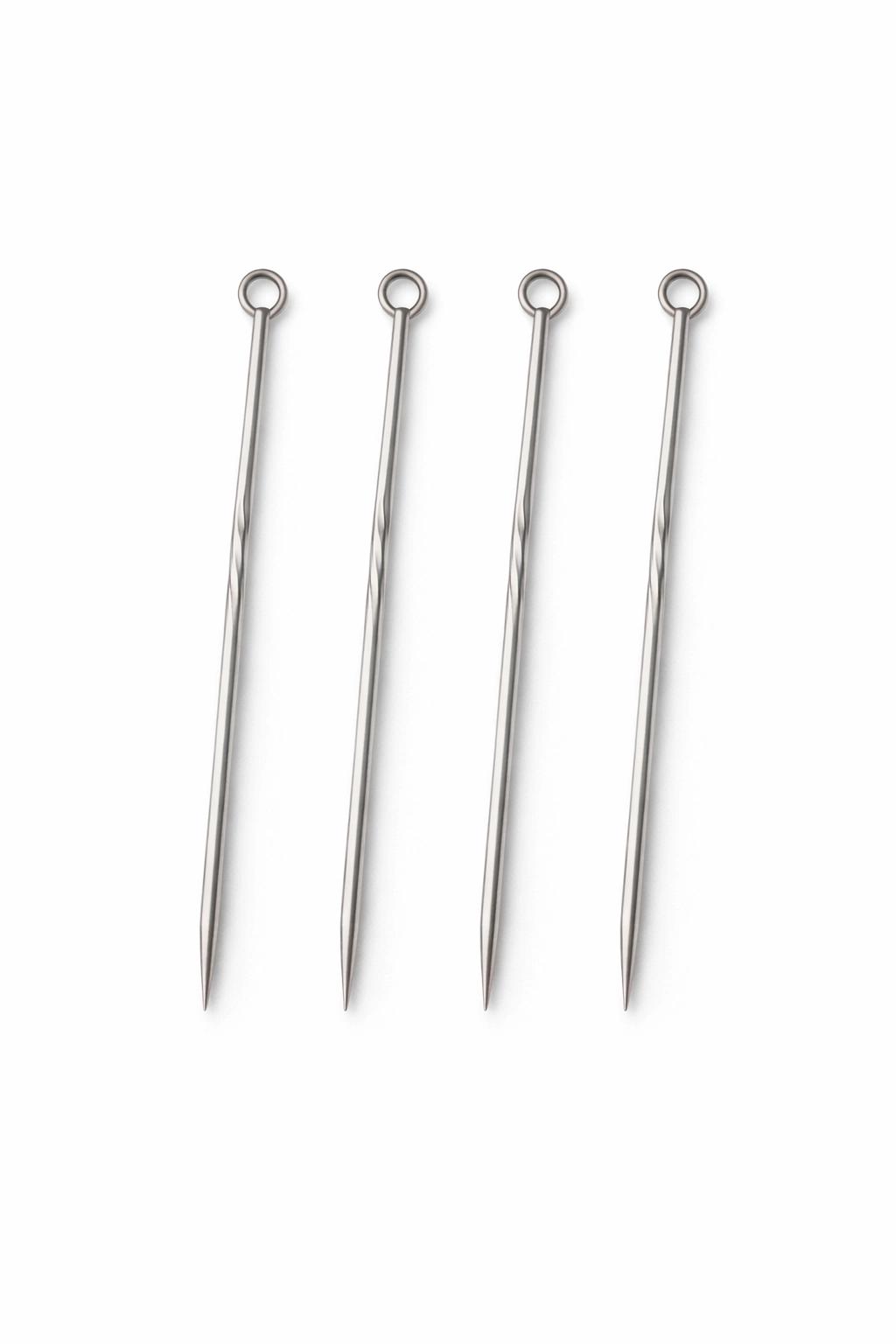
About the Cocktail Picks
A Pick Keeps the Garnish Out of the Drink
A pick does two jobs. It lets the drinker lift a garnish out whole, without fingers. And it stops the garnish soaking in the drink, so a cherry rested across a stirred drink adds nothing until it is eaten.
That is why the Gibson carries its onions on a pick, and why a cherry and a pineapple wedge sit on one across the rim of the Reggae Rum Punch.
Match the Length to the Glass
A pick should be a few centimetres longer than the glass is wide, so it rests across the rim. In a coupe or Martini glass that means 10 to 12cm; in a collins or hurricane glass, 15cm or more.
Too short and it slides into the drink. Too long and it tips the glass or catches on a sleeve.
Metal, bamboo and plastic picks compared
Stainless steel
- Usual length
- 10-12cm
- Reuse
- Washed and reused for years
- Suits
- Martinis, Gibsons, stemmed glasses
Bamboo or wood
- Usual length
- 9-15cm
- Reuse
- Single use
- Suits
- Parties and tall tropical drinks
Plastic
- Usual length
- 8-12cm
- Reuse
- Usually thrown away
- Suits
- Novelty serves
Toothpick
- Usual length
- About 6cm
- Reuse
- Single use
- Suits
- A single olive in a small glass
| Pick | Usual length | Reuse | Suits |
|---|---|---|---|
| Stainless steel | 10-12cm | Washed and reused for years | Martinis, Gibsons, stemmed glasses |
| Bamboo or wood | 9-15cm | Single use | Parties and tall tropical drinks |
| Plastic | 8-12cm | Usually thrown away | Novelty serves |
| Toothpick | About 6cm | Single use | A single olive in a small glass |
Odd Numbers Are a Habit, Not a Rule
Bars often put one or three olives on a pick, an old convention that favours odd numbers. It is a matter of taste; our Gibson takes two cocktail onions.
In a short drink, keep the count low. Each olive or onion displaces some of the drink, and more than a few start to crowd the glass.
Sharp Points Need Care
Treat picks like any small skewer. Never leave them loose in washing-up water, where a hand cannot see them, and count metal ones back after a party.
Wash metal picks in a cutlery basket, since they slip through dishwasher racks, and rinse off brine promptly. Throw bamboo and wooden picks away after one use.
Using the Cocktail Picks
Usage
Olives on a Martini, onions on a Gibson, and cherries or fruit on the Amaretto Sour or the Reggae Rum Punch. Rested across the rim, a pick keeps the garnish out of the drink until the drinker wants it.
Pro Tip
Spear the garnish before you mix. With the pick ready on the board, the drink goes from glass to guest without waiting on fiddly work.
Professional Tips
- Rest the pick across the rim so the garnish sits clear of the drink.
- Match the length to the glass; a short pick sinks in a tall one.
- Spear olives and onions through the middle so they stay put.
- Count metal picks back after a party.
Alternatives
Budget Alternative
Bamboo or wooden picks cost little and suit parties and tall tropical drinks. Use each one once.
Premium Option
Heavier stainless picks with a shaped top. In our experience they last for years and look tidier on a stemmed glass; the garnish is the same.
Specifications
Material
Stainless steel, bamboo or wood
Capacity
Not applicable
Details
About 10 to 12cm for stemmed glasses and 15cm or more for tall glasses, our guidance; Urban Bar’s own steel picks are four inches (about 10cm); a ring, ball or knot at the top stops it sliding in
More to explore
Common Questions
Why use cocktail picks?
How many olives go on a pick?
Metal or bamboo picks?
What length pick do I need?
Can I use a toothpick instead?
Are cocktail picks safe?
What garnishes go on a pick?
Sources.
Correct as of 18 October 2026.
- Urban Bar, “Copper Cocktail Pick Set of 10” (4 inch length; ball head).
Master the Technique
Made with the Cocktail Picks
Used In These Cocktails
Related Equipment
Updated 18 October 2026