Collins Glass
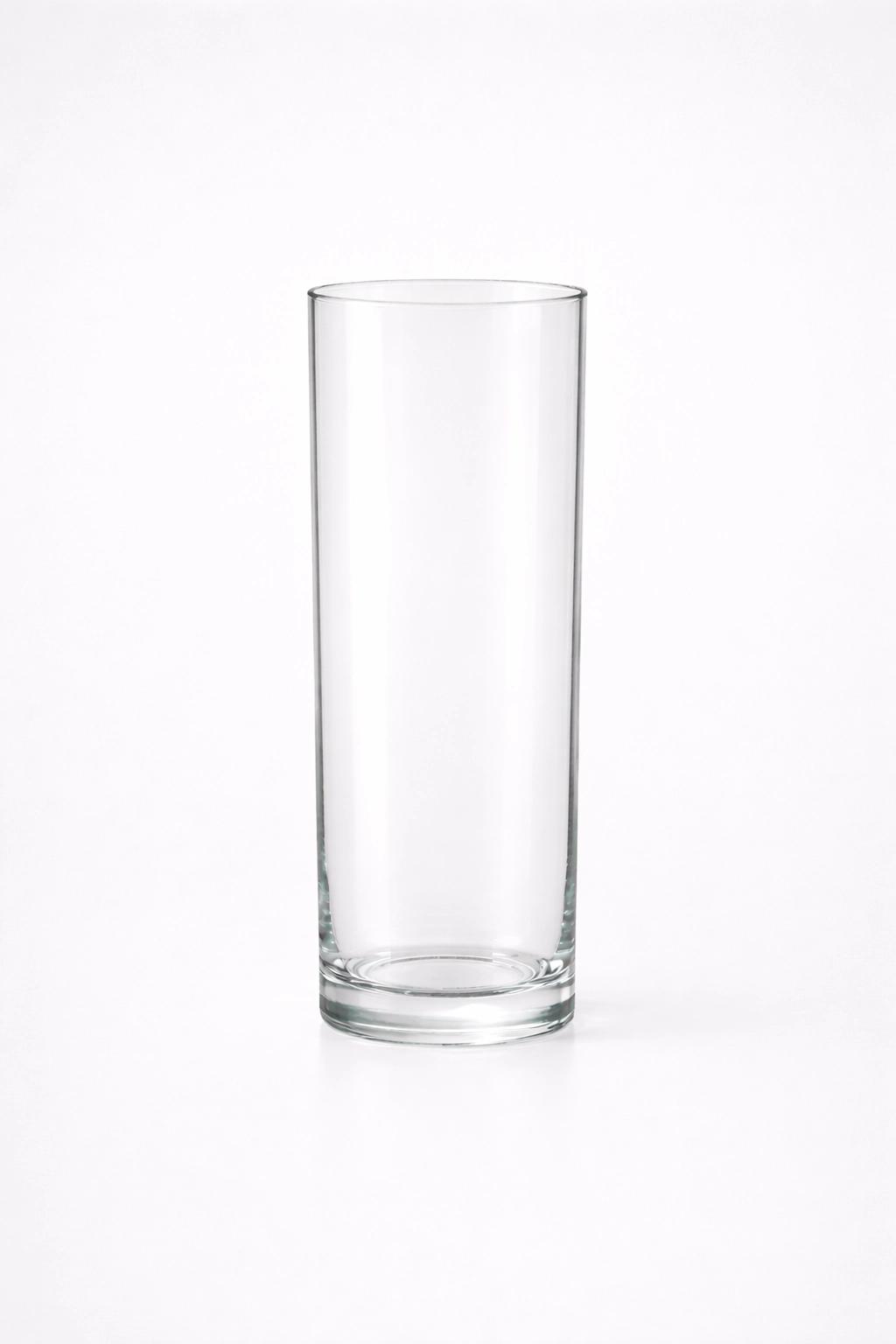
A collins glass is a tall, slim tumbler, 36cl or more by our guidance, for drinks of spirit, citrus and sugar lengthened with soda. Its height takes a full column of ice, and its small top surface keeps the soda fizzing longer. The Tom Collins it is named after, the Whiskey Collins and the Doctor Funk are all served in one.
About the Collins Glass
Height for Width Sets It Apart
A collins glass often holds about as much as a hiball (ours are 38 and 42cl), but it puts that volume into a taller, slimmer shape. That is the useful difference, and it is why the two are so often confused.
The slim shape means a small top surface, where the bubbles from the soda escape, and a long column of ice running from base to rim.
It Was Made for Soda-Topped Sours
A collins drink starts as a sour of spirit, citrus and sugar, and soda lengthens it to a third or a half of the glass. The Tom Collins pairs 60ml of gin with 30ml of lemon and 15ml of syrup, then takes 90ml of soda; the Whiskey Collins swaps in bourbon.
With soda only part of the drink, every bubble counts, and the slim glass keeps them longer.
The same glass suits shaken long drinks that need height and ice, such as the Doctor Funk and the Reggae Rum Punch. A spirit with a single mixer belongs in a highball.
Collins glass against its tall neighbours (highball sizes from our shop; the rest our guidance from our recipes)
Collins
- Usual size
- 36cl or more (our guidance)
- Shape
- Tallest and slimmest for its size
- In our recipes
- Tom Collins, Doctor Funk, Lynchburg Lemonade
Highball
- Usual size
- 38 or 42cl (our shop)
- Shape
- Tall, a little wider
- In our recipes
- Rum and Coke, Campari and Soda
Sling
- Usual size
- About 40cl (our guidance)
- Shape
- Footed, opening at the rim
- In our recipes
- Singapore Sling, Gin Sling
| Glass | Usual size | Shape | In our recipes |
|---|---|---|---|
| Collins | 36cl or more (our guidance) | Tallest and slimmest for its size | Tom Collins, Doctor Funk, Lynchburg Lemonade |
| Highball | 38 or 42cl (our shop) | Tall, a little wider | Rum and Coke, Campari and Soda |
| Sling | About 40cl (our guidance) | Footed, opening at the rim | Singapore Sling, Gin Sling |
The Name Came From a Hoax
The name comes from a prank of the 1870s that filled the newspapers of 1874 with mentions of the elusive Mr. Collins, the Oxford Companion says. You were told that a Tom Collins in a nearby bar had been talking about you, and went off to look for a man who did not exist.
The drink itself is probably older. The Oxford Companion credits a gin drink of the same build to John Collin, head waiter at Limmer’s Hotel in London from 1807 or earlier, and Harry Johnson’s manual of 1882 lists “John or Tom Collins Glasses” among the glassware a bar needs and prints both drinks for an extra large bar glass.
Buy 36cl or More
Full-size collins drinks need a glass of 36cl or more. Look for straight sides and a thick base; a tall glass with a light base tips over when loaded with ice and drink.
A long bottle brush reaches the bottom where a hand cannot. If you have hard water, a rinse in warm water with a little white vinegar clears the film that builds up on tall glass.
Using the Collins Glass
Usage
Soda-topped sours, such as the Tom Collins, John Collins, Vodka Collins and Whiskey Collins, plus swizzles and shaken long drinks like the Doctor Funk and the Reggae Rum Punch. Our collins drinks mostly measure 150 to 200ml, ice not counted.
Pro Tip
Build the base over the ice and stir it cold before you add the soda. Soda poured into a drink that is already chilled keeps its gas, and a single turn of the spoon finishes it.
Professional Tips
- Pack the glass to the rim with ice, then build.
- Add the soda last, then one slow lift with the bar spoon.
- Keep the soda in the fridge; warm soda loses its gas fast.
- Rest a long garnish against the side; the straight wall holds it upright.
Alternatives
Budget Alternative
Any straight-sided tumbler of 36cl or more holds a collins. A British hiball of that size is close enough for most kitchens.
Premium Option
Tall, fine-walled crystal on a solid base. It feels lighter to drink from and stands firmer on a busy bar; what is in it does not change.
Specifications
Material
Glass
Capacity
36cl or more by our guidance; our shop’s hiballs are 38 and 42cl
Details
Tall, narrow and straight-sided, taller for its capacity than a highball, on a thick base
More to explore
Common Questions
What's the difference between a collins glass and a highball?
What size is a collins glass?
Who was the Tom Collins drink named after?
Which drinks suit a collins glass?
How much ice goes in a collins glass?
Is a Tom Collins served in a collins glass?
Can a collins glass go in the dishwasher?
Sources.
Checked between 18 October and 19 October 2026.
- The Oxford Companion to Spirits and Cocktails (Robert Simonson), “Tom Collins” (secondary source: the 1870s prank; newspapers of 1874; the drink lent its name to the Collins glass).
- Jerry Can Spirits shop, “Hiball Glass, 38cl”.
- Jerry Can Spirits shop, “Crystal ICE Hiball, 42cl”.
- The Oxford Companion to Spirits and Cocktails (David Wondrich), “The Collins” (secondary source: Limmer’s Hotel, London; head waiter John Collin from 1807 or earlier through the 1830s).
- Internet Archive, “Harry Johnson’s new and improved bartender’s manual (1882)” (scanned reproduction: “John or Tom Collins Glasses” in the glassware list; nos. 58 John Collins and 121 Tom Collins, each for an extra large bar glass).
Made with the Collins Glass
Used In These Cocktails
Show all 12 cocktailsShow fewer
Related Equipment
Updated 19 October 2026