Coupe Glass
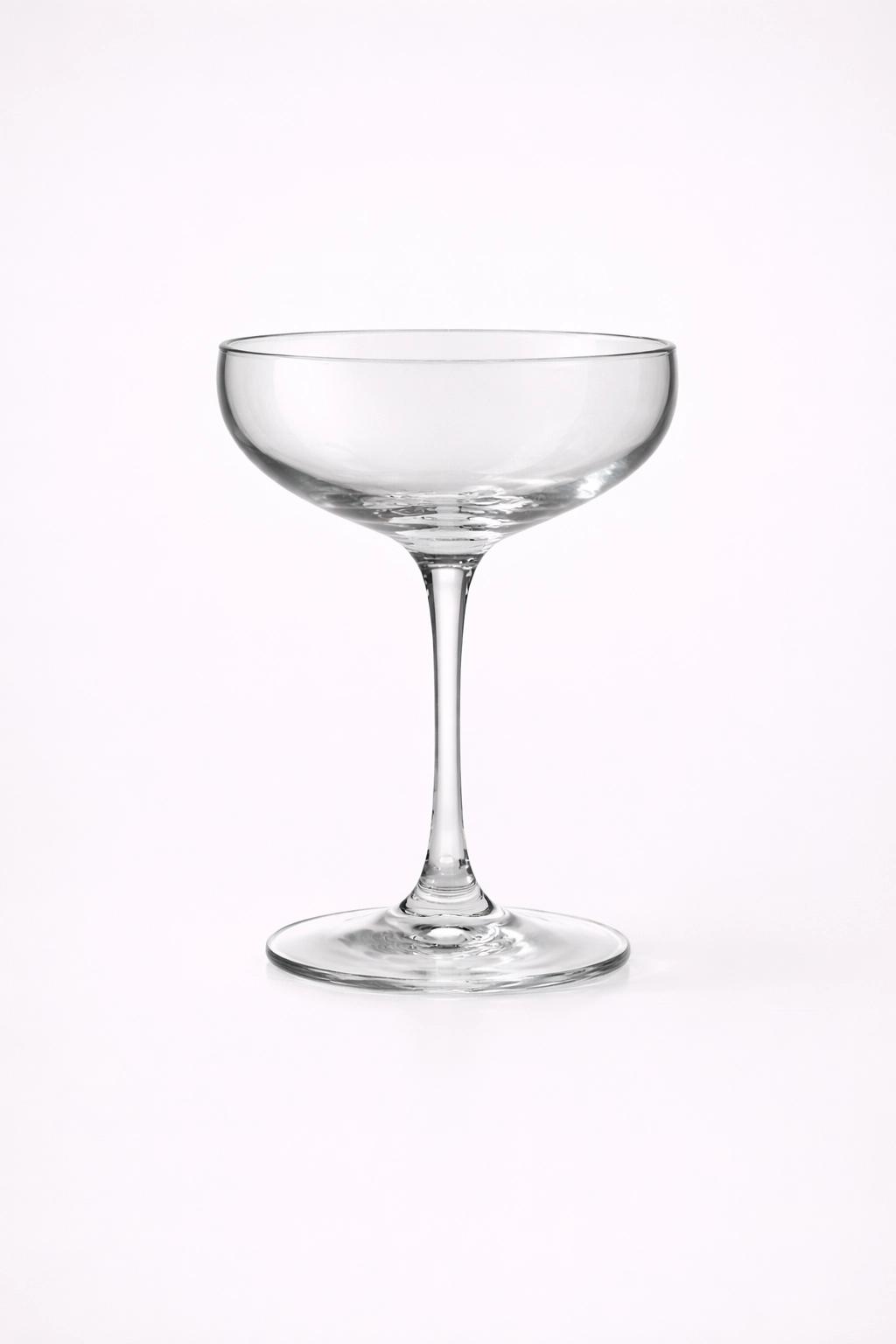
A coupe is a stemmed glass with a wide, shallow, rounded bowl; Urban Bar’s run from 18cl to 23cl. Its job is the drink served up with no ice in the glass: shaken sours like the Daiquiri, stirred ones like the Bamboo, and cocktails topped with sparkling wine. A coupe of 180 to 200ml takes almost anything served up, egg white sours included.
Essential Equipment
Recommended for every home bar
About the Coupe Glass
Size Decides What Fits
Urban Bar’s coupes are listed at 18cl, 21cl and 23cl. Vintage ones are often smaller.
Shaking and stirring add water, so the drink in the glass is bigger than the measures. A stirred Bamboo of 90ml finishes at about 110ml. A shaken sour of 105ml, such as the Yellow Jacket, comes to about 135ml, and a Hemingway Daiquiri of 130ml to about 165ml.
Leave about a centimetre under the rim so you can carry it. That makes 180 to 200ml the useful size, by our guidance: it takes nearly every drink served up, egg white sours included.
What fits which size of coupe (our guidance from our recipe volumes)
Under 140ml
- Takes
- Stirred drinks such as the Bamboo or Gin and It
- Too small for
- Most shaken sours
150 to 170ml
- Takes
- Stirred drinks, and shaken sours up to about 135ml finished
- Too small for
- Egg white sours, the Hemingway Daiquiri
180 to 200ml
- Takes
- Nearly everything served up, egg white sours included
- Too small for
- Little; the Old Cuban, topped with champagne, wants the full 200ml
| Coupe size | Takes | Too small for |
|---|---|---|
| Under 140ml | Stirred drinks such as the Bamboo or Gin and It | Most shaken sours |
| 150 to 170ml | Stirred drinks, and shaken sours up to about 135ml finished | Egg white sours, the Hemingway Daiquiri |
| 180 to 200ml | Nearly everything served up, egg white sours included | Little; the Old Cuban, topped with champagne, wants the full 200ml |
Why It Replaced the Martini Glass
A V-shaped martini glass is widest at the rim, so the slightest tilt sends the drink over the edge.
A coupe curves in at the top. The surface of the drink sits inside the widest part of the bowl, so a tilt moves it without spilling it, and the drink can be carried across a room. That is the practical case for it, and coupes now do much of the martini glass’s old work in cocktail bars.
The story that the shape was moulded on Marie Antoinette’s breast is false. The coupe is usually dated to the seventeenth century, about a hundred years before she was born.
The Stem Keeps the Drink Cold
With no ice in the glass, the only things keeping a coupe drink cold are the chilled glass and the water from mixing.
A hand around the bowl warms the drink. Hold the coupe by the stem and the cold you put in with 20 to 30 seconds of stirring, or 10 to 12 seconds of hard shaking, stays there longer.
So chill the coupe before the drink is ready: ten minutes in the freezer, or a fill of ice and water emptied at the last moment.
Sparkling Wine Goes Flat Sooner in One
It works, and it goes flat sooner than in a flute, because the wide surface lets the bubbles escape faster.
For a cocktail topped with sparkling wine and drunk while cold, such as the Old Cuban, that trade is fine. For a glass of good champagne on its own, a flute holds the bubbles longer.
Using the Coupe Glass
Usage
Cocktails served up: shaken sours such as the Daiquiri and Paper Plane, stirred ones like the Bamboo, and cocktails topped with sparkling wine, such as the Old Cuban.
Pro Tip
Chill the coupe as the first step, not the last: freezer, or ice and water, before you pick up a jigger.
Professional Tips
- Chill it before you mix.
- Fill to about a centimetre under the rim.
- Hold the stem, not the bowl.
- Buy 180 to 200ml if you shake egg white sours.
Alternatives
Budget Alternative
Old champagne saucers turn up in charity shops. Buy them if a measured 150ml of water fits with room to spare.
Premium Option
A thin-rimmed coupe of about 180ml with the stem pulled from the same piece of glass as the bowl. The money buys a finer rim and no join to fail.
Specifications
Material
Soda-lime glass or crystal
Capacity
18cl to 23cl in Urban Bar’s listings; our guidance is 180 to 200ml for egg white sours
Details
Wide, shallow, rounded bowl with a slight inward curve at the rim; stemmed
More to explore
Common Questions
What size is a coupe glass?
What is a coupe glass used for?
Should I buy coupes or martini glasses?
Can you serve champagne in a coupe?
Was the coupe modelled on Marie Antoinette?
Why does my drink look half-empty in a coupe?
Can coupes go in the dishwasher?
Sources.
Correct as of 18 October 2026.
- Urban Bar, “Alto Coupe 18cl”.
- Urban Bar, “Retro Champagne Glass Coupe 21cl”.
- Urban Bar, “Calabrese ZigZag Coupe 23cl”.
Made with the Coupe Glass
Used In These Cocktails
Show all 106 cocktailsShow fewer
Related Equipment
Updated 18 October 2026