Highball Glass
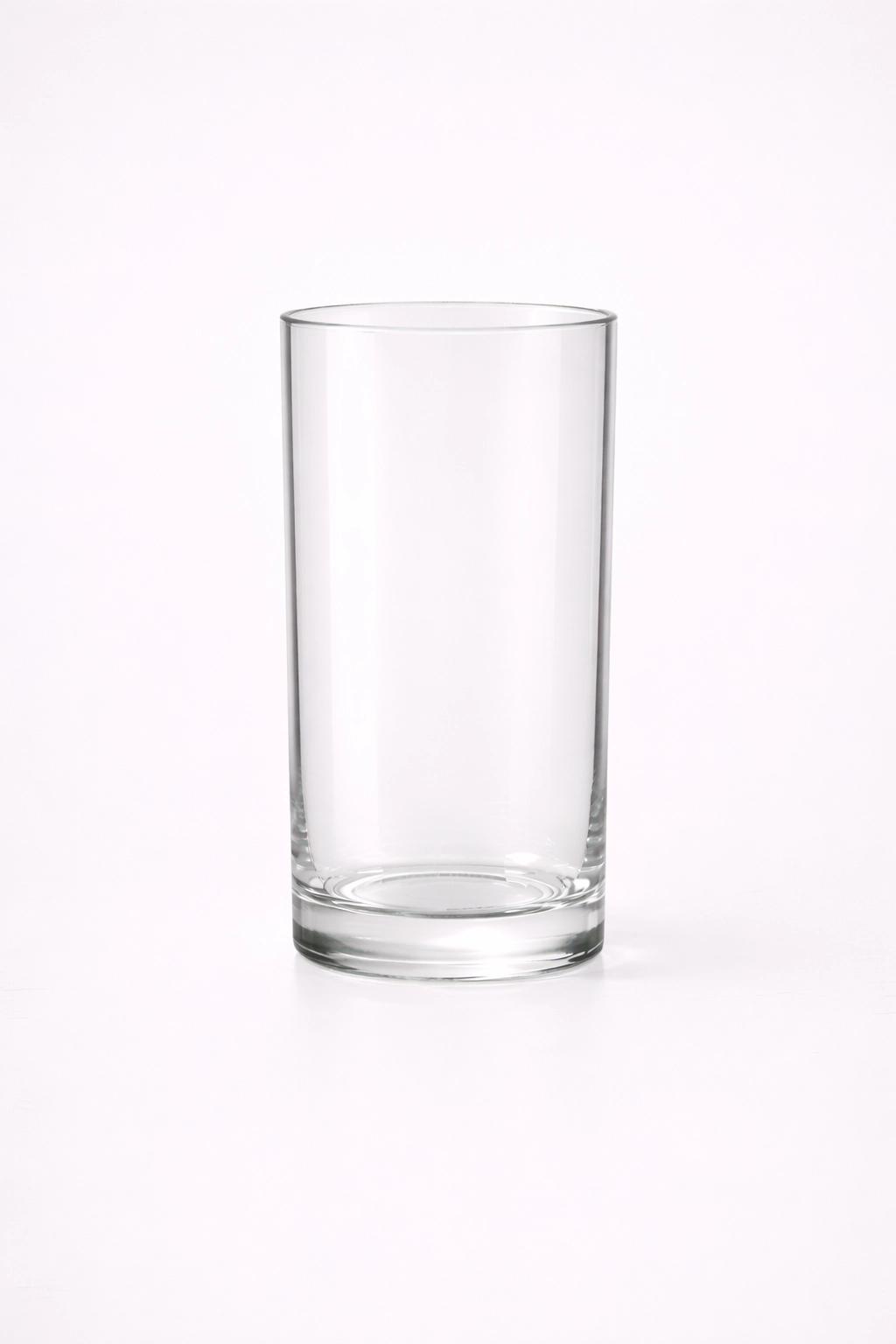
A highball glass is the tall, straight-sided glass for a spirit and one carbonated mixer over ice. A British serve of 50ml spirit and 150ml mixer needs about 38 to 42cl once the ice is in, by our guidance, which is what our shop sells; smaller is the range most UK hiballs are sold in. Rum and cola, gin and tonic, Campari and soda and the long mixed drinks such as the Long Island Iced Tea all go in one.
Essential Equipment
Recommended for every home bar
About the Highball Glass
We Make One
A 42cl hiball with a crystal-effect texture, sold singly or as a pair.
Crystal ICE Hiball Glass, 42clThe Shape Is the Function
A highball is tall and narrow, and both dimensions are doing work.
Narrow means a small surface at the top, which is where carbonation escapes. Tall means room for enough ice to keep the drink cold for its whole life without the ice taking the space the mixer needs.
So a gin and tonic keeps its fizz longer in a highball than in a wide tumbler of the same size, and its ice lasts longer too.
The Drink Decides the Glass
A highball is two ingredients: a spirit and one carbonated mixer, over ice. A slice or a squeeze of lime does not change that. Rum and cola, gin and tonic and whisky and soda are all highballs.
A collins is built differently: spirit, citrus juice and sugar first, soda on top. The Tom Collins, with gin, lemon, sugar syrup and soda, set the pattern.
So the two glasses answer two builds. In a highball, mixer makes up most of the drink. A collins carries soda as only a third to a half of the glass, over a sharper, sweeter base, and the slimmer collins glass holds on to what fizz there is. Bars pour either drink into either glass, and the IBA specifies a highball for its John Collins.
A British Highball Needs About 38 to 42cl
Our shop’s hiballs are 38 and 42cl, and the trade usually spells it hiball; Urban Bar’s own highballs run from 30 to 37cl. American guides give smaller figures: about 6 to 10oz, or 18 to 30cl, and they call anything bigger a collins glass.
Work it out from the drink. The usual British serve is 50ml of spirit and 150ml of mixer, which is 200ml of liquid. A highball should be filled to the top with ice, and the cubes take up a large share of the glass. Under about 34cl, that drink and a full load of ice will not fit.
Highball vs collins at a glance (highball sizes from our shop; collins our guidance)
What goes in
- Highball
- A spirit and one carbonated mixer
- Collins
- Spirit, citrus juice and sugar, topped with soda
Typical drink
- Highball
- About 200ml: 50ml spirit, 150ml mixer
- Collins
- About 150-200ml, a third to a half of it soda
Glass capacity
- Highball
- 38 or 42cl in our shop (6-10oz in American guides)
- Collins
- 36cl or more, our guidance
Shape
- Highball
- Tall and straight-sided
- Collins
- Taller and narrower for its capacity
Example drinks
- Highball
- Rum and Coke, gin and tonic, whisky and soda
- Collins
- Tom Collins, John Collins, Vodka Collins
| Feature | Highball | Collins |
|---|---|---|
| What goes in | A spirit and one carbonated mixer | Spirit, citrus juice and sugar, topped with soda |
| Typical drink | About 200ml: 50ml spirit, 150ml mixer | About 150-200ml, a third to a half of it soda |
| Glass capacity | 38 or 42cl in our shop (6-10oz in American guides) | 36cl or more, our guidance |
| Shape | Tall and straight-sided | Taller and narrower for its capacity |
| Example drinks | Rum and Coke, gin and tonic, whisky and soda | Tom Collins, John Collins, Vodka Collins |
The Expedition Spiced Rum serve that took Silver at the IWSC 2026 follows the highball pattern: 50ml of rum and 150ml of Franklin and Sons cola, judged without ice. Built over ice at home, the same 200ml wants a glass at the larger end of the range.
Ice, and Filling It Properly
Fill the glass with ice. Not half, not two-thirds. To the top.
This is a common mistake in home highballs and it is counterintuitive. Less ice feels like less dilution, and it produces the opposite: a small amount of ice in a tall glass warms quickly, melts fast, and gives you a drink that is warm and watery at once. Packed to the rim, the ice keeps the whole drink cold and each cube lasts longer.
Cold mixer matters just as much. Ice cannot both cool a room-temperature tonic and keep the drink cold; asked to do both, it does neither well.
Pouring for Carbonation
Down the inside wall, gently, and stir once.
Poured straight into the middle, a mixer crashes through the drink and drives off much of its carbonation. Angled against the side, it slides in and keeps most of it.
Then one slow turn with a bar spoon, from the bottom. Each extra stir drives off more gas. If the drink still looks layered, the rising bubbles and the ice finish the mixing as it sits.
Using the Highball Glass
Usage
Rum and Coke, gin and tonic, whisky and soda, Dark 'n' Stormy, Paloma: any spirit lengthened with one carbonated mixer over ice. A Tom Collins or a Mojito will go in one too, though the taller collins glass suits the Collins better.
Pro Tip
For a whisky highball, chill the glass, fill it with ice, pour the whisky first, then add the soda slowly down the side. The slim glass keeps the fizz, and one slow turn with a bar spoon is all the mixing it needs.
Professional Tips
- Ice to the rim. Half-filled means a warm, fast-diluting drink.
- Pour the mixer down the inside wall to keep the bubbles.
- One gentle stir. Every extra one costs carbonation.
- Chill the glass if you have time; it slows the first melt.
Alternatives
Budget Alternative
Any plain, straight-sided tumbler of 34cl or more. The size matters more than the maker.
Premium Option
Thin-rimmed crystal on a weighted base. It feels lighter at the lip and stands steadier; the drink is the same as in a well-sized plain hiball.
Specifications
Material
Glass
Capacity
34 to 42cl in UK catalogues (6 to 10oz in American guides)
Details
Straight or slightly tapered sides, moderate height, thin-to-medium rim, flat or lightly weighted base
More to explore
Common Questions
What is a highball glass?
What's the difference between a highball and a Collins glass?
What size highball glass should I buy?
What drinks go in a highball glass?
Is a hiball the same as a highball?
How much ice goes in a highball?
Should I chill a highball glass?
Why do some long drinks overflow a highball?
Sources.
Correct as of 18 October 2026.
- Jerry Can Spirits shop, “Hiball Glass, 38cl”.
- Jerry Can Spirits shop, “Crystal ICE Hiball, 42cl”.
- Urban Bar, “Calabrese ZigZag Highball 37cl”.
Master the Technique
Made with the Highball Glass
Used In These Cocktails
Show all 68 cocktailsShow fewer
Related Equipment
Updated 18 October 2026