Hurricane Glass
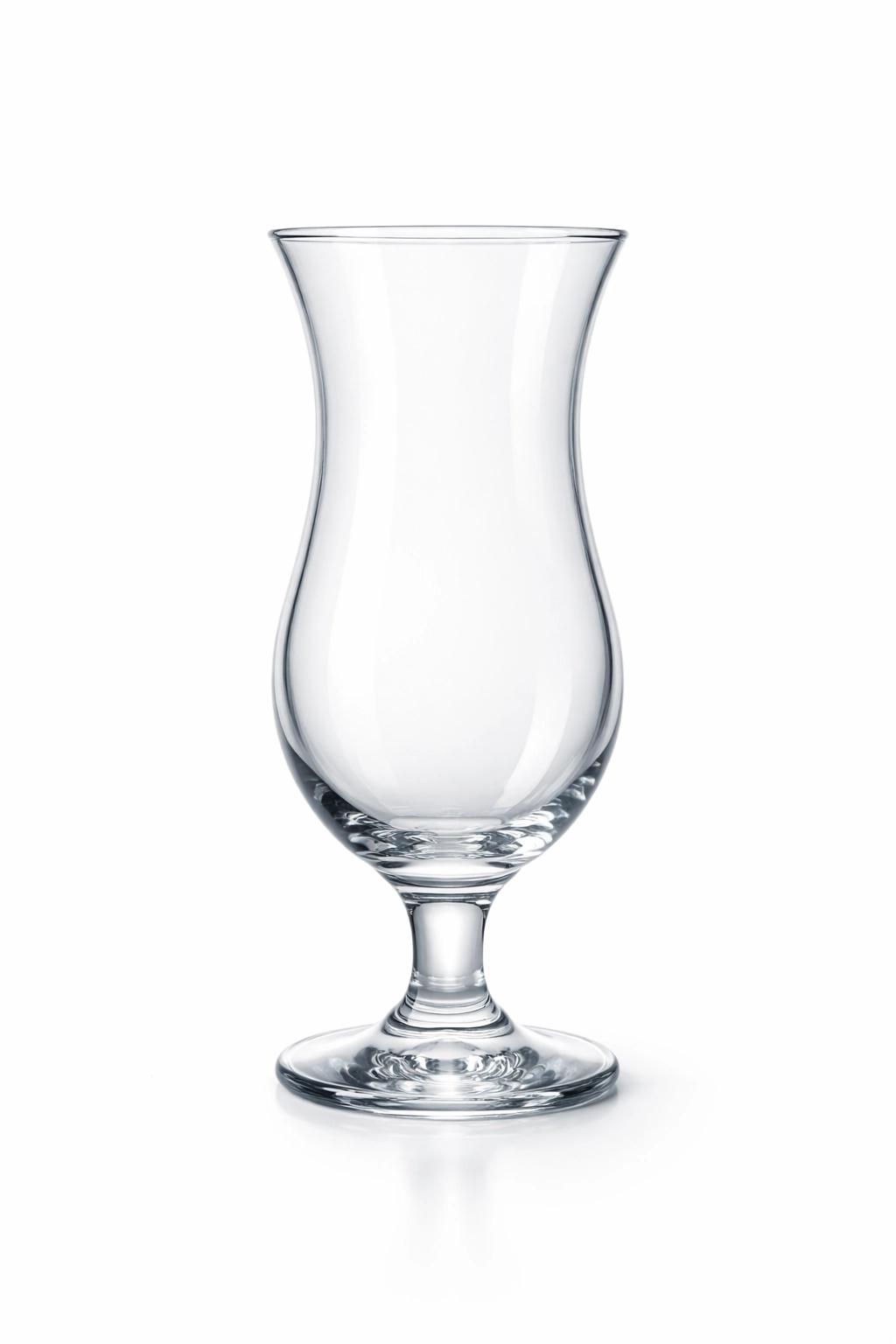
A hurricane glass is a tall, curved glass on a short stem, 42cl in our shop, modelled on the chimney of a hurricane lamp. It holds long rum drinks over crushed ice, with a fruit garnish standing at the rim. The Hurricane, the Rum Runner, the Bahama Mama and blended drinks such as the Piña Colada all go in one.
About the Hurricane Glass
We Make One
A 42cl hurricane glass on a short stem, sold singly or as a pair.
Hurricane Cocktail Glass, 42clA Glass Named After a Lamp
A hurricane lamp is a candle or oil lamp inside a tall glass chimney that keeps the flame out of the wind. The glass copies that chimney: a bulb low down, a narrow waist and a flared rim, set on a short stem.
The shape is mostly about display. The curve shows off bright and layered drinks, and the flared rim gives space for a wedge of pineapple, an orange slice and a cherry at once.
Pat O'Brien's Had Rum to Sell
Pat O’Brien’s, in the New Orleans French Quarter, gets the credit for the Hurricane cocktail in the 1940s, and its own history tells how rum was plentiful while war work made domestic liquor scarce. Distributors, the story goes, would supply scarce whiskies only to bars that also took cases of rum, and the new drink moved the surplus.
Pat O'Brien's poured it into lamp-shaped glasses, which came to share its name. The Oxford Companion, a secondary source, records a Hurricane Punch in a 1941 Ronrico booklet, made to a quite different recipe, so the name is not the bar’s alone.
Crushed Ice and Room at the Top
Our recipes for this glass shake the drink with cubed ice, then strain it onto crushed ice already packed in the glass. The Hurricane is 120ml of rum with passion fruit, lime and orange; the Rum Runner and the Bahama Mama are a little smaller, at about 220ml before shaking.
Our shop’s 42cl glass takes the smaller drinks with room for fruit at the rim. The Hurricane fills it to the brim, and our guidance for that drink is a glass of about 50cl.
Hurricane glass against other tall tropical glasses (hurricane from our shop; tiki mug from Urban Bar’s listing; the rest our guidance)
Hurricane
- Usual size
- 42cl (our shop)
- Shape
- Curved bulb, flared rim, short stem
- Typical drinks
- Hurricane, Rum Runner, Piña Colada
Zombie
- Usual size
- Taller and narrower than a hurricane
- Shape
- Tall, straight and narrow
- Typical drinks
- Zombie and other tall rum builds
Sling
- Usual size
- About 40cl (our guidance)
- Shape
- Footed, opening gently at the rim
- Typical drinks
- Singapore Sling, Gin Sling
Tiki mug
- Usual size
- 50cl (Urban Bar)
- Shape
- Sculpted ceramic, opaque
- Typical drinks
- Scorpion, Three Dots and a Dash
| Glass | Usual size | Shape | Typical drinks |
|---|---|---|---|
| Hurricane | 42cl (our shop) | Curved bulb, flared rim, short stem | Hurricane, Rum Runner, Piña Colada |
| Zombie | Taller and narrower than a hurricane | Tall, straight and narrow | Zombie and other tall rum builds |
| Sling | About 40cl (our guidance) | Footed, opening gently at the rim | Singapore Sling, Gin Sling |
| Tiki mug | 50cl (Urban Bar) | Sculpted ceramic, opaque | Scorpion, Three Dots and a Dash |
A Heavy Foot Keeps It Standing
A tall glass full of crushed ice and juice is top-heavy, and weight at the base is what keeps it upright on a crowded table.
The flared rim chips first. Store them upright on a shelf with space between them, never nested, and check the rim before you pour.
Using the Hurricane Glass
Usage
Long rum drinks poured over crushed ice after a hard shake, such as the Hurricane, the Rum Runner and the Bahama Mama, and blended drinks like the Piña Colada and the Strawberry Daiquiri. Our shaken hurricane drinks run to 200 to 255ml before shaking.
Pro Tip
Pack the glass with crushed ice and freeze it while you shake. A frosted glass keeps crushed ice from turning to slush before the garnish goes on.
Professional Tips
- Pack the glass with crushed ice first, then shake the drink.
- Strain it onto the ice the moment the shaking stops.
- Leave room at the rim for fruit and a straw.
- Chill it in the freezer if there is space; crushed ice melts fast.
Alternatives
Budget Alternative
A large straight-sided tumbler of 40cl or more holds the same drink. It loses the shape, not the function.
Premium Option
A heavier glass with a thick foot and a fine rim. It stands steadier when full; the drink tastes no different.
Specifications
Material
Glass
Capacity
42cl in our shop; our guidance for the Hurricane itself is about 50cl
Details
A bulb that swells low, narrows at the waist and flares at the rim, on a short stem and round foot
More to explore
Common Questions
What is a hurricane glass?
What drinks go in a hurricane glass?
How much does a hurricane glass hold?
Why is it called a hurricane glass?
Crushed or cubed ice in a hurricane glass?
Hurricane glass or zombie glass?
Can I serve a Piña Colada in a hurricane glass?
Sources.
Checked between 18 October and 19 October 2026.
- Pat O’Brien’s, “Our History” (the bar’s own account of the Hurricane in the 1940s).
- The Oxford Companion to Spirits and Cocktails (Chuck Taggart), “The Hurricane” (secondary source: introduced at Pat O’Brien’s; Louis Culligan; the 1941 Ronrico “Hurricane Punch” in a special blue glass; served in a glass shaped like the chimney of an old hurricane lantern).
- Jerry Can Spirits shop, “Hurricane Cocktail Glass, 42cl”.
- Urban Bar, “Lono Tiki Tropical Cocktail Mug 50cl”.
- Difford’s Guide, “Hurricane” (secondary source: named after the shape of a hurricane lamp; thought to date from 1939 at The Hurricane Bar, New York; made famous at Pat O’Brien’s).
Master the Technique
Made with the Hurricane Glass
Used In These Cocktails
Show all 7 cocktailsShow fewer
Related Equipment
Updated 19 October 2026