Lewis Bag & Mallet
A Lewis bag is a plain canvas bag, roughly 25 to 40cm long, used with a wooden mallet to crush ice by hand. The canvas soaks up the meltwater as the ice breaks, so the ice comes out dry and packs into a firm mound instead of slumping. Juleps, swizzles, the Mai Tai, the Bramble and most tiki drinks call for ice crushed this way.
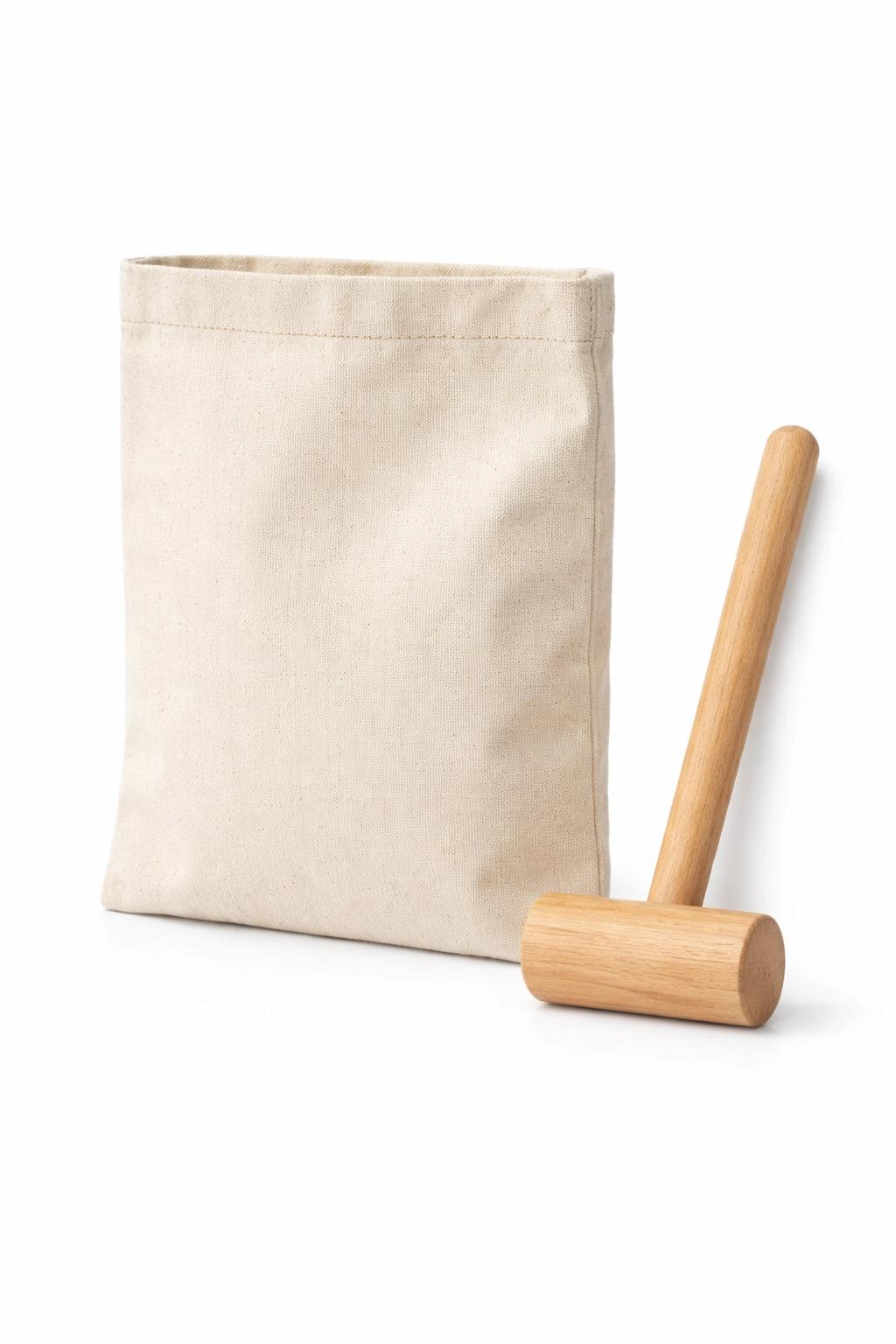
About the Lewis Bag & Mallet
Canvas Drinks the Meltwater
Breaking ice releases water. Every fresh face melts a little, and that water is what turns crushed ice into slush.
Untreated canvas soaks it up as it forms. The ice left in the bag has dry surfaces, so it packs into a mound and keeps its shape in the glass.
Bag Ice Packs Where Blender Ice Slumps
A blender cuts rather than breaks, giving powder and stubborn lumps, and the blades warm the ice as they turn. It comes out rounded and wet.
Bag-crushed pieces are jagged, so they lock together. That is what lets a julep cup carry a dome of ice over the rim and frost on the outside.
Ten or Twelve Blows Across the Bag
Use cubes from the freezer, not the bowl, half-fill the bag and fold the top over twice. Lay it flat on a board and strike across the whole bag with the weight of the mallet, then feel for large pieces. That gives enough for two or three drinks, such as a Mai Tai or a Bramble.
Ways to crush ice at home
Lewis bag and mallet
- Texture
- Jagged, even pieces
- Wetness
- Dry
- Notes
- Packs into a firm mound
Tea towel and rolling pin
- Texture
- Uneven
- Wetness
- Slightly wet
- Notes
- Works; the towel wears out
Blender
- Texture
- Powder and lumps
- Wetness
- Wet
- Notes
- Better kept for frozen drinks
Hand-cranked or electric crusher
- Texture
- Even, small pieces
- Wetness
- Fairly dry
- Notes
- Quick for large rounds
| Method | Texture | Wetness | Notes |
|---|---|---|---|
| Lewis bag and mallet | Jagged, even pieces | Dry | Packs into a firm mound |
| Tea towel and rolling pin | Uneven | Slightly wet | Works; the towel wears out |
| Blender | Powder and lumps | Wet | Better kept for frozen drinks |
| Hand-cranked or electric crusher | Even, small pieces | Fairly dry | Quick for large rounds |
Dry It Every Time
Shake the bag out, give it a cold rinse if needed, and hang it open until it is completely dry. A canvas bag folded away damp turns musty within days, and the ice takes on the smell.
Using the Lewis Bag & Mallet
Usage
Crushing ice for drinks built on it: juleps, swizzles, the Mai Tai, the Bramble, the Bahama Mama and the Rum Runner. Half-fill the bag with freezer-cold cubes, fold the top over and give it ten or twelve firm blows.
Pro Tip
Crush just before you build, and only as much as the round needs. Crushed ice has so much surface that it starts melting as soon as it leaves the bag, and a bowl of it standing on the side is wet within minutes.
Professional Tips
- Use cubes taken from the freezer at the last moment; softening ice turns to slush.
- Fold the open end over twice before the first blow.
- Let the mallet's weight do the work, and work the whole bag.
- Hang the bag up to dry after every use.
Alternatives
Budget Alternative
A clean, thick tea towel folded round the ice, and a rolling pin. It works, though the towel holds less water than canvas and wears through sooner.
Premium Option
A heavy canvas bag with reinforced seams and a dense hardwood mallet. It lasts longer under regular use; the ice is no better than from any sound canvas bag.
Specifications
Material
Untreated cotton canvas bag with a hardwood mallet
Capacity
Usually takes enough cubes for two to four drinks per batch
Details
A plain or drawstring canvas bag, roughly 25 to 40cm long, and a mallet with a broad, flat head
More to explore
Common Questions
What is a Lewis bag?
Why not crush ice in a blender?
How do you get evenly crushed ice?
What drinks need crushed ice?
Can you wash a Lewis bag?
Can I use a tea towel instead of a Lewis bag?
Why is it called a Lewis bag?
Made with the Lewis Bag & Mallet
Used In These Cocktails
Related Equipment
Updated 18 October 2026