Measuring Spoons
Measuring spoons are a graduated set, 1.25ml, 2.5ml, 5ml and 15ml in the sets we use, for amounts too small to pour accurately from a jigger. They measure the bar spoons and teaspoons of syrup, liqueur and sugar where small errors show most. The Aviation, the Mojito and the Caipirinha all call for one.
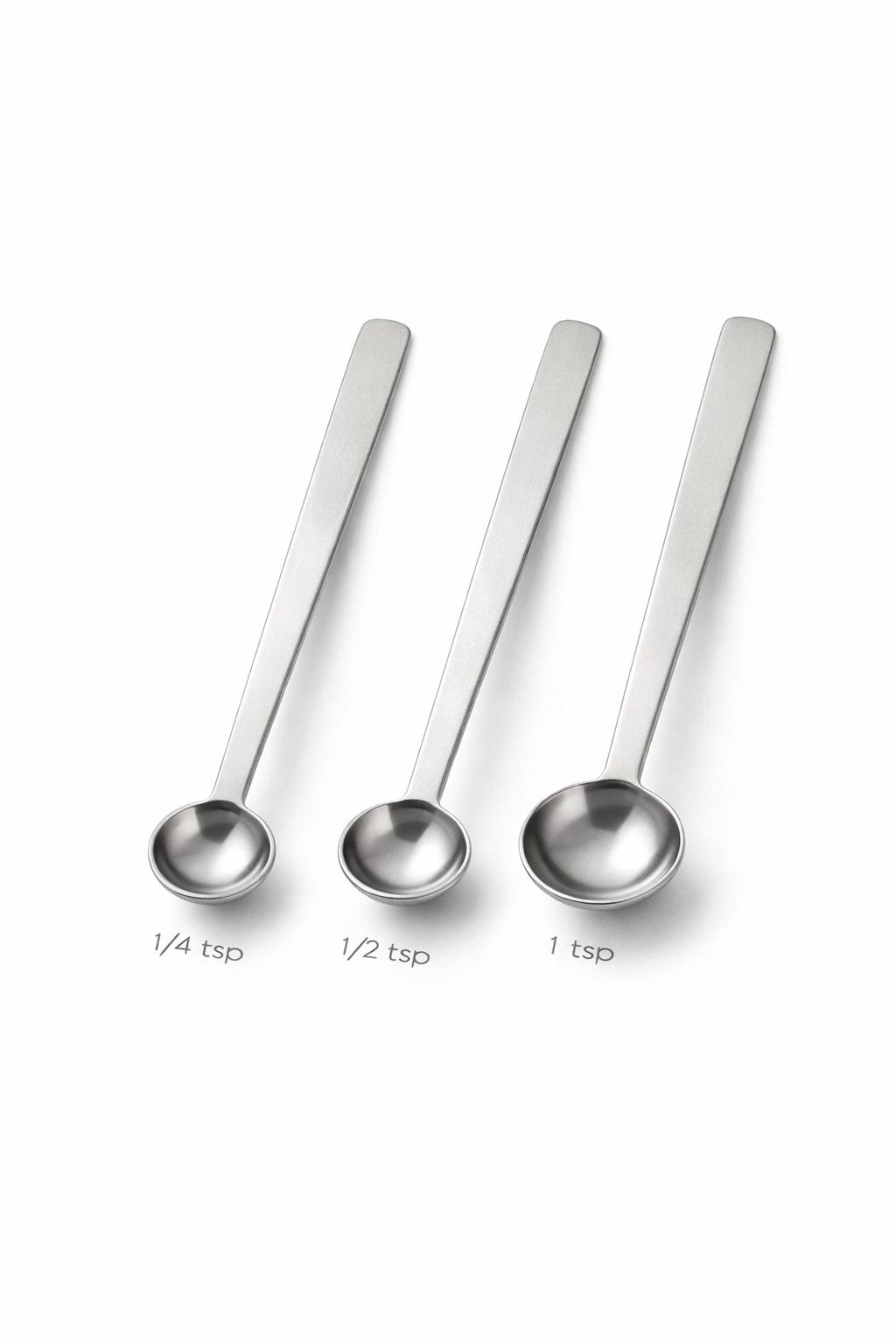
About the Measuring Spoons
Small Measures Change a Drink Quickly
A jigger is accurate from about 15ml up. Under that, the amount is a thin layer in the bottom of a cone and hard to judge.
Yet many recipes call for less. The Aviation takes one bar spoon of crème de violette, about 5ml, against 45ml of gin; a little too much and the drink turns floral and purple. The Caipirinha takes four teaspoons of caster sugar, and four heaped spoons are much sweeter than four level ones.
A Bar Spoon and a Teaspoon Are Both About 5ml
In our recipes a bar spoon and a teaspoon both mean about 5ml. A dash, from a dasher top, is about 0.6 to 0.9ml, smaller than any spoon in a standard set.
So dashes are counted and spoons are filled. The two do not swap cleanly in a recipe.
Small measures in our recipes
Dash
- Volume
- About 0.6-0.9ml
- Measure it with
- A dasher bottle
- Example
- Angostura in a Zombie
Quarter teaspoon
- Volume
- 1.25ml
- Measure it with
- Measuring spoon
- Example
- Salt for a rim or a syrup
Half teaspoon
- Volume
- 2.5ml
- Measure it with
- Measuring spoon
- Example
- Half a bar spoon of liqueur
Teaspoon or bar spoon
- Volume
- About 5ml
- Measure it with
- Measuring spoon
- Example
- Crème de violette in an Aviation
Tablespoon
- Volume
- 15ml
- Measure it with
- Measuring spoon or jigger
- Example
- Most recipes simply say 15ml
| Measure | Volume | Measure it with | Example |
|---|---|---|---|
| Dash | About 0.6-0.9ml | A dasher bottle | Angostura in a Zombie |
| Quarter teaspoon | 1.25ml | Measuring spoon | Salt for a rim or a syrup |
| Half teaspoon | 2.5ml | Measuring spoon | Half a bar spoon of liqueur |
| Teaspoon or bar spoon | About 5ml | Measuring spoon | Crème de violette in an Aviation |
| Tablespoon | 15ml | Measuring spoon or jigger | Most recipes simply say 15ml |
Level, Not Heaped
For sugar and salt, fill the spoon and sweep it flat with the back of a knife. For liquids, fill to the brim and hold the spoon level over the tin as you pour.
Stamped Steel Lasts
Buy stainless steel with the sizes stamped into the handles, and make sure the set includes 2.5ml. Rinse spoons straight after syrup or salt; a film of dried sugar makes the next measure short.
Using the Measuring Spoons
Usage
Measuring bar spoons and teaspoons of syrup, liqueur and sugar, such as the Aviation's bar spoon of crème de violette or the four teaspoons of sugar in a Caipirinha. Also for salt and sugar in rims and syrups.
Pro Tip
Measure your own bar spoon once. Fill it with water, tip it into a 5ml measuring spoon and see how close it comes; then you know what your stirring spoon holds.
Professional Tips
- Fill liquids level with the brim, not short of it.
- Level sugar with the back of a knife; a heaped spoon holds far more.
- Measure over the shaker tin, so any drip lands in the drink.
- Rinse straight away; dried syrup makes the next measure short.
Alternatives
Budget Alternative
An ordinary stainless kitchen set in metric sizes does the job. Check that it includes 2.5ml.
Premium Option
A slim stainless set with long handles and narrow bowls that reach into bottles. The measures are no more accurate; they are easier to use.
Specifications
Material
Stainless steel
Capacity
The sets we use run 1.25ml (¼ teaspoon), 2.5ml (½ teaspoon), 5ml (1 teaspoon) and 15ml (1 tablespoon)
Details
Small, shallow bowls on slim handles, with the size stamped on each
More to explore
Common Questions
How much is a bar spoon in ml?
How much is a dash?
Why use measuring spoons for cocktails?
How many ml is a teaspoon?
Metal or plastic measuring spoons?
Should a teaspoon of sugar be level or heaped?
Can I use a bar spoon to measure?
Made with the Measuring Spoons
Used In These Cocktails
Related Equipment
Updated 18 October 2026