Mixing Glass
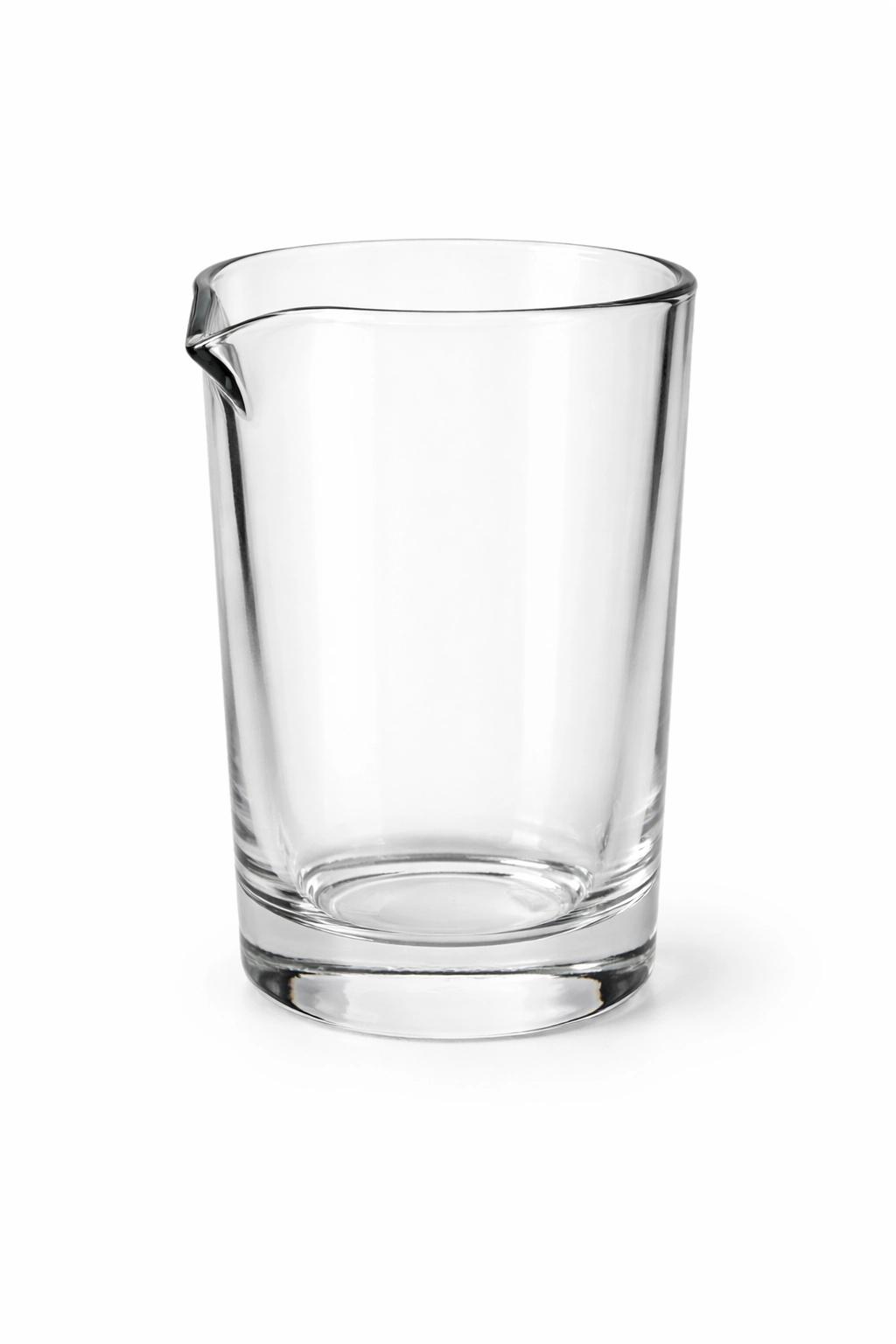
A mixing glass is a heavy, straight-sided glass with a pouring lip, 500 to 750ml by our guidance (Urban Bar’s own mixing jug is 60cl), used to stir a drink with ice and strain it into the serving glass. It is for drinks made only of spirits, vermouth, sherry, liqueurs and bitters, which need chilling and dilution without the air a shake beats in. The Manhattan, the Martini, the Negroni and the Vieux Carré are all stirred in one.
About the Mixing Glass
Stirring Keeps a Drink Clear
A stirred drink is chilled and diluted by ice turning slowly in the glass. No air goes in, so a Manhattan or a Martini comes out clear, cold and heavy on the tongue.
Shaking does the opposite. It drives air and small chips of ice into the drink, which a sour needs for its froth and lift, and which leaves a spirit-only drink cloudy and thin.
Twenty to Thirty Seconds Over Cubed Ice
Load the glass two-thirds with cubed ice, add the measures and turn the ice with a bar spoon, its back against the wall, for 20 to 30 seconds. That is how our Manhattan and Bamboo are made. Our Old Fashioned, stirred in its own glass over one big cube, needs 15 to 20 seconds.
Large, dry cubes melt slowly and give the most control. Small or wet ice thins the drink before it has chilled.
Mixing glass against other vessels for stirring
Mixing glass
- Usual size
- 500-750ml (our guidance)
- Strengths
- Heavy, steady, clean spout; you watch the drink
- Drawbacks
- Glass cracks under sudden heat
Boston tin
- Usual size
- 70 to 85cl (Urban Bar)
- Strengths
- Chills fast and never breaks
- Drawbacks
- You cannot see the drink
Pint glass
- Usual size
- About 570ml
- Strengths
- Already in the cupboard
- Drawbacks
- No spout; thinner walls
Rocks glass
- Usual size
- 20-40cl
- Strengths
- One glass to wash
- Drawbacks
- Only for drinks served over ice
| Vessel | Usual size | Strengths | Drawbacks |
|---|---|---|---|
| Mixing glass | 500-750ml (our guidance) | Heavy, steady, clean spout; you watch the drink | Glass cracks under sudden heat |
| Boston tin | 70 to 85cl (Urban Bar) | Chills fast and never breaks | You cannot see the drink |
| Pint glass | About 570ml | Already in the cupboard | No spout; thinner walls |
| Rocks glass | 20-40cl | One glass to wash | Only for drinks served over ice |
Heavy Glass Holds Its Cold
Thick walls take a while to warm up. Chill the glass with ice and water first and it takes almost no warmth from the drink, so the ice does the cooling and the dilution lands where the recipe expects.
The spout matters more than the cut pattern. It sends the drink into the glass in a single stream, with the strainer held over the rim.
The Base Is What Cracks
A thick base cracks when hot water meets a glass still cold from the ice. Let it warm up before it meets the tap, and retire a glass with a chipped lip.
Using the Mixing Glass
Usage
Stirring drinks with no juice, cream or egg in them: the Manhattan, the Bamboo, the Boulevardier, the Martini and the Vieux Carré. Two-thirds fill it with cubed ice, stir for 20 to 30 seconds, then strain the drink into a frozen coupe or onto new ice. Stirred in its own glass over one big cube, a drink needs only 15 to 20 seconds.
Pro Tip
Chill the mixing glass first: ice and cold water in it for a minute, tipped out just before the spirits go in. A cold glass takes no warmth from the drink, so the dilution comes from the ice alone and the timing holds true.
Professional Tips
- Load it two-thirds full of cubed ice first.
- Keep the back of the spoon against the wall and turn the ice as one mass.
- Taste from the spoon near the end; stop when the heat has gone off the spirit.
- Hold the strainer firmly over the rim as you pour.
Alternatives
Budget Alternative
A pint glass, or the large tin of a Boston shaker with a strainer over it. Both stir well; the tin chills faster, and neither pours as neatly.
Premium Option
A heavy, seamless glass with a well-formed lip. It holds its cold, sits steady and pours cleanly; the stir itself is the same.
Specifications
Material
Glass, sometimes crystal; steel versions exist
Capacity
500 to 750ml by our guidance; Urban Bar’s own mixing jug 60cl
Details
Straight or gently tapered sides, a thick flat base and a pouring lip; many carry a cut pattern for grip
More to explore
Common Questions
Why stir a cocktail instead of shaking it?
Which cocktails are stirred, not shaken?
Is a Negroni shaken or stirred?
How long should you stir a cocktail?
What size mixing glass should I buy?
Do I need a mixing glass?
Is a mixer glass the same as a mixing glass?
Can a mixing glass go in the dishwasher?
Sources.
Correct as of 18 October 2026.
- Urban Bar, “Tattoo Glass Cocktail Mixing Jug 60cl”.
- Urban Bar, “Octagonal Boston Shaker Tin 70cl”.
Master the Technique
Made with the Mixing Glass
Used In These Cocktails
Related Equipment
Updated 18 October 2026