Punch Bowl
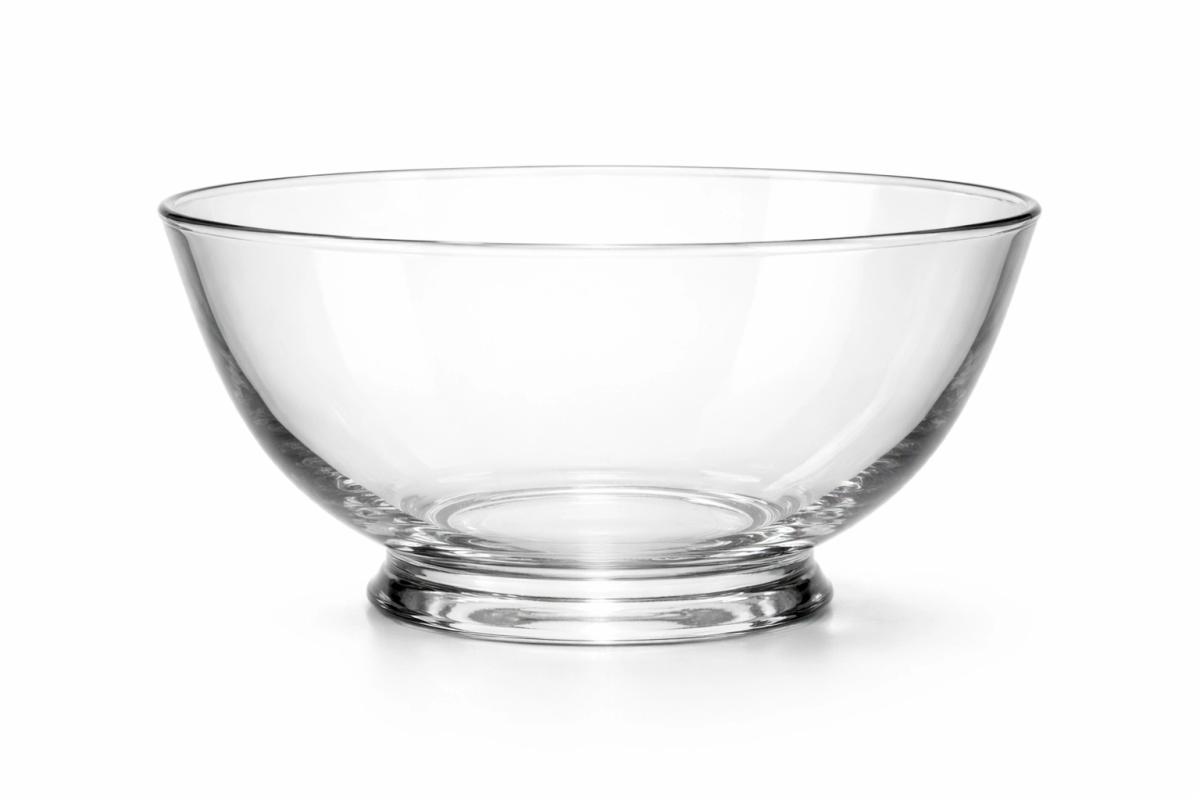
A punch bowl is a wide, open bowl, about three to eight litres by our guidance, for serving a batched drink to a room. It holds a cold punch over a single block of ice, or a warm one such as Wassail, ladled into small cups. Our punches make about 1.2 to 2.3 litres, and a bowl of four or five litres takes that with the ice.
About the Punch Bowl
Size the Bowl to the Batch and the Ice
Our punches make about 1.2 to 2.3 litres: the Tropical Punch about 1.2 litres, the Champagne Punch about two with its two bottles of champagne. Add a block of ice and room to ladle, and a bowl of four or five litres is right.
Fill to two-thirds at most. A brim-full bowl slops when the ladle goes in and when anyone moves it.
One Block of Ice, Not Cubes
Ice melts at its surface, and a block has far less surface than the same weight of cubes. Freeze water in a loaf tin or a clean food tub the day before; the block chills the bowl for hours and dilutes it slowly.
That is why our Fish House Punch, scaled up ten times, rests for an hour over one large block before the first ladle.
Our punches and the bowl they need
Tropical Punch
- Batch
- About 1.2 litres
- Ice
- One large block
- Served in
- Cups of about 120ml
Fish House Punch (about twelve cups)
- Batch
- About 1.9 litres
- Ice
- One large block, an hour ahead
- Served in
- Small cups
Champagne Punch
- Batch
- About 2 litres
- Ice
- One large block
- Served in
- Flutes or punch cups
Wassail
- Batch
- About 1.6 litres
- Ice
- None; served warm
- Served in
- Heatproof cups
| Punch | Batch | Ice | Served in |
|---|---|---|---|
| Tropical Punch | About 1.2 litres | One large block | Cups of about 120ml |
| Fish House Punch (about twelve cups) | About 1.9 litres | One large block, an hour ahead | Small cups |
| Champagne Punch | About 2 litres | One large block | Flutes or punch cups |
| Wassail | About 1.6 litres | None; served warm | Heatproof cups |
Warm Punch Needs a Warmed Bowl
Wassail is held under a simmer for 20 minutes and never boiled, then ladled from the pan or from a warmed bowl. Run hot tap water into a glass bowl first and empty it; cold glass meeting hot punch can crack.
Dry Ice Stays Outside the Punch
A smoking bowl, as for our Cauldron Punch, works by setting the punch bowl in a bigger one and putting the dry ice, food grade, in the gap with warm water. Use gloves and tongs that insulate, keep the room aired, and keep every piece out of the punch and the cups.
Using the Punch Bowl
Usage
Serving a batched punch to a room: cold over a single block of ice, or warm from a warmed bowl. Ladle into small cups of about 120ml, as our Tropical Punch is served.
Pro Tip
Taste the punch before the ice goes in, and only then adjust. Our Tropical Punch is meant to taste slightly too tart at that stage, because the block softens it as it melts.
Professional Tips
- Freeze one large block of ice the day before; cubes melt too fast.
- Add sparkling wine or soda at the last moment, down the side of the bowl.
- Fill to no more than two-thirds, so the ladle does not slop.
- Run hot tap water round a glass bowl, then empty it, before warm punch goes in.
Alternatives
Budget Alternative
A large mixing bowl, a stockpot, or a drinks dispenser with a tap. Each holds punch just as well, and a dispenser is easier for a crowd.
Premium Option
A heavy crystal or ceramic bowl with matching cups and ladle. It looks the part on a table; the punch tastes the same.
Specifications
Material
Glass, crystal, ceramic or metal
Capacity
About three to eight litres, our guidance; a four-litre bowl takes a two-litre batch and its ice
Details
Wide, open bowl, often on a short foot; usually used with a ladle and small cups
More to explore
Common Questions
What size punch bowl do I need?
How many people does a punch bowl serve?
How do you keep punch cold without watering it down?
Can a glass punch bowl take hot punch?
Is dry ice safe in punch?
What goes into a punch?
Do I need a punch bowl?
Sources.
Correct as of 19 October 2026.
- The Oxford Companion to Spirits and Cocktails (David Wondrich), “punch” (secondary source: first mention of punch by name in a 1632 East India Company letter; made by the English in India with local ingredients; by the 1660s the staple drink of the Caribbean and North America and in the British Isles).
- The Oxford Companion to Spirits and Cocktails (Konrad A. Antczak), “punch bowls and punch paraphernalia” (secondary source: hemispherical vessels from the second quarter of the seventeenth century; large bowls typically 25 to 30cm across).
Made with the Punch Bowl
Used In These Cocktails
Related Equipment
Updated 19 October 2026