Rocks Glass
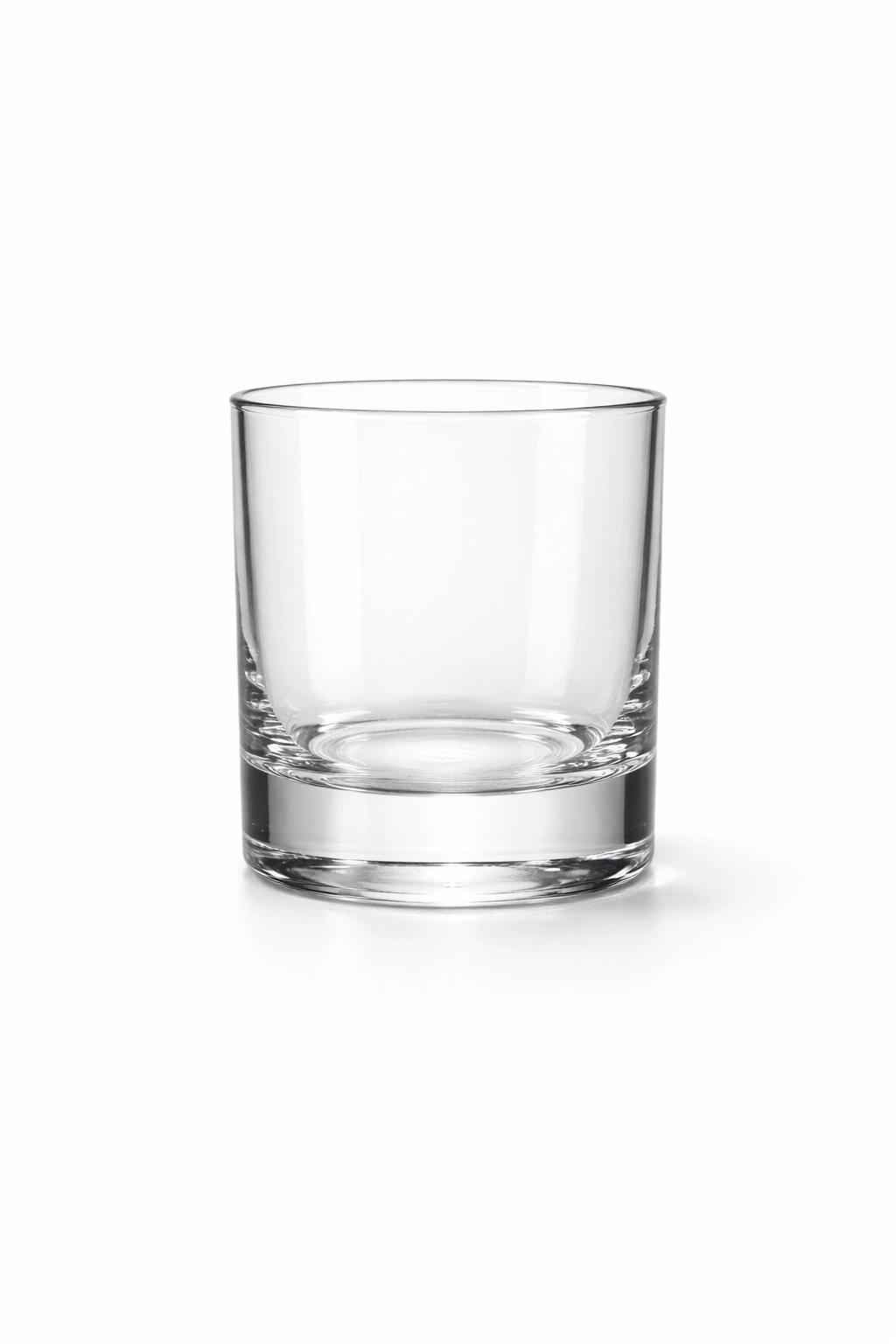
A rocks glass is a short, wide tumbler with a heavy base, sold as a single (our shop’s Club ICE tumbler is 26cl) or a double (Urban Bar’s run 32 to 35cl). It holds spirits and short drinks over ice, and drinks built in the glass, from the Old Fashioned and the Negroni to sours on the rocks. The thick base keeps it steady under a muddler and when a large cube drops in.
Essential Equipment
Recommended for every home bar
About the Rocks Glass
We Make One
A 26cl heavy-based tumbler with a textured ICE pattern, available singly or in pairs.
Club ICE Tumbler, 26clRocks, Lowball and Old Fashioned Are One Glass
Rocks refers to the ice, Old Fashioned to the drink and lowball to its height beside a highball. A recipe that names any of them means a short, wide, heavy-bottomed tumbler.
Some catalogues call the single an Old Fashioned glass and the double a rocks glass. The difference that matters is the size.
Single or Double Depends on the Drink
A single, such as our shop’s 26cl Club ICE tumbler, suits stirred drinks over one large cube. Our Old Fashioned is 45ml of bourbon with sugar and bitters, the Negroni 90ml, and either sits comfortably with a 5cm cube.
A double, 32 to 35cl in Urban Bar’s listings, is for bigger drinks. Our Penicillin and Honey Sour are around 115ml before the ice, the Jungle Bird about 140ml, and the Mai Tai goes over crushed ice packed to the rim. They need the room.
The Sazerac is the exception to the ice: it is strained into a chilled rocks glass rinsed with absinthe, with no ice at all.
Single and double rocks glasses against their neighbours (single and highball from our shop; double from Urban Bar’s listings; Glencairn from its own site)
Single rocks
- Typical capacity
- 26cl (our shop)
- Ice
- One large cube
- Our drinks in it
- Old Fashioned, Negroni, Boulevardier
Double rocks
- Typical capacity
- 32 to 35cl (Urban Bar)
- Ice
- Cubes or crushed
- Our drinks in it
- Penicillin, Jungle Bird, Mai Tai
Highball
- Typical capacity
- 38 or 42cl (our shop)
- Ice
- A glass full of cubes
- Our drinks in it
- Rum and Coke, Paloma
Glencairn
- Typical capacity
- 200ml (Glencairn)
- Ice
- None
- Our drinks in it
- Whisky or aged rum, neat
| Glass | Typical capacity | Ice | Our drinks in it |
|---|---|---|---|
| Single rocks | 26cl (our shop) | One large cube | Old Fashioned, Negroni, Boulevardier |
| Double rocks | 32 to 35cl (Urban Bar) | Cubes or crushed | Penicillin, Jungle Bird, Mai Tai |
| Highball | 38 or 42cl (our shop) | A glass full of cubes | Rum and Coke, Paloma |
| Glencairn | 200ml (Glencairn) | None | Whisky or aged rum, neat |
The Heavy Base Does Two Jobs
It keeps the glass still. The Old Fashioned, the Caipirinha and the Dawa are built and muddled in the glass, and a light tumbler slides about under the muddler.
It also copes with cold. Thick glass takes a large frozen cube better than thin, though a glass straight from a hot dishwasher can still crack if ice goes in at once. Let it cool first.
One Large Cube Melts Slowest
Volume for volume, one big cube presents far less surface to the drink than a scatter of small ones, so it melts more slowly. In a short drink, where every millilitre of meltwater shows, that keeps the drink closer to how it started.
Stir a drink built over one large cube for 15 to 20 seconds. Over a glass of smaller cubes, or in a mixing glass, give it 20 to 30.
Look at the Base First
Thick, flat and even. Cut patterns are a matter of taste and do nothing to the drink, though deep cutting makes it harder to see the level as you pour.
Using the Rocks Glass
Usage
Short drinks over ice and drinks built in the glass: the Old Fashioned, the Negroni and the Boulevardier, sours on the rocks such as the Penicillin, and spirits with a cube. Doubles take the larger sours and crushed-ice drinks like the Mai Tai.
Pro Tip
For an Old Fashioned, use one large cube that nearly fills the width of the glass. It melts slowly, so the drink keeps its strength and its chill for longer.
Professional Tips
- One large cube melts more slowly than several small ones.
- Singles for stirred drinks over one cube; doubles for sours and crushed ice.
- Chill it for drinks served without ice, such as the Sazerac.
- Let a glass from the dishwasher cool before a frozen cube goes in.
Alternatives
Budget Alternative
Plain heavy tumblers from a supermarket or a charity shop. Check that the base is thick and flat; the pattern makes no difference.
Premium Option
Crystal with a fine rim and a heavy base. It drinks more pleasantly and still sits firm; the drink itself does not change.
Specifications
Material
Glass
Capacity
Single 26cl (our shop); double 32 to 35cl (Urban Bar’s listings)
Details
Short and wide, with straight sides and a thick, heavy base
More to explore
Common Questions
Are a rocks glass and an Old Fashioned glass the same thing?
Should I buy single or double rocks glasses?
What size is a rocks glass in ml?
Why are rocks glasses so heavy?
What drinks belong in a rocks glass?
Why use one large ice cube?
Is a rocks glass good for whisky?
Can rocks glasses go in the dishwasher?
Sources.
Correct as of 18 October 2026.
- Jerry Can Spirits shop, “Club ICE Tumbler, 26cl”.
- Urban Bar, “Classico Margot Old Fashioned 32cl”.
- Urban Bar, “Urbino Old Fashioned 35cl”.
- Jerry Can Spirits shop, “Crystal ICE Hiball, 42cl”.
- Glencairn Crystal, “The Glencairn Glass” (200ml).
Master the Technique
Made with the Rocks Glass
Used In These Cocktails
Show all 73 cocktailsShow fewer
Related Equipment
Updated 18 October 2026