Shot Glass
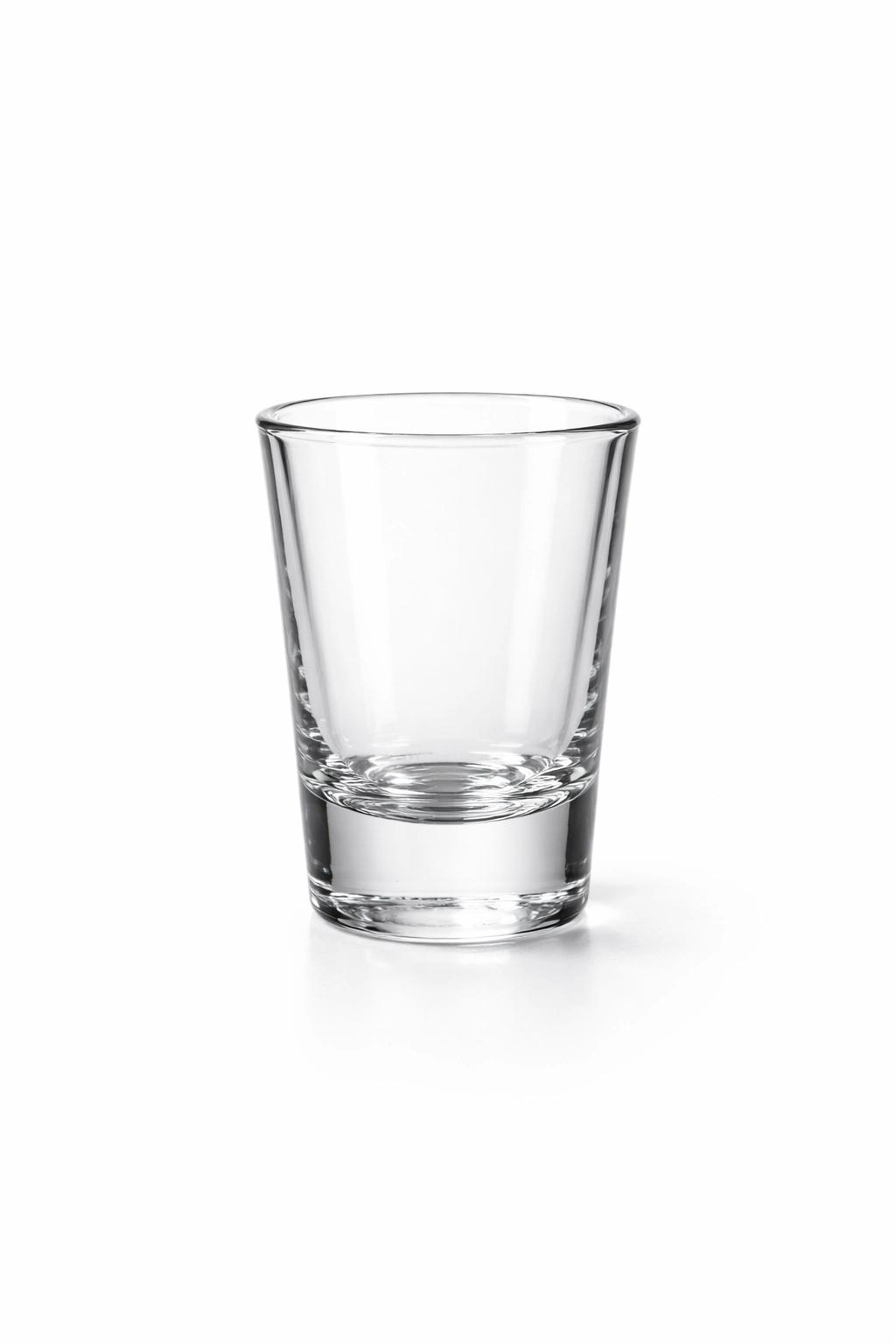
A shot glass is a small, heavy-based glass, 5cl or 6cl in Urban Bar’s listings, for a measure of spirit drunk neat or a layered shooter. In a British bar, under the Weights and Measures (Intoxicating Liquor) Order 1988, gin, rum, vodka and whisky sold by the glass come in 25ml or 35ml measures or multiples of them, so a single is 25ml or 35ml and a double 50ml or 70ml. Our shot recipes, from the Pickleback to the Slippery Nipple, run from 30 to 50ml.
About the Shot Glass
British Law Sets the Measure, Not the Glass
In a British bar, gin, rum, vodka and whisky sold by the glass must be served in 25ml or 35ml measures, or multiples of them, under the Weights and Measures (Intoxicating Liquor) Order 1988. A single is 25ml or 35ml depending on the bar, and a double 50ml or 70ml. The Order exempts a mixture of three or more liquids, so cocktails are outside it.
Bars measure through a government-stamped thimble or an optic on the bottle, then pour into whatever glass the drink is served in.
Most Shot Glasses Are Not Measures
Urban Bar lists its shot glasses at 5cl and 6cl, and few glasses are marked. Two that look alike on a shelf can differ by a third.
Fill yours once from a jigger with water and you will know where 25ml sits. After that, measure the spirit with the jigger anyway.
UK measures and units at 40% ABV (measures from the Weights and Measures (Intoxicating Liquor) Order 1988; the glass column is our guidance)
Single
- Volume
- 25ml
- UK units
- 1
- Glass that holds it
- A 25 to 35ml shot glass
Larger single
- Volume
- 35ml
- UK units
- 1.4
- Glass that holds it
- A 35 to 50ml shot glass
Double
- Volume
- 50ml
- UK units
- 2
- Glass that holds it
- A 50 to 60ml shooter
Larger double
- Volume
- 70ml
- UK units
- 2.8
- Glass that holds it
- A small rocks glass
| Measure | Volume | UK units | Glass that holds it |
|---|---|---|---|
| Single | 25ml | 1 | A 25 to 35ml shot glass |
| Larger single | 35ml | 1.4 | A 35 to 50ml shot glass |
| Double | 50ml | 2 | A 50 to 60ml shooter |
| Larger double | 70ml | 2.8 | A small rocks glass |
Layered Shots Need a Tall Glass
Our B-52 is three 15ml layers and our Slippery Nipple two of 25ml. Both need a slim glass of 50 to 60ml; a narrow column keeps each band deep. Chill the bottles, then run each layer in slowly off an upturned spoon.
Count the Units
A shot goes down fast, which makes it easy to lose count. At 40% ABV, each 25ml holds one UK unit, and the UK Chief Medical Officers advise no more than 14 units a week. For a good tequila, our Tequila Ceremony gives the other way: skip the salt and lime, and sip it.
Keep water on the table, and never drive after drinking.
Using the Shot Glass
Usage
A measure of spirit drunk neat, such as chilled vodka, aquavit or blanco tequila, and layered shooters such as the B-52 and the Slippery Nipple, which need a 50 to 60ml glass, tall and narrow. Measure the spirit with a jigger rather than trusting the glass.
Pro Tip
Fill each of your shot glasses with water from a 25ml jigger before you trust them. Many hold more than they look; knowing where the real line sits keeps a neat pour honest and the units easy to count.
Professional Tips
- Measure with a jigger, then pour into the glass.
- Chill the glass and the bottle for vodka, aquavit and layered shots.
- Use a tall, narrow glass for layers; the bands stay distinct.
- Put water on the table alongside, and keep count.
Alternatives
Budget Alternative
Small, heavy tumblers or cordial glasses hold a neat measure just as well. Check the capacity with a jigger and water before use.
Premium Option
A heavy, clear glass marked at 25ml or 35ml. It doubles as a check on your pour; the spirit is the same.
Specifications
Material
Glass, thick at the base
Capacity
5cl or 6cl in Urban Bar’s listings; our layered shooters want 50 to 60ml
Details
Straight or slightly flared sides on a heavy base; some carry a marked fill line
More to explore
Common Questions
How much does a shot glass hold?
What is a standard shot in the UK?
How many units are in a shot?
Can I use a shot glass as a measure?
Why do shot glasses have thick bases?
What size shot glass for layered shots?
Which spirits suit a shot glass?
How do you drink shots responsibly?
Sources.
Checked between 18 October and 20 October 2026.
- legislation.gov.uk, “The Weights and Measures (Intoxicating Liquor) Order 1988, article 3 (as amended)” (gin, rum, vodka and whisky: ¼ gill, ⅕ gill, ⅙ gill, 25 ml or 35 ml, or multiples; exempt as a constituent of a mixture of three or more liquids).
- Victoria and Albert Museum, “Whisky taster (Boston and Sandwich Glass Co., made 1825 to 1840)” (museum record: American whisky taster, probably Boston and Sandwich Glass Co., 1825 to 1850).
- Urban Bar, “Classic Shot Glass 5cl”.
- Urban Bar, “1910 Shot Glass 6cl”.
Master the Technique
Made with the Shot Glass
Used In These Cocktails
Related Equipment
Updated 20 October 2026