Start here.
Five techniques make almost every cocktail
Five techniques make almost every cocktail, and the ingredients decide which one. Citrus, egg or cream mean a shake. Spirits, vermouth and bitters alone mean a stir. A sparkling mixer means the drink is built in its glass. The cocktail terms glossary defines the words recipes use.
The five core techniques and when each applies
Shake
- Use it for
- Drinks with citrus, egg, cream or juice
- What it does
- Chills hard, adds about a quarter in water, and adds air
- Field Manual drinks
- Daiquiri, Whiskey Sour, Margarita
Stir
- Use it for
- Drinks made only from spirits, vermouth, liqueurs and bitters
- What it does
- Chills, adds about a fifth in water, and keeps the drink clear
- Field Manual drinks
- Manhattan, Negroni, Martini
Build
- Use it for
- Long drinks with a sparkling mixer
- What it does
- Mixes in the glass without knocking out the bubbles
- Field Manual drinks
- Gin & Tonic, Whiskey Highball, Storm & Spice
Muddle
- Use it for
- Fresh mint, citrus, fruit or sugar
- What it does
- Presses out juice and oil in the glass or tin
- Field Manual drinks
- Mojito, Caipirinha, Old Fashioned
Layer
- Use it for
- Drinks served in separate bands
- What it does
- Keeps a lighter ingredient above a denser one
- Field Manual drinks
- Tequila Sunrise, Penicillin
| Technique | Use it for | What it does | Field Manual drinks |
|---|---|---|---|
| Shake | Drinks with citrus, egg, cream or juice | Chills hard, adds about a quarter in water, and adds air | Daiquiri, Whiskey Sour, Margarita |
| Stir | Drinks made only from spirits, vermouth, liqueurs and bitters | Chills, adds about a fifth in water, and keeps the drink clear | Manhattan, Negroni, Martini |
| Build | Long drinks with a sparkling mixer | Mixes in the glass without knocking out the bubbles | Gin & Tonic, Whiskey Highball, Storm & Spice |
| Muddle | Fresh mint, citrus, fruit or sugar | Presses out juice and oil in the glass or tin | Mojito, Caipirinha, Old Fashioned |
| Layer | Drinks served in separate bands | Keeps a lighter ingredient above a denser one | Tequila Sunrise, Penicillin |
Shake hard and short, with a full tin of ice
Shake any drink that contains citrus juice, egg white, cream or fruit juice. Fill the tin two-thirds with hard, dry ice, seal it, and drive the ice the length of the tin from the shoulders. Shake hard for 10 to 12 seconds, until the tin is painfully cold.
The Daiquiri is the drink to practise on: 60ml white rum, 20ml lime juice and two bar spoons of caster sugar, with nothing to hide a timid shake. Shaken or stirred? covers sealing, straining, the dry shake for egg white and the reverse dry shake.
Stir for 20 to 30 seconds, then taste
Stir any drink made only from spirits, vermouth, liqueurs and bitters. Fill a mixing glass two-thirds with ice, add the drink and turn the ice smoothly with a bar spoon for 20 to 30 seconds, then taste before you strain. Large, dense cubes need the top of that range. The Manhattan is the drink to learn on: 50ml rye whiskey, 20ml sweet vermouth and a dash of Angostura bitters, served up in a chilled coupe.
Build long drinks in the glass, and lift the mixer once
A highball is made in the glass it is served in. Fill the glass to the top with ice, add the spirit, pour the chilled mixer gently down the inside of the glass, and lift the spirit through it once with a bar spoon. More stirring knocks out the bubbles. The Storm & Spice is built this way: 50ml Expedition Spiced Rum, 15ml lime juice and two dashes of Angostura bitters, with 150ml ginger beer. The Whiskey Highball is 50ml Scotch and 100 to 125ml soda water.
Muddle by pressing, never by grinding
Muddling presses fresh ingredients in the bottom of the glass or shaker. Mint takes a gentle press or two, because torn leaves turn bitter, and the Mojito presses its mint once or twice with the sugar. Lime and sugar take firm pressure: the Caipirinha muddles a lime cut into eight with caster sugar for 20 to 30 seconds. The muddling masterclass gives the pressure for each ingredient.
Layer by pouring the densest ingredient first
Syrups and liqueurs are dense and sink; strong spirits are lighter and sit on top. Pour the lighter ingredient slowly over the back of a bar spoon held just above the surface. Grenadine sinks through a Tequila Sunrise, and the Penicillin finishes with 7.5ml of Lagavulin floated on top. Pour too fast and the layers mix.
Four tools make most drinks
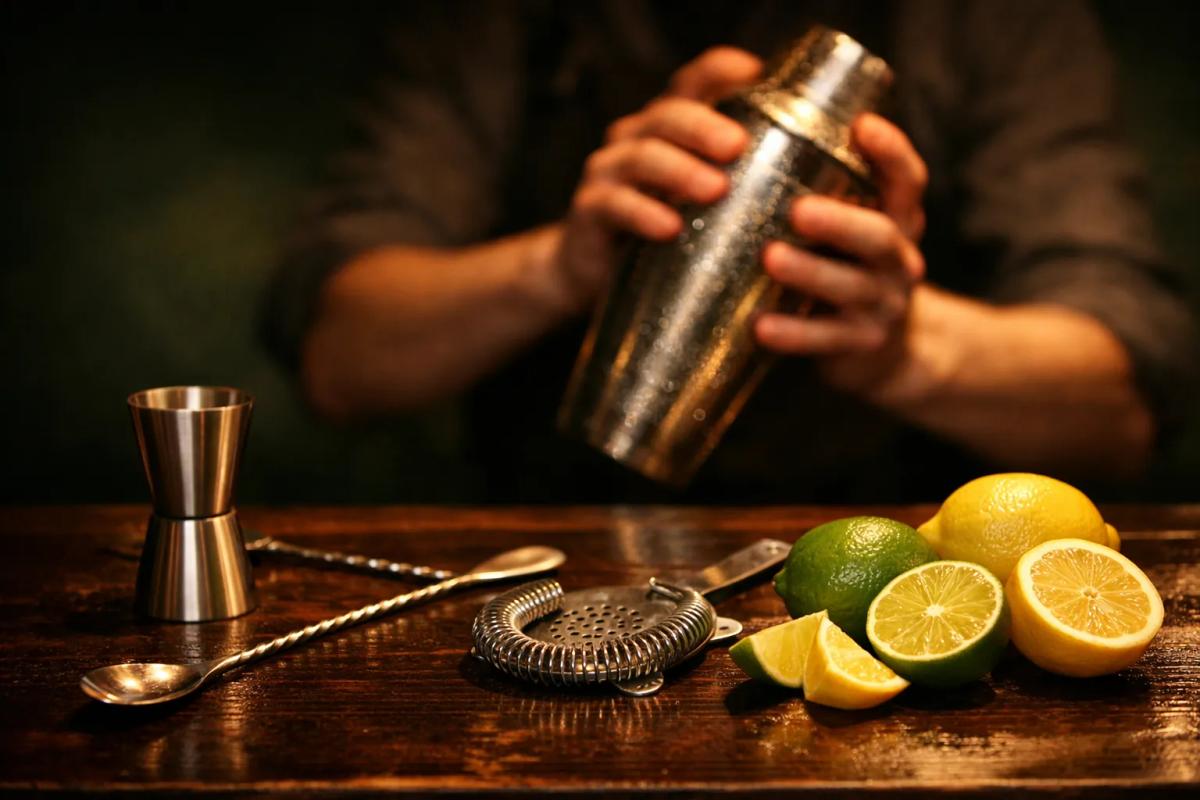
A shaker, a jigger, a strainer and a bar spoon make most of the drinks in the Field Manual. Add a mixing glass, a fine strainer and a muddler as you go. Essential home bar setup covers the full kit.
The tools to start with
Shaker, Boston or Cobbler
- What it does
- Holds the ice and the drink for shaking
- When you need it
- From the first drink
Jigger
- What it does
- Measures each ingredient, usually 25ml and 50ml
- When you need it
- From the first drink
Hawthorne strainer
- What it does
- Holds back the ice as you pour from the tin
- When you need it
- From the first drink, unless your shaker is a Cobbler
Bar spoon
- What it does
- Stirs, lifts a highball, and measures about 5ml
- When you need it
- From the first drink
Mixing glass
- What it does
- Holds the ice and the drink for stirring
- When you need it
- For stirred drinks; a shaker tin will do at first
Fine mesh strainer
- What it does
- Catches ice chips and pulp in a drink served up
- When you need it
- For shaken drinks with herbs, fruit or egg
Muddler
- What it does
- Presses mint, citrus and sugar
- When you need it
- For the Mojito, the Caipirinha and the Old Fashioned
Citrus press
- What it does
- Squeezes lemons and limes on the day
- When you need it
- Once you make sours often
| Tool | What it does | When you need it |
|---|---|---|
| Shaker, Boston or Cobbler | Holds the ice and the drink for shaking | From the first drink |
| Jigger | Measures each ingredient, usually 25ml and 50ml | From the first drink |
| Hawthorne strainer | Holds back the ice as you pour from the tin | From the first drink, unless your shaker is a Cobbler |
| Bar spoon | Stirs, lifts a highball, and measures about 5ml | From the first drink |
| Mixing glass | Holds the ice and the drink for stirring | For stirred drinks; a shaker tin will do at first |
| Fine mesh strainer | Catches ice chips and pulp in a drink served up | For shaken drinks with herbs, fruit or egg |
| Muddler | Presses mint, citrus and sugar | For the Mojito, the Caipirinha and the Old Fashioned |
| Citrus press | Squeezes lemons and limes on the day | Once you make sours often |
A Boston shaker seals tighter; a Cobbler has its own strainer
A Boston shaker is two tins that seal together, quick to use and easy to strain. A Cobbler shaker has three pieces with a strainer built into the cap, so it needs no separate strainer but is slower to empty. Either works at home.
Measure every ingredient with a jigger
A drink 5ml heavy on citrus or syrup tastes off, so measure every ingredient. A jigger in the UK usually measures 25ml and 50ml, and one with lines inside gives you 15ml and 22.5ml as well. Fill it to the brim and check it from the side.
Strain twice for a drink served up
A Hawthorne strainer holds back the ice. For a shaken drink served up, hold a fine mesh strainer over the glass as well, to catch the ice chips and pulp. A bar spoon holds up to about 5ml, though bowls vary.
Chill the glass for a drink served without ice
A stemmed glass keeps your hand off a drink served up. A rocks glass takes a large cube, and a highball keeps a long drink fizzy. Chill any glass for a drink served without ice: ten minutes in the freezer, or ice and water in it while you mix. The glassware guide matches each glass to its drinks.
Balance starts at two parts spirit, one part citrus and one part sweet
Most sours start at 2:1:1: two parts spirit, one part citrus, one part sweet. The Whiskey Sour sits close to it, at 45ml bourbon, 25ml lemon juice and 20ml simple syrup. Taste the drink once it is cold, and change one thing at a time by about 5ml: if it is too sour, add sugar; if it is too sweet, add citrus. How to balance a cocktail gives the ratio for each family and a table of fixes.
Ice chills the drink and adds the water it needs
Melting ice is part of the recipe. Shaking adds roughly a quarter of the drink’s volume in water and stirring around a fifth, and that water softens the alcohol. Use hard, dry ice straight from the freezer, plenty of it, and fresh ice in the serving glass, because ice from the shaker is already melting.
Match the ice to the drink
Cubes do most jobs. A single large cube melts slowly, which suits the Old Fashioned. Crushed ice melts fast and chills hard, for the Mint Julep and the Caipirinha. The Mojito is built over large cubed ice, so it stays cold without going thin.
Dilution comes from the time on the ice
Shaking for 10 to 12 seconds or stirring for 20 to 30 seconds achieves proper dilution with standard ice. Larger, colder ice needs the longer end of each range. A batch made ahead never meets the ice, so its water goes in by hand, and how to batch cocktails gives the amounts.
A garnish adds aroma, and goes on last
A twist of citrus peel pinched over the drink adds scent without sourness, and a mint sprig at the rim does the same for a Mojito. Use the garnish the recipe names and add it last. Garnishing like a pro shows how to cut each one.
Taste every drink before it reaches the glass
Dip a straw into the shaker or mixing glass, close the top with a finger and taste what it holds. Lemons and limes vary in sharpness, and syrups in sweetness, so a measured recipe can still need 5ml of correction. Squeeze citrus on the day, because bottled juice tastes flat. Most disappointing drinks come down to a free pour, too little ice, or a shake or stir cut short.
A first home bar needs few bottles
Start with the spirits you drink. A white rum, a gin and a bourbon make the Daiquiri, the Mojito, the Tom Collins and the Whiskey Sour. Add sweet vermouth and Campari for the Negroni, dry vermouth for the Martini, and Angostura bitters for the Old Fashioned. Keep fresh lemons, limes and simple syrup to hand.
A spiced rum opens up long drinks with ginger beer, cola and apple, and what to mix with spiced rum gives the pairings.