Aviation
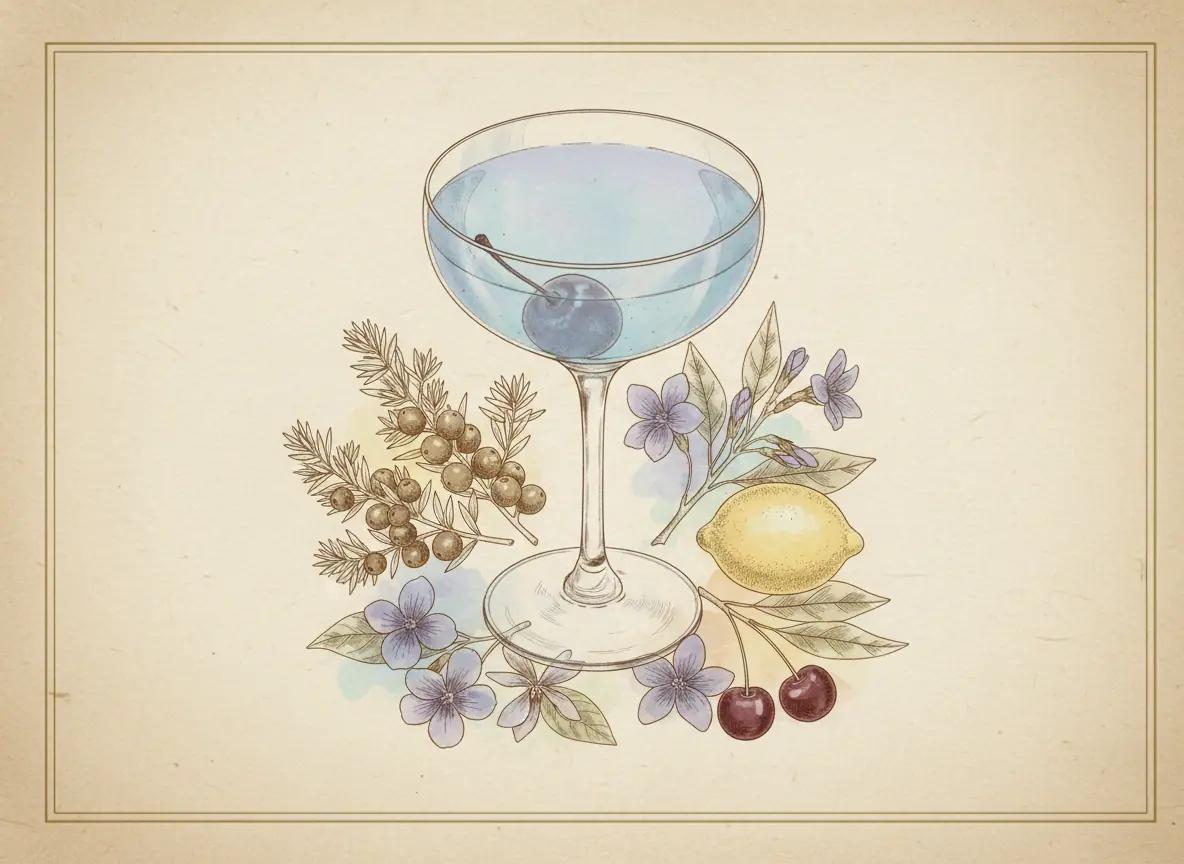
An Aviation is gin, maraschino, lemon and a little crème de violette: 45ml gin, 15ml maraschino liqueur, 15ml fresh lemon juice and one bar spoon of crème de violette, shaken hard and double strained into a chilled coupe, with a cherry dropped in. The measures are the International Bartenders Association’s. The violette gives the drink its pale blue-violet colour. Hugo Ensslin, bar manager at the Wallick Hotel in New York, published the original formula for the classic Aviation in his 1916 Recipes for Mixed Drinks, the Oxford Companion says. In 1930 the Savoy Cocktail Book printed it without the violette, and many bartenders followed that version. Keep the violette to a bar spoon: more turns the drink soapy and purple. A glass holds about 2.4 UK units.
Glassware: Coupe Glass
Garnish: Maraschino cherry ideally Luxardo, placed in the centre of the drink
Ingredients
45ml
A juniper-led London Dry at around 40% ABV. It is the frame of the drink and stops the floral and cherry notes from turning sweet.
1 bar spoon
One bar spoon, about 5ml, as the IBA gives it. A violet-flower liqueur, usually 16 to 25% ABV, used for colour and scent. More makes the drink soapy and dark.
15ml
Luxardo is the usual bottle, at 32% ABV on Luxardo’s own page. Made from marasca cherries, it is clear, with a bitter almond edge, sweeter than it tastes, and links the lemon to the violette.
15ml
Squeezed the same day. Those 15ml are all the acid set against two liqueurs, and stale lemon lets the sweetness win.
Instructions
Chill a coupe.
Add the gin, maraschino liqueur, lemon juice and crème de violette to a shaker.
Fill with cubed ice and shake hard for 10 to 12 seconds.
Double strain into the chilled coupe.
Drop a maraschino cherry into the centre of the drink.
Source: the IBA (Official IBA specification; method ours). Last checked 9 October 2026.
Expert Tip
Measure the violette with a bar spoon, not a jigger. One spoon gives a pale blue-violet and a floral note; a full measure makes the drink purple and soapy. Use Luxardo maraschino if you can. Its cherry-stone bitterness holds the lemon and the violette together, while sweeter maraschinos tip the drink towards syrup. Shake hard for 10 to 12 seconds, double strain, and serve in a well-chilled coupe. Served up, it has nothing to keep it cold, so make it just before it is drunk.
Behind the Aviation
Flavour Profile
Ensslin’s Recipe
Bar Vademecum says Hugo Ensslin was bar manager at the Wallick Hotel in New York. The Oxford Companion puts the original formula of the classic Aviation in his 1916 Recipes for Mixed Drinks, one of at least four formulae of that name then in circulation; Bar Vademecum prints it from the second edition of 1917: two-thirds El Bart gin, one-third lemon juice, two dashes of maraschino and two of crème de violette.
That is a sharper drink than most made today, with the liqueurs at a dash each. Modern versions keep the shape and raise the maraschino.
The Missing Violette
In 1930 Harry Craddock’s Savoy Cocktail Book printed the Aviation as gin, lemon and maraschino, with no violette. Crème de violette was becoming hard to find, and many bartenders took up the Savoy version.
When the violette was available again, some bars put it back and others stayed with the Savoy recipe. The IBA now includes it, at one bar spoon.
Three Aviations: Ensslin’s of 1916, as Bar Vademecum prints it from the 1917 edition, and the Savoy’s of 1930, and the IBA’s, which is ours
Ensslin, 1916
- Gin
- Two-thirds
- Lemon
- One-third
- Maraschino
- Two dashes
- Crème de violette
- Two dashes
Savoy, 1930
- Gin
- Two-thirds
- Lemon
- One-third
- Maraschino
- Two dashes
- Crème de violette
- None
IBA, and ours
- Gin
- 45ml
- Lemon
- 15ml
- Maraschino
- 15ml
- Crème de violette
- One bar spoon
| Version | Gin | Lemon | Maraschino | Crème de violette |
|---|---|---|---|---|
| Ensslin, 1916 | Two-thirds | One-third | Two dashes | Two dashes |
| Savoy, 1930 | Two-thirds | One-third | Two dashes | None |
| IBA, and ours | 45ml | 15ml | 15ml | One bar spoon |
A Bar Spoon Is Enough
Crème de violette is strongly flavoured and strongly coloured. One bar spoon turns the drink a pale blue-violet and adds a floral note that sits between the cherry and the lemon. A full measure makes it purple, heavy and soapy.
Strength varies between bottles, so taste the first one you make and adjust by a drop or two rather than a measure.
Maraschino and Lemon
Maraschino liqueur, made from marasca cherries, is less sweet than its name suggests and has a bitter, nutty edge. At 15ml it is the main sweetener, and 15ml of lemon balances it. Maraschino does a similar job in the Last Word, beside green Chartreuse and lime.
The Cherry
The IBA lists the cherry as optional. A dark cocktail cherry dropped into the centre sinks and sits under the pale drink, and its syrup echoes the maraschino. A bright red, dyed cherry looks out of place against the colour and adds sugar the drink does not need.
How Strong It Is
With a 40% gin, maraschino at 32% and violette at about 20%, an Aviation holds about 2.4 UK units, served up without ice. A stronger gin raises that; at 47% it is about 2.7.
Make it at home
The Spirit
GinGin is a spirit flavoured with juniper berries. Under the retained Regulation (EC) 110/2008, juniper must lead the taste, the floor is 37.5% ABV, and the route the flavour takes sets the grade: plain gin, distilled gin or London gin. Our recipes count it at 40%, and it carries the Martini, the Negroni and the Gin and Tonic.
Master the Techniques
More to explore
Frequently Asked Questions
What is in an Aviation cocktail?
How much crème de violette goes in an Aviation?
Who created the Aviation?
Why do some Aviation recipes leave out the crème de violette?
How strong is an Aviation?
Can I make an Aviation without crème de violette?
Did the original Aviation have crème de violette?
Sources.
Correct as of 19 October 2026.
- The Oxford Companion to Spirits and Cocktails (David Wondrich), “The Aviation Cocktail” (secondary source: the original formula of the classic Aviation in Ensslin’s 1916 Recipes for Mixed Drinks, one of at least four formulae of that name; Craddock and Duffy included it in the 1930s; Craddock’s version omitted the crème de violette).
- Luxardo, “Maraschino Originale” (maker’s own page: lowered with simple syrup to 32% ABV).
- Harry Craddock, 1930 (Internet Archive scan), “The Savoy Cocktail Book” (primary source: Aviation Cocktail, 2/3 dry gin, 1/3 lemon juice, 2 dashes Maraschino, shaken and strained; no crème de violette).
- Bar Vademecum, “Aviation Cocktail” (secondary source quoting Ensslin’s second edition (1917): 1/3 lemon juice, 2/3 El Bart gin, 2 dashes maraschino, 2 dashes crème de violette; Ensslin bar manager at the Wallick Hotel; Craddock 1930 omits the violette).
- Punch, “The Rise and Fall of the Aviation Cocktail” (secondary source: the Savoy recipe (gin, lemon juice, maraschino) in the books that revived the drink; Ensslin’s 1916 recipe with crème de violette found later).
You Might Also Like
Last Word
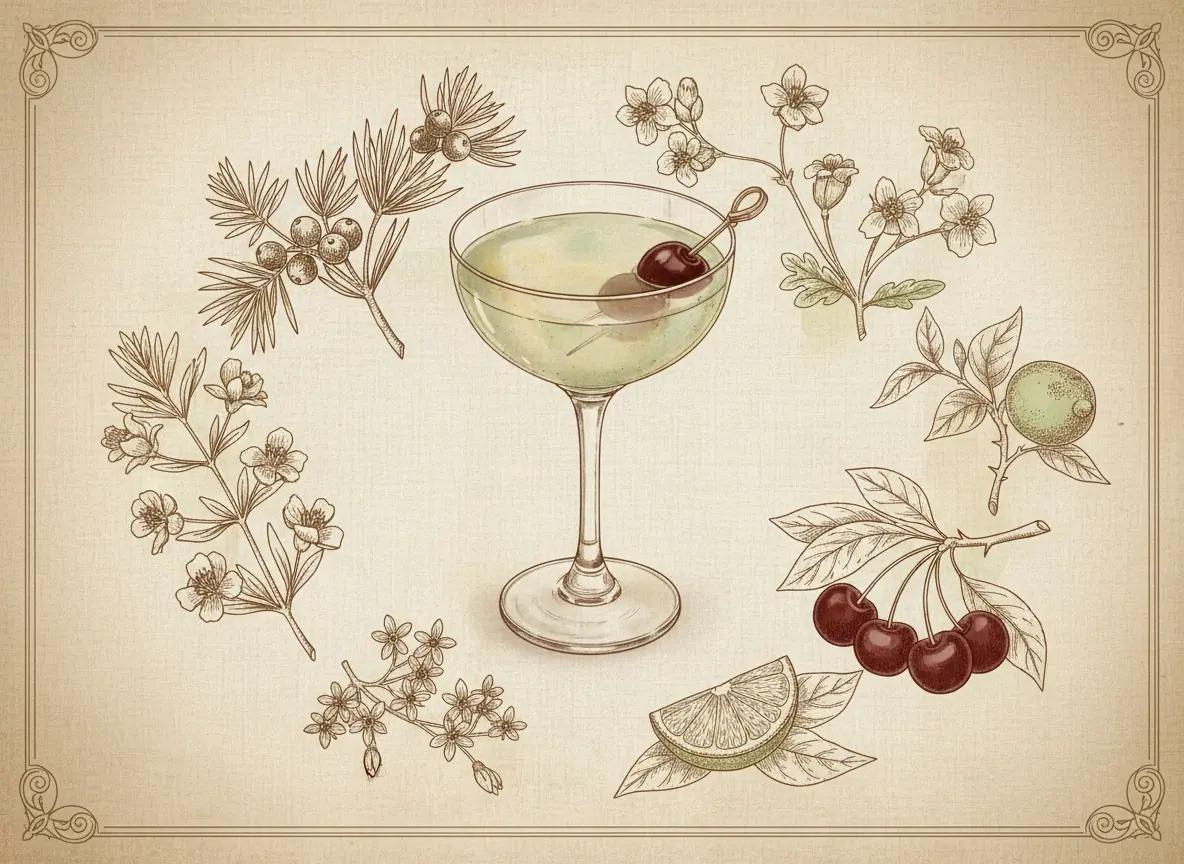
A Last Word is 22.5ml each of gin, green Chartreuse, maraschino liqueur and fresh lime juice, shaken hard for 10 to 12 seconds and double strained into a chilled Nick & Nora or coupe. About 2.9 UK units. The measures are the IBA’s; the cherry or lime twist is ours. The Oxford Companion says the drink first appears in print in the Detroit Athletic Club News in 1916, on a menu at 35 cents, a high price then. Ted Saucier’s Bottoms Up of 1951 prints the recipe, quoting a club source who says Frank Fogarty, a vaudeville monologist, introduced it there about thirty years earlier. In 2003 Murray Stenson put it on the menu at the Zig Zag Café in Seattle, from where it spread, the Companion says. Four strong flavours at equal volume, and none takes over. Chartreuse brings herbs and heat, maraschino cherry and a bitter almond edge, lime the acid, and gin holds them together.
Yellow Jacket
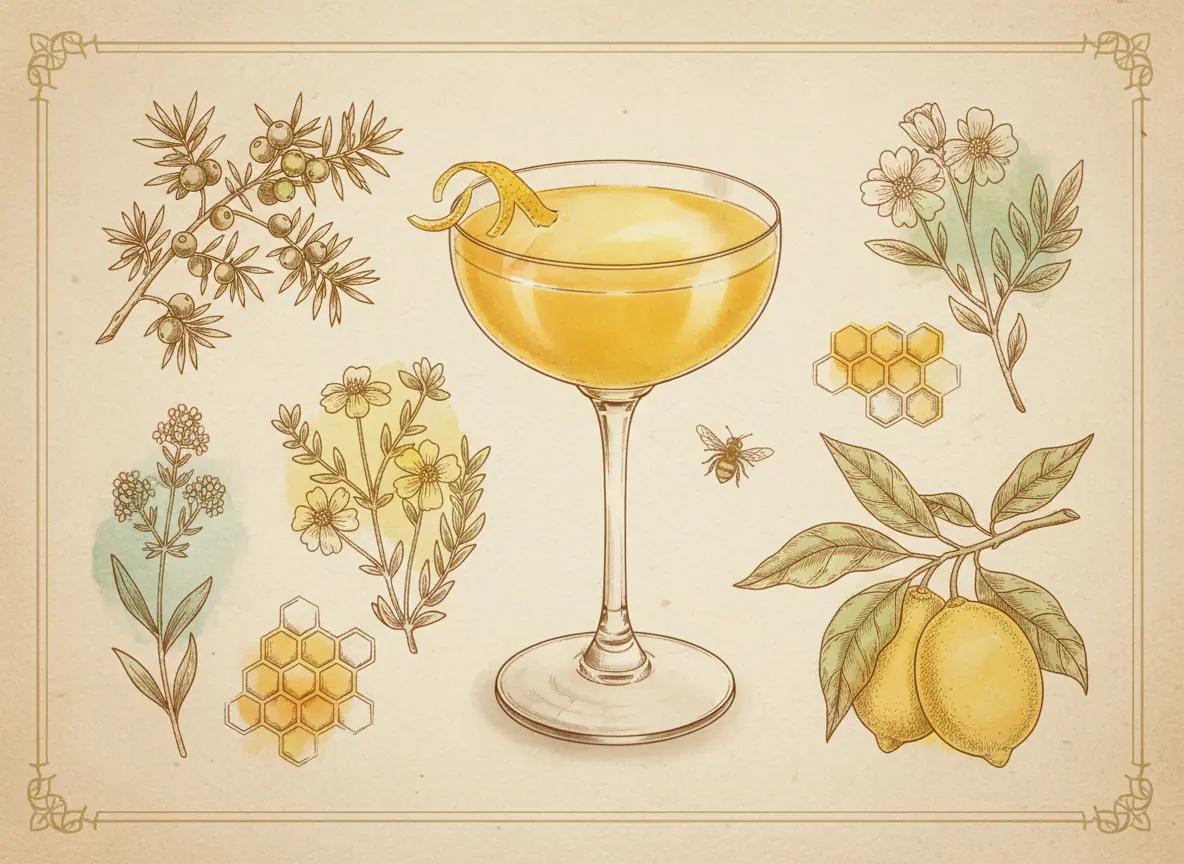
The Yellow Jacket is a gin sour sweetened with yellow Chartreuse and honey: 45ml London Dry gin, 22.5ml yellow Chartreuse, 22.5ml fresh lemon juice and 15ml honey syrup, shaken hard and double strained into a chilled coupe. It comes out pale gold, tart first, then honey and soft herbs. Yellow Chartreuse and honey are the pairing that makes it. Chartreuse’s own page gives Yellow Chartreuse at 43% ABV and calls it sweet with spicy scents, so the honey syrup reads as part of it rather than a second sweetener stacked on top. The gin gives the drink its spine and the lemon its edge. No creator or date is documented for this combination. It sits in the Bee’s Knees family of gin, lemon and honey, which Difford’s Guide traces in print to Frank Meier at the Hôtel Ritz Paris, in his 1929 Cocktails de Paris, with the Chartreuse added, and it carries about 2.8 UK units in a short glass.
Bee’s Knees
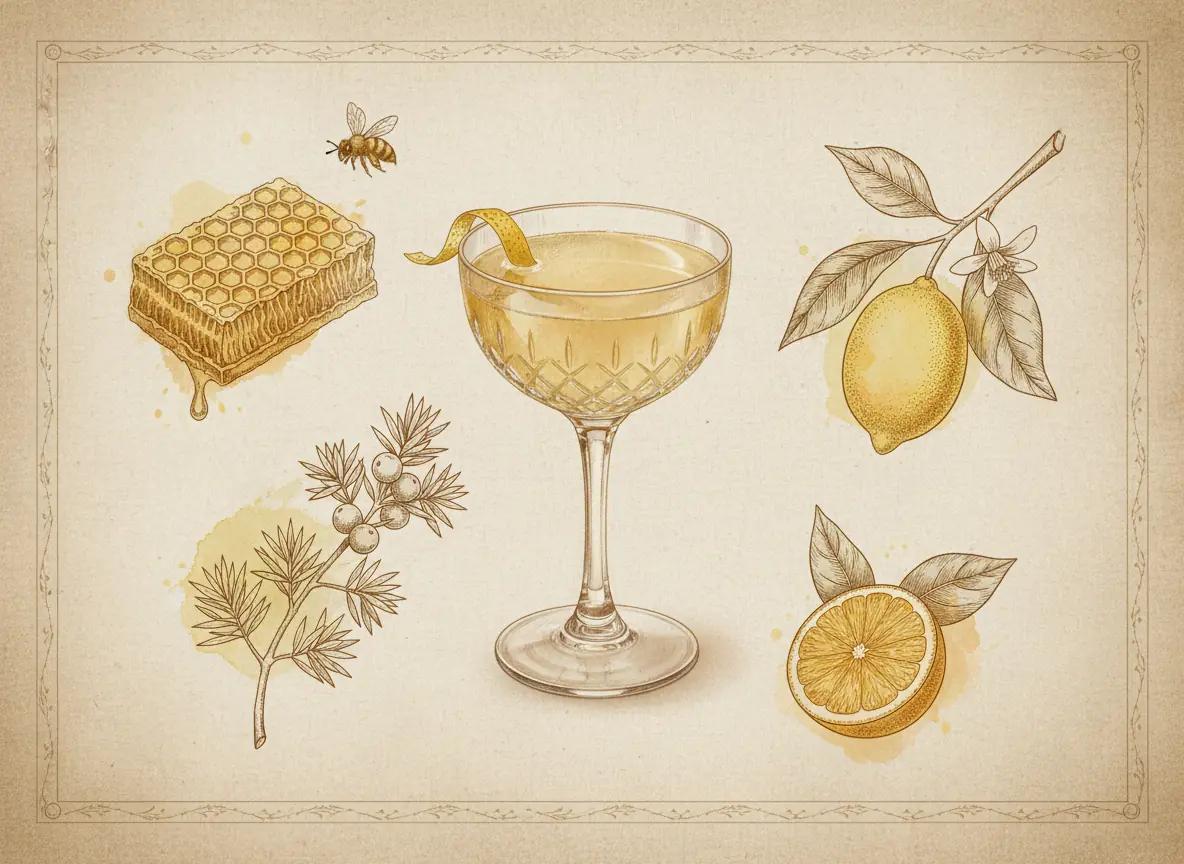
A Bee’s Knees is 52.5ml of London Dry gin, 22.5ml each of fresh lemon and orange juice and two teaspoons (10ml) of honey syrup, made with two parts honey to one of warm water. Shake it hard for 10 to 12 seconds and double strain it into a chilled coupe, with a strip of lemon peel. About 2.1 UK units. The measures are the IBA’s. The orange is the part most recipes leave out. The oldest printings are gin, lemon and honey alone; David Embury suggested a little orange juice as a variation in 1948, and the IBA built it in. Orange softens the lemon, which is why two teaspoons of honey syrup are enough. The drink is often filed under American Prohibition, with honey and lemon covering for bathtub gin. Difford’s Guide, a secondary source, says the earliest printing tells a different story: Cocktails de Paris, published in 1929, credits it to Frank Meier of the Ritz in Paris, and Meier claimed it again in his own book in 1936.
Where this one sits
Recipe by Jerry Can Spirits · Updated 19 October 2026