Berry Sour
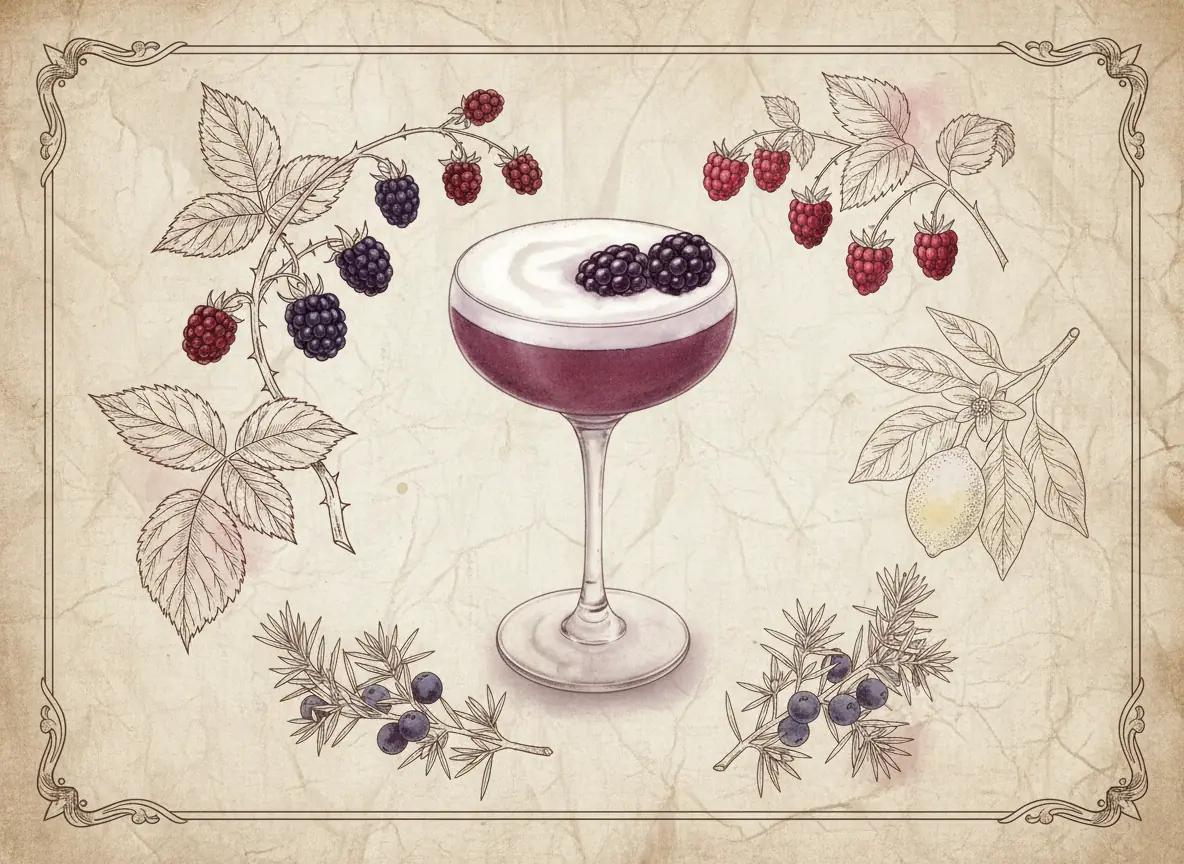
A Berry Sour is 50ml of London Dry gin, 20ml of crème de mûre, 25ml of fresh lemon juice, 10ml of sugar syrup and 15ml of egg white, dry shaken, shaken again with ice and double strained into a chilled coupe, with two blackberries on the foam. About 2.4 UK units. The egg white is raw, so leave it out for anyone allergic to egg. It is our gin sour built from the Bramble’s bottles. Dick Bradsell says in Difford’s Guide that he created the Bramble in the mid-eighties at Fred’s Club in Soho (the Oxford Companion says 1989), and its method pours the crème de mûre over crushed ice so it bleeds down through the drink. Here the liqueur goes into the shaker, and the glass stays one even colour all the way down, under a white head. The trade is deliberate. You lose the Bramble’s shift from sharp to dark as you drink; you gain a silkier texture and a drink that tastes the same at the bottom as at the top. The juniper should still come through the fruit.
Glassware: Coupe Glass
Garnish: Two blackberries resting on the foam
Ingredients
50ml
London Dry with plenty of juniper, around 40% ABV. Blackberry and lemon bury a soft gin.
20ml
Blackberry liqueur from real fruit, at our working figure of 18% ABV; Drinkfinder lists Giffard’s at 16%. Giffard and Cartron are reliable in our experience. Chambord, a black raspberry liqueur at 16.5% on its own page, makes a sweeter, more perfumed drink.
25ml
Squeezed the same day. At 25ml against a sweet liqueur and syrup, it keeps the drink a sour rather than a cordial.
10ml
Sugar and water, 1:1 by weight. A small trim only, because the liqueur already brings sugar.
15ml
About half a white, enough for a full foam. Raw. Following the FSA, British Lion-mark eggs are safe raw, including for vulnerable groups and in pregnancy; pasteurised carton white is the alternative. Eating out, where the mark cannot be checked, the FSA advises vulnerable people to have their eggs thoroughly cooked. Contains egg: leave it out, or use aquafaba, for anyone allergic.
Instructions
Squeeze the lemon juice the same day.
Chill a coupe.
Add the gin, crème de mûre, lemon juice, sugar syrup and egg white to a shaker.
Dry shake without ice for 10 to 15 seconds.
Add cubed ice and shake hard for 10 to 12 seconds.
Double strain into the chilled coupe and let the foam settle.
Garnish with two blackberries on the foam.
Our version
A house drink with no published specification: the Bramble’s gin, lemon and crème de mûre shaken together as a sour, with 15ml of egg white and the syrup cut to 10ml because more liqueur goes in.
Source: our own specification. Last checked 9 October 2026.
Expert Tip
Shake twice. The first shake, without ice for 10 to 15 seconds, builds the head, because egg white foams best before the drink is cold. The second, hard and with ice for 10 to 12 seconds, brings it down to temperature. Double strain through a fine sieve. It catches ice chips and any strands of white that did not foam, and the head comes out smooth. Taste your crème de mûre before you pour the syrup. Brands differ a good deal in sweetness, and with a sweeter bottle, halve the syrup.
Behind the Berry Sour
Flavour Profile
Where It Comes From
The Berry Sour is a house drink, and its source is plain. Difford’s Guide prints Dick Bradsell’s own account: he created the Bramble in the mid-eighties, while bar manager at Fred’s Club in Soho, wanting to invent a British drink, and a taste of crème de mûre took him back to blackberrying in his childhood on the Isle of Wight. The Oxford Companion dates it to 1989.
His drink is a gin sour over crushed ice with crème de mûre poured on top, sinking slowly so the glass turns from tart to dark. The Berry Sour keeps his bottles and changes his method: everything is shaken together, egg white goes in, and the drink is served up.
The Structure
A sour is spirit, citrus and sugar. Here the sugar comes from two places: 10ml of syrup and 20ml of crème de mûre, which is sweet and fruity at once. The lemon, at 25ml, sits a step ahead of both, so the drink finishes tart.
The egg white adds texture and no flavour. The foam softens the lemon’s edge and carries the juniper and the blackberry to your nose before you taste them.
If the gin vanishes, the fruit has taken over. Check the liqueur’s sweetness and cut the syrup before you cut the gin.
Choosing the Liqueur
Crème de mûre is darker and earthier than raspberry liqueurs, with a slight bitterness that sits well against juniper. It is also the bottle the Bramble uses, which keeps the two drinks related.
Chambord is sweeter and more perfumed. It works with the syrup cut back. Crème de cassis gives a blackcurrant sour, darker and a little sharper.
The Egg White and the Dry Shake
Fifteen millilitres is about half the white of a medium egg, which makes a full head without the drink tasting of egg.
The dry shake comes first because egg white foams best before the drink is cold and diluted. The second shake, with ice, is for temperature.
The Berry Sour Against the Bramble
The same bottles, built two ways
Gin
- Bramble
- 50ml London Dry
- Berry Sour
- 50ml London Dry
Lemon juice
- Bramble
- 25ml
- Berry Sour
- 25ml
Sugar syrup
- Bramble
- 12.5ml
- Berry Sour
- 10ml
Crème de mûre
- Bramble
- 15ml, poured over the top
- Berry Sour
- 20ml, shaken in
Egg white
- Bramble
- None
- Berry Sour
- 15ml, dry shaken first
Ice and glass
- Bramble
- Crushed ice in a rocks glass
- Berry Sour
- Served up in a chilled coupe
Garnish
- Bramble
- Lemon slice and blackberries
- Berry Sour
- Two blackberries on the foam
UK units
- Bramble
- About 2.3
- Berry Sour
- About 2.4
| Element | Bramble | Berry Sour |
|---|---|---|
| Gin | 50ml London Dry | 50ml London Dry |
| Lemon juice | 25ml | 25ml |
| Sugar syrup | 12.5ml | 10ml |
| Crème de mûre | 15ml, poured over the top | 20ml, shaken in |
| Egg white | None | 15ml, dry shaken first |
| Ice and glass | Crushed ice in a rocks glass | Served up in a chilled coupe |
| Garnish | Lemon slice and blackberries | Two blackberries on the foam |
| UK units | About 2.3 | About 2.4 |
For the layered original, make a Bramble; for the plain sour under both, a Gin Sour.
How to Serve It
Double strained into a chilled coupe, with two blackberries resting on the foam. The fine strainer catches ice chips and strands of white, which keeps the head smooth.
Serve it at once. The foam is thickest in the first few minutes, and with no ice in the glass the drink warms quickly.
Make it at home
The Spirit
GinGin is a spirit flavoured with juniper berries. Under the retained Regulation (EC) 110/2008, juniper must lead the taste, the floor is 37.5% ABV, and the route the flavour takes sets the grade: plain gin, distilled gin or London gin. Our recipes count it at 40%, and it carries the Martini, the Negroni and the Gin and Tonic.
More to explore
Frequently Asked Questions
What is a Berry Sour?
How does it differ from the Bramble?
Do I need egg white?
Can I make a Berry Sour vegan?
How strong is a Berry Sour?
Which berry liqueur works best?
Sources.
Correct as of 19 October 2026.
- Difford’s Guide (Dick Bradsell, 2001 and 2015), “Bramble cocktail: its inception told by its creator” (creator’s own account: created in the mid-eighties, when he was bar manager at Fred’s Club in Soho; a truly British drink; crème de mûre and his Isle of Wight childhood; crushed ice from the neighbouring restaurant).
- Chambord, “Chambord Black Raspberry Liqueur” (maker’s own page: “Chambord Black Raspberry Liqueur, 16.5% Alc. by Vol.”).
- Drinkfinder, “Giffard Crème de Mûre 70cl” (retailer’s listing (read for C-SOUR-7): 16% ABV).
- The Oxford Companion to Spirits and Cocktails (Anistatia R. Miller and Jared M. Brown), “The Bramble” (secondary source: created by Dick Bradsell in 1989 at Fred’s Club, Soho, from a Singapore Sling he made at the Zanzibar; crème de mûre and the Isle of Wight blackberries).
You Might Also Like
Bramble
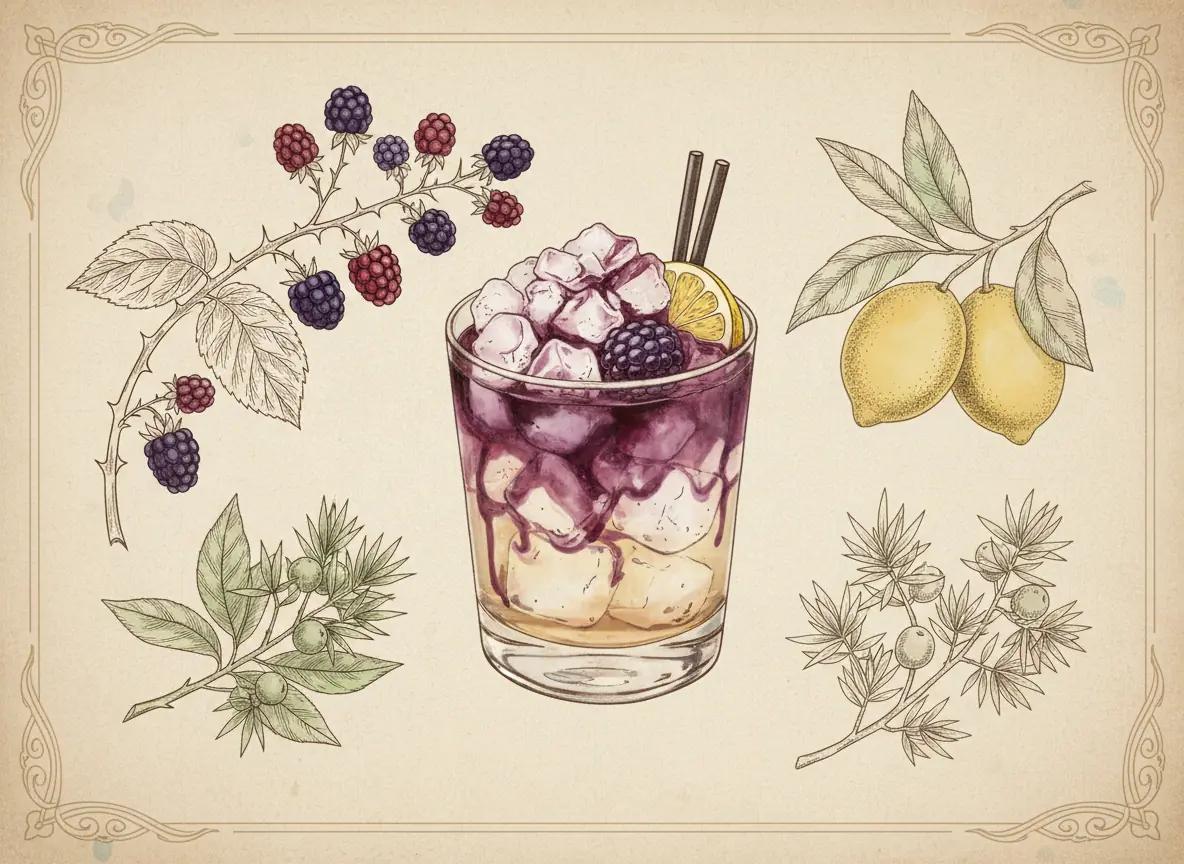
A Bramble is 50ml London Dry gin, 25ml fresh lemon juice and 12.5ml sugar syrup, shaken hard and strained over crushed ice in a rocks glass, with 15ml of crème de mûre poured over the top so it bleeds down through the ice. A lemon slice and blackberries finish it. About 2.2 UK units. These are the IBA’s measures. Dick Bradsell created it at Fred’s Club in Soho: Punch dates it to 1984, Bradsell’s own account in Difford’s Guide says the mid-eighties or thereabouts, and the Oxford Companion says 1989. He wanted a British cocktail, and he took the idea from going blackberrying as a child on the Isle of Wight. Bramble is the everyday name for the blackberry bush. Underneath, it is a gin sour. The liqueur on top makes it change as you drink: tart and sharp at first, darker and fruitier towards the bottom of the glass.
Bee’s Knees
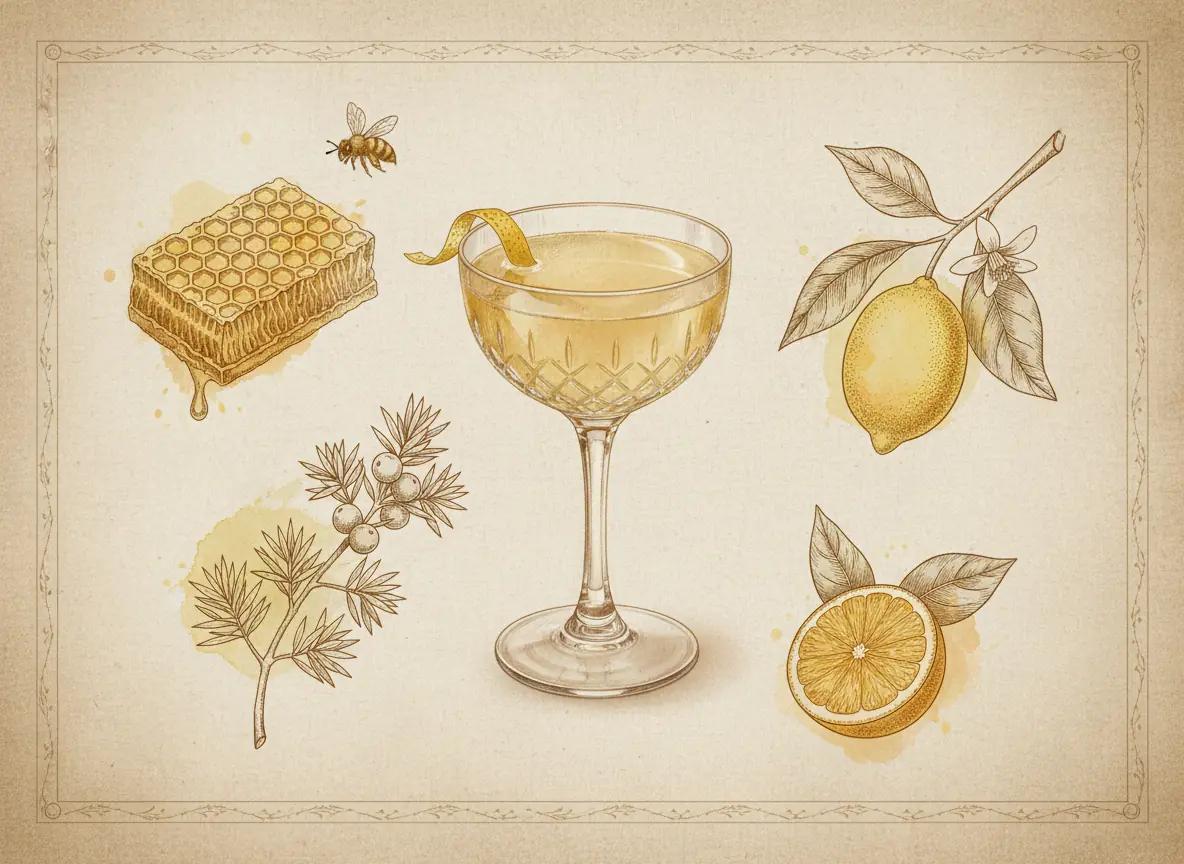
A Bee’s Knees is 52.5ml of London Dry gin, 22.5ml each of fresh lemon and orange juice and two teaspoons (10ml) of honey syrup, made with two parts honey to one of warm water. Shake it hard for 10 to 12 seconds and double strain it into a chilled coupe, with a strip of lemon peel. About 2.1 UK units. The measures are the IBA’s. The orange is the part most recipes leave out. The oldest printings are gin, lemon and honey alone; David Embury suggested a little orange juice as a variation in 1948, and the IBA built it in. Orange softens the lemon, which is why two teaspoons of honey syrup are enough. The drink is often filed under American Prohibition, with honey and lemon covering for bathtub gin. Difford’s Guide, a secondary source, says the earliest printing tells a different story: Cocktails de Paris, published in 1929, credits it to Frank Meier of the Ritz in Paris, and Meier claimed it again in his own book in 1936.
Amaretto Sour
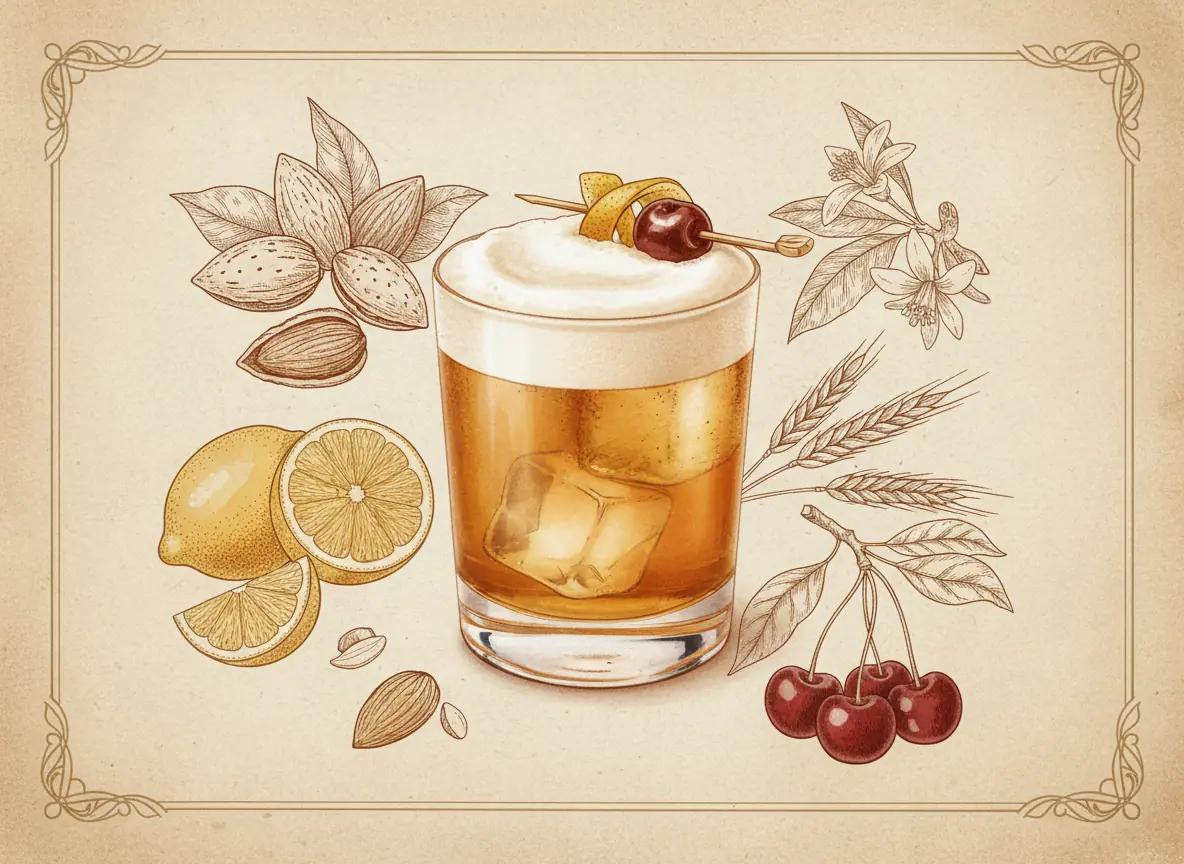
An Amaretto Sour made the way Jeffrey Morgenthaler published it in 2012, as Difford’s Guide records his formula, is 45ml amaretto, 22.5ml cask-strength bourbon, 30ml fresh lemon juice, 5ml rich sugar syrup and an optional 15ml egg white. It is shaken without ice, then with it, and strained onto a single large ice cube in a rocks glass, then finished with a lemon peel and a cherry. The bourbon is why it works. Amaretto is sweet and, at Disaronno’s 28% ABV on Drinkfinder’s listing, too light to carry a sour alone; Morgenthaler’s point was that it needs help. A small measure of cask-strength bourbon adds strength, oak and spice while the almond stays in front. The Oxford Companion to Spirits and Cocktails says amaretto is generally made from apricot kernels, though it is commonly thought of as almond-flavoured; anyone with a nut allergy should read the label. The egg white is raw egg. A glass holds about 2.6 UK units, taking the cask-strength bourbon at our working figure of 60% ABV and the amaretto at 28%, as Drinkfinder lists Disaronno.
Where this one sits
Recipe by Jerry Can Spirits · Updated 19 October 2026