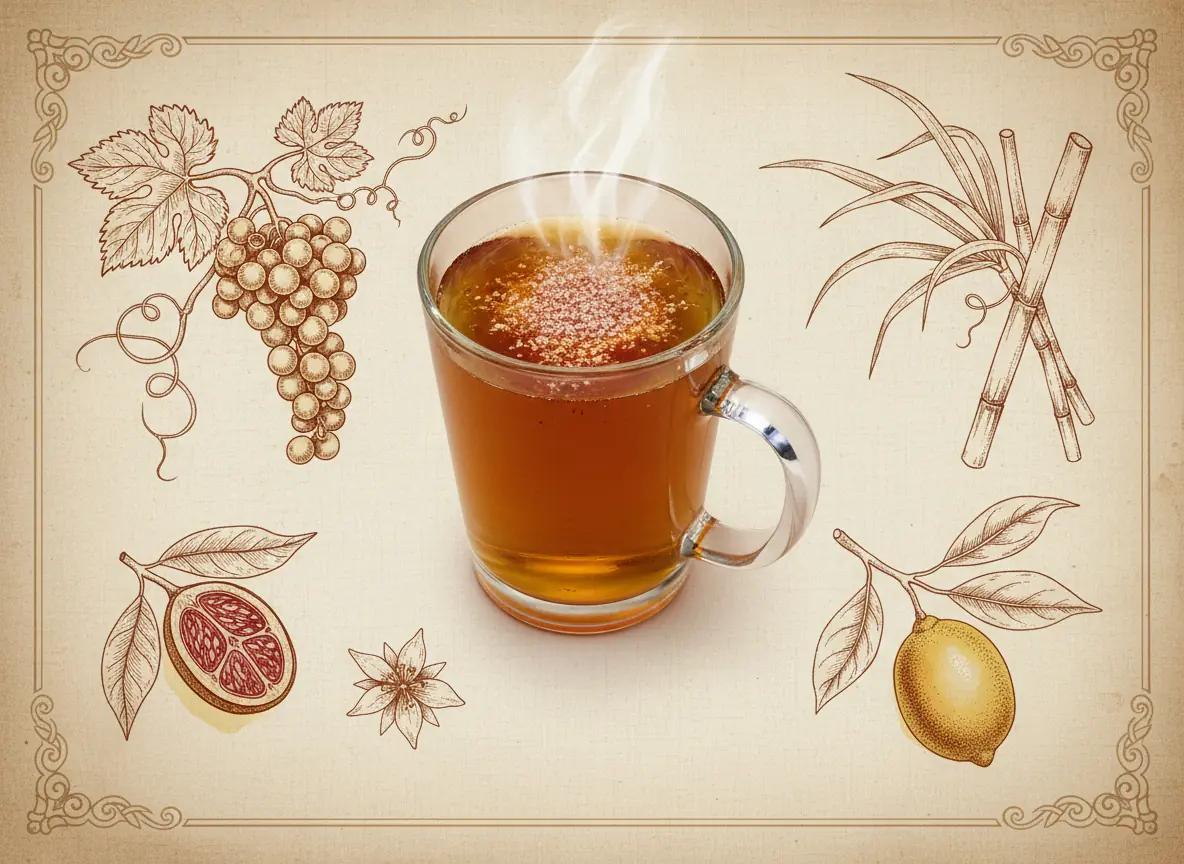
Brandy Sling (Hot)
A hot Brandy Sling is 50ml of brandy, 20ml of fresh lemon juice and 15ml of sugar syrup in a warmed heatproof glass, topped with 90ml of water just off the boil, stirred, and finished with freshly grated nutmeg and a lemon slice on the rim. About 2.0 UK units. In his 1862 bar guide Jerry Thomas wrote that the brandy sling is made with the same ingredients as the brandy toddy, except that you grate a little nutmeg on top. His sling has no lemon; ours adds 20ml, which keeps the sugar and brandy from tasting flat in hot water. Heat is the method. Water just off the boil, never boiling, warms the brandy without scalding off its aroma, and the nutmeg on the surface reaches you before the first sip.
Glassware: Irish Coffee Mug
Garnish: Nutmeg grated fresh over the top and Lemon slice on the rim
Ingredients
50ml
A VS or VSOP cognac, or a good French brandy, at 40% ABV. Hot water exposes a harsh spirit, so use one you would drink neat.
20ml
Squeezed the same day. Thomas’s sling has none; here it lifts the sugar and keeps the hot drink from tasting flat.
15ml
One to one sugar syrup, by weight. It mixes at once, where a sugar lump needs stirring to dissolve.
90ml
From a kettle left to stand about 30 seconds after boiling, around 90 to 95°C. Boiling water scalds the brandy’s aroma.
Instructions
Warm a heatproof glass or mug with hot water for 30 seconds, then discard the water.
Boil the kettle and leave it to stand for about 30 seconds.
Add the sugar syrup and lemon juice to the warmed glass.
Add the brandy.
Top with 90ml of the hot water and stir gently.
Grate fresh nutmeg over the surface.
Add a lemon slice to the rim and serve at once.
Our version
Jerry Thomas’s 1862 sling is the brandy toddy with nutmeg grated on top. His toddy is a teaspoon of sugar, a wine-glass of water and a wine-glass of brandy with a small lump of ice, and for a hot toddy he says to omit the ice and use boiling water. His sling has no citrus. Ours adds 20ml of lemon and measures it as 50ml of brandy, 15ml of syrup and 90ml of water just off the boil.
Source: our own specification. Last checked 10 October 2026.
Expert Tip
Warm the glass first. Fill it with hot water, leave it for 30 seconds and tip it out; a cold glass takes the heat out of 90ml of water before the drink reaches the table. Boil the kettle, then let it stand for about 30 seconds. Water at a rolling boil scalds off the brandy’s aroma, and the drink itself is never boiled or kept on the heat. Grate the nutmeg from a whole nut, directly onto the drink. Pre-ground nutmeg smells of little, because its oil fades soon after grinding, and the nutmeg is what makes this a sling rather than a toddy.
Behind the Brandy Sling (Hot)
Flavour Profile
Jerry Thomas’s Sling
Jerry Thomas’s 1862 bar guide, How to Mix Drinks, defines the brandy sling by one detail. It is made, he wrote, with the same ingredients as the brandy toddy, except that you grate a little nutmeg on top. His toddy is made cold with a small lump of ice; for a hot one he says to omit the ice and use boiling water.
His version has no lemon. The 20ml in ours is our addition and the main way ours differs from his; leave it out for the plainer drink he printed.
Why the Nutmeg Is Grated Fresh
Nutmeg’s aroma is in oils that fade fast once it is ground. Grated straight onto the hot surface, they rise with the steam, so the spice reaches the nose before the brandy reaches the mouth.
Use a whole nutmeg and a fine grater; a few strokes is enough. Ground nutmeg from a jar gives colour and dust.
Water Just Off the Boil
Boil the kettle and let it stand for about 30 seconds. That brings the water to around 90 to 95°C: hot enough to warm the drink through, and gentle enough to keep the brandy’s aroma.
The drink is never boiled and never kept on a hob. Boiling drives off aroma first and alcohol after, leaving a flat, sweet drink. Warm the glass beforehand instead, so the water loses less heat on the way in.
Hot Sling, Cold Sling and Toddy
Our hot Brandy Sling beside our cold Brandy Sling and Hot Toddy
Brandy Sling (hot)
- Spirit
- 50ml brandy
- Citrus
- 20ml lemon
- Sweetener
- 15ml syrup
- Lengthener
- 90ml water just off the boil
- Finish
- Grated nutmeg, lemon slice
- UK units
- About 2.0
Brandy Sling (cold)
- Spirit
- 50ml brandy
- Citrus
- 25ml lemon
- Sweetener
- 15ml syrup
- Lengthener
- 75 to 100ml soda
- Finish
- Served over ice
- UK units
- About 2.0
Hot Toddy
- Spirit
- 60ml Scotch
- Citrus
- 15ml lemon
- Sweetener
- 15ml honey syrup
- Lengthener
- 120ml water just off the boil
- Finish
- Clove-studded lemon wheel, cinnamon stick
- UK units
- About 2.4
| Drink | Spirit | Citrus | Sweetener | Lengthener | Finish | UK units |
|---|---|---|---|---|---|---|
| Brandy Sling (hot) | 50ml brandy | 20ml lemon | 15ml syrup | 90ml water just off the boil | Grated nutmeg, lemon slice | About 2.0 |
| Brandy Sling (cold) | 50ml brandy | 25ml lemon | 15ml syrup | 75 to 100ml soda | Served over ice | About 2.0 |
| Hot Toddy | 60ml Scotch | 15ml lemon | 15ml honey syrup | 120ml water just off the boil | Clove-studded lemon wheel, cinnamon stick | About 2.4 |
How to Serve It
In a warmed glass mug, nutmeg on the surface and a lemon slice on the rim, served at once while the steam carries the spice. It suits a cold evening after dinner, and one is enough.
For the cold version over ice, make a Brandy Sling; for Scotch, honey and lemon, a Hot Toddy; for rum and spiced butter, a Hot Buttered Rum.
Make it at home
The Spirit
CognacCognac is a grape spirit distilled twice from white wine in copper pot stills in the Cognac area of western France and, under INAO’s specification, aged at least two years in oak and sold at no less than 40% ABV. The letters on the label are minimum ages, by the BNIC’s account: VS at least two years, VSOP four, XO ten. A VS or VSOP is what our cocktails assume.
More to explore
Frequently Asked Questions
What is a hot Brandy Sling?
How does a sling differ from a toddy?
What is a sling?
How hot should the water be?
Brandy or cognac?
Can I make it without lemon?
How strong is a hot Brandy Sling?
Sources.
Correct as of 19 October 2026.
- Jerry Thomas (1862), Internet Archive, “How to Mix Drinks, or the Bon-Vivant’s Companion” (primary source: 136 Brandy Sling: made with the same ingredients as the brandy toddy, except you grate a little nutmeg on top; 133 Brandy Toddy: 1 teaspoonful of sugar, 1 wine-glass of water, 1 wine-glass of brandy, 1 small lump of ice, stir; for hot brandy toddy omit the ice and use boiling water).
- The Oxford Companion to Spirits and Cocktails (Nicholas Faith), “cognac” (secondary source: brandy from a delimited region of western France; distilled twice in small pot stills; AOC rules lodge VS in wood for a minimum of two years, VSOP four).
- GOV.UK, “Eau-de-vie de Cognac / Eau-de-vie des Charentes / Cognac” (primary source: UK register of protected spirit drink names; Geographical Indication; country of origin France; wine spirit).
You Might Also Like
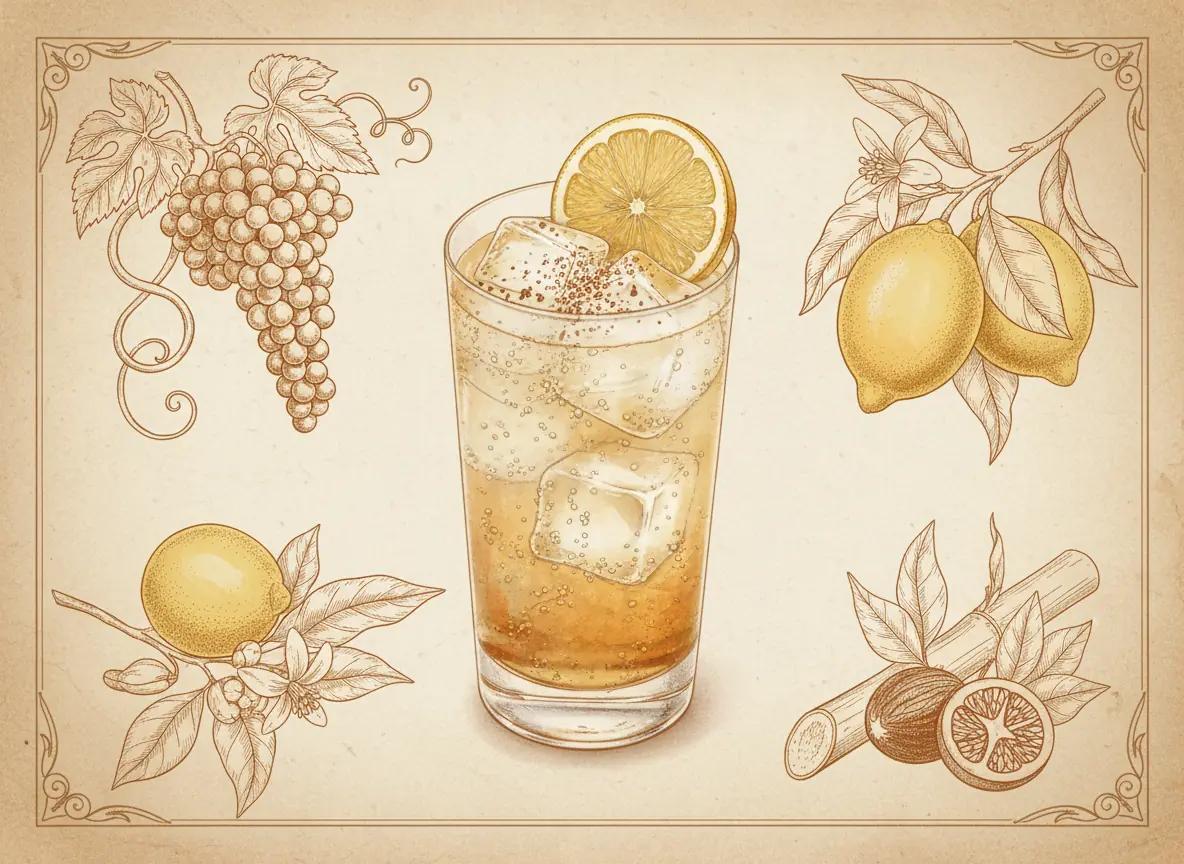
Brandy Sling (Cold)
A cold Brandy Sling is 50ml of brandy, 25ml of fresh lemon juice and 15ml of sugar syrup, stirred over ice in a highball glass and topped with 75 to 100ml of cold soda water, with freshly grated nutmeg and a lemon slice. About 2.0 UK units. Jerry Thomas printed the sling as a toddy with nutmeg on top: sugar dissolved in water, a wine glass of brandy and a small lump of ice, with no lemon. Ours keeps his brandy and his nutmeg, and adds lemon and soda for a longer, sharper drink. The nutmeg is the part to keep. Grated from a whole nut straight onto the drink, it is what separates a sling from a toddy, and it reaches the nose before the first sip.
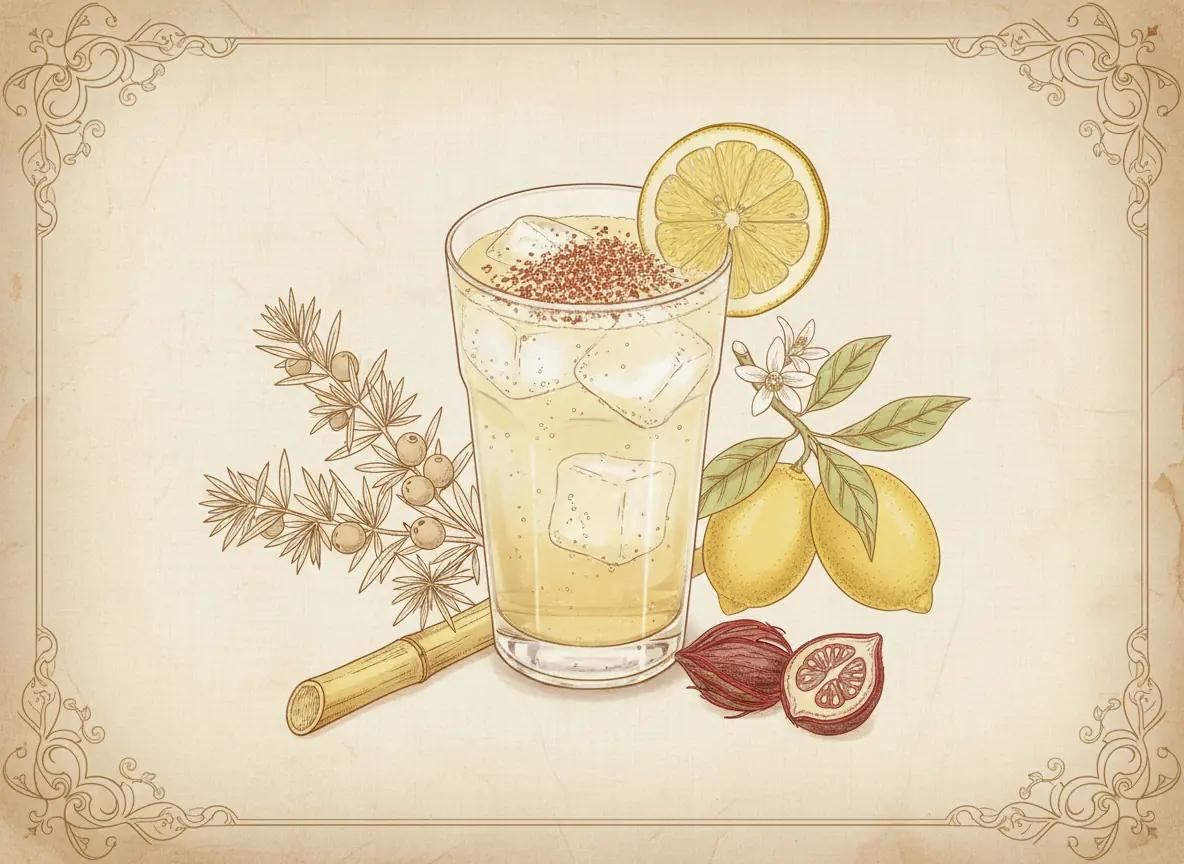
Gin Sling
A Gin Sling is 50ml London Dry gin, 25ml fresh lemon juice and 15ml sugar syrup, built over ice in a tall glass, topped with 60ml of cold soda and finished with nutmeg grated fresh over the top. The nutmeg is the part that makes it a sling. The sling is older than the cocktail. The Oxford Companion to Spirits and Cocktails, a secondary source, records the sling in Maryland in 1778 and says the first printed definition of the cocktail, in 1806, noted that it is vulgarly called bittered sling. Those early slings were spirit, sugar and water. Jerry Thomas, in his 1862 bar manual, separated the sling from the toddy by one detail: nutmeg grated on top. Lemon and soda came later, and they bring the modern Gin Sling close to the Tom Collins. The difference is in the proportions and the spice: less soda, so the gin stays in front, and a dusting of nutmeg the Collins never had.
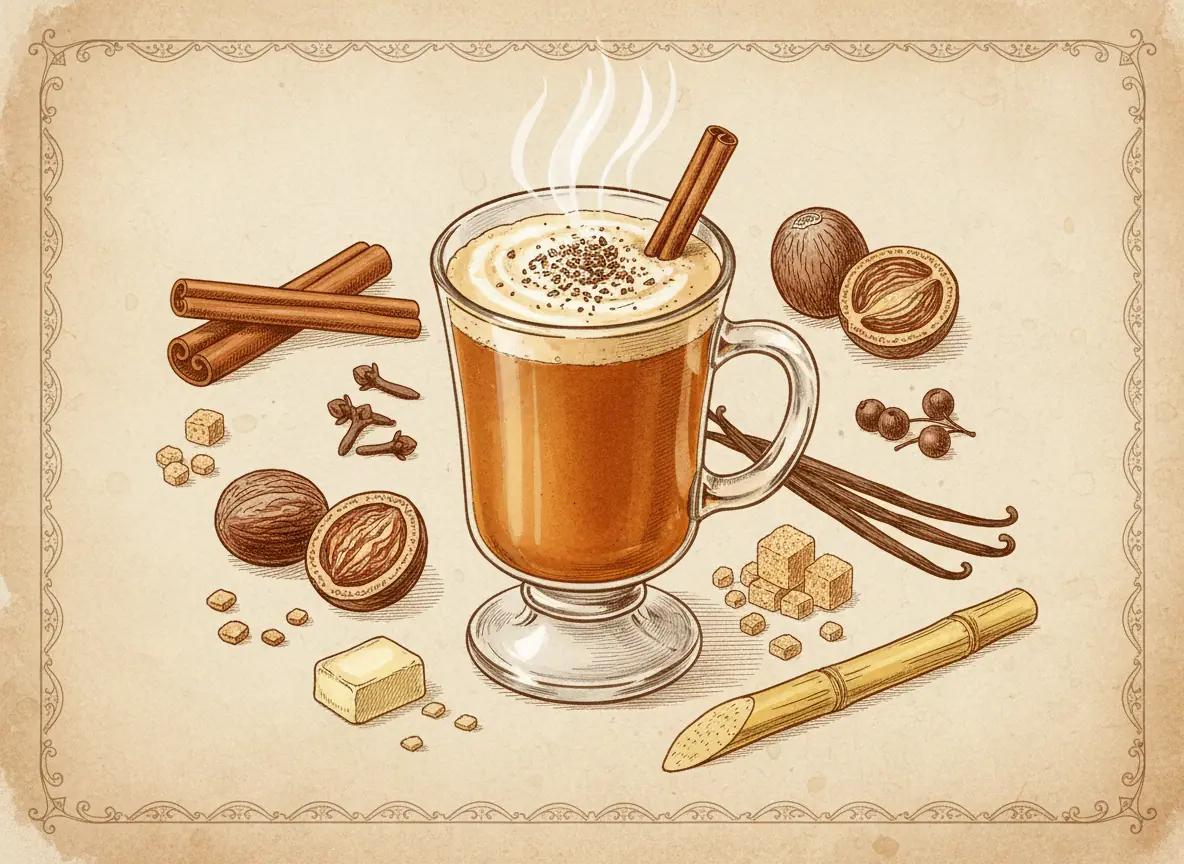
Hot Buttered Rum
A Hot Buttered Rum is 60ml of dark rum poured over about 50g of spiced butter batter in a warmed mug, topped with 150ml of water just off the boil and stirred until the butter melts through, then finished with grated nutmeg and a cinnamon stick. About 2.4 UK units. The batter is butter, dark brown sugar, cinnamon, allspice, a pinch of clove and vanilla, so the drink contains milk. The Oxford Companion calls hot buttered rum a colonial-era drink once favoured for being medicinal; we have found no early recipe from then. Jerry Thomas’s 1862 bar guide prints a hot spiced rum of sugar, Jamaica rum, allspice and cloves, butter and hot water, and the Companion says a batter of butter, sugar and spices cures the slick that loose butter leaves. The batter is the method. Butter dropped into a mug alone floats in a slick; beaten first with sugar and spice, it melts evenly into the rum and water.
Where this one sits
Recipe by Jerry Can Spirits · Updated 19 October 2026