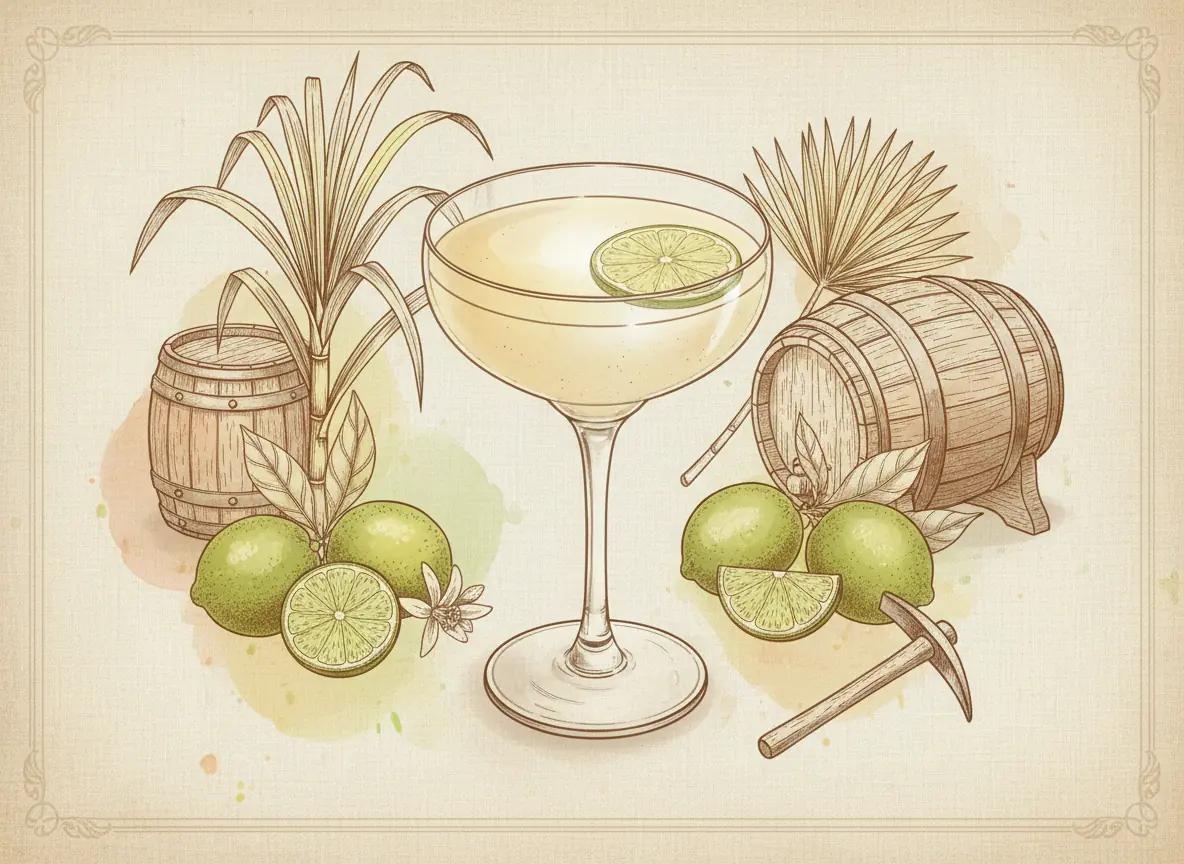
Daiquiri
A Daiquiri is 60ml white rum, 20ml fresh lime juice and two bar spoons of caster sugar. Stir the sugar into the rum and lime in the shaker until it dissolves, then add ice, shake hard for 10 to 12 seconds and double strain into a chilled coupe. About 2.4 UK units. Those are the IBA’s measures, and its method dissolves the sugar first too. The name belongs to Daiquirí, an iron-mining district and beach near Santiago de Cuba. Difford’s Guide credits Jennings Stockton Cox, an American engineer who led one of the first mining parties into Cuba’s iron-ore country after the Spanish-American War of 1898; the Oxford Companion has him making or supervising the first Daiquiri in 1896, and a Santiago bartender naming it in 1908. Difford’s says Constantino Ribalaigua Vert of Havana’s El Floridita made the frozen version famous. With three ingredients and no liqueur or bitters, the Daiquiri hides nothing. A flat rum, tired lime or undissolved sugar shows in the first sip.
Variations
Glassware: Coupe Glass
Garnish: Lime wheel
Ingredients
60ml
A lightly aged white rum with some character, at 40% ABV. The IBA names white Cuban rum. A very neutral rum leaves a drink that tastes only of lime and sugar.
20ml
Juice it on the day, as close to shaking as you can. In our experience lime juice turns flat and slightly bitter as it stands, and nothing in a Daiquiri covers for it.
2 bar spoons
Caster sugar, as the IBA specifies, stirred into the rum and lime until it dissolves. Without the water a syrup brings, the drink stays at full strength and tastes sharper than its measures suggest.
Instructions
Chill a coupe in the freezer or with iced water.
Squeeze the lime juice no more than three hours ahead, as Difford’s Guide advises.
Add the white rum, lime juice and caster sugar to a shaker and stir until the sugar dissolves.
Fill with cubed ice and shake hard for 10 to 12 seconds.
Double strain into the chilled coupe.
Float a lime wheel on the surface and serve straight away.
Source: the IBA (Official IBA specification, with a floated lime wheel where the IBA has no garnish; method ours). Last checked 9 October 2026.
Expert Tip
Dissolve the sugar before the ice goes in. Stir the caster sugar into the rum and lime in the shaker tin until no grains are left. Undissolved sugar stays gritty in a drink served this cold and leaves the last sip sweeter than the first. Taste the lime and adjust. Limes vary in sharpness with the season, so with a very sharp batch add a little more sugar, half a bar spoon at most; with mild limes, use a little less. Shake hard for 10 to 12 seconds and double strain. Sugar adds no water the way syrup does, so the shake supplies all the dilution, and the fine strainer keeps out ice chips that would go on melting in the coupe.
Behind the Daiquiri
Flavour Profile
Where It Comes From
Difford’s Guide credits Jennings Stockton Cox, an American engineer who led one of the first mining parties into the iron-ore country of south-eastern Cuba after the Spanish-American War of 1898. Daiquirí, a small town and beach there near Santiago de Cuba, gave the drink its name.
The Oxford Companion says people in the Caribbean had been combining rum, lime and sugar for over two hundred years before Cox made the first Daiquiri, or supervised its making, in 1896, so it is a stretch to call him the drink’s father.
Difford’s Guide says the US Admiral Lucius Johnson visited Cox in Daiquirí in 1909 and later introduced the drink to the Army & Navy Club in Washington, where a plaque in its Daiquiri Lounge records him. The Oxford Companion says the blended version was originally popularised by Constantino Ribalaigua at Havana’s Floridita bar.
Why It Is the Test
Like the Gimlet and the Caipirinha, the Daiquiri leaves three ingredients wholly responsible for the glass. There is no liqueur for interest, no bitters for depth and no wine for body.
That makes balance, dilution and temperature easy to judge. If the drink is sharp, hot or thin, the cause is in the rum, the lime, the sugar or the shake.
Rum Selection
The white rum shapes the drink more than any other choice.
A very neutral rum gives a drink that tastes of lime and sugar. A light rum with some fermentation character comes through every sip without crowding the lime.
The IBA asks for white Cuban rum, and a Havana Club white fits that brief. Any lightly aged white rum with a little body works; avoid bottles sold on their neutrality.
The Lime Variable
Lime does not keep. Squeeze it the same day. Difford’s Guide says lime juice more than three hours old should not be used, particularly in a Daiquiri. In our experience it turns flat and slightly bitter past that, and in a drink this bare the change shows at once.
Sharpness also varies with the fruit and the season, so taste the juice before you build and nudge the sugar to suit it, by half a bar spoon at most.
The Daiquiri and Its Relatives
The Daiquiri beside two relatives
Daiquiri (IBA)
- Spirit
- 60ml white rum
- Citrus
- 20ml lime
- Sweetener
- Two bar spoons caster sugar
- Other
- None
- UK units
- 2.4
Hemingway Daiquiri
- Spirit
- 60ml white rum
- Citrus
- 15ml lime, 40ml grapefruit
- Sweetener
- 15ml maraschino
- Other
- None
- UK units
- 2.9
Canchánchara
- Spirit
- 60ml aguardiente
- Citrus
- 15ml lime
- Sweetener
- 15ml raw honey
- Other
- 50ml water
- UK units
- 2.4
| Drink | Spirit | Citrus | Sweetener | Other | UK units |
|---|---|---|---|---|---|
| Daiquiri (IBA) | 60ml white rum | 20ml lime | Two bar spoons caster sugar | None | 2.4 |
| Hemingway Daiquiri | 60ml white rum | 15ml lime, 40ml grapefruit | 15ml maraschino | None | 2.9 |
| Canchánchara | 60ml aguardiente | 15ml lime | 15ml raw honey | 50ml water | 2.4 |
How to Serve It
Double strained into a well-chilled coupe, with a lime wheel floating on top, served at once. The IBA uses no garnish; the wheel is ours.
It is at its best in the first few minutes, while it is coldest and the lime sharpest. It does not improve for standing.
Make it at home
The Spirit
White RumWhite rum is clear rum, usually bottled at 40% ABV, either unaged or rested in oak and then charcoal-filtered back to clear. It is the light, dry rum of the Daiquiri, the Mojito and the Cuba Libre, and the rum most of our recipes mean when they want rum that sits under lime rather than over it.
Master the Techniques
More to explore
Frequently Asked Questions
What is in a Daiquiri?
How strong is a Daiquiri?
Where does the name come from?
Does the rum matter in something this simple?
Sugar or sugar syrup?
How fresh does the lime juice need to be?
Is a frozen Daiquiri the same drink?
Sources.
Correct as of 19 October 2026.
- The Oxford Companion to Spirits and Cocktails (Jeff Berry), “The Daiquiri” (secondary source: Jennings Stockton Cox Jr. made the first Daiquiri, or supervised its making, in 1896; rum, lime and sugar combined in the Caribbean for over two hundred years before; named in 1908 at the San Carlos Club in Santiago; Ribalaigua and the blender).
- Difford’s Guide, “Daiquiri cocktail history” (secondary source: Admiral Lucius Johnson visited Jennings Cox in Daiquirí during 1909 and introduced the cocktail to the Army & Navy Club in Washington D.C.).
- Difford’s Guide, “Daiquiri cocktail: best recipe and method” (secondary source: lime juice more than three hours old should not be used, particularly in a Daiquiri).
- The Oxford Companion to Spirits and Cocktails, “Frozen Daiquiri” (secondary source: a blended variation of the Daiquiri, originally popularised by Constantino Ribalaigua at Havana’s Floridita bar).
- Difford’s Guide, “Daiquiri (frozen)” (secondary source: Emilio Gonzalez is said to have adapted a shaken Daiquiri to make a frozen one at the Plaza Hotel in Cuba; Ribalaigua of El Floridita made the drink famous).
You Might Also Like
Caipirinha
A Caipirinha is 60ml of cachaça poured over one lime cut into eight pieces and muddled firmly with four teaspoons of caster sugar for 20 to 30 seconds, in a rocks glass filled with crushed ice and stirred briefly. About 2.4 UK units. The measures match the IBA’s. The Oxford Companion says non-Brazilians consider it the national drink of Brazil, though in Brazil it is the most famous of a large class of mixed drinks, the batidas. The Companion adds that the drink seems to have been called simply pinga com limão, cachaça with lime, before the 1950s, and that the name caipirinha, from caipira, a southern Brazilian word for a person from the rural hinterlands, was in occasional use by the 1950s and widespread by the end of the 1960s. Cachaça is what makes it. It is made from fresh sugarcane juice, where much rum starts from molasses, and it brings a grassy, green edge that the lime and sugar frame rather than cover.
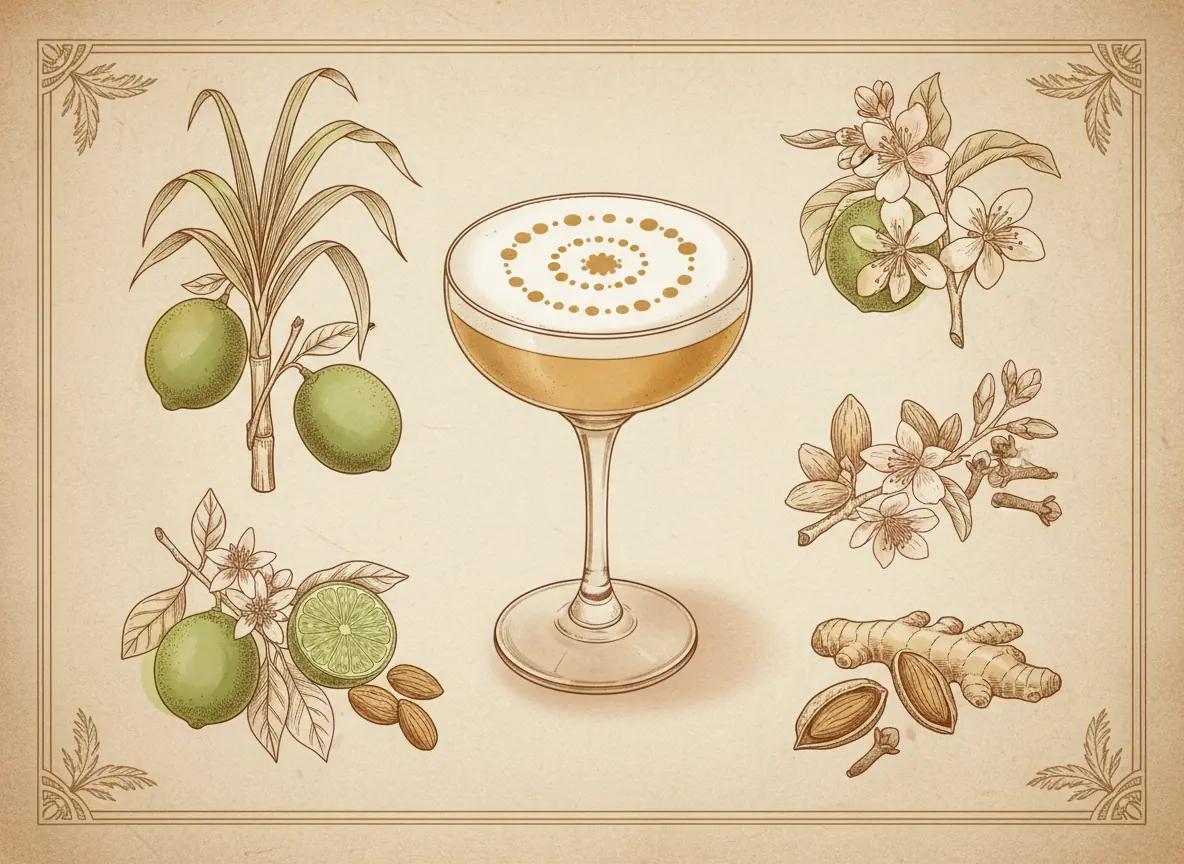
Tiki Sour
A Tiki Sour is a rum sour with tiki flavours: 50ml aged rum, 25ml fresh lime juice, 12.5ml orgeat and 7.5ml falernum, plus 15ml egg white if you want a foam, shaken first without ice and then with it, and double strained into a chilled coupe. Angostura, dotted on the foam, is the garnish. The frame is the classic sour of spirit, citrus, sweetener and egg. The contents come from tiki: almond from the orgeat, clove and ginger from the falernum, and an aged rum’s vanilla and oak. We have found no source that names a creator or a date for it. Orgeat is made from almonds and falernum often contains almond, so the drink is not for anyone with a nut allergy. A glass holds about 2.1 UK units.
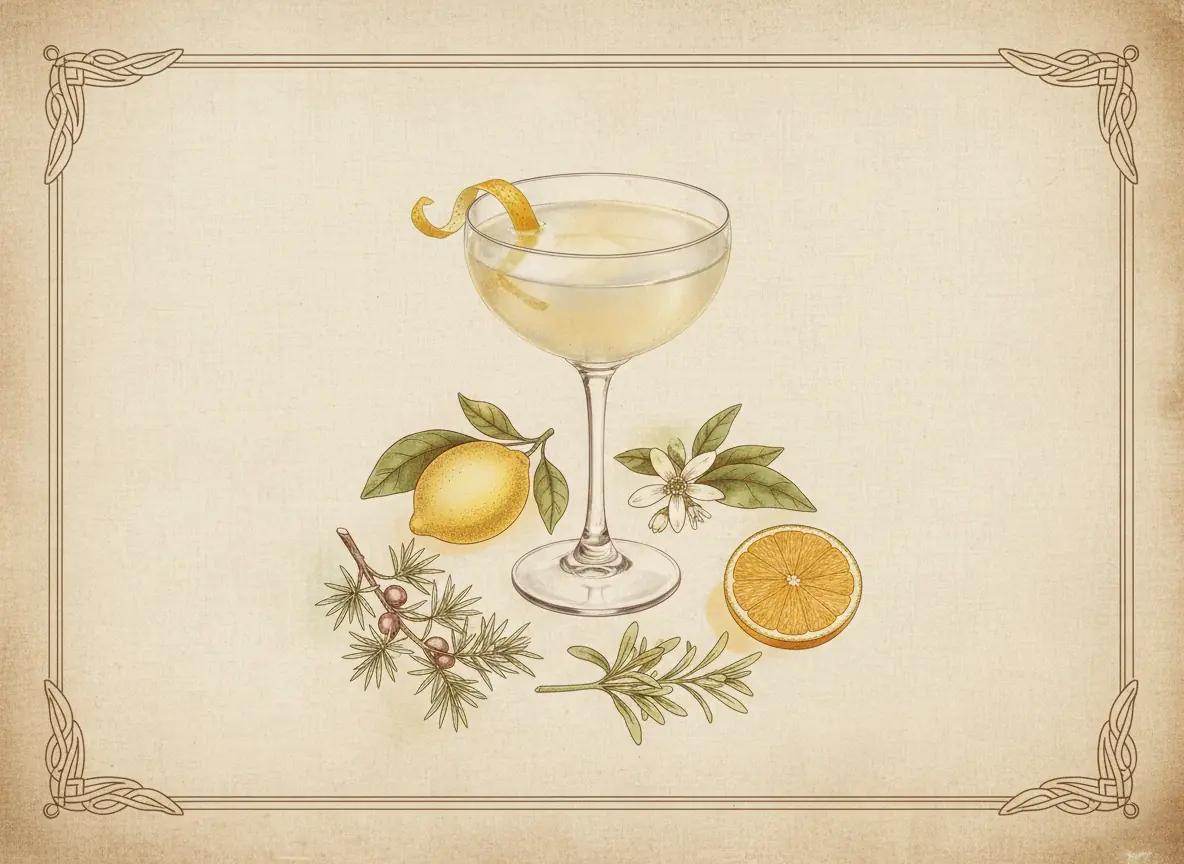
Corpse Reviver No. 2
A Corpse Reviver No. 2 is 30ml each of London Dry gin, Cointreau, Lillet Blanc and fresh lemon juice, shaken hard for 10 to 12 seconds and double strained into a chilled coupe rinsed with absinthe, with lemon peel expressed over the top. About 2.9 UK units. The four measures are the IBA’s. The IBA puts a dash of absinthe in the shaker; we rinse the glass with it, which leaves the scent with less of the anise. Lillet Blanc stands in for the Kina Lillet of older recipes; accounts differ on whether that was a more bitter wine. Harry Craddock printed it in the Savoy Cocktail Book in 1930, beside a No. 1. Under the No. 2 he added a warning: four taken in swift succession would unrevive the corpse again.
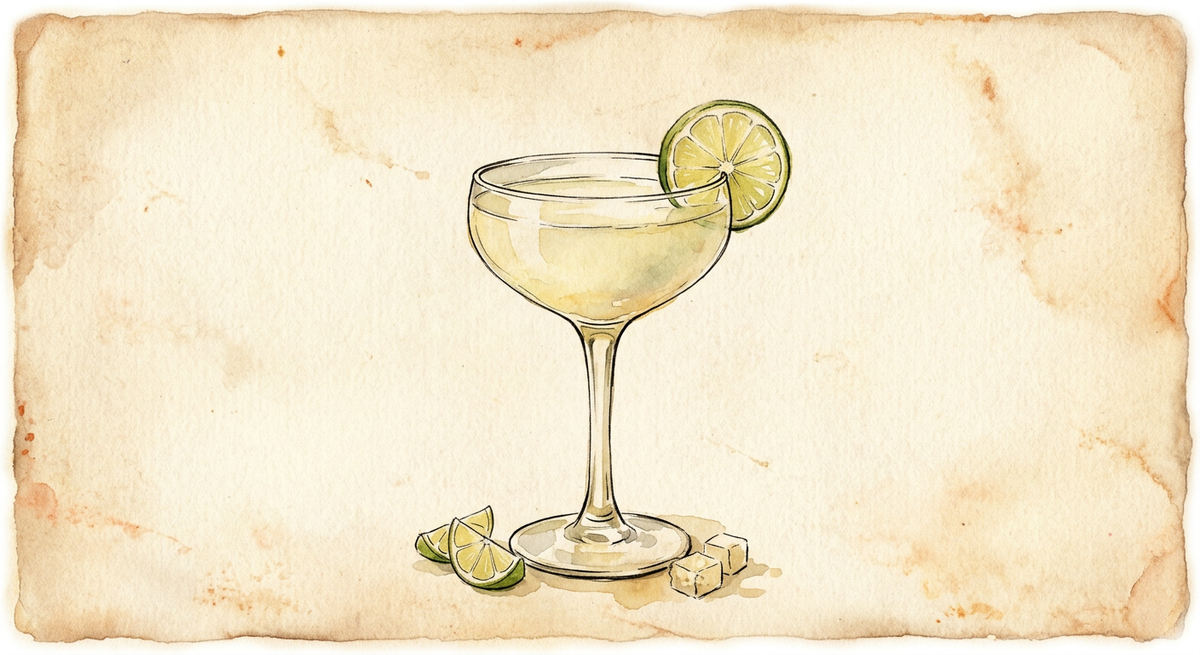
El Floridita Daiquiri
An El Floridita Daiquiri is 60ml of white rum, 15ml of fresh lime juice, 5ml of maraschino and 10ml of sugar syrup, flash blended with fine crushed ice for five to ten seconds and heaped into a chilled coupe as soft snow, with a short straw. About 2.6 UK units. The Oxford Companion says the Floridita began as the Piña de Plata café in the centre of Havana, renamed the Café Restaurant la Florida some time between 1898 and 1907, that Constantino Ribalaigua Vert began working there in 1912 or 1914 (accounts differ) and bought the bar in 1935, and that shortly after Repeal he used the electric blender to make the first frozen Daiquiris. Kevin Kos’s history of the daiquiri lists this one as Daiquiri No. 4 in the 1937 edition of the bar’s cocktail book. The maraschino lifts the lime without tasting of cherry, and the shaved ice makes it a frappé rather than a slush.
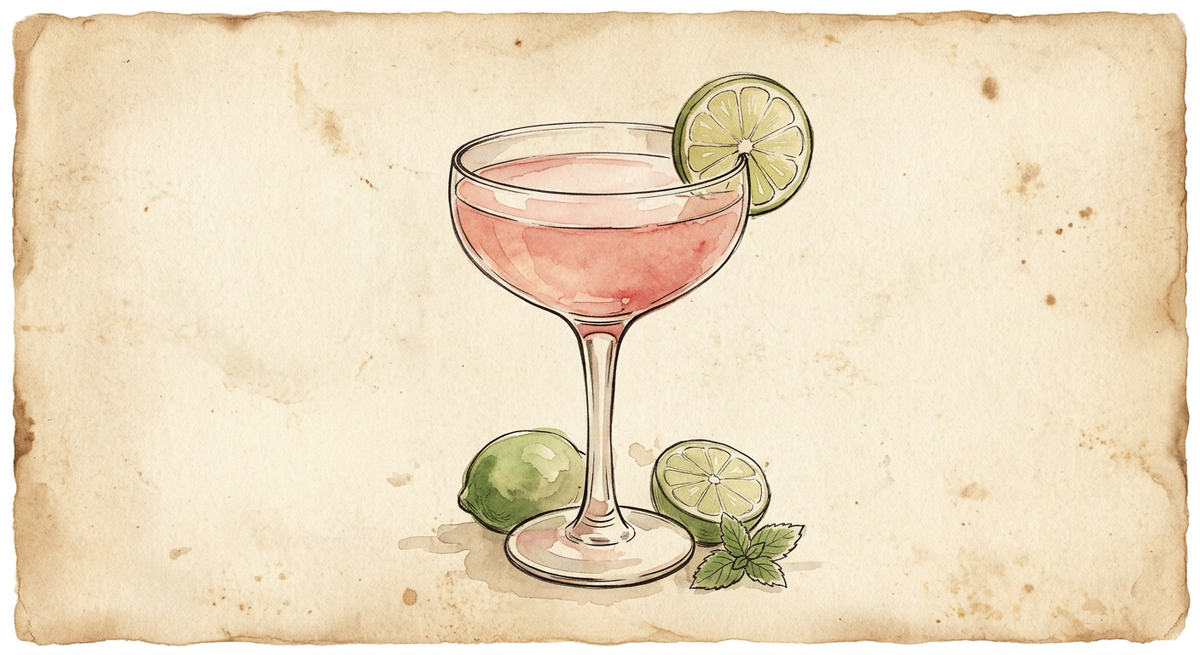
Hemingway Daiquiri
A Hemingway Daiquiri is 60ml white rum, 40ml fresh grapefruit juice, 15ml fresh lime juice and 15ml maraschino liqueur, shaken hard and double strained into a chilled coupe, with a lime wheel. The measures follow the IBA, which lists it as the Hemingway Special. There is no sugar syrup: the maraschino is the only sweetness. About 2.9 UK units. The Oxford Companion to Spirits and Cocktails says it is a version of the Daiquiri No. 3 from Havana’s Floridita bar, named for the writer who downed them there in volume. Difford’s Guide has Hemingway trying the Floridita’s standard frozen Daiquiri and saying he preferred it without sugar and with double rum, which became the Papa Doble, and says the head bartender Antonio Meilan later added maraschino and grapefruit juice to make the Hemingway Special. It is drier and more bitter than a classic Daiquiri, and the grapefruit decides how it tastes.
Where this one sits
Recipe by Jerry Can Spirits · Updated 19 October 2026