Espresso Martini
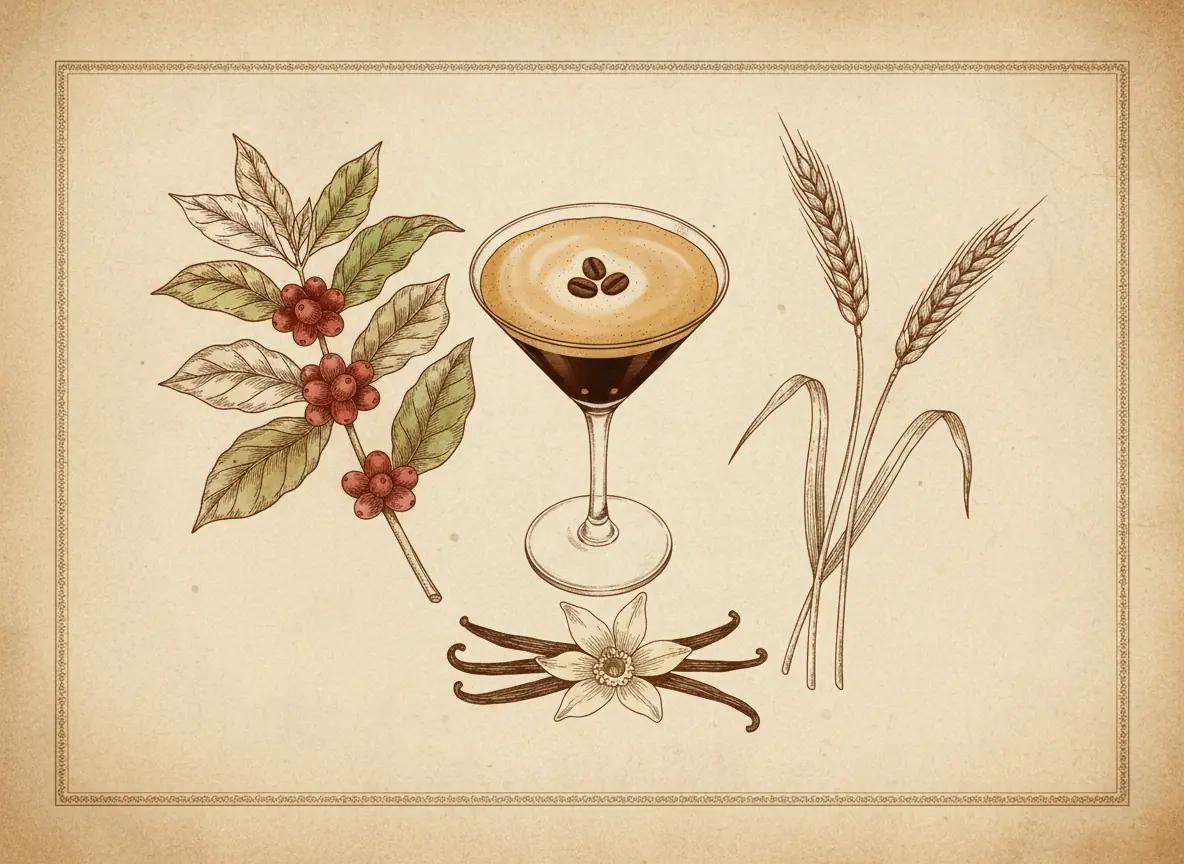
An Espresso Martini is 50ml of vodka, 30ml of Kahlúa, 10ml of sugar syrup and one freshly pulled espresso of about 30ml, shaken hard for 10 to 12 seconds and double strained into a chilled martini glass, with three coffee beans laid on the foam. About 2.5 UK units, and the caffeine of a single shot. The Oxford Companion says Dick Bradsell created it at the Soho Brasserie in London in 1983, for a famous model who asked for a drink to wake her up and then mess her up; he never said who she was. The measures are the IBA’s. Vodka gives strength and cold without flavour, so the coffee leads. The foam comes from the crema of a shot pulled moments before the shake, which is why the espresso goes in last.
Variations
Glassware: Martini Glass
Garnish: Three coffee beans laid on the foam
Ingredients
1 shot (about 30ml)
Pulled fresh just before the shake and used hot: its crema is what the foam is made from. It carries caffeine, so a decaffeinated shot is the choice late in the evening.
30ml
The IBA’s coffee liqueur, at 16% ABV on Pernod Ricard’s page for Kahlúa Original. It adds roast and sugar. Tia Maria or a drier coffee liqueur also works; adjust the syrup to suit.
10ml
One to one, by weight. It rounds the espresso’s bitterness and gives the foam body. Start with the full 10ml when the liqueur is Kahlúa.
3 beans
Three, laid on the foam and not pressed in. A dense foam holds them up; if they sink, the shot was old or the shake was short.
Instructions
Chill a martini glass of 180 to 200ml in the freezer.
Add the vodka, Kahlúa and sugar syrup to a shaker.
Pull a single espresso and add it to the shaker while hot.
Fill with cubed ice and shake hard for 10 to 12 seconds.
Double strain into the chilled glass.
Lay three coffee beans on the foam.
Source: the IBA (Official IBA specification; method ours (espresso added hot and last, double strained)). Last checked 10 October 2026.
Expert Tip
Pull the shot last. Measure the vodka, Kahlúa and syrup into the tin first, then pull the espresso and shake straight away. The foam is built from the crema, and crema starts to break down within a few minutes. Use the coffee hot. A hot shot melts a little more ice in the tin, and the measures allow for that water. Espresso cooled in the fridge, cold brew and instant have lost or never had the crema the foam depends on. Taste the liqueur before you trust the syrup. The IBA’s 10ml suits Kahlúa. A drier coffee liqueur may want all of it, a sweeter one less, and the drink should finish bittersweet rather than sticky.
Behind the Espresso Martini
Flavour Profile
Soho, Around 1983
The Oxford Companion says Dick Bradsell created the drink at the Soho Brasserie in London in 1983, and that the restaurant had recently installed an Illy espresso machine next to the bar. He told the story himself: a young model asked for something to wake her up and then mess her up. He never said who she was, and the names attached to the story since are guesses.
His explanation was practical. The coffee machine stood next to the station where he served drinks, he said, and vodka was what people were drinking. The drink is also known as a Vodka Espresso, a plainer name for what is in the glass.
Where the Foam Comes From
Crema is the pale layer of oils and fine bubbles on a freshly pulled espresso. Shaken hard with ice, those oils and gases whip into a foam that sits on top of the drink and holds three beans.
Crema fades within minutes of the shot. That is why the espresso goes into the shaker last and the shake follows at once, and why cold brew and instant, which never had crema, make a flat drink.
Coffee, Liqueur and Sugar
Espresso brings the bitterness and most of the coffee. Kahlúa adds roast and sugar, and 10ml of syrup takes off the edge the espresso leaves. Vodka contributes strength and chill and little more, which leaves the coffee in charge.
A darker roast makes a heavier, more bitter drink; a lighter roast is sharper and fruitier. Either works. A shot pulled ten minutes before the shake does not.
The IBA’s Recipe and Ours
The IBA Espresso Martini and ours
Vodka
- IBA
- 50ml
- Ours
- 50ml
Coffee liqueur
- IBA
- 30ml Kahlúa
- Ours
- 30ml Kahlúa
Sugar syrup
- IBA
- 10ml
- Ours
- 10ml
Espresso
- IBA
- One strong espresso
- Ours
- One fresh shot, about 30ml, added hot and last
Method
- IBA
- Shaken with ice and strained
- Ours
- Shaken hard 10 to 12 seconds, double strained
Glass
- IBA
- Chilled cocktail glass
- Ours
- Chilled martini glass
Garnish
- IBA
- Three coffee beans
- Ours
- Three coffee beans
UK units
- IBA
- About 2.5
- Ours
- About 2.5
| Element | IBA | Ours |
|---|---|---|
| Vodka | 50ml | 50ml |
| Coffee liqueur | 30ml Kahlúa | 30ml Kahlúa |
| Sugar syrup | 10ml | 10ml |
| Espresso | One strong espresso | One fresh shot, about 30ml, added hot and last |
| Method | Shaken with ice and strained | Shaken hard 10 to 12 seconds, double strained |
| Glass | Chilled cocktail glass | Chilled martini glass |
| Garnish | Three coffee beans | Three coffee beans |
| UK units | About 2.5 | About 2.5 |
Three Beans
Three coffee beans on the foam is the IBA’s garnish. They add a little scent as the glass comes up. Lay them on gently; on a foam that is right, they float.
How to Serve It
Straight from the shaker into a martini glass chilled in the freezer, beans on, and drunk while the foam is dense. It suits the end of a meal. It carries the caffeine of an espresso, so think about the hour before a second.
For vodka and coffee liqueur over ice, make a Black Russian; with cream on top, a White Russian; for Bradsell’s blackberry drink, a Bramble.
Make it at home
The Spirit
VodkaVodka is spirit made from a farmed crop, usually grain or potatoes, distilled and refined so that the taste of that crop is deliberately reduced. Under the retained Regulation (EC) 110/2008 its minimum is 37.5% ABV and it may not be given a predominant flavour, which separates it from flavoured vodka and from gin; our recipes count it at 40%. In a mixed drink it adds strength and body while the other ingredients carry the taste.
More to explore
Frequently Asked Questions
What is in an Espresso Martini?
Who invented the Espresso Martini?
Why is my Espresso Martini not foamy?
Can I use cold brew or instant coffee?
How much caffeine is in an Espresso Martini?
Can I use a different coffee liqueur?
Why is it called a Martini?
How strong is an Espresso Martini?
Sources.
Checked between 18 October and 19 October 2026.
- The Oxford Companion to Spirits and Cocktails (Alice Lascelles), “Espresso Martini” (secondary source: created by Dick Bradsell at the Soho Brasserie in 1983 for a famous model; the Illy espresso machine next to the bar; first the Vodka Espresso, then the Pharmaceutical Stimulant, then renamed the Espresso Martini at Match EC1 in 1997).
- IBA, “Espresso Martini” (official specification: 50ml vodka, 30ml Kahlúa, 10ml sugar syrup, 1 strong espresso; shake well with ice, strain; garnish 3 coffee beans).
- Pernod Ricard, “Kahlúa” (owner’s brand page: Kahlúa Original, 16% ABV).
- Drinkfinder, “Tia Maria Liqueur 70cl” (UK retailer listing: ABV 20%).
- NHS, “Foods to avoid in pregnancy” (official page: no more than 200mg of caffeine a day; about 100mg in a cup of instant coffee).
You Might Also Like
Vietnamese Iced Coffee (Cocktail)
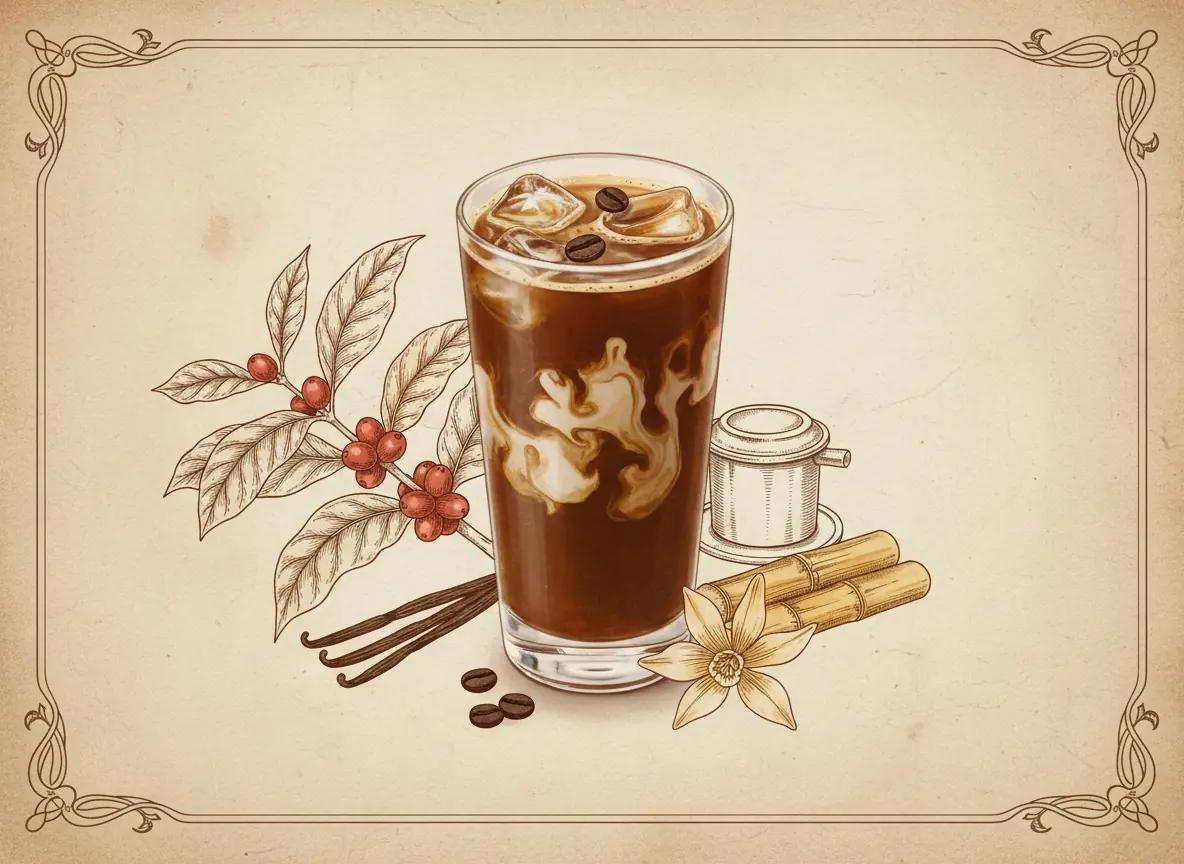
The Vietnamese Iced Coffee cocktail is 90ml of phin-brewed robusta stirred into 30ml of condensed milk, then shaken hard with 25ml of vodka and 15ml of coffee liqueur and strained over a highball packed with ice, with three coffee beans on top. About 1.3 UK units. It contains milk and plenty of caffeine. The base is our cà phê sữa đá, at the same measures. The vodka adds strength without taste, and the coffee liqueur puts back the coffee that the alcohol would otherwise thin out. Robusta is the point. Local Beans Roastery says Vietnam’s native robusta is bold, bitter and high in caffeine, and that the fat of the milk tames the bitterness.
Vietnamese Iced Coffee (Non-Alcoholic)
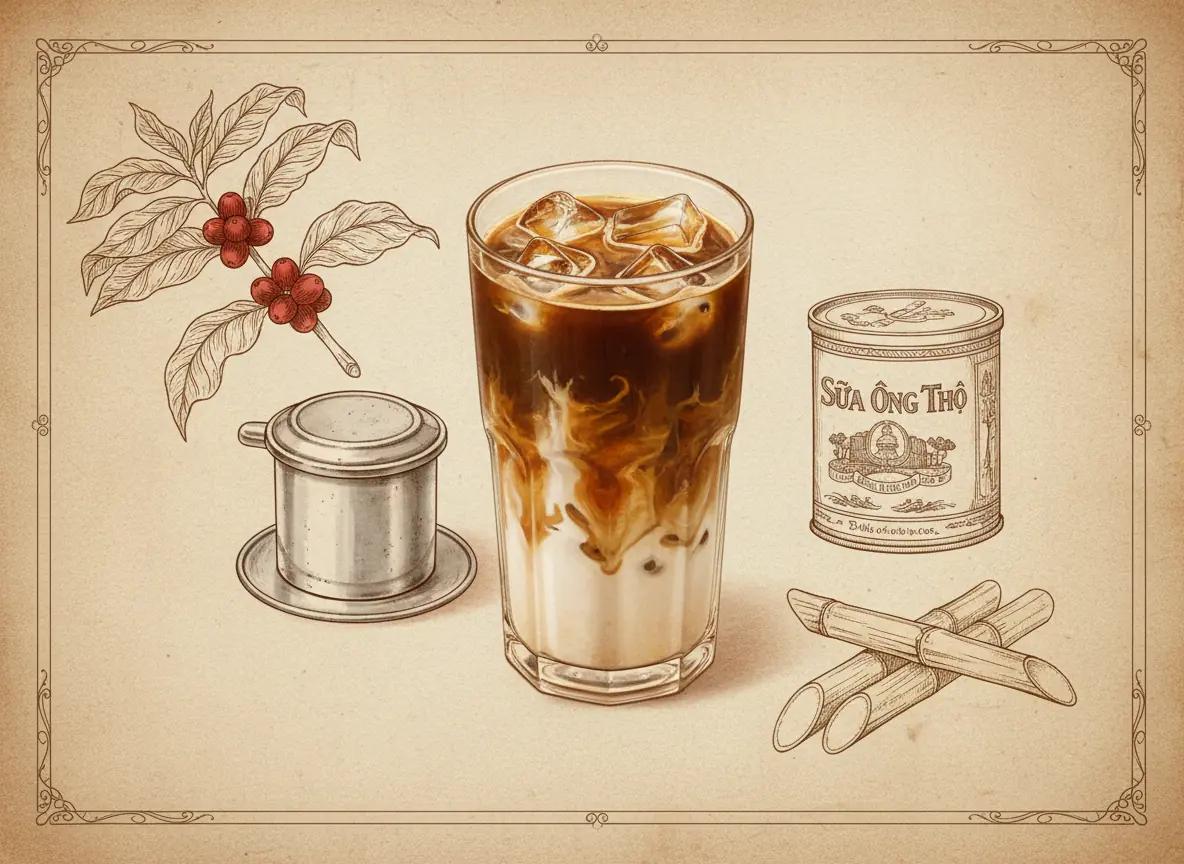
Vietnamese iced coffee, cà phê sữa đá, is 90ml of strong robusta coffee dripped through a phin filter onto 30ml of sweetened condensed milk, stirred together while hot and poured over a tall glass packed with ice. It is alcohol-free. The condensed milk is dairy, and robusta carries plenty of caffeine. The name means milk coffee with ice; in the north it is cà phê nâu đá, brown coffee with ice, Sort of Legal says. Little Coffee Place says the French introduced coffee cultivation and kept brewing café au lait in Vietnam, but fresh milk went sour quickly in the tropical climate, so condensed milk, first imported and later made locally, took its place. Local Beans Roastery says the bold, bitter robusta grown there stands up to the sweetness. The phin is a small metal filter that sits on the cup and drips for four to six minutes. The coffee it makes is dense and strong, and it needs to be, because the ice cools and dilutes it the moment it is poured.
Amaretto Sour
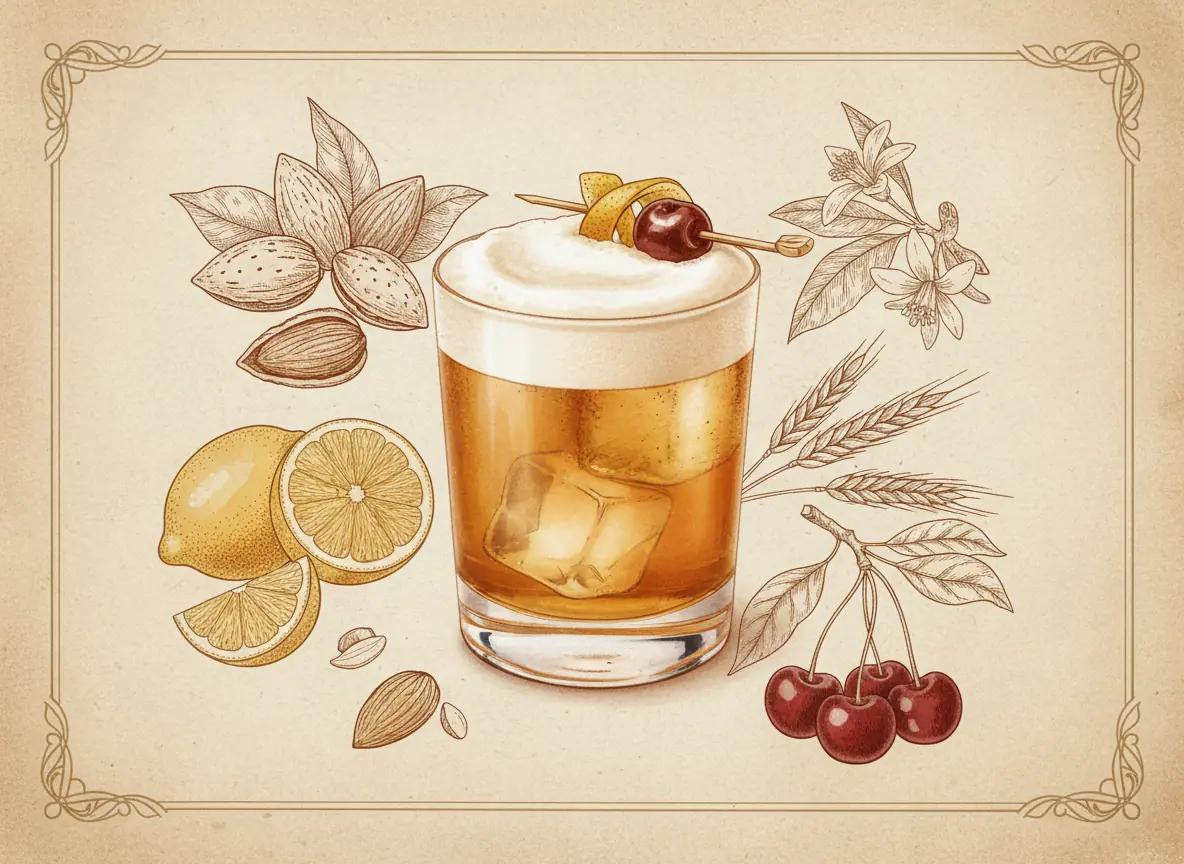
An Amaretto Sour made the way Jeffrey Morgenthaler published it in 2012, as Difford’s Guide records his formula, is 45ml amaretto, 22.5ml cask-strength bourbon, 30ml fresh lemon juice, 5ml rich sugar syrup and an optional 15ml egg white. It is shaken without ice, then with it, and strained onto a single large ice cube in a rocks glass, then finished with a lemon peel and a cherry. The bourbon is why it works. Amaretto is sweet and, at Disaronno’s 28% ABV on Drinkfinder’s listing, too light to carry a sour alone; Morgenthaler’s point was that it needs help. A small measure of cask-strength bourbon adds strength, oak and spice while the almond stays in front. The Oxford Companion to Spirits and Cocktails says amaretto is generally made from apricot kernels, though it is commonly thought of as almond-flavoured; anyone with a nut allergy should read the label. The egg white is raw egg. A glass holds about 2.6 UK units, taking the cask-strength bourbon at our working figure of 60% ABV and the amaretto at 28%, as Drinkfinder lists Disaronno.
Where this one sits
Recipe by Jerry Can Spirits · Updated 19 October 2026