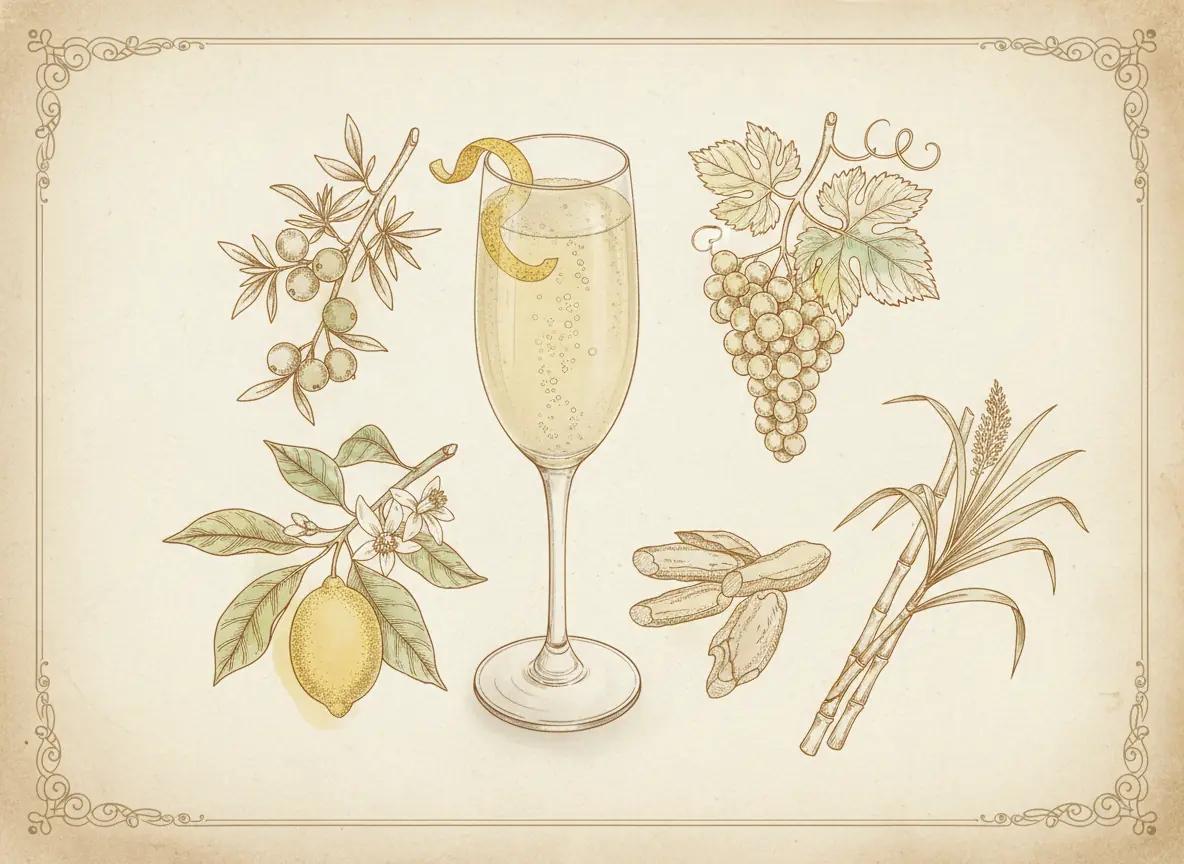
French 75
A French 75 is 30ml of London Dry gin, 15ml of fresh lemon juice and 15ml of sugar syrup, shaken hard for 10 to 12 seconds, double strained into a chilled flute and topped with 60ml of cold brut champagne, with a lemon twist. About 1.9 UK units. The measures are the IBA’s. The name is the French army’s 75mm field gun of the First World War. The drink is usually credited to Harry MacElhone and Harry’s New York Bar in Paris, often with the date 1915, but the printed record starts later. MacElhone’s ABC of Mixing Cocktails, published at the end of 1922 according to the Oxford Companion, has a ‘75’ of calvados, gin, grenadine and absinthe, as the Internet Archive’s scan of its second impression shows. The Companion, in an entry by David Wondrich, finds the gin, lemon, sugar and champagne formula and the French 75 name together first in Here’s How, a book put out by a New York humour magazine, in 1927. Built that way, it is a Tom Collins with champagne in place of soda: a short gin sour that the wine lengthens and lifts.
Glassware: Champagne Flute
Garnish: Lemon twist
Ingredients
30ml
A London Dry at 40% ABV with clear juniper. At 30ml it is a modest measure under a lot of wine, so a gin with some botanical weight holds its voice.
15ml
Squeezed the same day. The wine is already acidic, so 15ml is enough to make the base a sour without making the drink sharp.
15ml
One part caster sugar dissolved in one part warm water by weight, then cooled. The IBA’s 15ml suits a brut; trim it with a sweeter wine.
60ml
Brut, at about 12% ABV, and very cold. A dry crémant or cava does the same job for less. Pour it last and slowly. Contains sulphites.
Instructions
Chill a champagne flute and squeeze the lemon juice the same day.
Add the gin, lemon juice and sugar syrup to a shaker.
Fill with cubed ice and shake hard for 10 to 12 seconds.
Double strain into the chilled flute.
Top slowly with 60ml of cold brut champagne, poured down the inside of the glass.
Lift once, gently, with a bar spoon.
Express a lemon twist over the surface and rest it on the rim.
Source: the IBA (Official IBA specification; double strain and lemon twist ours). Last checked 10 October 2026.
Expert Tip
Shake only the gin, lemon and syrup. Champagne in a shaker loses its bubbles and can force the lid off. Strain the sour into the flute first, then pour the wine. Tilt the flute and pour the champagne slowly against the glass, then give one gentle lift with a bar spoon, as the IBA does, so the sour at the bottom meets the wine. Any more stirring flattens it. The 15ml of syrup assumes a brut. A sweeter sparkling wine wants less, so taste the first drink before making a round. Champagne and most sparkling wines contain sulphites, and the label will say so.
Behind the French 75
Flavour Profile
What the Printed Record Shows
The story most bars repeat is simple: Harry MacElhone made the drink at Harry’s New York Bar in Paris and named it for the field gun. The Oxford Companion says the New York Bar was opened by the retired jockey Tod Sloan in 1911, and that McElhone bought it in 1923 and added his name to it.
The Oxford Companion finds the formula and the name first together in 1927, in Here’s How, and the Internet Archive’s scan of its second impression prints The French “75” as gin, lemon juice, powdered sugar and cracked ice with champagne to fill the glass, noting that club soda in its place makes a Tom Collins. Before that, the Companion reports, the columnist O. O. McIntyre wrote in 1915 of a “Soixante-Quinze” of gin and calvados or applejack with grenadine, and McElhone’s ABC prints a “75” Cocktail of grenadine, absinthe or Anis del Oso, calvados and gin, “very popular in France during the war”. The Companion adds that Harry Craddock included the French 75 in the Savoy Cocktail Book in 1930.
A Collins Under Champagne
Take the soda out of a Tom Collins and pour champagne in its place, and you have the French 75’s structure. Gin, lemon and sugar make a short sour. The wine adds length, acidity and a bready, yeasty note that soda cannot, and its bubbles carry the gin’s aroma up out of the glass.
The shake matters because the wine cannot be shaken. Shaking the sour with ice chills and dilutes it before the champagne goes in, so the wine only has to lengthen a drink that is already balanced.
Gin or Cognac
The Oxford Companion says some drinkers, such as the actress Tallulah Bankhead, preferred theirs with cognac instead of gin, and that Arnaud’s French 75 bar in New Orleans makes it with cognac. It is rounder and fruitier. The gin version is the IBA’s and the older printed one, and it is the one given here.
The French 75 Beside Its Relatives
The French 75 beside the Tom Collins and the Airmail
French 75 (IBA)
- Spirit
- 30ml gin
- Citrus
- 15ml lemon
- Sweetener
- 15ml sugar syrup
- Lengthener
- 60ml champagne
- UK units
- About 1.9
Tom Collins
- Spirit
- 60ml gin
- Citrus
- 30ml lemon
- Sweetener
- 15ml sugar syrup
- Lengthener
- 90ml soda water
- UK units
- About 2.4
Airmail
- Spirit
- 45ml aged rum
- Citrus
- 15ml lime
- Sweetener
- 15ml honey syrup
- Lengthener
- 60ml champagne
- UK units
- About 2.5
| Drink | Spirit | Citrus | Sweetener | Lengthener | UK units |
|---|---|---|---|---|---|
| French 75 (IBA) | 30ml gin | 15ml lemon | 15ml sugar syrup | 60ml champagne | About 1.9 |
| Tom Collins | 60ml gin | 30ml lemon | 15ml sugar syrup | 90ml soda water | About 2.4 |
| Airmail | 45ml aged rum | 15ml lime | 15ml honey syrup | 60ml champagne | About 2.5 |
How to Serve It
In a chilled flute, as soon as the wine is in, with a lemon twist expressed over the top and rested on the rim. It works as an aperitif and as a toast. There is more gin under the bubbles than the glass suggests, so count it as a full drink.
For the rum relative with honey, an Airmail; for the same sour lengthened with soda, a Tom Collins.
Make it at home
The Spirit
GinGin is a spirit flavoured with juniper berries. Under the retained Regulation (EC) 110/2008, juniper must lead the taste, the floor is 37.5% ABV, and the route the flavour takes sets the grade: plain gin, distilled gin or London gin. Our recipes count it at 40%, and it carries the Martini, the Negroni and the Gin and Tonic.
Master the Techniques
More to explore
Frequently Asked Questions
What is in a French 75?
Was it invented at Harry’s New York Bar in 1915?
Why is it called the French 75?
Gin or cognac?
Do I need real champagne?
Flute or coupe?
Is the Airmail a rum French 75?
How strong is a French 75?
Sources.
Correct as of 19 October 2026.
- The Oxford Companion to Spirits and Cocktails (David Wondrich), “The French 75” (secondary source: formula and name first together in Here’s How (1927); McIntyre’s 1915 Soixante-Quinze of gin, calvados or applejack and grenadine; named for the canon de 75 modèle 1897; Craddock’s Savoy Cocktail Book of 1930; cognac versions).
- The Oxford Companion to Spirits and Cocktails (François Monti), “Harry’s New York Bar” (secondary source: opened by Tod Sloan in 1911, bought by McElhone in 1923; the birthplace claims for the French 75 and others mostly bogus, arising after 1958).
- IBA, “French 75” (official specification: 30ml gin, 15ml lemon juice, 15ml sugar syrup, 60ml champagne).
- Internet Archive, “Here’s How by Judge Jr. (1927, second impression), scan” (primary source, read 19 Oct: The French “75”, 2 jiggers gin, 1 part lemon juice, a spoonful of powdered sugar, cracked ice, fill a tall glass with champagne; club soda instead makes a Tom Collins).
- Internet Archive, ““Harry” of Ciro’s ABC of Mixing Cocktails (1923, second impression), scan” (primary source, read 19 Oct: 228. “75” Cocktail, 1 teaspoonful grenadine, 2 dashes absinthe or Anis del Oso, calvados, gin; “very popular in France during the war, and named after the French light field gun”).
You Might Also Like
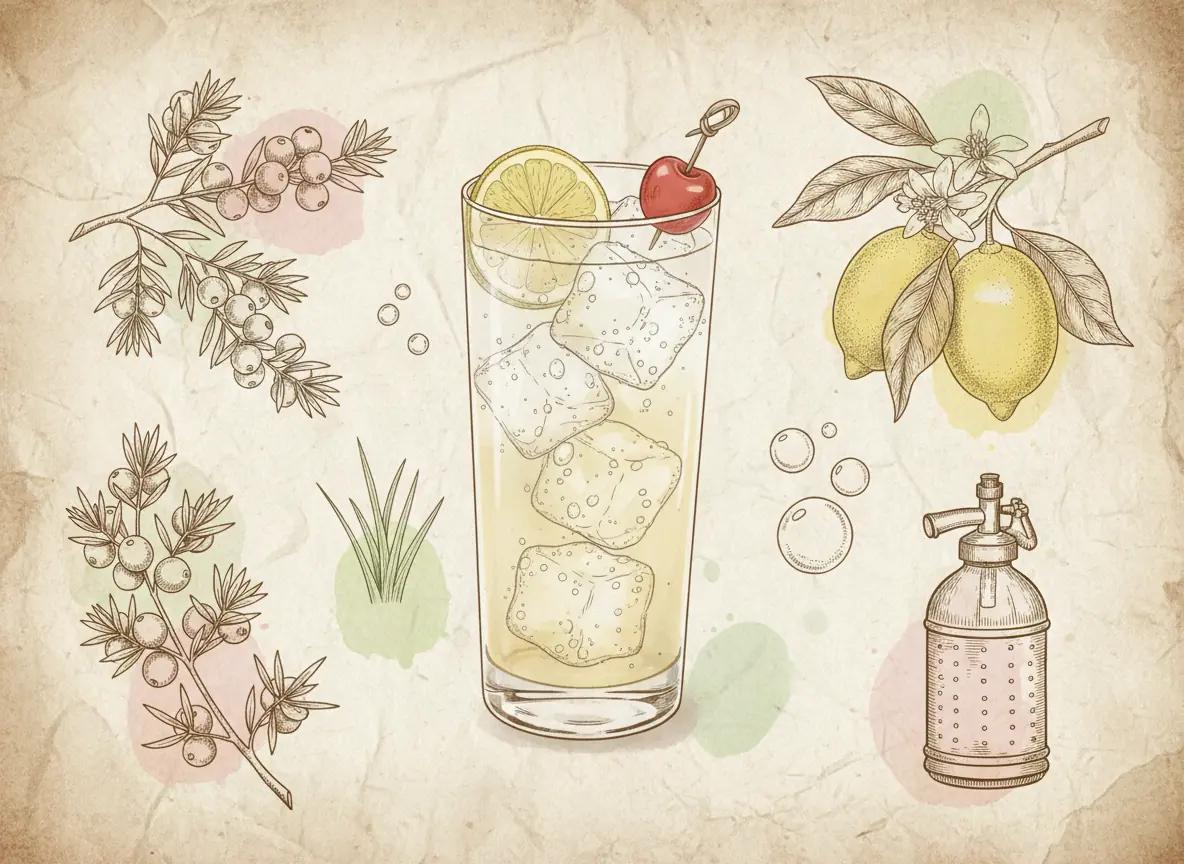
Tom Collins
A Tom Collins is 60ml London Dry gin, 30ml fresh lemon juice and 15ml sugar syrup built over ice in a collins glass, topped with 90ml of cold soda and stirred once, with a lemon slice and a cherry. It is a collins in the plainest sense: spirit, citrus and sugar, topped with soda. Difford’s Guide, a secondary source, reports one account that traces the name to the Great Tom Collins Hoax of 1874, in which people in New York were told that a man called Tom Collins had been insulting them and could be found in a bar some distance away. It also gives accounts of a real Mr Collins. The drink the name attached to may be older: Difford’s credits John Collins, head waiter at Limmer’s Hotel on Conduit Street in London, with the Collins. Early recipes used Dutch genever, and Old Tom gin came into them later; the IBA still specifies Old Tom for a Tom Collins. This version uses London Dry for a drier, sharper drink, and the Old Tom version follows as a variation.
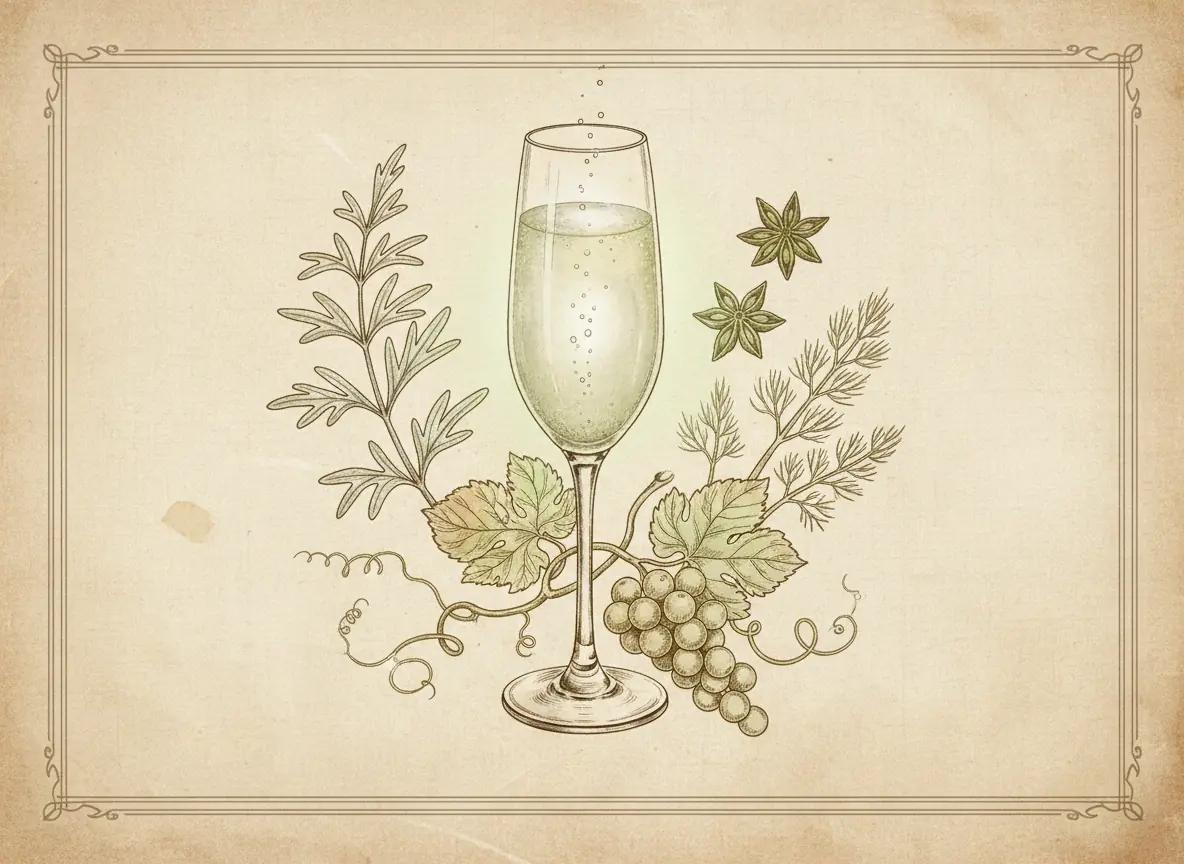
Death in the Afternoon
Death in the Afternoon is 30ml absinthe in a cold flute, with about 90ml of very cold Champagne poured in slowly until the drink turns cloudy. No garnish and no ice. About 3.1 UK units, two-thirds of it from the absinthe. The recipe was published in the Internet Archive’s scan of So Red the Nose, or Breath in the Afternoon, a cocktail book of 1935 with contributions from famous authors, and the drink shares its name with Hemingway’s 1932 book on bullfighting. His instructions, as the book prints them: pour one jigger of absinthe into a champagne glass, add iced champagne until it attains the proper opalescent milkiness, and drink three to five of these slowly. That milkiness is the louche, anise oils falling out of solution as the wine thins the spirit, and it is your cue to stop pouring.
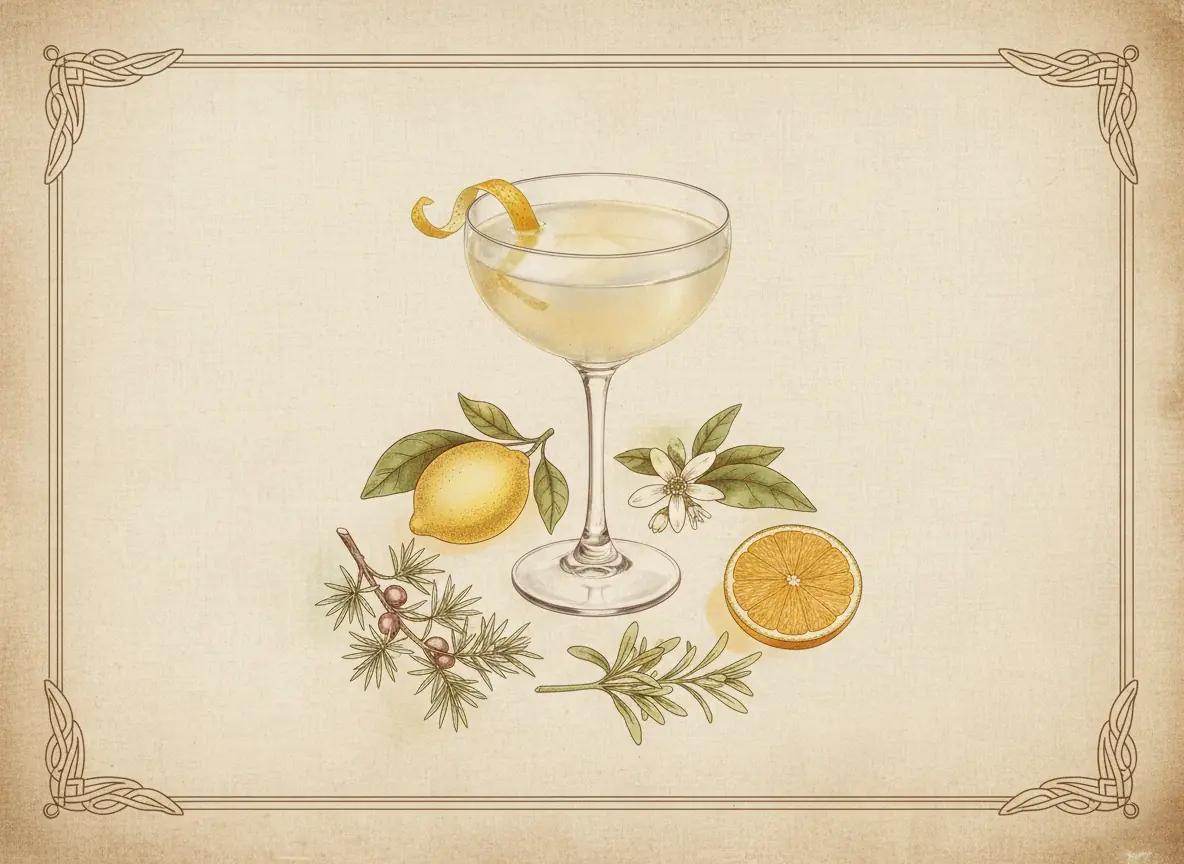
Corpse Reviver No. 2
A Corpse Reviver No. 2 is 30ml each of London Dry gin, Cointreau, Lillet Blanc and fresh lemon juice, shaken hard for 10 to 12 seconds and double strained into a chilled coupe rinsed with absinthe, with lemon peel expressed over the top. About 2.9 UK units. The four measures are the IBA’s. The IBA puts a dash of absinthe in the shaker; we rinse the glass with it, which leaves the scent with less of the anise. Lillet Blanc stands in for the Kina Lillet of older recipes; accounts differ on whether that was a more bitter wine. Harry Craddock printed it in the Savoy Cocktail Book in 1930, beside a No. 1. Under the No. 2 he added a warning: four taken in swift succession would unrevive the corpse again.
Where this one sits
Recipe by Jerry Can Spirits · Updated 19 October 2026