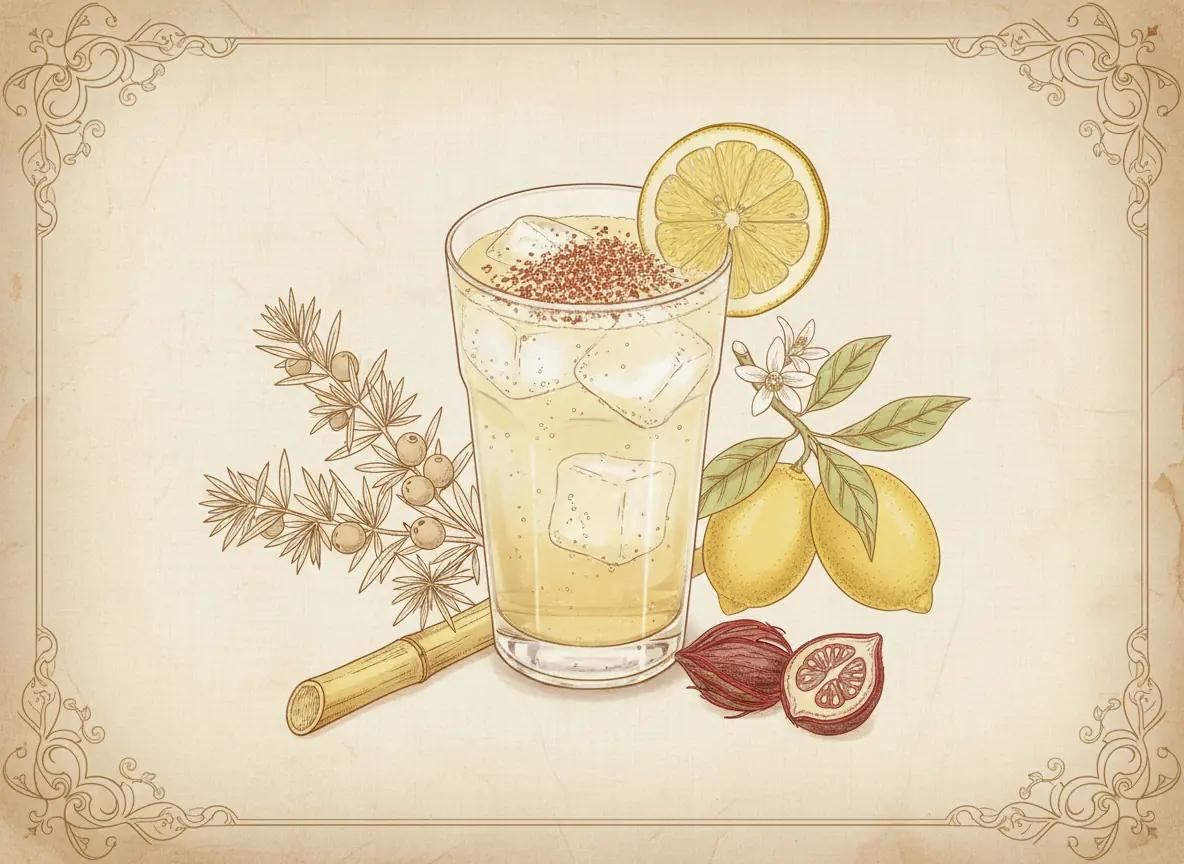
Gin Sling
A Gin Sling is 50ml London Dry gin, 25ml fresh lemon juice and 15ml sugar syrup, built over ice in a tall glass, topped with 60ml of cold soda and finished with nutmeg grated fresh over the top. The nutmeg is the part that makes it a sling. The sling is older than the cocktail. The Oxford Companion to Spirits and Cocktails, a secondary source, records the sling in Maryland in 1778 and says the first printed definition of the cocktail, in 1806, noted that it is vulgarly called bittered sling. Those early slings were spirit, sugar and water. Jerry Thomas, in his 1862 bar manual, separated the sling from the toddy by one detail: nutmeg grated on top. Lemon and soda came later, and they bring the modern Gin Sling close to the Tom Collins. The difference is in the proportions and the spice: less soda, so the gin stays in front, and a dusting of nutmeg the Collins never had.
Variations
Glassware: Sling Glass
Garnish: Freshly grated nutmeg over the top and Lemon slice
Ingredients
50ml
A London Dry with clear juniper. With only 60ml of soda the gin carries the drink, and a soft or floral gin disappears under the lemon.
25ml
Squeezed the same day, ideally to order. It is the acid that keeps the syrup from turning the drink sweet.
15ml
One part white sugar to one part water, by weight. The drink leans tart; add 5ml more if your lemons are sharp.
60ml
Well chilled, poured last and gently down the inside of the glass. Held close to the gin’s own volume, an echo of the old sling’s roughly equal measures of spirit and water.
Instructions
Squeeze the lemon juice the same day, ideally just before you build.
Fill a sling glass or highball with cubed ice.
Add the gin, lemon juice and sugar syrup over the ice and stir briefly to combine.
Top with 60ml of cold soda water, poured gently down the inside of the glass.
Stir once with a single upward lift of the bar spoon.
Grate fresh nutmeg over the surface, add a lemon slice and serve.
Expert Tip
Grate the nutmeg from a whole nut, straight over the glass, and do it last. Ground nutmeg from a jar has lost most of its aroma and sits on the surface as dust. Two or three passes on a fine grater is enough; more and the spice covers the gin. Keep the soda short. At 60ml the gin and lemon still lead. Pour a Collins-length 90ml and you have, in effect, a Tom Collins with nutmeg on it. Build it in the glass rather than shaking it. Shaking adds aeration and dilution the drink does not need, and the soda goes in last either way.
Behind the Gin Sling
Flavour Profile
Older Than the Cocktail
The Oxford Companion to Spirits and Cocktails, a secondary source, calls the sling a simple mixture of spirits, sugar and water, American in origin and first recorded in Maryland in 1778, and quotes David Wondrich dating the gin variety to 1800. When The Balance and Columbian Repository, a newspaper in Hudson, New York, first defined the cocktail on 13 May 1806, it noted, as the Companion records, that the cocktail is “vulgarly called bittered sling”.
Those early slings had no lemon. The Companion puts the sling at roughly equal parts spirit and water, against the toddy’s two parts water to one. Citrus and soda came into later recipes, and that is the drink most bars now pour as a Gin Sling.
The Nutmeg and the Toddy
Jerry Thomas’s 1862 manual drew the line between sling and toddy with one ingredient. The brandy sling, he wrote, was made with the same ingredients as the brandy toddy, except for a little nutmeg grated on top. By his account the nutmeg is the sling. Modern recipes mostly leave it out. Put it back. Grated over a cold gin and lemon drink, it is the first thing you smell, and it turns a plain long drink into a recognisably old one.
Sling, Collins, Fizz and Rickey
Four long gin drinks share the same few ingredients and are confused for that reason. What separates them is the citrus, the sugar, the build and the glass.
Sling, Collins, Fizz and Rickey compared
Gin Sling
- Spec
- 50ml gin, 25ml lemon, 15ml syrup, 60ml soda
- Build
- Built over ice
- Glass
- Sling glass or highball
- What sets it apart
- Nutmeg grated over the top; a short top of soda
Tom Collins
- Spec
- 60ml gin, 30ml lemon, 15ml syrup, 90ml soda
- Build
- Built over ice
- Glass
- Collins glass
- What sets it apart
- The longest of the four; no spice
Gin Fizz
- Spec
- 45ml gin, 30ml lemon, 10ml syrup, 60ml soda
- Build
- Shaken hard, served with no ice
- Glass
- Small highball or fizz glass
- What sets it apart
- Short and drunk quickly while the soda is lively
Gin Rickey
- Spec
- 60ml gin, 25ml lime, 100 to 125ml soda
- Build
- Built over ice
- Glass
- Highball
- What sets it apart
- Lime and no sugar, so it is dry
| Drink | Spec | Build | Glass | What sets it apart |
|---|---|---|---|---|
| Gin Sling | 50ml gin, 25ml lemon, 15ml syrup, 60ml soda | Built over ice | Sling glass or highball | Nutmeg grated over the top; a short top of soda |
| Tom Collins | 60ml gin, 30ml lemon, 15ml syrup, 90ml soda | Built over ice | Collins glass | The longest of the four; no spice |
| Gin Fizz | 45ml gin, 30ml lemon, 10ml syrup, 60ml soda | Shaken hard, served with no ice | Small highball or fizz glass | Short and drunk quickly while the soda is lively |
| Gin Rickey | 60ml gin, 25ml lime, 100 to 125ml soda | Built over ice | Highball | Lime and no sugar, so it is dry |
The Singapore Sling
Anyone who meets the Singapore Sling first arrives at this drink expecting pineapple and cherry. The Singapore Sling, which Raffles dates to 1915 at its Long Bar by its own account, built on the sling with cherry liqueur, Cointreau, Bénédictine, grenadine and pineapple juice. The two share a name and a tall glass. The Gin Sling is the plain form the Singapore Sling grew out of, and it is complete without any of the additions.
Why It Works
Gin, lemon, sugar and soda each do one job. The gin gives juniper and strength; at 50ml it is a third of the drink before the ice, so a gin with clear juniper matters. The lemon gives the acid and the syrup sets sugar against it; the balance runs slightly tart on purpose, because the soda and the melting ice soften it as you drink. The soda adds length and lift, and keeping it to 60ml leaves the gin in front. The nutmeg works on the nose rather than the palate, which is why it goes on last and on top.
How to Serve It
Built in the glass over cubed ice, soda last, one lift of the spoon, nutmeg grated over the top and a lemon slice on the rim. No shaker. It is a drink for a warm afternoon rather than a showpiece, and it rewards the small things: cold soda, fresh lemon and a whole nutmeg.
Make it at home
The Spirit
GinGin is a spirit flavoured with juniper berries. Under the retained Regulation (EC) 110/2008, juniper must lead the taste, the floor is 37.5% ABV, and the route the flavour takes sets the grade: plain gin, distilled gin or London gin. Our recipes count it at 40%, and it carries the Martini, the Negroni and the Gin and Tonic.
More to explore
Frequently Asked Questions
What is a Gin Sling?
What is the difference between a Gin Sling and a Tom Collins?
How old is the Gin Sling?
Why is there nutmeg on top?
Did the original Gin Sling have lemon in it?
How does it differ from a Singapore Sling?
What glass does a Gin Sling go in?
How strong is a Gin Sling?
Sources.
Checked between 18 October and 19 October 2026.
- Oxford Companion to Spirits and Cocktails (spiritsanddistilling.com), “The sling” (secondary source: sling first recorded in Maryland in 1778; gin variety first attested in 1800 (Wondrich); the 13 May 1806 Balance and Columbian Repository item, “vulgarly called bittered sling”; Thomas 1862 nutmeg).
- Raffles Singapore, “Long Bar” (Ngiam Tong Boon, 1915; the fruit-juice disguise story).
You Might Also Like
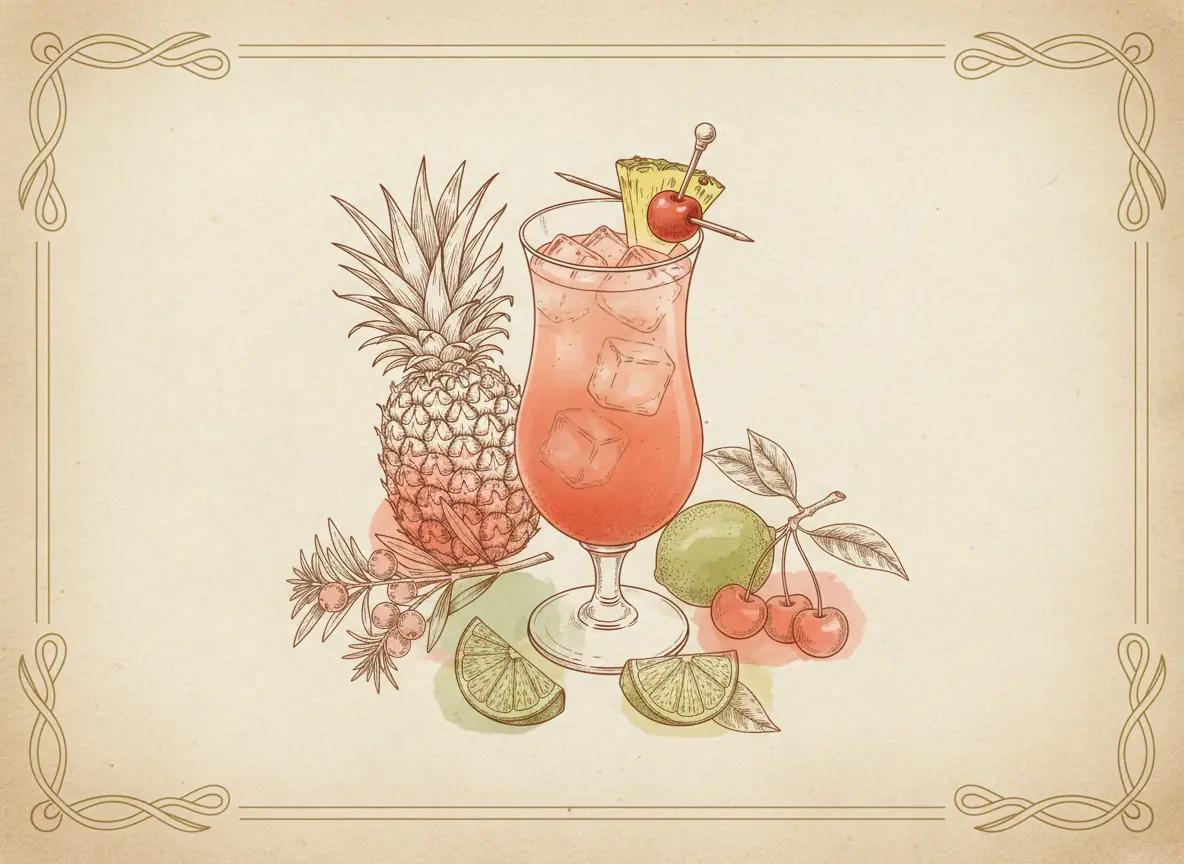
Singapore Sling
A Singapore Sling is 30ml gin, 15ml cherry liqueur, 7.5ml Cointreau, 7.5ml Bénédictine, 10ml grenadine, 120ml fresh pineapple juice, 15ml fresh lime juice and a dash of Angostura, shaken hard and strained over fresh ice in a sling or hurricane glass. That is the IBA specification, made here with Cherry Heering. It is a long, pink, fruit-led gin drink with more going on underneath than the colour suggests. It belongs to the Long Bar at the Raffles Hotel in Singapore, where Raffles, by its own account, credits its bartender Ngiam Tong Boon with creating it in 1915. The date is disputed, and the recipe first poured there is generally accepted to be lost. Fresh pineapple juice decides the result. There is 120ml of it, more than everything else in the glass combined, and juice pressed the same day gives the drink its light foam and its sharp edge. Carton juice gives a flat, sweet one.
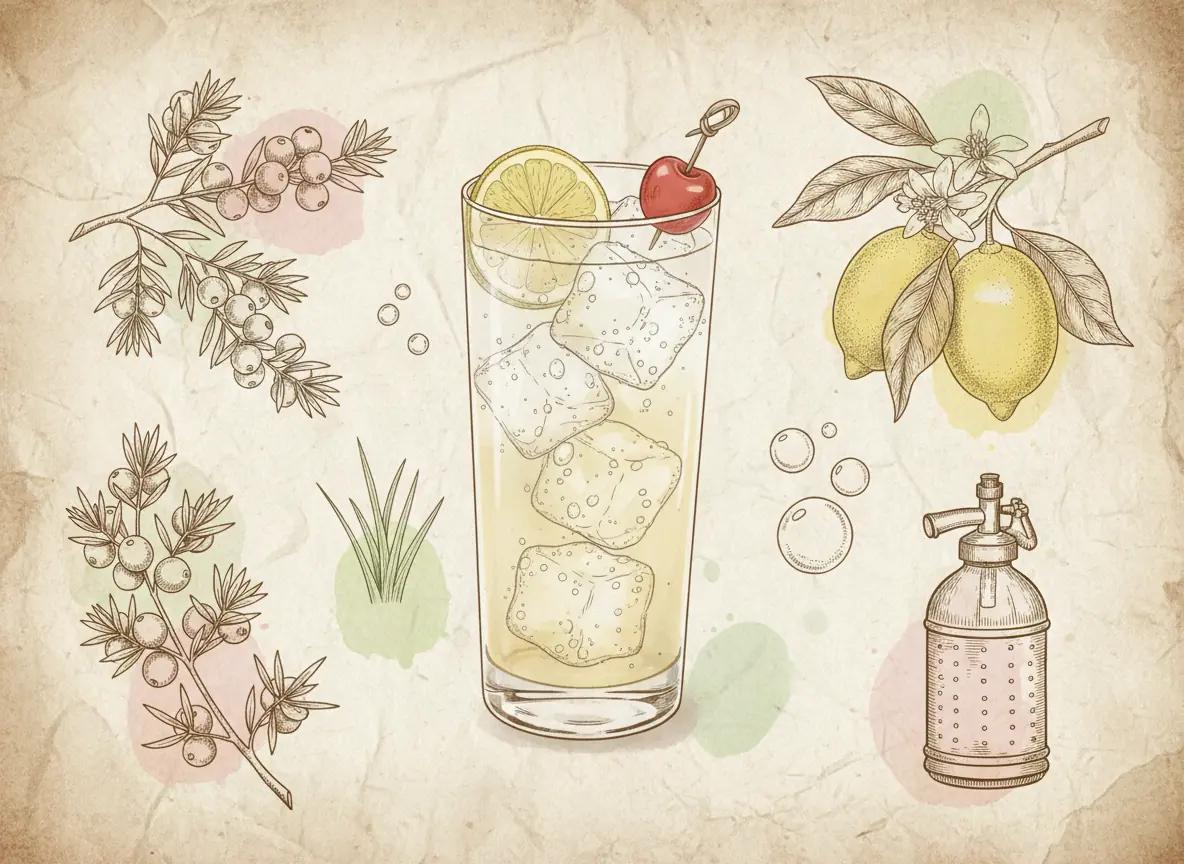
Tom Collins
A Tom Collins is 60ml London Dry gin, 30ml fresh lemon juice and 15ml sugar syrup built over ice in a collins glass, topped with 90ml of cold soda and stirred once, with a lemon slice and a cherry. It is a collins in the plainest sense: spirit, citrus and sugar, topped with soda. Difford’s Guide, a secondary source, reports one account that traces the name to the Great Tom Collins Hoax of 1874, in which people in New York were told that a man called Tom Collins had been insulting them and could be found in a bar some distance away. It also gives accounts of a real Mr Collins. The drink the name attached to may be older: Difford’s credits John Collins, head waiter at Limmer’s Hotel on Conduit Street in London, with the Collins. Early recipes used Dutch genever, and Old Tom gin came into them later; the IBA still specifies Old Tom for a Tom Collins. This version uses London Dry for a drier, sharper drink, and the Old Tom version follows as a variation.
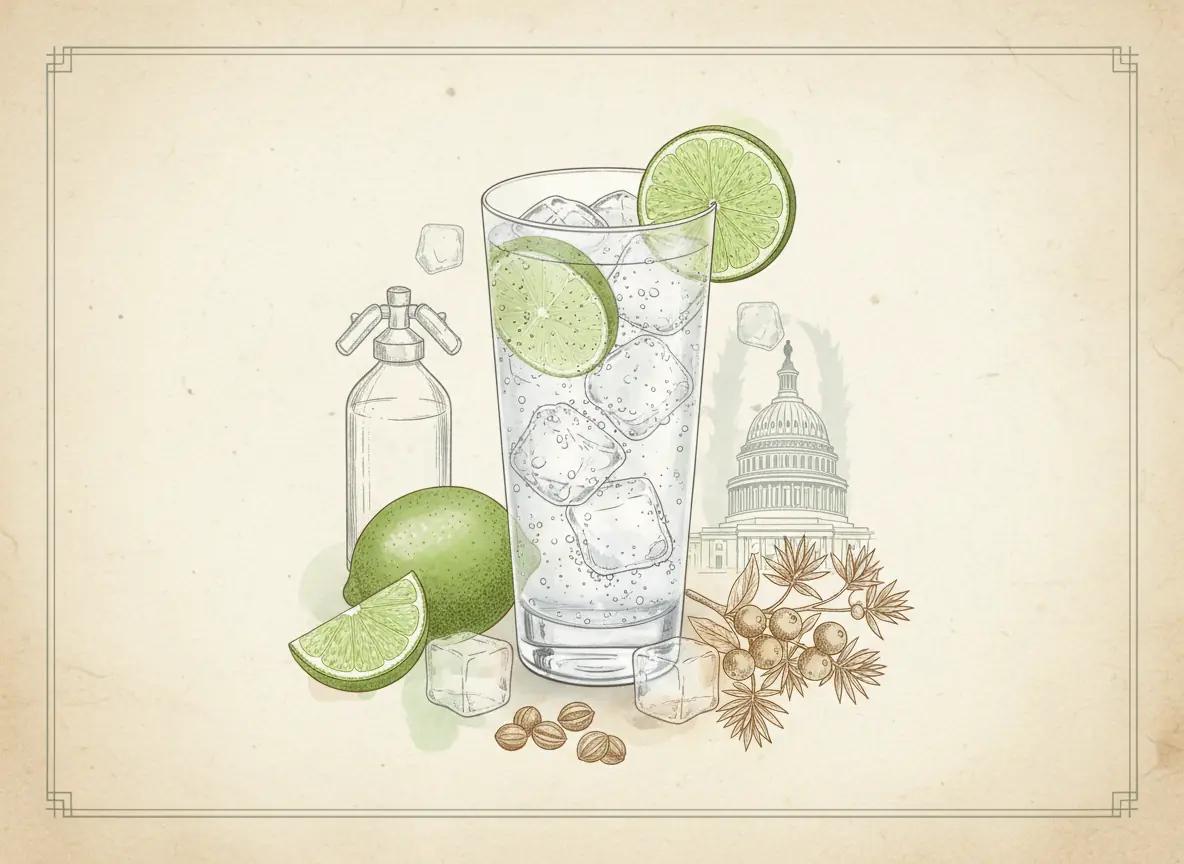
Gin Rickey
A Gin Rickey is 60ml of London Dry gin and 25ml of fresh lime juice over ice in a highball, topped with 100 to 125ml of cold soda water and finished with a lime wheel. There is no sugar in it. About 2.4 UK units. The Oxford Companion says the Rickey was popularised in the late 1880s at Shoomaker’s bar in Washington, D.C., by Colonel Joseph Kerr “Joe” Rickey, a lobbyist from Missouri, and the bartender George Williamson, that it began with bourbon, and that the Gin Rickey, first found in print in 1893, was the version most widely known by the mid-1890s. With no sugar to round anything off, the gin and the lime carry it. Squeeze the lime on the day and close to the drink: in our experience lime turns flat and bitter within hours, and a Rickey has nothing to hide that behind.
Where this one sits
Recipe by Jerry Can Spirits · Updated 19 October 2026