Sling Glass
A sling glass is a tall footed glass, about 40cl by our guidance, with a bowl that opens gently towards the rim. It is named after the Singapore Sling and holds long, fruit-led drinks over cubed ice, with room on top for a pineapple wedge and a cherry. Our Singapore Sling and Gin Sling are both served in one.
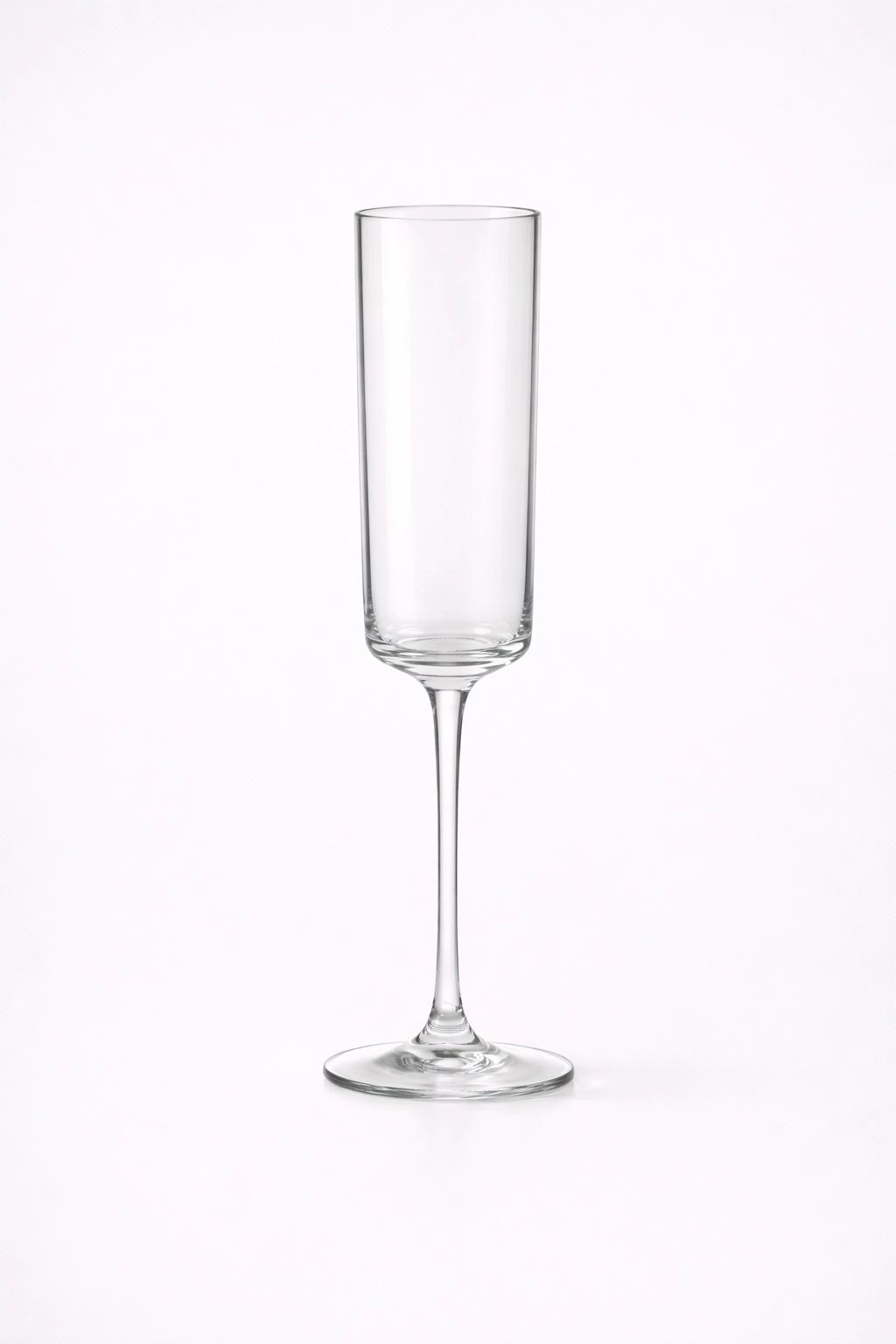
About the Sling Glass
Named After the Singapore Sling
Raffles Hotel credits the Singapore Sling to its bartender Ngiam Tong Boon at the Long Bar in 1915. The glass came later and took the drink's name.
The shape is a short foot under a tall bowl that opens gently towards the rim. That opening is practical: it leaves room for a pineapple wedge and a cherry without crowding the straw.
Sized for a 205ml Drink and Its Ice
Our Singapore Sling is 30ml of gin, 15ml of cherry liqueur, 7.5ml each of Cointreau and Bénédictine, 10ml of grenadine, 120ml of pineapple juice, 15ml of lime and a dash of Angostura: about 205ml before the ice. Shaken and strained over a glass full of cubes, it needs about 40cl.
The Gin Sling is smaller, about 150ml with its soda, and fits a sling glass or a highball with room to spare.
Sling glass, hurricane, highball and collins compared (hurricane and highball from our shop; sling and collins our guidance from our recipes)
Sling glass
- Typical capacity
- About 40cl (our guidance)
- Shape
- Tall bowl on a short foot, opening towards the rim
- Our drinks in it
- Singapore Sling, Gin Sling
Hurricane
- Typical capacity
- 42cl (our shop)
- Shape
- Curved and flared on a short foot
- Our drinks in it
- Rum Runner; Singapore Sling as an alternative
Highball
- Typical capacity
- 38 or 42cl (our shop)
- Shape
- Tall and straight-sided
- Our drinks in it
- Rum and Coke; Gin Sling as an alternative
Collins
- Typical capacity
- 36cl or more (our guidance)
- Shape
- Taller and narrower
- Our drinks in it
- Tom Collins
| Glass | Typical capacity | Shape | Our drinks in it |
|---|---|---|---|
| Sling glass | About 40cl (our guidance) | Tall bowl on a short foot, opening towards the rim | Singapore Sling, Gin Sling |
| Hurricane | 42cl (our shop) | Curved and flared on a short foot | Rum Runner; Singapore Sling as an alternative |
| Highball | 38 or 42cl (our shop) | Tall and straight-sided | Rum and Coke; Gin Sling as an alternative |
| Collins | 36cl or more (our guidance) | Taller and narrower | Tom Collins |
Cubed Ice Keeps It Long
A Sling is meant to be drunk slowly over cubed ice. Pack the glass with cubes first; packed ice lasts far longer than a few loose cubes rattling in a tall glass.
Crushed ice belongs to the swizzles and tiki drinks. Under a Sling it turns to water fast and dulls the pineapple and gin.
A Hurricane Will Do
Most homes make a Singapore Sling a few times a year, and a hurricane glass handles it well. A sling glass is worth buying if you serve long, fruit-led drinks often.
Buy plain glass with a solid foot and a rim wide enough to hook a pineapple wedge over. Wash it by hand: on any footed glass, the join between foot and bowl is where it breaks.
Using the Sling Glass
Usage
The Singapore Sling, the Gin Sling and other long, fruit-led drinks served over cubed ice. Around 40cl holds our 205ml Singapore Sling with a full load of cubes and a garnish on the rim.
Pro Tip
Chill the glass with cubes while you shake, then tip them out and strain over fresh ice. A Sling poured onto half-melted ice starts out diluted.
Professional Tips
- Fill it with cubed ice first, then strain or build.
- Strain a shaken Sling over fresh cubes, not the shaking ice.
- A hurricane does the same job; a highball takes the Gin Sling.
- Hold it low on the bowl. A tall, full footed glass tips easily.
Alternatives
Budget Alternative
A hurricane glass or a tall highball. Our Singapore Sling recipe allows a hurricane, and the Gin Sling recipe allows a highball.
Premium Option
Thin, clear glass on a heavy foot. It feels lighter and is harder to tip; the Sling inside tastes no different.
Specifications
Material
Glass
Capacity
About 40cl by our guidance, sized for our 205ml Singapore Sling and its ice; sizes vary, so check before buying
Details
Tall bowl on a short foot, opening gently towards the rim
More to explore
Common Questions
What is a sling glass?
What size is a sling glass?
How is a sling glass different from a hurricane glass?
What glass is a Singapore Sling served in?
What drinks suit a sling glass?
What is the difference between a Gin Sling and a Tom Collins?
Do I need a sling glass?
Sources.
Checked between 18 October and 19 October 2026.
- Raffles Singapore, “Long Bar” (“In 1915, a resourceful Raffles bartender Ngiam Tong Boon crafted a cocktail…”).
- The Oxford Companion to Spirits and Cocktails (David Wondrich), “Cock-Tail” (secondary source: the first unambiguous appearance in print of the formula and name together, Hudson, New York, 1806; vulgarly called a bittered sling (see the sling)).
- Jerry Can Spirits shop, “Hurricane Cocktail Glass, 42cl”.
- The Oxford Companion to Spirits and Cocktails (David Wondrich), “The Singapore Sling” (secondary source: a British reworking of the American Gin Sling; cherry brandy in Singapore from about 1903; the Raffles Hotel’s claim; Ngiam Tong Boon supposedly 1915).
Made with the Sling Glass
Used In These Cocktails
Related Equipment
Updated 19 October 2026