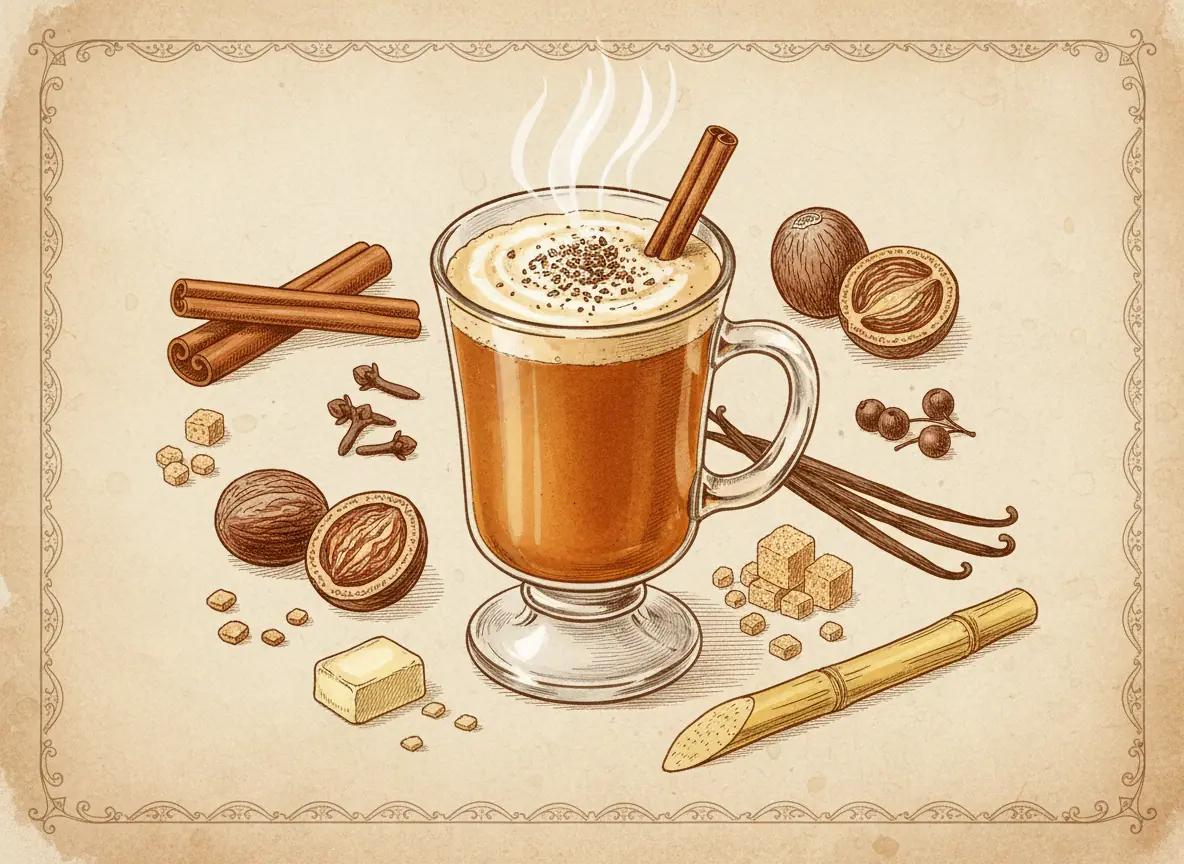
Hot Buttered Rum
A Hot Buttered Rum is 60ml of dark rum poured over about 50g of spiced butter batter in a warmed mug, topped with 150ml of water just off the boil and stirred until the butter melts through, then finished with grated nutmeg and a cinnamon stick. About 2.4 UK units. The batter is butter, dark brown sugar, cinnamon, allspice, a pinch of clove and vanilla, so the drink contains milk. The Oxford Companion calls hot buttered rum a colonial-era drink once favoured for being medicinal; we have found no early recipe from then. Jerry Thomas’s 1862 bar guide prints a hot spiced rum of sugar, Jamaica rum, allspice and cloves, butter and hot water, and the Companion says a batter of butter, sugar and spices cures the slick that loose butter leaves. The batter is the method. Butter dropped into a mug alone floats in a slick; beaten first with sugar and spice, it melts evenly into the rum and water.
Glassware: Heatproof Mug
Garnish: Cinnamon stick and Freshly grated nutmeg
Ingredients
60ml
A full-bodied dark rum at our working 40% ABV, navy-style or aged Jamaican. Heat pushes its flavour forward, so a thin rum shows its thinness more here than it would cold.
30g
Unsalted, softened at room temperature before beating, so the sugar and spice set the flavour. It is the dairy in the drink: the mug contains milk.
15g
Dark brown sugar, which carries more molasses than light brown and gives the batter a deeper, toffee-like sweetness.
1/4 tsp
A quarter teaspoon, beaten into the batter with the cinnamon. It brings a clove-like warmth that sits well with dark rum.
1/2 tsp
Half a teaspoon, the main spice. Ground rather than a stick, so it spreads evenly through the butter.
A pinch
A pinch only. Clove grows stronger in heat, and a quarter teaspoon takes over the mug.
1/4 tsp
A quarter teaspoon of pure extract, which rounds the spice. Vanilla flavouring tastes artificial once heated.
150ml
Just off the boil, rested for thirty seconds. A rolling boil strips the aroma from the rum before the first sip.
Instructions
Make the batter: beat the softened butter with the dark brown sugar until pale, then beat in the cinnamon, allspice, clove and vanilla. Multiply by the number of drinks; we keep it in the fridge for up to two weeks.
Warm a heatproof mug of about 300ml with hot water and empty it.
Spoon in one drink’s share of batter, about 50g.
Pour the dark rum over the batter.
Add 150ml of water just off the boil and stir until the batter has melted through the drink.
Grate nutmeg over the top, add a cinnamon stick and serve.
Our version
Our own measures: 60ml of dark rum over about 50g of spiced butter batter, with 150ml of water just off the boil. Jerry Thomas’s 1862 hot spiced rum used sugar, Jamaica rum, cloves, allspice, butter and hot water, without a batter.
Source: our own specification.
Expert Tip
Make the batter ahead, a whole 250g block of butter at a time, and keep it in the fridge. Take it out fifteen minutes before you need it, because cold batter leaves lumps in the mug instead of melting. Let the kettle stand for thirty seconds after it boils, to around 90 to 95°C. Water straight off a rolling boil drives the aroma out of the rum, and the mug smells of hot alcohol rather than of rum and spice. Choose a dark rum with weight. A navy-style or aged Jamaican rum stands up to the butter; a light rum leaves the mug tasting of sweet butter and little else.
Behind the Hot Buttered Rum
Flavour Profile
An Old Winter Drink
The Oxford Companion, in an entry by Wayne Curtis, calls hot buttered rum a colonial-era drink once favoured for being medicinal, warming and full of calories, first prescribed for hoarseness of voice, and quotes an early recipe that called for butter the size of a black walnut, maple sugar the size of a large hickory nut, boiling water, rum and nutmeg for the ladies. We have found no colonial recipe, so treat the colonial story as tradition.
The firmer ground is print. Jerry Thomas’s 1862 How to Mix Drinks gives, as No. 207, a hot spiced rum of a teaspoon of sugar, a wine-glass of Jamaica rum, a teaspoon of mixed allspice and cloves, a piece of butter as large as half a chestnut and hot water, close to the drink made today. The Oxford Companion credits the twentieth-century revival largely to Kenneth Roberts’s 1937 novel Northwest Passage, notes David Embury’s complaint of 1948 that the lump of butter is the final insult, and says the slick can be remedied by a batter of butter, sugar and spices mixed with the rum and hot water.
Why the Batter Works
Butter does not dissolve in water. Dropped into a mug on its own it melts into a slick on the surface. Beaten first with sugar and ground spice, it is broken into fine pieces coated in sugar, and those melt through the hot water evenly.
In our experience the spice gains too. Ground cinnamon, allspice and clove left in the fat for a day spread their flavour through it, which is why batter made the day before tastes rounder than batter made to order.
A 250g block of butter makes batter for eight mugs. The table scales the single mug by eight, rounded to the whole block.
Hot Buttered Rum batter for one mug and for eight; our measures
Unsalted butter, softened
- For one mug
- 30g
- For eight mugs
- 250g (one block)
Dark brown sugar
- For one mug
- 15g
- For eight mugs
- 125g
Ground cinnamon
- For one mug
- 1/2 tsp
- For eight mugs
- 4 tsp
Ground allspice
- For one mug
- 1/4 tsp
- For eight mugs
- 2 tsp
Ground clove
- For one mug
- A pinch
- For eight mugs
- 1/2 tsp
Vanilla extract
- For one mug
- 1/4 tsp
- For eight mugs
- 2 tsp
Batter per mug
- For one mug
- About 50g
- For eight mugs
- About 400g in all
| Ingredient | For one mug | For eight mugs |
|---|---|---|
| Unsalted butter, softened | 30g | 250g (one block) |
| Dark brown sugar | 15g | 125g |
| Ground cinnamon | 1/2 tsp | 4 tsp |
| Ground allspice | 1/4 tsp | 2 tsp |
| Ground clove | A pinch | 1/2 tsp |
| Vanilla extract | 1/4 tsp | 2 tsp |
| Batter per mug | About 50g | About 400g in all |
Beat the butter and sugar with a wooden spoon for about two minutes, until pale and soft, then beat in the spices and vanilla. Spoon it into a lidded tub, or roll it into a log in baking paper and cut a 50g slice for each mug. We keep it two weeks in the fridge and freeze it in slices.
The Rum
A dark rum with weight holds its own against butter, sugar and heat. Navy-style rums and aged Jamaican rums both work, and the Jamaican brings more fruit. A light rum disappears, leaving sweet spiced butter in hot water.
Hot, Never Boiled
Pour water that has stood for thirty seconds after the kettle clicks off, around 90 to 95°C. That melts the batter fully and leaves the mug hot enough to hold. A full boil sends the aroma of the rum straight off the top. Never heat the rum in a pan, and never reheat a made mug.
How to Serve It
In a warmed heatproof mug of about 300ml, stirred until no butter shows on the surface, with fresh nutmeg grated over and a cinnamon stick to stir with. Serve it at once: as it cools, the butter begins to set on top.
For hot milk, egg, cognac and rum, a Tom and Jerry; for whisky, honey and lemon in hot water, a Hot Toddy.
Make it at home
The Spirit
Dark RumDark rum is a heavy, deep-coloured rum, counted at 40% ABV in our recipes, whose colour may come from years in oak, from blending or from added caramel, which Regulation (EC) 110/2008 allows. It brings weight and a burnt-sugar note to punches, hot drinks and tiki builds: the Rum Runner, the Hurricane and the Planter’s Punch.
More to explore
Frequently Asked Questions
What is in a Hot Buttered Rum?
Does Hot Buttered Rum contain dairy?
Should the water be boiling?
How do I make the batter ahead?
What kind of rum suits it?
How old is Hot Buttered Rum?
How strong is Hot Buttered Rum?
Sources.
Correct as of 19 October 2026.
- The Oxford Companion to Spirits and Cocktails (Wayne Curtis), “hot buttered rum” (secondary source: a colonial-era drink once favoured for being medicinal; Kenneth Roberts’s Northwest Passage (1937) behind the twentieth-century revival; Embury’s 1948 objection to the lump of butter; a batter of butter, sugar and spices cures the slick).
- Jerry Thomas (1862), Internet Archive, “How to Mix Drinks, or the Bon-Vivant’s Companion” (primary source: 207 Hot Spiced Rum: 1 teaspoonful of sugar, 1 wine-glass of Jamaica rum, 1 teaspoonful of mixed spices (allspice and cloves), 1 piece of butter as large as half of a chestnut, fill tumbler with hot water).
You Might Also Like
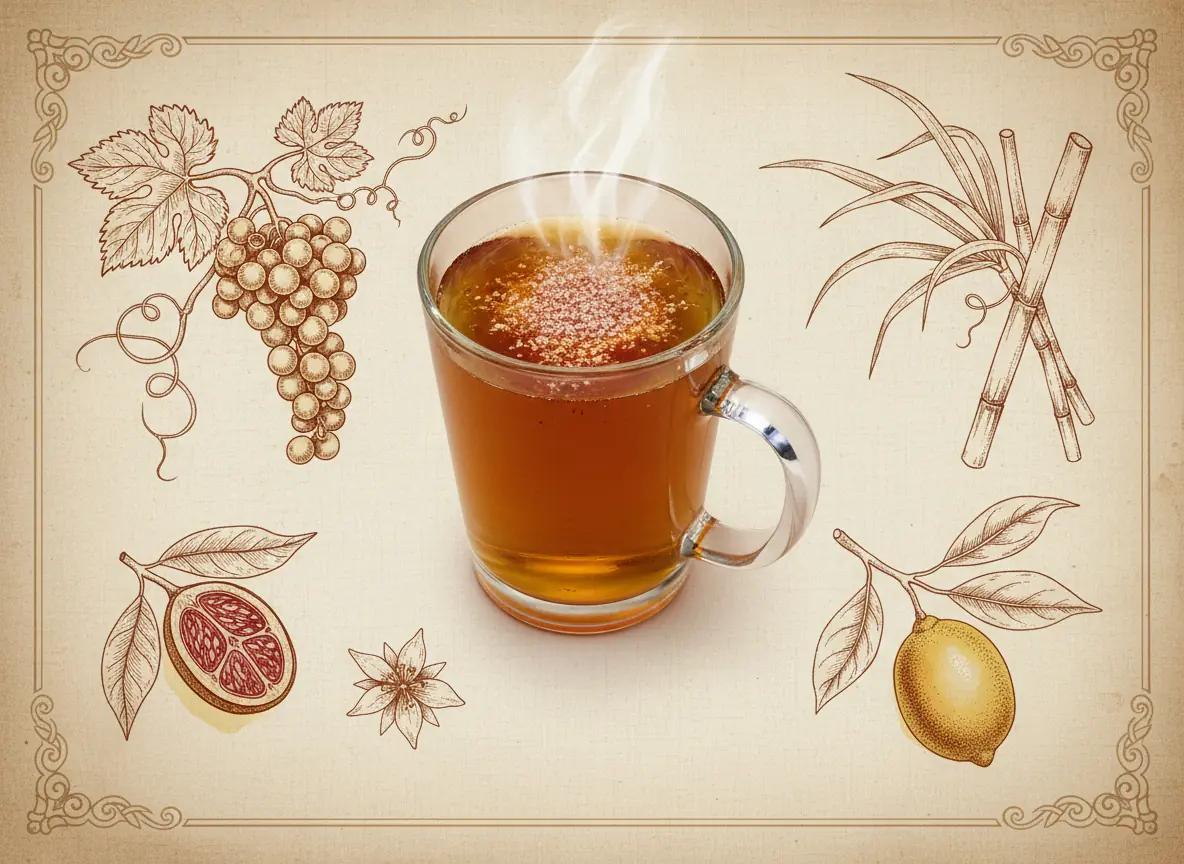
Brandy Sling (Hot)
A hot Brandy Sling is 50ml of brandy, 20ml of fresh lemon juice and 15ml of sugar syrup in a warmed heatproof glass, topped with 90ml of water just off the boil, stirred, and finished with freshly grated nutmeg and a lemon slice on the rim. About 2.0 UK units. In his 1862 bar guide Jerry Thomas wrote that the brandy sling is made with the same ingredients as the brandy toddy, except that you grate a little nutmeg on top. His sling has no lemon; ours adds 20ml, which keeps the sugar and brandy from tasting flat in hot water. Heat is the method. Water just off the boil, never boiling, warms the brandy without scalding off its aroma, and the nutmeg on the surface reaches you before the first sip.
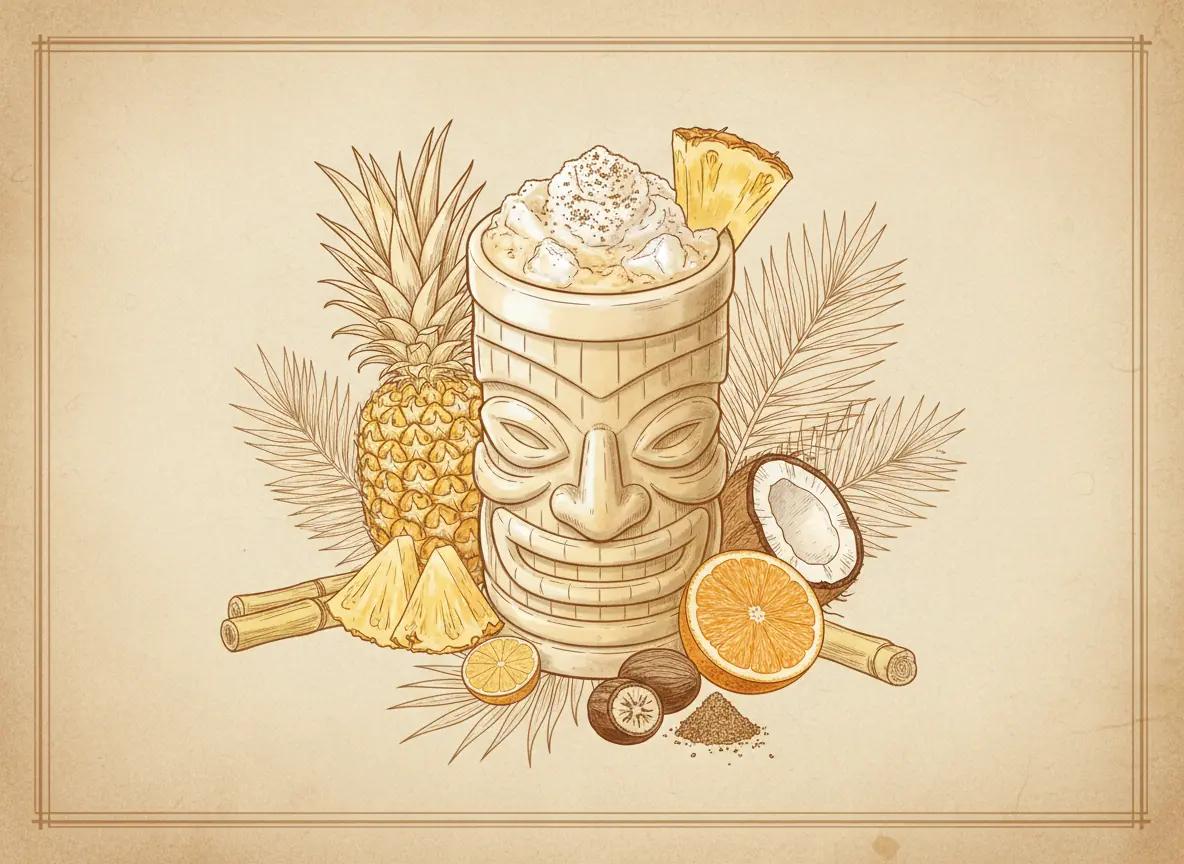
Painkiller
A Painkiller is 60ml of Pusser’s Rum, 120ml of pineapple juice, 30ml of fresh orange juice and 30ml of cream of coconut, given a hard 10 to 12 second shake and strained onto cubed ice in a tiki mug or a big glass, with fresh nutmeg grated on top. About 2.4 UK units. Cream of coconut is coconut and sugar, usually with no dairy, but check the label. The name belongs to Pusser’s. Pusser’s prints the name with the registered symbol on its own Painkiller page, and the Oxford Companion says the company owns the trademark for the Pusser’s Painkiller cocktail. The recipe here is its own: four parts pineapple, one of cream of coconut and one of orange, with Pusser’s to suit. Difford’s Guide says it trademarked the name in the United States and the UK in 2003 and in 2010 forced a New York bar called Painkiller to rename itself PKNY. Pusser’s traces the drink to Daphne Henderson’s Soggy Dollar Bar on Jost Van Dyke, in the British Virgin Islands.
Where this one sits
Recipe by Jerry Can Spirits · Updated 19 October 2026