Jack Rose
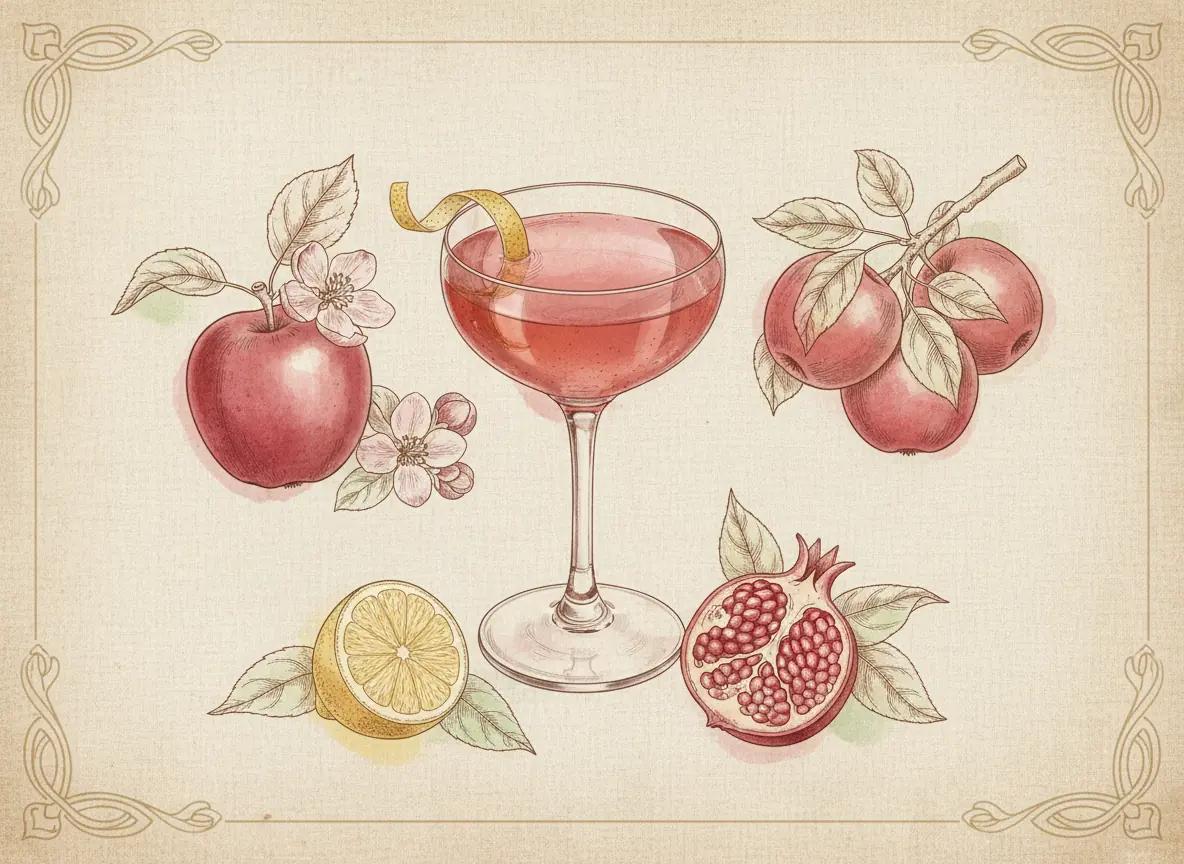
A Jack Rose is 60ml applejack, 22.5ml fresh lemon juice and 22.5ml grenadine, shaken hard and double strained into a chilled coupe, with lemon peel expressed over the top. About 2.4 UK units with a 40% applejack, or 3.0 with a bonded apple brandy at 50%. The lemon and grenadine are poured in equal measure, and the grenadine is why the drink looks and tastes as it does. Made from real pomegranate, it brings tart red fruit as well as sugar, and turns the glass pink. The Oxford Companion finds it in print in 1899, in the New York Press, as the pet of many connoisseurs at a downtown New York bar, and says the name was apparently taken from the Général Jacqueminot, or Jack, rose, a hybrid the drink resembles in colour. Difford’s Guide lists other claims for the name, among them a 1905 Police Gazette item crediting the Jersey City bartender Frank J. May. Hemingway put one in Jake Barnes’s hand at the Crillon in The Sun Also Rises.
Glassware: Coupe Glass
Garnish: Lemon peel
Ingredients
60ml
Laird’s is the name most linked with applejack. Laird’s own site describes its Blended Applejack as 35% aged apple brandy and 65% neutral spirits, and its Straight Apple Brandy Bottled in Bond as 100% apple brandy at 100 proof, which is 50% ABV, and the bonded one gives a fuller, stronger drink. Calvados makes a softer, earthier version.
22.5ml
Squeezed the same day. Poured level with the grenadine, it keeps the drink tart. Lime is a fair swap, and sharper.
22.5ml
Pomegranate and sugar, not red syrup. At this measure it sweetens, colours and adds tart fruit, so a poor bottle spoils the drink.
Instructions
Chill a coupe.
Squeeze the lemon juice the same day.
Add the applejack, lemon juice and grenadine to a shaker.
Fill with cubed ice and shake hard for 10 to 12 seconds.
Double strain into the chilled coupe.
Express a strip of lemon peel over the surface and rest it on the rim.
Expert Tip
Measure the grenadine as carefully as the lemon. At 22.5ml each they balance, and the drink sits between sharp and sweet. Cut the grenadine and it turns thin and sour; add more and it becomes cordial. Buy or make grenadine from pomegranate. Bright red supermarket syrup is sugar, colouring and flavouring, and at about a fifth of the drink it shows. Real grenadine is tart as well as sweet, and darker. Taste your applejack first. The standard American bottling is apple brandy blended with neutral spirit, which keeps it light. A straight or bonded apple brandy is fuller and stronger, and may want a touch more grenadine to stay in balance.
Behind the Jack Rose
Flavour Profile
Where It Comes From
The Oxford Companion finds the Jack Rose in the New York Press in 1899, and Difford’s Guide quotes the Police Gazette of 1905 crediting Frank J. May, a Jersey City bartender. Applejack was the natural base there. Laird’s, the name most linked with it, is a New Jersey company, and the Companion says its owners descend from William Laird, who settled in Monmouth County, New Jersey, in 1698, and that family tradition has him making apple brandy by 1700.
Ernest Hemingway gave it a scene in The Sun Also Rises, published in 1926, where, in the Project Gutenberg text, Jake Barnes has a Jack Rose with the barman at the Crillon in Paris. Difford’s Guide says David Embury later listed it among the six basic cocktails in The Fine Art of Mixing Drinks, in 1948.
The Name
Four explanations circulate. The likeliest is the plainest: applejack, coloured rose by grenadine. Albert Stevens Crockett tied it to the Jacqueminot, a red garden rose. Others name Joseph P. Rose, a Newark restaurateur, or Bald Jack Rose, a New York gambler, though the drink was in print before his notoriety.
Applejack
The Oxford Companion calls applejack a spirit distilled from apples, and says its name is said to derive from jacking, a crude method of concentrating the alcohol in hard cider by freezing it and removing the frozen water. Laird’s own site describes its standard Blended Applejack as 35% aged apple brandy and 65% neutral spirits, which in our view keeps it light; a straight or bonded apple brandy gives a fuller, stronger Jack Rose.
The Grenadine Question
Ours pours lemon and grenadine level, at 22.5ml each, so grenadine is about a fifth of the drink. Real pomegranate grenadine brings tartness and dark red fruit as well as sugar. The bright supermarket kind brings sugar and dye.
Older recipes ran much drier. The proportions usually quoted are four parts applejack to one of citrus and half a part of grenadine, which gives a sharper glass with the same alcohol.
Jack Rose proportions, and a relative
Jack Rose, ours
- Apple brandy
- 60ml applejack
- Citrus
- 22.5ml lemon
- Grenadine
- 22.5ml
- Other
- None
- UK units
- 2.4
Jack Rose, older 4 : 1 : ½
- Apple brandy
- 60ml applejack
- Citrus
- 15ml lemon or lime
- Grenadine
- 7.5ml
- Other
- None
- UK units
- 2.4
Pink Lady
- Apple brandy
- 15ml apple brandy
- Citrus
- 20ml lemon
- Grenadine
- 15ml
- Other
- 45ml gin, egg white
- UK units
- 2.4
| Drink | Apple brandy | Citrus | Grenadine | Other | UK units |
|---|---|---|---|---|---|
| Jack Rose, ours | 60ml applejack | 22.5ml lemon | 22.5ml | None | 2.4 |
| Jack Rose, older 4 : 1 : ½ | 60ml applejack | 15ml lemon or lime | 7.5ml | None | 2.4 |
| Pink Lady | 15ml apple brandy | 20ml lemon | 15ml | 45ml gin, egg white | 2.4 |
Calvados Instead
Calvados is apple brandy from Normandy, drier and earthier than applejack. In a Jack Rose it makes a softer, more orchard-like drink. It is a fair substitute; taste it and adjust the grenadine.
How to Serve It
Shaken hard, double strained into a chilled coupe, with lemon peel expressed over the surface and rested on the rim. Serve it without ice. It is short and warms quickly, so make it when it is wanted.
Make it at home
The Spirit
ApplejackApplejack is an American apple spirit, and the bottle most shops sell as applejack is blended applejack: aged apple brandy mixed with neutral grain spirit, at 40% ABV. Laird & Company, which by its own account has made applejack in New Jersey since 1698, created the blended style in 1972. Our Jack Rose stands on it, and an American Trilogy pairs it with rye.
Master the Techniques
More to explore
Frequently Asked Questions
What is in a Jack Rose?
How strong is a Jack Rose?
Where does the name come from?
Is the grenadine really equal to the lemon?
Applejack or Calvados?
Is the Jack Rose an IBA cocktail?
Who drinks a Jack Rose in Hemingway?
Sources.
Checked between 18 October and 19 October 2026.
- The Oxford Companion to Spirits and Cocktails (David Wondrich), “The Jack Rose” (secondary source: in the New York Press in 1899; Grohusko’s 1908 Jack’s Manual; the Général Jacqueminot rose; Bald Jack Rose, Frank May and others attributed).
- The Oxford Companion to Spirits and Cocktails (David Mahoney), “applejack” (secondary source: a spirit distilled from apples; the name said to derive from jacking; New Jersey roots).
- Laird’s, “Laird & Company” (maker’s site: Blended Applejack is 35% aged apple brandy and 65% neutral spirits; Straight Apple Brandy Bottled in Bond is 100% apple brandy, 100 proof).
- The Oxford Companion to Spirits and Cocktails (Allen Katz), “Laird’s” (secondary source: William Laird settled in Monmouth County, New Jersey, in 1698; family tradition has apple brandy by 1700; the entry-level blended applejack introduced in 1972).
- Difford’s Guide, “Jack Rose Cocktail Recipe” (secondary source: the Police Gazette of 1905 crediting Frank J. May; the first known recipe in Grohusko’s 1908 Jack’s Manual; Embury’s six basic cocktails (1948)).
- Ernest Hemingway, Project Gutenberg, “The Sun Also Rises (1926)” (primary source, read as text: Jake Barnes has a Jack Rose with George the barman at the Crillon bar).
You Might Also Like
Corpse Reviver No. 1
Our Corpse Reviver No. 1 is 30ml each of cognac, Calvados and sweet vermouth, stirred over ice for 20 to 30 seconds and strained into a chilled coupe, with no garnish. About 2.9 UK units. It is a short, stirred drink of two fruit brandies and vermouth, and nothing like the gin and lemon No. 2. The phrase came before the drink. The Oxford Companion says a Corpse Reviver appears to have been a real drink at an American-style bar in Piccadilly in the late 1850s, and the Gentleman’s Table Guide of 1871, in the Internet Archive scan, gives a recipe of half a wineglass each of brandy and maraschino with two dashes of Boker’s bitters. Harry Craddock printed a No. 1 and a No. 2 in the Savoy Cocktail Book in 1930, and the Companion says it was he who tethered the name to actual recipes. Difford’s Guide, quoting the Savoy, gives half brandy and a quarter each of apple brandy or Calvados and Italian vermouth, which is two parts brandy to one each of the others. Ours pours equal parts, which brings the apple forward and makes the vermouth a full partner.
Bee’s Knees
A Bee’s Knees is 52.5ml of London Dry gin, 22.5ml each of fresh lemon and orange juice and two teaspoons (10ml) of honey syrup, made with two parts honey to one of warm water. Shake it hard for 10 to 12 seconds and double strain it into a chilled coupe, with a strip of lemon peel. About 2.1 UK units. The measures are the IBA’s. The orange is the part most recipes leave out. The oldest printings are gin, lemon and honey alone; David Embury suggested a little orange juice as a variation in 1948, and the IBA built it in. Orange softens the lemon, which is why two teaspoons of honey syrup are enough. The drink is often filed under American Prohibition, with honey and lemon covering for bathtub gin. Difford’s Guide, a secondary source, says the earliest printing tells a different story: Cocktails de Paris, published in 1929, credits it to Frank Meier of the Ritz in Paris, and Meier claimed it again in his own book in 1936.
Brandy Crusta
A Brandy Crusta is 52.5ml of cognac, 7.5ml of maraschino, a bar spoon each of orange curaçao and sugar syrup, 15ml of fresh lemon juice and two dashes of Angostura, shaken hard and strained into a chilled coupe with a sugared rim and a long spiral of lemon peel curled inside. About 2.6 UK units. The measures are the IBA’s. Jerry Thomas printed it in his bar guide of 1862 and wrote that the crusta was said to have been invented by “Santina, a celebrated Spanish caterer”. Difford’s Guide identifies him as Joseph Santini, an Italian from Trieste in New Orleans, and dates the drink to the 1850s, made either at the City Exchange or at his own bar, the Jewel of the South, which he opened in 1855. The crust of sugar on the rim gives the drink its name. With the peel lining the glass, the first sip meets sugar and lemon oil before the cognac.
Where this one sits
Recipe by Jerry Can Spirits · Updated 19 October 2026