Painkiller
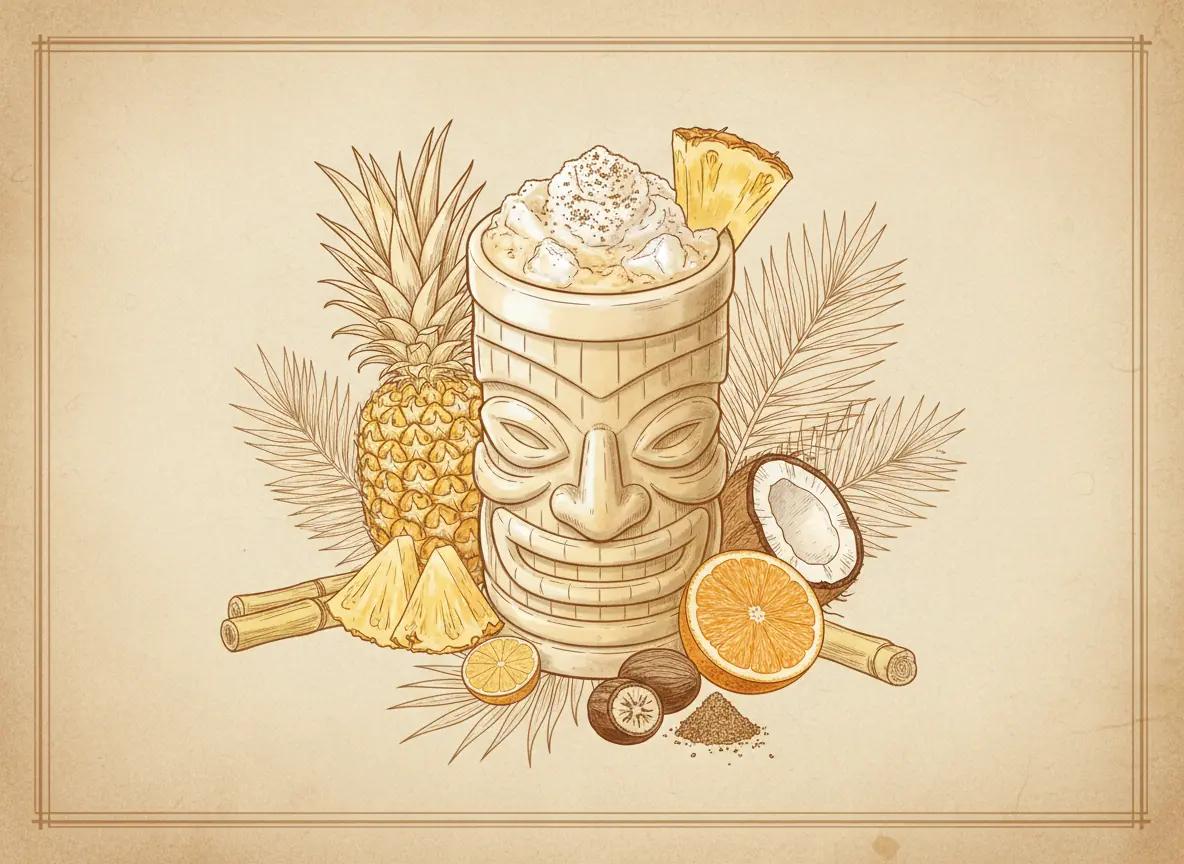
A Painkiller is 60ml of Pusser’s Rum, 120ml of pineapple juice, 30ml of fresh orange juice and 30ml of cream of coconut, given a hard 10 to 12 second shake and strained onto cubed ice in a tiki mug or a big glass, with fresh nutmeg grated on top. About 2.4 UK units. Cream of coconut is coconut and sugar, usually with no dairy, but check the label. The name belongs to Pusser’s. Pusser’s prints the name with the registered symbol on its own Painkiller page, and the Oxford Companion says the company owns the trademark for the Pusser’s Painkiller cocktail. The recipe here is its own: four parts pineapple, one of cream of coconut and one of orange, with Pusser’s to suit. Difford’s Guide says it trademarked the name in the United States and the UK in 2003 and in 2010 forced a New York bar called Painkiller to rename itself PKNY. Pusser’s traces the drink to Daphne Henderson’s Soggy Dollar Bar on Jost Van Dyke, in the British Virgin Islands.
Glassware: Tiki Mug
Garnish: Pineapple wedge and Freshly grated nutmeg
Ingredients
60ml
The rum the name belongs to, and the one Pusser’s specifies: a dark, full-bodied blend in the British naval style. Pusser’s says to add rum to suit; 60ml is its standard measure.
120ml
Pressed or not-from-concentrate juice, chilled. At 120ml it makes up half the glass, so a thin, sugary carton shows at once.
30ml
Squeezed the same day. Its acid keeps the coconut from making the drink heavy.
30ml
Sweetened cream of coconut, such as Coco López. It separates in the tin, so stir or shake it before measuring. There is usually no dairy in it, but check the label.
Instructions
Squeeze the orange juice the same day.
Fill a tiki mug or large glass of 450ml or more with cubed ice.
Add the rum, pineapple juice, orange juice and cream of coconut to a shaker with cubed ice.
Shake hard for 10 to 12 seconds.
Strain over the fresh ice.
Grate fresh nutmeg over the top and garnish with a pineapple wedge.
Source: the producer's own specification (Pusser’s: four parts pineapple, one part cream of coconut, one part orange juice, Pusser’s Rum to suit (60ml); garnish and method ours). Last checked 9 October 2026.
Expert Tip
Shake hard for the full 10 to 12 seconds. Cream of coconut is thick, and a short shake leaves it in streaks, so one sip tastes sweet and the next thin. Buy cream of coconut, not coconut cream. Cream of coconut is sweetened and made for drinks; coconut cream is unsweetened and made for cooking, and it leaves the glass savoury and short of sugar. Grate a whole nutmeg over the finished drink. Pre-ground nutmeg keeps little scent, and the smell at the rim is much of what a Painkiller offers.
Behind the Painkiller
Flavour Profile
The Origin
Pusser’s tells the story this way. The Soggy Dollar Bar sits on White Bay on Jost Van Dyke, in the British Virgin Islands, and its owner, Daphne Henderson, served a Painkiller whose recipe she kept to herself. The bar’s name is usually explained by customers swimming ashore with wet banknotes.
Charles Tobias, who founded Pusser’s after gaining the Admiralty Board’s permission in 1979 to sell the Royal Navy’s rum, got one of her drinks back to his boat and worked out his own version, by the company’s own account. He settled on four parts pineapple, one of cream of coconut and one of orange, with rum to suit.
The Trade Mark
Pusser’s prints the name with the registered symbol on its own Painkiller page, and the Oxford Companion says the company owns the trademark for the Pusser’s Painkiller cocktail. We have read no register entry.
Difford’s Guide says Pusser’s trademarked the name in the United States and the UK in 2003, and in 2010 forced the Lower East Side tiki bar Painkiller to rename itself PKNY after a cease-and-desist notice and a lawsuit. It had registered the name under bar and restaurant services as well as alcoholic beverages.
We give the drink as Pusser’s publishes it, with its rum, because the name and the recipe are both theirs.
Cream of Coconut
Cream of coconut is sweetened coconut, thick and syrupy, made for drinks. Coconut cream is the unsweetened, fatty layer from coconut milk, made for cooking. They look alike in the tin and behave very differently in a glass.
Coco López, from Puerto Rico, is the brand most bars reach for. It separates as it stands, so stir or shake the tin before measuring.
Pusser’s Proportions Against Ours
The Painkiller as Pusser’s publishes it and as we serve it
Pusser’s Rum
- Pusser’s
- 60ml, or to suit
- Ours
- 60ml
Pineapple juice
- Pusser’s
- 120ml
- Ours
- 120ml
Orange juice
- Pusser’s
- 30ml
- Ours
- 30ml, squeezed the same day
Cream of coconut
- Pusser’s
- 30ml
- Ours
- 30ml
Method
- Pusser’s
- Shaken, poured into a big glass of ice
- Ours
- Shaken 10 to 12 seconds, strained over fresh ice
Garnish
- Pusser’s
- Orange slice, cherry, fresh nutmeg
- Ours
- Pineapple wedge, fresh nutmeg
| Element | Pusser’s | Ours |
|---|---|---|
| Pusser’s Rum | 60ml, or to suit | 60ml |
| Pineapple juice | 120ml | 120ml |
| Orange juice | 30ml | 30ml, squeezed the same day |
| Cream of coconut | 30ml | 30ml |
| Method | Shaken, poured into a big glass of ice | Shaken 10 to 12 seconds, strained over fresh ice |
| Garnish | Orange slice, cherry, fresh nutmeg | Pineapple wedge, fresh nutmeg |
The measures are Pusser’s own. We strain over fresh ice and trade the orange slice and cherry for a pineapple wedge.
The Nutmeg
Nutmeg’s aroma sits in oils that fade soon after grinding. Grated fresh over the finished drink, it puts that scent at the rim, where it reaches you before the coconut and rum.
Pre-ground nutmeg adds a dusty brown speck and little else. A small fine grater and one whole nut last for dozens of drinks.
How to Serve It
Shaken hard and strained over fresh ice in a tiki mug or large glass, with nutmeg grated on top and a pineapple wedge on the rim. Hand it over straight away, before the ice thins the coconut.
The blended relation is the Piña Colada, with no orange and no nutmeg.
Make it at home
The Spirit
Dark RumDark rum is a heavy, deep-coloured rum, counted at 40% ABV in our recipes, whose colour may come from years in oak, from blending or from added caramel, which Regulation (EC) 110/2008 allows. It brings weight and a burnt-sugar note to punches, hot drinks and tiki builds: the Rum Runner, the Hurricane and the Planter’s Punch.
Master the Techniques
More to explore
Frequently Asked Questions
What is a Painkiller?
Do you have to use Pusser’s Rum in a Painkiller?
Who invented the Painkiller?
How does it differ from a Piña Colada?
Is cream of coconut the same as coconut cream?
How strong is a Painkiller?
Is there dairy in a Painkiller?
Sources.
Checked between 18 October and 19 October 2026.
- The Oxford Companion to Spirits and Cocktails (Richard Boccato), “The Painkiller” (secondary source: Pusser’s owns the trademark for the Pusser’s Painkiller cocktail; created at the Soggy Dollar Bar; the Myricks’ claim of 1971 against Pusser’s account; parentage left open).
- Pusser’s Rum, “Pusser’s Painkiller” (the company’s own account: Daphne Henderson, the Admiralty Board’s permission in 1979, Tobias’s kitchen on Tortola, the 4-1-1 ratio).
- Difford’s Guide, “Trademarking cocktails” (secondary source: Pusser’s trademarked the Painkiller in the US and UK in 2003; in 2010 the Lower East Side bar Painkiller was forced to rename itself PKNY; registered under several categories including restaurant and bar services).
You Might Also Like
Scorpion
The Scorpion is Trader Vic’s rum and brandy sour: 45ml white rum, 22.5ml cognac, 50ml fresh orange juice, 30ml fresh lemon juice and 15ml orgeat, shaken hard and strained over crushed ice in a tiki mug or large rocks glass. The measures are adapted from Trader Vic’s Bartender’s Guide in its 1972 revised edition. Victor Bergeron, the Trader Vic of the restaurant chain, is credited with it; Punch dates his recipe to 1946, and Tasting Table traces the drink to a Honolulu punch in print by 1938. Difford’s Guide, citing Life magazine, has Vic serving the Scorpion in four-pint bowls made to serve four, and prints his 1972 recipes for a single glass and for a bowl for three or four. The single glass is the same drink at one person’s size. It comes out pale orange, almond-scented and drier than it looks, at about 2.7 UK units. Fresh orange and lemon and an orgeat made from almonds decide it. Orgeat contains nuts, which matters for anyone with an allergy.
Singapore Sling
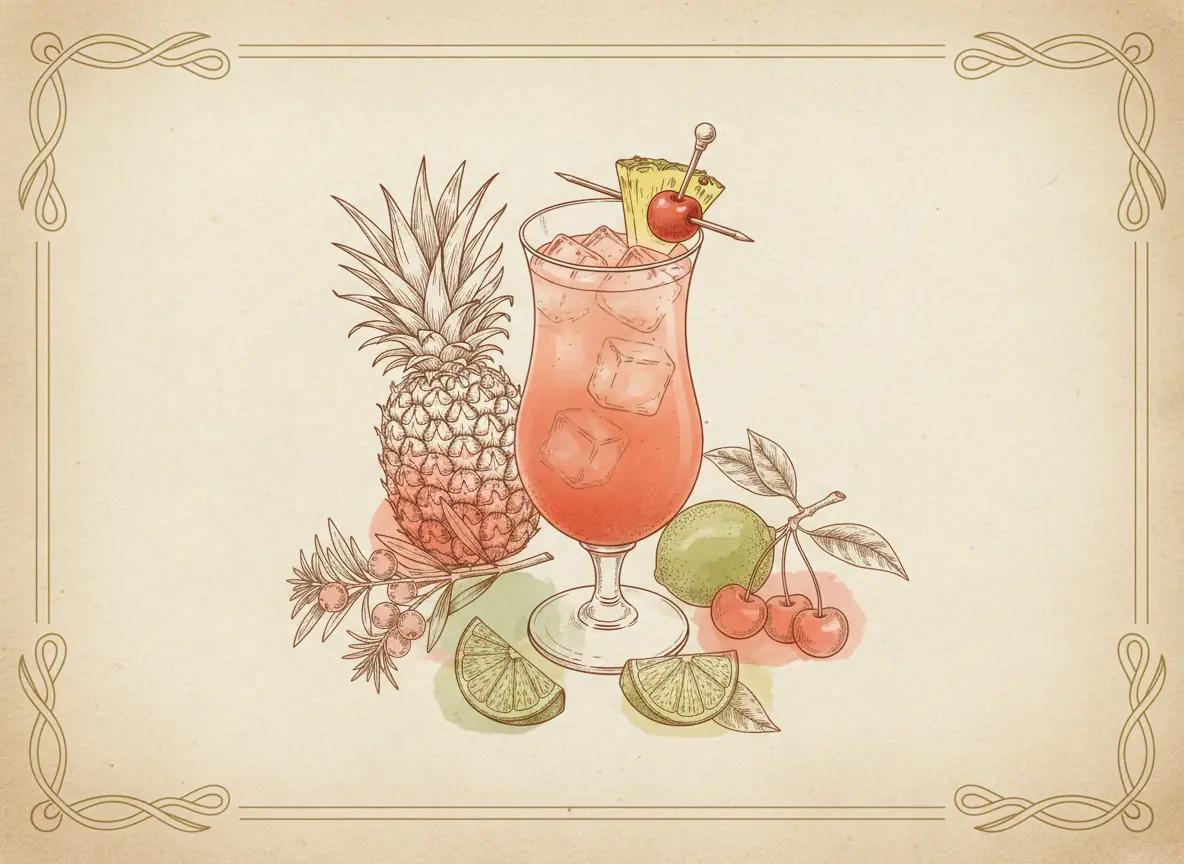
A Singapore Sling is 30ml gin, 15ml cherry liqueur, 7.5ml Cointreau, 7.5ml Bénédictine, 10ml grenadine, 120ml fresh pineapple juice, 15ml fresh lime juice and a dash of Angostura, shaken hard and strained over fresh ice in a sling or hurricane glass. That is the IBA specification, made here with Cherry Heering. It is a long, pink, fruit-led gin drink with more going on underneath than the colour suggests. It belongs to the Long Bar at the Raffles Hotel in Singapore, where Raffles, by its own account, credits its bartender Ngiam Tong Boon with creating it in 1915. The date is disputed, and the recipe first poured there is generally accepted to be lost. Fresh pineapple juice decides the result. There is 120ml of it, more than everything else in the glass combined, and juice pressed the same day gives the drink its light foam and its sharp edge. Carton juice gives a flat, sweet one.
Rum Runner
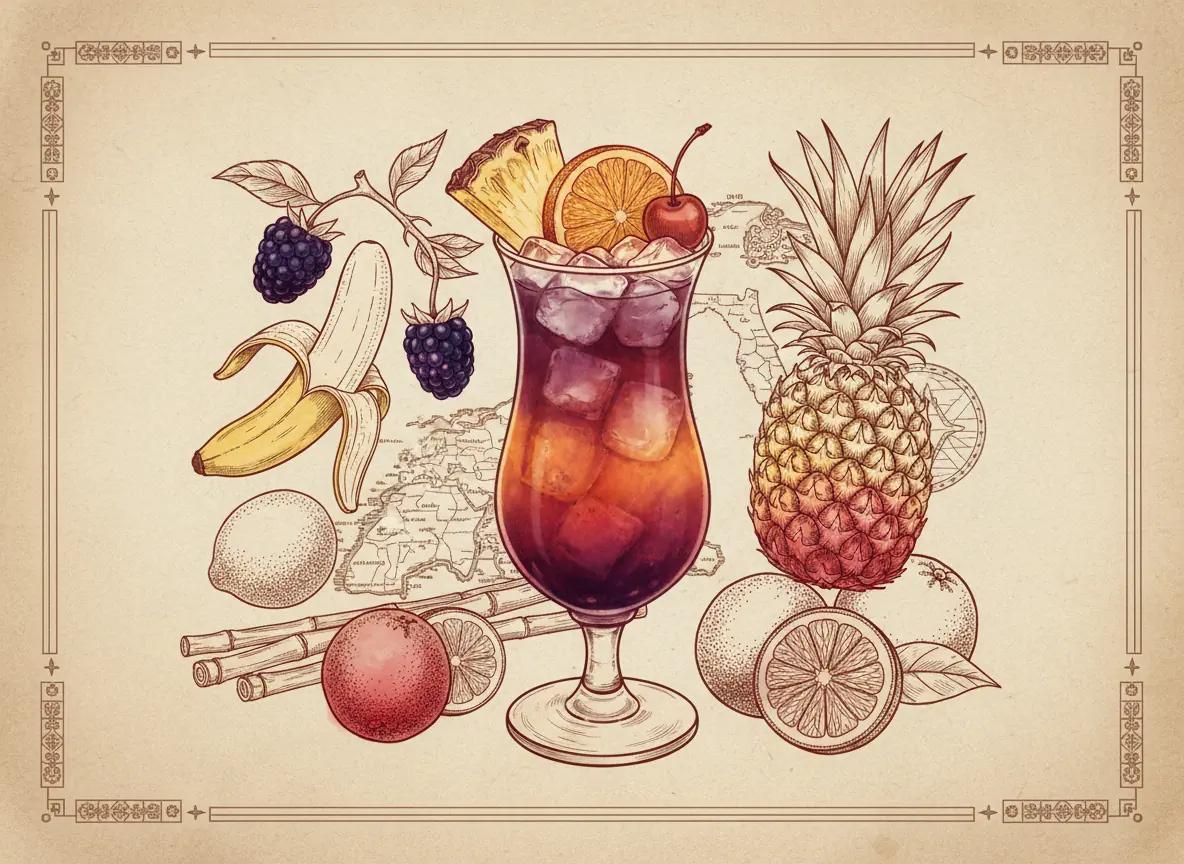
A Rum Runner is a Florida Keys tiki drink: 30ml each of dark and white rum, 15ml each of blackberry and banana liqueur, 10ml grenadine, 15ml fresh lime juice, 45ml pineapple juice and 30ml orange juice, shaken hard and strained over crushed ice in a hurricane glass. A 15ml float of overproof rum is optional. Blended with the ice instead, it becomes the frozen Rum Runner the Keys are known for. The usual account, which Difford’s Guide quotes from the Holiday Isle Tiki Bar’s own site and calls legend, credits the bar’s manager John “Tiki John” Elber with mixing it to clear surplus rum and liqueur before a delivery; the bar took its name in 1971, so the early 1970s is the likely date. That first version had no fruit juice. Pineapple and orange came later and made it the long, fruity drink most bars pour now. It is stronger than it tastes: about 3.0 UK units a glass, 3.9 with the float. Fresh lime and a pomegranate grenadine are what keep it from tasting of boiled sweets.
Where this one sits
Recipe by Jerry Can Spirits · Updated 19 October 2026