Tiki Mug
A sculpted ceramic vessel, usually a carved face or a figure, holding 350 to 500ml. It hides the drink completely, which is the opposite of what every other glass here is trying to do, and that is entirely deliberate.
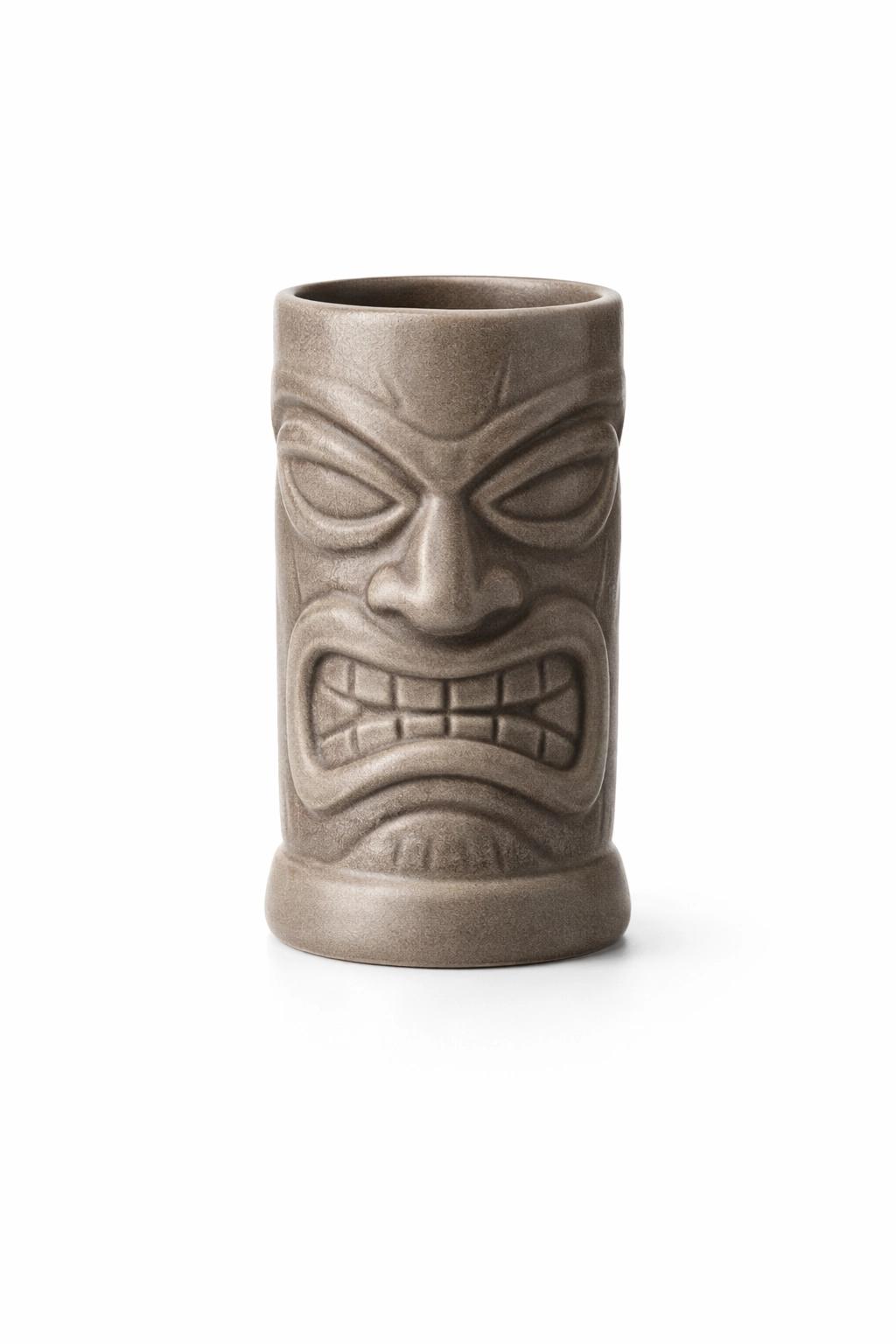
About the Tiki Mug
Hiding the Drink
Every other vessel in a bar is trying to show you something: the colour of a wine, the layers in a Hurricane, the clarity of a stirred Martini. A tiki mug shows you nothing at all.
That is the point. Donn Beach and Trader Vic built an entire style of bar on mystery: recipes were coded, ingredients were secret, and a drink arriving in an opaque carved face gave nothing away about what was in it or how much.
There is a commercial edge to it as well. If the customer cannot see the level, they cannot see a small pour, and Donn Beach's recipes were closely guarded trade secrets precisely because the drinks were reproducible.
Ceramic Actually Helps
Unlike most tiki theatre, the material does a real job. Ceramic is a far poorer conductor of heat than glass, so it insulates the drink rather than exchanging temperature with the room.
That matters because tiki drinks are built on crushed ice, which has enormous surface area and melts fast. A Mai Tai in a thin highball glass is dilute within fifteen minutes; the same drink in a thick ceramic mug holds its balance noticeably longer.
Freezing the mug beforehand extends it further. Ceramic takes longer to chill than glass and holds that cold for correspondingly longer once it gets there.
The Glaze Question
Modern mugs from reputable makers are food-safe, lead-free and fired to standard. Vintage ones are a different matter.
Mugs from the 1950s and 60s were often glazed with formulations containing lead or cadmium, which leach into acidic liquids, and tiki drinks are lime juice, so acidic is exactly what they are. A collectable 1960s Trader Vic mug is worth owning and is not worth drinking from.
If you want to use a vintage mug, test it with a home lead swab, or treat it as a display piece and drink from a reproduction. Any unglazed interior is also a problem: raw ceramic is porous and holds rum and juice indefinitely.
What Belongs In One
The tiki canon, and drinks that share its logic: rum-based, juice-heavy, built or flash-blended over crushed ice, garnished well beyond reason. Mai Tai, Zombie, Painkiller, Navy Grog, Three Dots and a Dash.
What does not belong is anything you would want to look at, anything stirred and spirit-forward, or anything where aroma matters, since the mug has no aromatic function at all and a Martini in one would be absurd.
Wash by hand in warm water. Dishwasher heat crazes glaze into a network of fine cracks and fades hand-painted detail within a handful of cycles.
Using the Tiki Mug
Usage
Mai Tais, Zombies, Painkillers and the rest of the tiki canon, packed with crushed ice. The ceramic insulates far better than glass, so a drink built on crushed ice survives longer than the same drink in a highball.
Pro Tip
For classic tiki service, fill the mug completely with crushed ice and mound the garnish high. The ice controls dilution while the ceramic insulates the drink, allowing strong, complex rum blends to remain balanced from first sip to last. In tiki, excess is the point, but it should always be deliberate.
What to Look For
- Thick ceramic walls: insulation is the point
- Stable, heavy base: many tiki drinks are garnish-heavy
- Smooth interior glaze: easier cleaning and better hygiene
- Wide opening: accommodates crushed ice and large garnishes
- Capacity consistency: wildly varying volumes complicate service
Common Mistakes to Avoid
- Treating tiki mugs like glass: they chip rather than crack
- Ignoring volume: some mugs hold far more than expected
- Under-icing: leads to warm, overly strong drinks
- Overcrowding garnish: spectacle should still be intentional
- Machine washing: damages glaze and shortens lifespan
Professional Tips
- Crushed ice, always. The mug is built around it.
- Freeze the mug. Ceramic holds cold as well as it holds heat out.
- Check the glaze is food-safe, especially on vintage mugs.
- Hand-wash. Dishwashers craze the glaze and fade the paint.
Alternatives
Budget Alternative
Thick-walled tumblers or novelty ceramic cups (£4–8): offer some insulation but lack the visual impact and tradition.
Premium Option
Tiki Farm or Munktiki ceramic mugs (£25–40 each): high-quality glaze, balanced weight, and designs respected within tiki culture.
Specifications
Material
Ceramic
Capacity
350–500ml
Details
Opaque ceramic body, thick walls, wide opening, heavy base; shapes range from traditional Polynesian motifs to abstract or modern designs
Care & Maintenance
Care Instructions
- Hand wash only with warm water
- Avoid soaking: water can seep into unglazed bases
- Dry thoroughly before storage
- Store upright to protect rims and details
- Inspect regularly for hairline cracks in the glaze
Expected Lifespan
- •High-quality ceramic: 5–10 years with careful handling
- •Mid-range mugs: 2–4 years in professional service
- •Budget mugs: 12–24 months before glaze wear or chipping
History & Context
Tiki mugs emerged alongside the American tiki movement of the 1930s and 40s, popularised by bars like Don the Beachcomber and Trader Vic’s. Drawing loosely, and often problematically, from Polynesian imagery, the mugs were designed to transport drinkers away from reality through spectacle and fantasy. In modern cocktail culture, tiki mugs are treated with greater awareness and restraint. While the imagery has evolved, the purpose remains the same: to create an immersive experience where the drink is only part of the story. The mug hides the liquid, slows warming, and allows bartenders to build drinks that feel abundant, indulgent, and escapist.