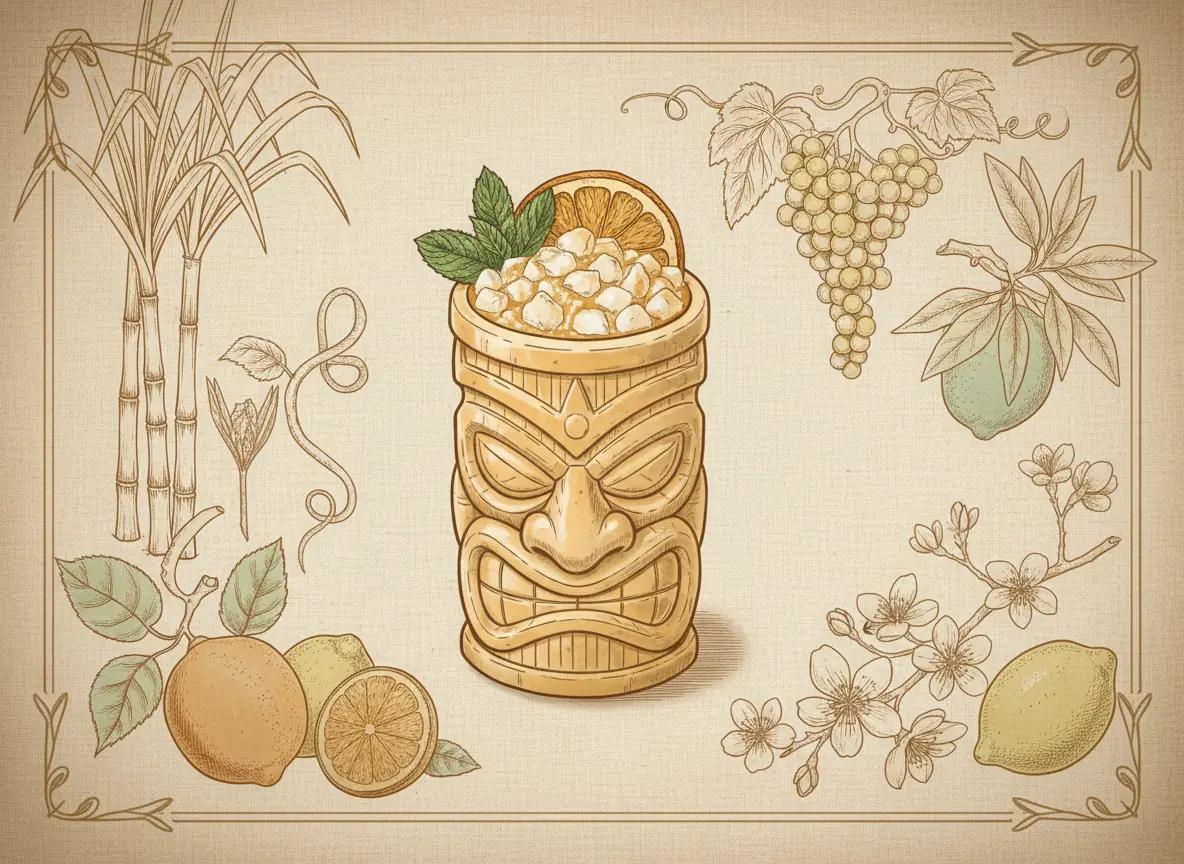
Scorpion
The Scorpion is Trader Vic’s rum and brandy sour: 45ml white rum, 22.5ml cognac, 50ml fresh orange juice, 30ml fresh lemon juice and 15ml orgeat, shaken hard and strained over crushed ice in a tiki mug or large rocks glass. The measures are adapted from Trader Vic’s Bartender’s Guide in its 1972 revised edition. Victor Bergeron, the Trader Vic of the restaurant chain, is credited with it; Punch dates his recipe to 1946, and Tasting Table traces the drink to a Honolulu punch in print by 1938. Difford’s Guide, citing Life magazine, has Vic serving the Scorpion in four-pint bowls made to serve four, and prints his 1972 recipes for a single glass and for a bowl for three or four. The single glass is the same drink at one person’s size. It comes out pale orange, almond-scented and drier than it looks, at about 2.7 UK units. Fresh orange and lemon and an orgeat made from almonds decide it. Orgeat contains nuts, which matters for anyone with an allergy.
Glassware: Tiki Mug
Garnish: Mint sprig, Orange slice and Gardenia flower (traditional)
Ingredients
22.5ml
VS is enough. At 22.5ml it adds dried fruit and grip under the rum; a good French brandy does the same job.
15ml
Almond syrup, and the only sweetener, so it decides the drink. Choose one made from almonds. Contains nuts.
Instructions
Squeeze the orange and lemon juice the same day.
Fill a tiki mug or large rocks glass with crushed ice.
Add the white rum, cognac, orange juice, lemon juice and orgeat to a shaker with cubed ice.
Shake hard for 10 to 12 seconds.
Strain over the crushed ice.
Garnish with an orange slice and a mint sprig, and serve with a straw.
Source: Difford's Guide (Adapted from Trader Vic’s Bartender’s Guide (1972 revised edition); shaken rather than blended, method ours). Last checked 9 October 2026.
Expert Tip
Squeeze the orange and the lemon the same day. Orange juice turns dull quickly, and at 50ml it is the largest pour in the glass, so a tired one flattens the whole drink. Use an orgeat made from almonds, and keep it at 15ml. It is the only sweetener, and the almond is what makes this a Scorpion rather than a rum and brandy sour. A thin orgeat flavoured with almond essence tastes of marzipan sweets. Shake hard for 10 to 12 seconds with plenty of ice: there is over 160ml of liquid to chill. With a blender to hand, a short blend with a scoop of crushed ice gives a softer, frothier drink.
Behind the Scorpion
Flavour Profile
Where It Comes From
Victor Bergeron built Trader Vic’s from a single bar in Oakland, California, into a chain, and the Scorpion became one of its signature drinks. It appears in his Bartender’s Guide; the measures here are adapted from the 1972 revised edition. Punch dates Vic’s Scorpion recipe to 1946, and Tasting Table traces the drink to a Honolulu punch of sugar, mint, oranges, lemons and okolehao, mentioned in a Honolulu column of 1938, so dates for its first appearance vary between accounts.
It made its name as a bowl drink: Difford’s Guide, citing Life magazine, has Vic serving the Scorpion in four-pint bowls made to serve four. Difford’s prints his 1972 Bartender’s Guide recipes for a single glass and for a bowl for three or four. The single glass is the same recipe at one person’s size.
Why It Works
The Scorpion is a sour with two spirits and two citrus juices. The rum leads; the cognac adds dried fruit and the grip that stops 50ml of orange juice making the drink soft. Orange gives body and some sugar. Lemon gives the acid. Orgeat sweetens and adds almond, and the almond is what ties brandy, rum and orange together.
Change the balance and it shows at once. More orgeat and it tastes of marzipan; more orange and it drifts towards juice; more lemon and it turns sharp.
What each part of a Scorpion does
White rum
- Measure
- 45ml
- Its job
- The lead spirit: strength and lightness
Cognac
- Measure
- 22.5ml
- Its job
- Dried fruit and grip
Fresh orange juice
- Measure
- 50ml
- Its job
- Body and some sweetness
Fresh lemon juice
- Measure
- 30ml
- Its job
- The acid
Orgeat
- Measure
- 15ml
- Its job
- Sweetness and almond, the thread through the rest
| Ingredient | Measure | Its job |
|---|---|---|
| White rum | 45ml | The lead spirit: strength and lightness |
| Cognac | 22.5ml | Dried fruit and grip |
| Fresh orange juice | 50ml | Body and some sweetness |
| Fresh lemon juice | 30ml | The acid |
| Orgeat | 15ml | Sweetness and almond, the thread through the rest |
Where It Goes Wrong
Three things spoil a Scorpion: carton citrus, a thin orgeat and a lazy shake. Squeeze both juices the same day. Use an orgeat made from almonds. Shake hard for 10 to 12 seconds, because over 160ml of liquid needs the chill and the dilution.
The Bowl
For a bowl, scale the recipe by the number of people and build it over plenty of ice. A bowl dilutes slowly, so the last of it is softer than the first. Many bowl recipes add gin, extra rum or wine; those are different drinks, and stronger ones.
How Strong It Is
Taking the rum and cognac at 40% ABV, a Scorpion carries about 2.7 UK units, a little under three 25ml pub singles. A bowl for four holds about 11 units, which is worth knowing before it reaches the table.
Make it at home
The Spirit
White RumWhite rum is clear rum, usually bottled at 40% ABV, either unaged or rested in oak and then charcoal-filtered back to clear. It is the light, dry rum of the Daiquiri, the Mojito and the Cuba Libre, and the rum most of our recipes mean when they want rum that sits under lime rather than over it.
Master the Techniques
More to explore
Frequently Asked Questions
What is a Scorpion cocktail?
Who created the Scorpion?
How strong is a Scorpion?
What is a Scorpion Bowl?
Why rum and cognac together?
Why does my Scorpion taste of marzipan?
Can I use another brandy instead of cognac?
Sources.
Checked between 18 October and 19 October 2026.
- Punch, “Scorpion Bowl” (Trader Vic (1946) as updated by Richard Boccato; modelled on a Hawaiian punch likely made with okolehao).
- Tasting Table, “The Original Scorpion Cocktail Was Made With A Rare Hawaiian Spirit” (a 1938 Honolulu column on “scorpions”; sugar, mint, oranges, lemons and okolehao).
- Difford’s Guide, “Scorpion” (secondary source: created by Victor Bergeron circa 1950s; the recipe printed from his 1972 Trader Vic’s Bartender’s Guide (Revised Edition), for one and for three or four people).
- Difford’s Guide, “Trader Vic” (Life magazine records Trader Vic serving the Scorpion in four-pint bowls made to serve four).
You Might Also Like
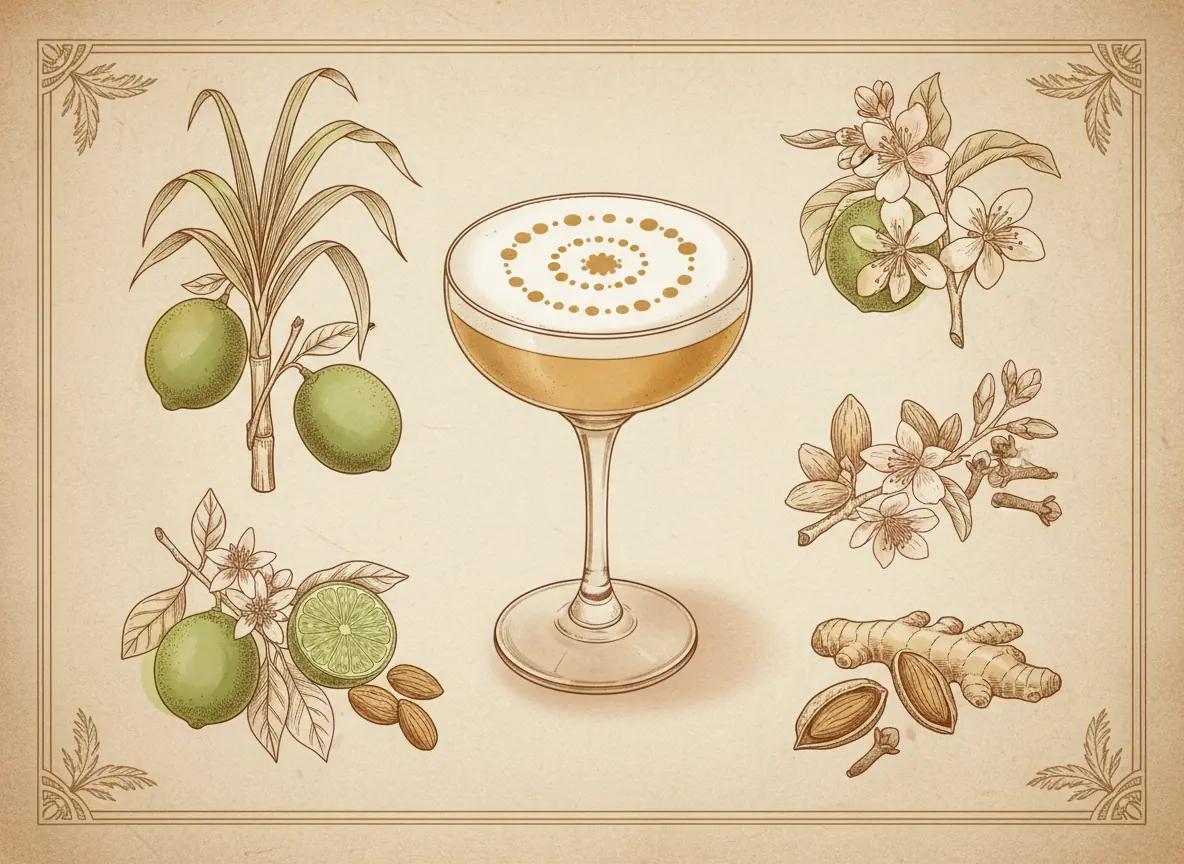
Tiki Sour
A Tiki Sour is a rum sour with tiki flavours: 50ml aged rum, 25ml fresh lime juice, 12.5ml orgeat and 7.5ml falernum, plus 15ml egg white if you want a foam, shaken first without ice and then with it, and double strained into a chilled coupe. Angostura, dotted on the foam, is the garnish. The frame is the classic sour of spirit, citrus, sweetener and egg. The contents come from tiki: almond from the orgeat, clove and ginger from the falernum, and an aged rum’s vanilla and oak. We have found no source that names a creator or a date for it. Orgeat is made from almonds and falernum often contains almond, so the drink is not for anyone with a nut allergy. A glass holds about 2.1 UK units.
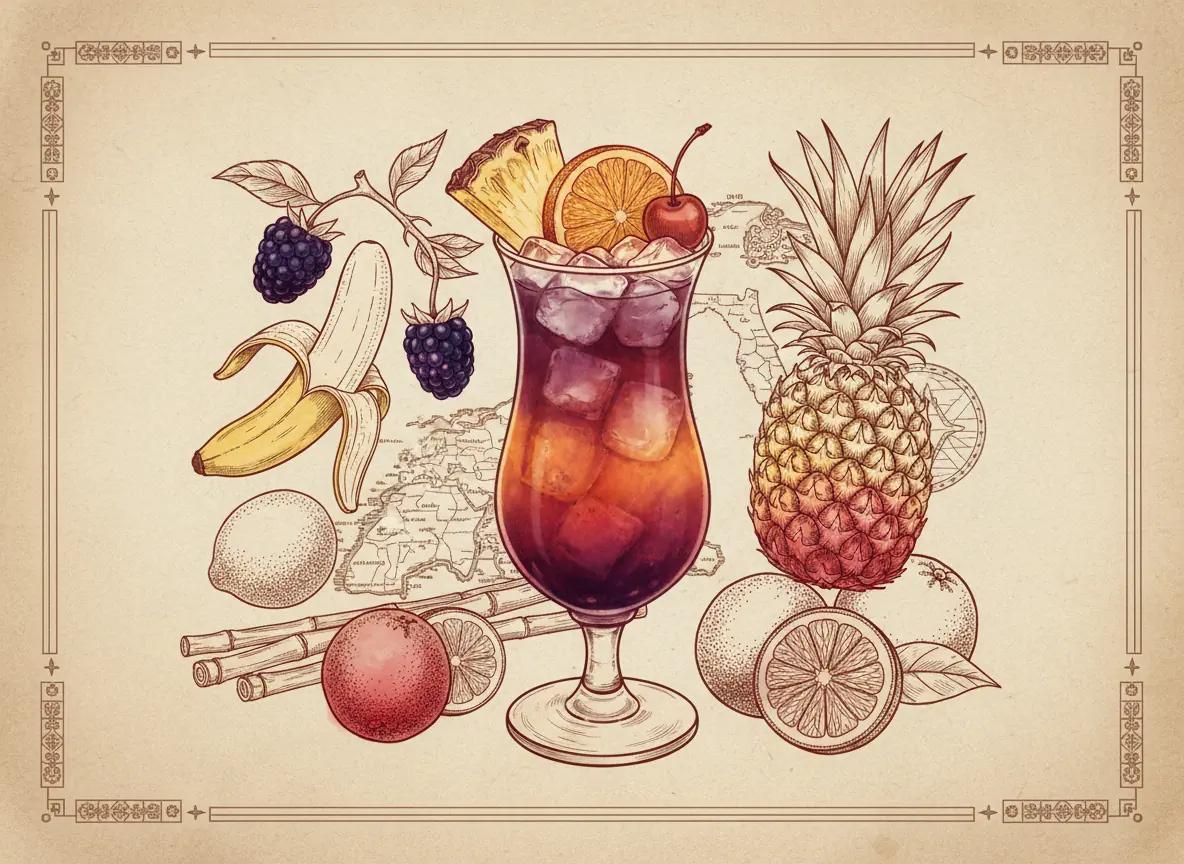
Rum Runner
A Rum Runner is a Florida Keys tiki drink: 30ml each of dark and white rum, 15ml each of blackberry and banana liqueur, 10ml grenadine, 15ml fresh lime juice, 45ml pineapple juice and 30ml orange juice, shaken hard and strained over crushed ice in a hurricane glass. A 15ml float of overproof rum is optional. Blended with the ice instead, it becomes the frozen Rum Runner the Keys are known for. The usual account, which Difford’s Guide quotes from the Holiday Isle Tiki Bar’s own site and calls legend, credits the bar’s manager John “Tiki John” Elber with mixing it to clear surplus rum and liqueur before a delivery; the bar took its name in 1971, so the early 1970s is the likely date. That first version had no fruit juice. Pineapple and orange came later and made it the long, fruity drink most bars pour now. It is stronger than it tastes: about 3.0 UK units a glass, 3.9 with the float. Fresh lime and a pomegranate grenadine are what keep it from tasting of boiled sweets.
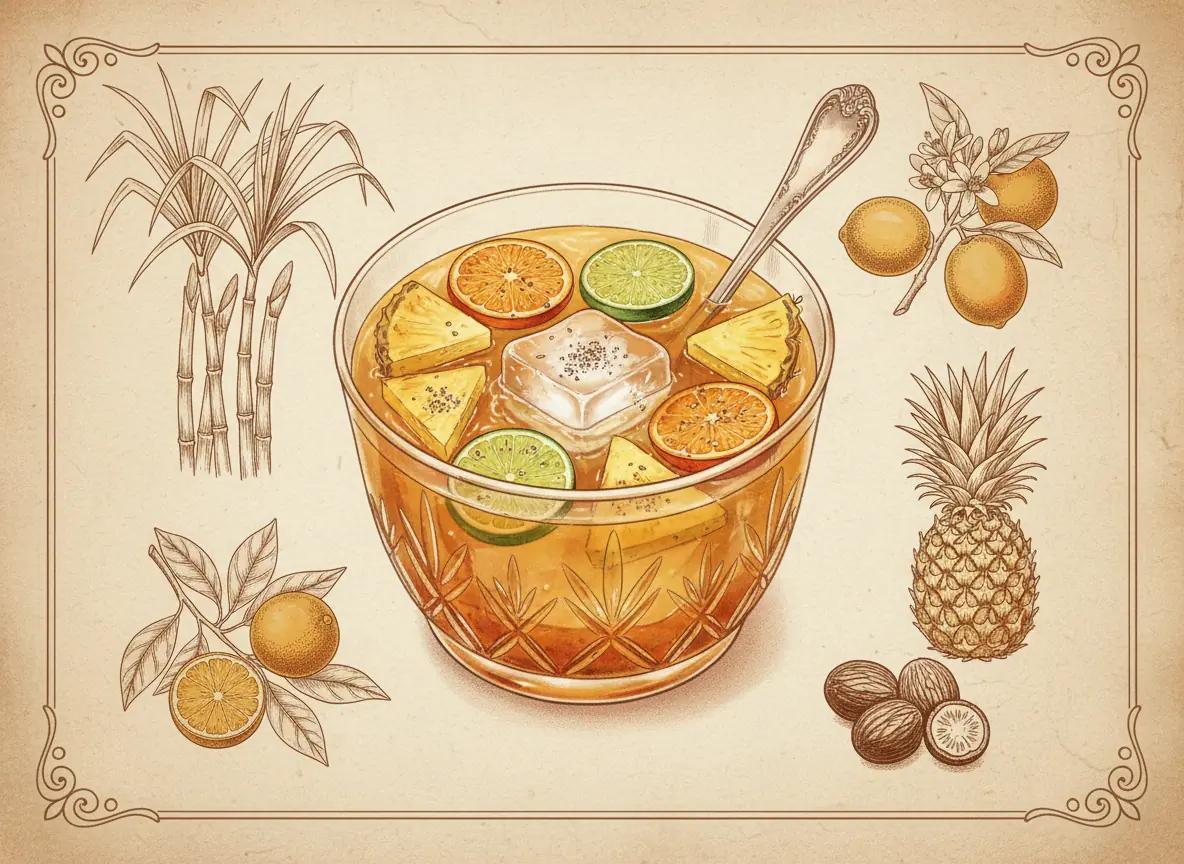
Tropical Punch
This Tropical Punch fills a bowl for eight to ten: 300ml aged rum, 150ml white rum, 300ml pineapple juice, 200ml fresh orange juice, 100ml fresh lime juice, 100ml simple syrup and six to eight dashes of Angostura, stirred over a large block of ice, with nutmeg grated over the top. About 18 UK units in the bowl, or roughly 1.8 a glass across ten. Punch began as a drink the English made in India. The word first appears in an East India Company letter of 1632, and John Fryer wrote in 1676 that it was “Indostan for Five”, for five ingredients, by the Oxford Companion’s account. This bowl keeps that shape, with the juices and the melting ice in place of the water. Two rums do different jobs: aged for body and barrel, white for lift. Build it a little tart, because the ice softens it over the evening.
Where this one sits
Recipe by Jerry Can Spirits · Updated 19 October 2026