Three Dots and a Dash
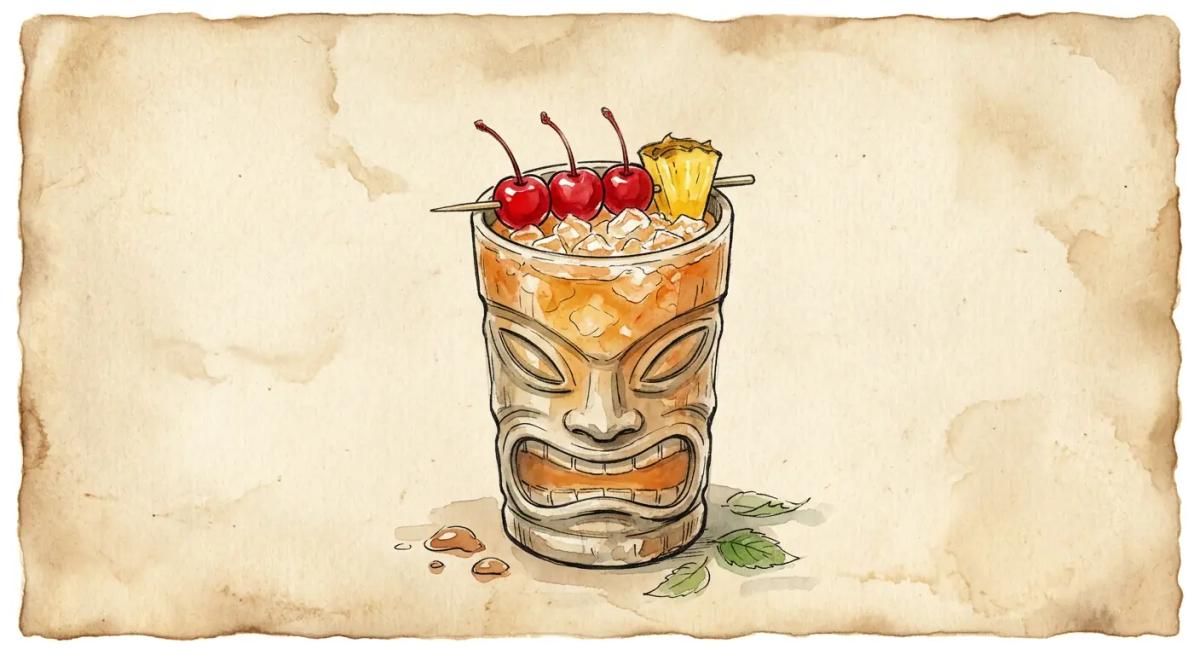
Three Dots and a Dash is 45ml of rhum agricole, 15ml of aged rum, 15ml each of fresh lime juice, fresh orange juice and honey syrup, 7.5ml each of falernum and allspice dram, and two dashes of Angostura bitters. Shake it hard for 10 to 12 seconds and strain it over crushed ice in a tiki mug, then lay three cherries and a pineapple chunk across the top on one skewer. About 3.2 UK units. The measures are the IBA’s, from its New Era list; the IBA flash blends where we shake. The drink is credited to Donn Beach at Don the Beachcomber in Hollywood during the Second World War. The name is Morse code: three dots and a dash spell V, the Allied sign for victory, and the garnish spells it again. The agricole leads. Made from fresh-pressed cane juice, it tastes grassy and green, and at three times the aged rum it sets the tone. The falernum contains almond.
Glassware: Tiki Mug
Garnish: Three maraschino cherries on a skewer and Pineapple chunk on the same skewer
Ingredients
15ml
A blended aged rum, as the IBA names, at 40% ABV. The small measure puts oak, vanilla and weight under the agricole rather than in front of it.
45ml
Rhum agricole from Martinique, the IBA’s choice, made from fresh cane juice and often bottled at 50% ABV. Its grassy edge is the drink’s character; a standard white rum makes it sweeter and plainer.
15ml
Squeezed the same day. The sharper of the two juices and the main acid against the honey and falernum.
7.5ml
A Barbadian liqueur of lime, almond, clove and ginger, around 11% ABV. Its almond makes the drink unsuitable for anyone with a tree nut allergy.
7.5ml
Also called pimento dram; the IBA names St. Elizabeth. Drier and more pungent than falernum and strong in flavour, so measure it rather than pouring by eye.
2 dashes
Two dashes. The clove and bitterness tie the sweet ingredients together and dry the finish.
1 chunk
Fresh, cut into a rectangular chunk. It is the dash in the Morse V and goes on the skewer after the three cherries.
Instructions
Squeeze the lime and orange juice the same day.
Pack a tiki mug with crushed ice.
Add the rhum agricole, aged rum, lime juice, orange juice, honey syrup, falernum, allspice dram and Angostura to a shaker.
Fill with cubed ice and shake hard for 10 to 12 seconds.
Strain over the crushed ice in the mug.
Skewer three cherries and a pineapple chunk, lay the skewer across the rim and serve with a straw.
Source: the IBA (Official IBA specification (New Era); shaken and strained over crushed ice in a tiki mug, where the IBA flash blends into a footed copo; method ours). Last checked 9 October 2026.
Expert Tip
Measure the falernum and the allspice dram exactly. At 7.5ml each they are small, but allspice dram is intense: pour heavy and the drink tastes of cloves and little else. Pour either one short and the honey takes over. Loosen the honey before you start, two parts to one of warm water by weight, so it mixes cold. Straight honey sets on the ice and clings to the tin. Pack the mug with crushed ice before you shake, so the drink goes straight onto it. Then build the skewer in order, three cherries and the pineapple, and lay it across the rim. It is the name of the drink.
Behind the Three Dots and a Dash
Flavour Profile
The Origin
The drink is credited to Donn Beach at Don the Beachcomber in Hollywood during the Second World War. The name is Morse code: three dots and a dash make V, the letter of the Allied V for Victory campaign.
Beach kept his recipes secret, coding the bottles behind his bar, so the drink survives through later reconstructions rather than his own notes. Dates given for it vary, and none is firmly documented.
The Split Base
The base is three parts rhum agricole to one of aged rum. The agricole leads with a grassy, green edge; the aged rum sits underneath with oak and vanilla.
Rhum agricole is made from fresh-pressed cane juice, mostly on Martinique and Guadeloupe, rather than from the by-products of sugar refining. That is why it tastes of the field. Swap in a standard white rum and the drink loses its top note and turns sweeter.
Falernum and Allspice Dram
Falernum brings lime zest, almond and warm spice in a sweet, low-strength rum-based bottle. Allspice dram brings pimento alone, drier and far more pungent. At 7.5ml each they cover different ground, and dropping the dram, the usual shortcut, makes the drink sweeter and flatter.
Lime and orange together give 30ml of juice against 15ml of honey syrup and 15ml of the two liqueurs, so the drink lands tart rather than sweet.
Ours Against the IBA
Three Dots and a Dash as the IBA writes it and as we make it
Rhum agricole
- IBA
- 45ml, Martinique
- Ours
- 45ml
Aged rum
- IBA
- 15ml blended aged rum
- Ours
- 15ml
Lime, orange, honey syrup
- IBA
- 15ml each
- Ours
- 15ml each
Falernum, allspice dram
- IBA
- 7.5ml each
- Ours
- 7.5ml each
Angostura
- IBA
- Two dashes
- Ours
- Two dashes
Method
- IBA
- Flash blended with crushed ice
- Ours
- Shaken 10 to 12 seconds, strained over crushed ice
Glass
- IBA
- Footed copo
- Ours
- Tiki mug
Garnish
- IBA
- Three cherries and a pineapple chunk
- Ours
- The same, on one skewer
| Element | IBA | Ours |
|---|---|---|
| Rhum agricole | 45ml, Martinique | 45ml |
| Aged rum | 15ml blended aged rum | 15ml |
| Lime, orange, honey syrup | 15ml each | 15ml each |
| Falernum, allspice dram | 7.5ml each | 7.5ml each |
| Angostura | Two dashes | Two dashes |
| Method | Flash blended with crushed ice | Shaken 10 to 12 seconds, strained over crushed ice |
| Glass | Footed copo | Tiki mug |
| Garnish | Three cherries and a pineapple chunk | The same, on one skewer |
The measures match. Shaking and straining over packed crushed ice gives much the same drink without a blender.
How to Serve It
Over packed crushed ice in a tiki mug, with the skewer of three cherries and a pineapple chunk laid across the rim, and a straw. Serve it at once, while the crushed ice is still dry.
Make it at home
The Spirit
Aged RumAged rum is rum that has spent years in oak casks, usually ex-bourbon barrels, and taken on vanilla, caramel and dried fruit; our recipes count it at 40% ABV. In our recipes it is the rum for drinks where you should taste the spirit: the Old Cuban, the Mai Tai, the Rum Sour and the punch bowl.
Master the Techniques
More to explore
Frequently Asked Questions
What is in a Three Dots and a Dash?
Why is it called Three Dots and a Dash?
Who created Three Dots and a Dash?
Can I use white rum instead of rhum agricole?
What is allspice dram?
How strong is a Three Dots and a Dash?
Does a Three Dots and a Dash contain nuts?
You Might Also Like
Zombie
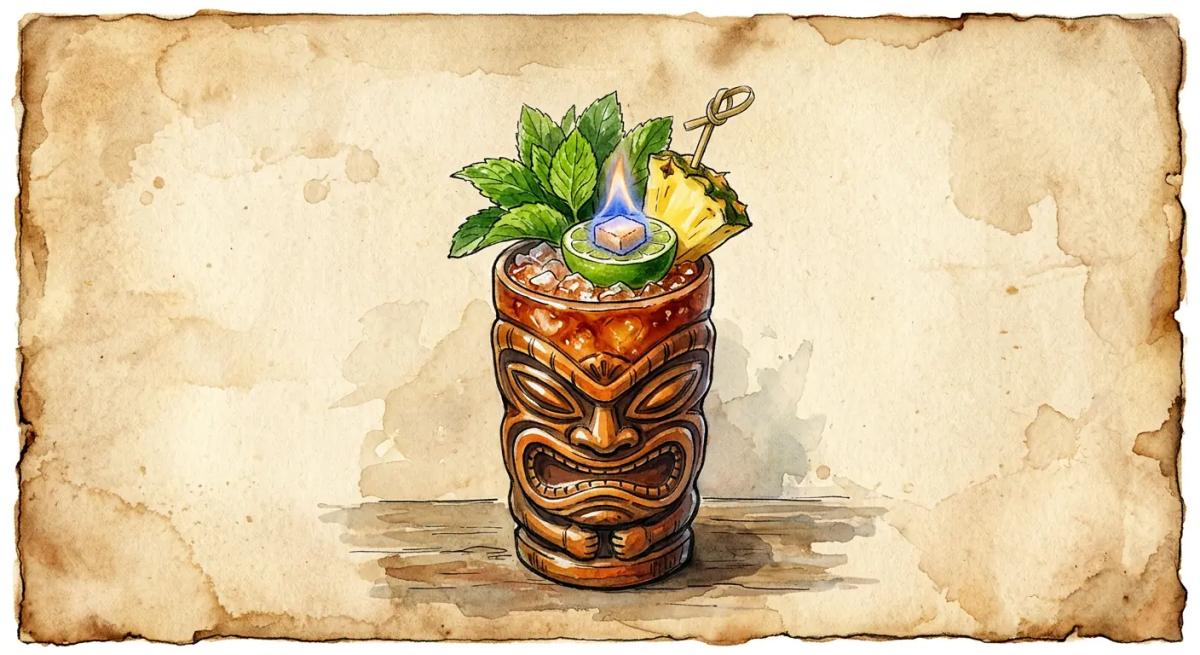
A Zombie is 45ml Jamaican dark rum, 45ml gold Puerto Rican rum and 30ml Demerara rum with 20ml fresh lime juice, 15ml falernum, 15ml Donn’s Mix, a teaspoon of grenadine, a dash of Angostura and six drops of Pernod, flash blended with cracked ice and poured into a zombie glass with mint. Those are the IBA’s measures. About 5.0 UK units in one glass. The Oxford Companion says Donn Beach created it in 1934 at Don the Beachcomber’s in Hollywood, and refused to serve more than two to a customer. Difford’s Guide says his recipes were notated in a secret code of numbered bottles and elusive mixes, and the Companion says Jeff Berry found the original formula in 2006 in the notebook of a former Beachcomber’s headwaiter, Richard Santiago. Donn’s Mix, two parts grapefruit juice to one of cinnamon syrup, is what separates it from a strong rum punch.
Painkiller
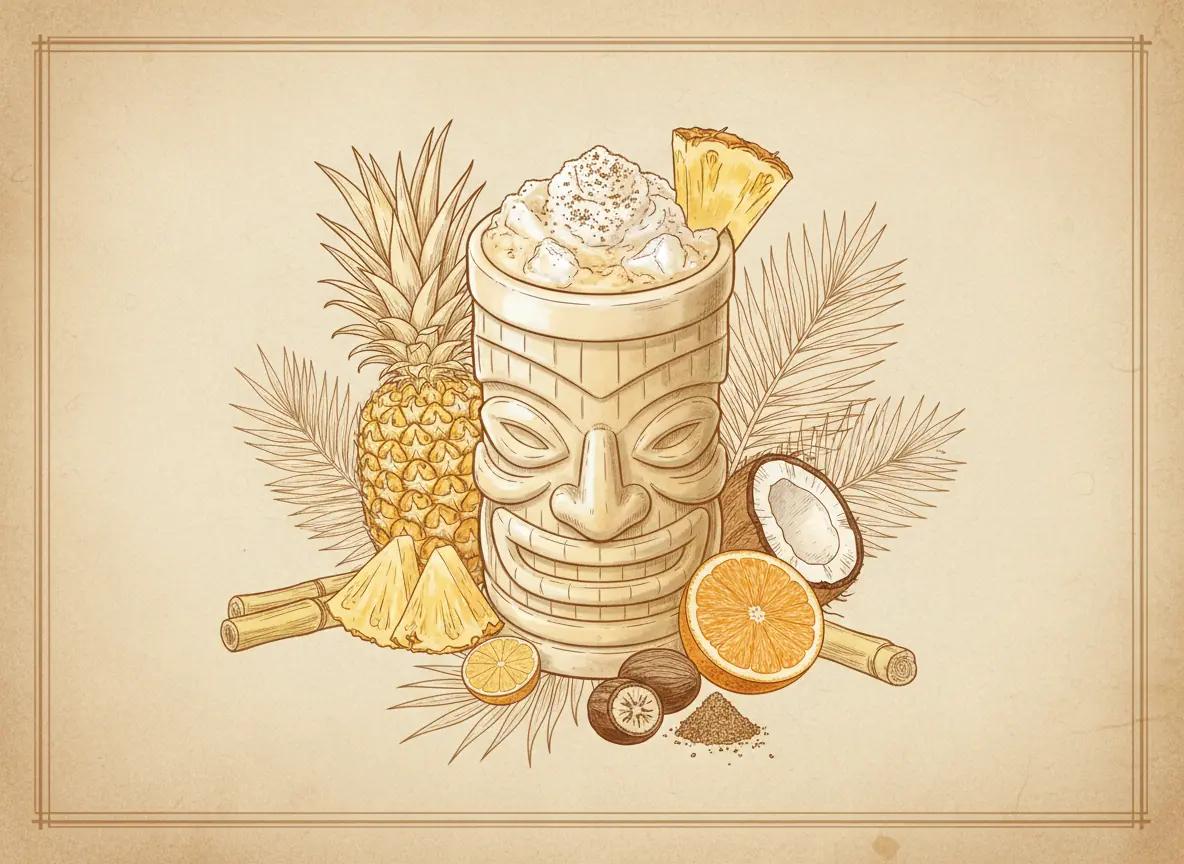
A Painkiller is 60ml of Pusser’s Rum, 120ml of pineapple juice, 30ml of fresh orange juice and 30ml of cream of coconut, given a hard 10 to 12 second shake and strained onto cubed ice in a tiki mug or a big glass, with fresh nutmeg grated on top. About 2.4 UK units. Cream of coconut is coconut and sugar, usually with no dairy, but check the label. The name belongs to Pusser’s. Pusser’s prints the name with the registered symbol on its own Painkiller page, and the Oxford Companion says the company owns the trademark for the Pusser’s Painkiller cocktail. The recipe here is its own: four parts pineapple, one of cream of coconut and one of orange, with Pusser’s to suit. Difford’s Guide says it trademarked the name in the United States and the UK in 2003 and in 2010 forced a New York bar called Painkiller to rename itself PKNY. Pusser’s traces the drink to Daphne Henderson’s Soggy Dollar Bar on Jost Van Dyke, in the British Virgin Islands.
Tiki Sour
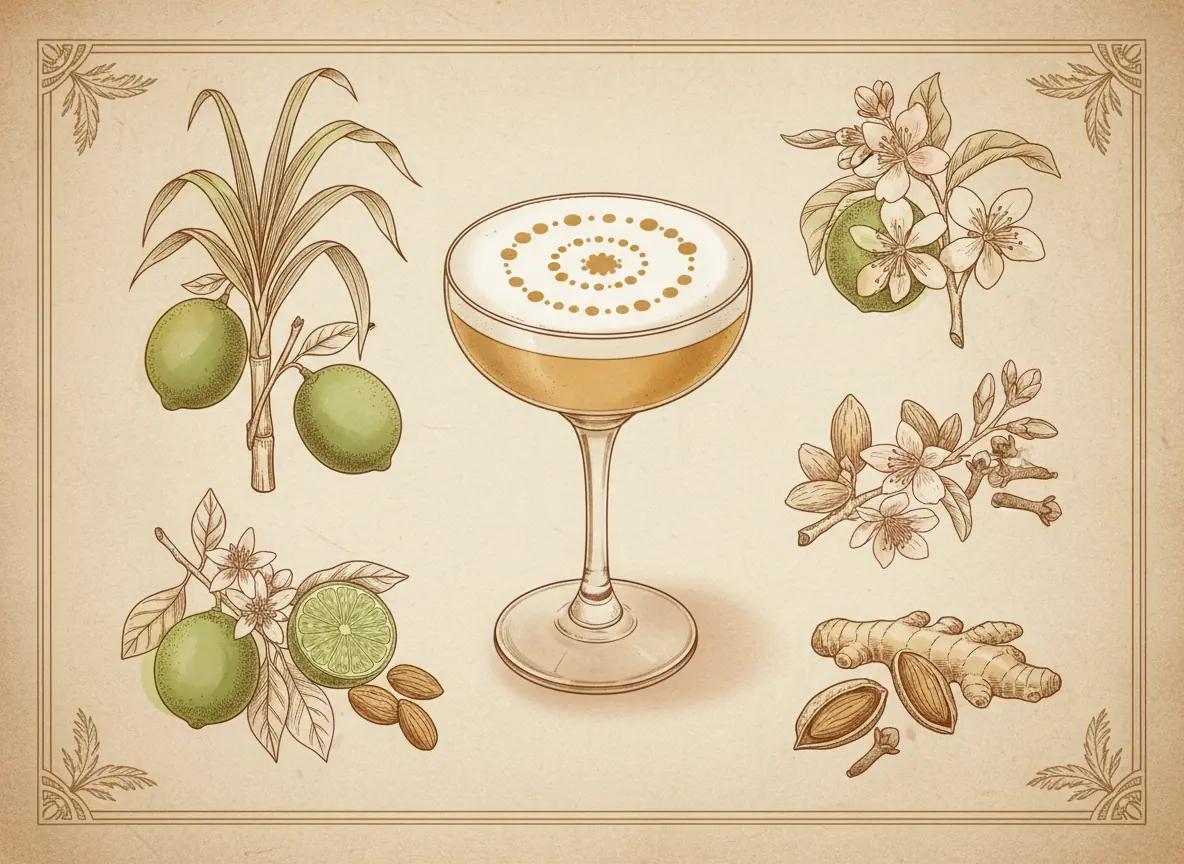
A Tiki Sour is a rum sour with tiki flavours: 50ml aged rum, 25ml fresh lime juice, 12.5ml orgeat and 7.5ml falernum, plus 15ml egg white if you want a foam, shaken first without ice and then with it, and double strained into a chilled coupe. Angostura, dotted on the foam, is the garnish. The frame is the classic sour of spirit, citrus, sweetener and egg. The contents come from tiki: almond from the orgeat, clove and ginger from the falernum, and an aged rum’s vanilla and oak. We have found no source that names a creator or a date for it. Orgeat is made from almonds and falernum often contains almond, so the drink is not for anyone with a nut allergy. A glass holds about 2.1 UK units.
Where this one sits
Recipe by Jerry Can Spirits · Updated 18 October 2026