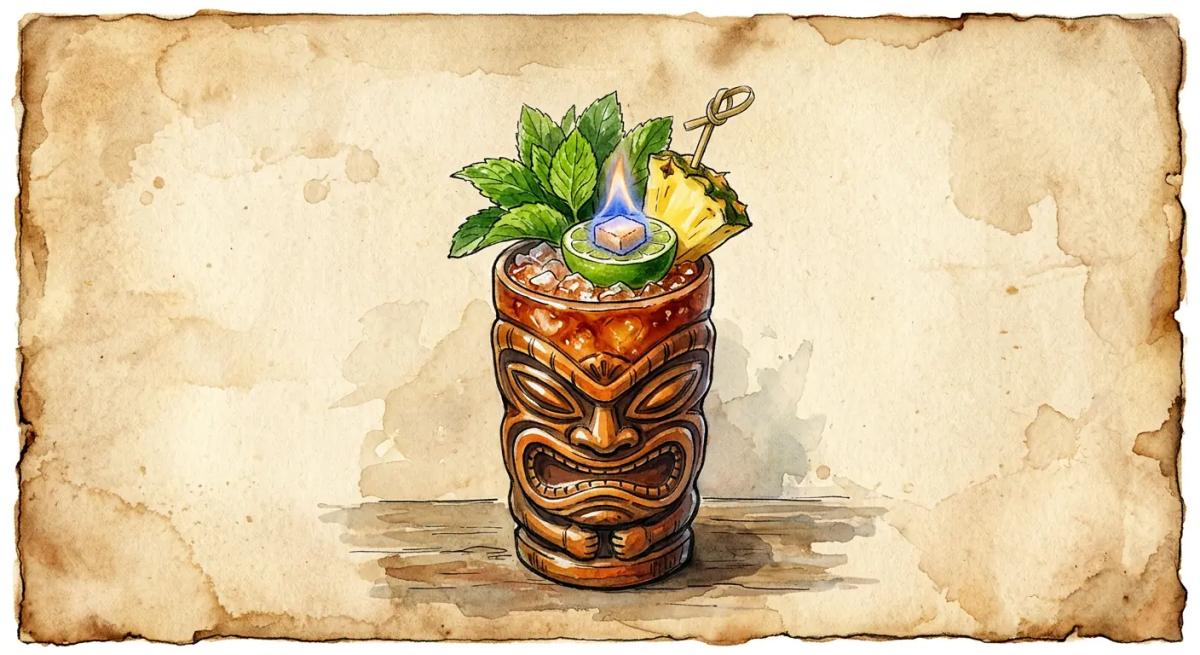
Zombie
A Zombie is 45ml Jamaican dark rum, 45ml gold Puerto Rican rum and 30ml Demerara rum with 20ml fresh lime juice, 15ml falernum, 15ml Donn’s Mix, a teaspoon of grenadine, a dash of Angostura and six drops of Pernod, flash blended with cracked ice and poured into a zombie glass with mint. Those are the IBA’s measures. About 5.0 UK units in one glass. The Oxford Companion says Donn Beach created it in 1934 at Don the Beachcomber’s in Hollywood, and refused to serve more than two to a customer. Difford’s Guide says his recipes were notated in a secret code of numbered bottles and elusive mixes, and the Companion says Jeff Berry found the original formula in 2006 in the notebook of a former Beachcomber’s headwaiter, Richard Santiago. Donn’s Mix, two parts grapefruit juice to one of cinnamon syrup, is what separates it from a strong rum punch.
Glassware: Zombie Glass
Garnish: Mint sprig
Ingredients
45ml
Jamaican dark rum at 40% ABV. Heavy with esters, overripe banana and pineapple; it is the rum you can still smell through eight other ingredients.
45ml
Gold Puerto Rican rum at 40% ABV, lightly aged and light in body. It carries the body between the other two.
30ml
Demerara rum from Guyana at a standard 40% ABV; the IBA names no overproof. Burnt sugar and smoke, the weight at the bottom of the drink. An overproof Demerara makes a different, much stronger drink.
20ml
Fresh, from the same day. At 20ml it is the main acid against three sweeteners; reduce it and sweetness takes over.
15ml
Velvet Falernum, 11% ABV on LWC’s UK listing, is the usual bottle: lime, clove and ginger, sweet and spiced. Most falernums contain almond flavouring, which matters to anyone allergic to nuts; read the label.
15ml
Two parts fresh grapefruit juice to one part cinnamon syrup, mixed in advance. Grapefruit brings bitterness as well as acid, and the cinnamon rounds it.
1 tsp
A teaspoon of grenadine made from pomegranate. It brings colour and a faint fruitiness; the artificially coloured kind adds only sugar.
1 dash
One dash, at 44.7% ABV. In a drink with three sweeteners, its bitterness helps keep the finish dry.
6 drops
Six drops, counted. Anise registers at tiny amounts, and this much shows only as a cool edge on the finish.
Instructions
Make Donn’s Mix: two parts fresh grapefruit juice to one part cinnamon syrup.
Squeeze the lime juice the same day, ideally just before you build.
Add all the ingredients to a blender with about 170g of cracked ice.
Pulse for a few seconds only, to chill and aerate, stopping while the ice still has texture.
Without a blender, shake hard with a small scoop of crushed ice for 10 to 12 seconds.
Pour unstrained into a zombie glass, topping up with crushed ice if needed.
Garnish with a mint sprig and serve with a straw.
Source: the IBA (Official IBA specification, following the 1934 recipe Jeff Berry published in Sippin’ Safari; served in a zombie glass; method ours). Last checked 9 October 2026.
Expert Tip
Make Donn’s Mix first: two parts fresh grapefruit juice to one part cinnamon syrup. Squeeze the grapefruit the same day and make only what you need; plain grapefruit gets you part of the way and leaves the finish thin. Count the Pernod. Six drops register as a cool edge on the finish; a bar spoon would make the drink taste of anise and little else. Blend for a few seconds only, enough to chill and froth the drink while the ice still has texture. Run the blender longer and you have a frozen drink, more diluted than the recipe means.
Behind the Zombie
Flavour Profile
The Origin
Donn Beach created the Zombie in late 1934 at Don the Beachcomber, his restaurant in Hollywood. His instructions to bartenders used coded references to ingredients that only he knew, so no single member of staff could carry a recipe to a rival.
The Oxford Companion says the New York nightclub owner Monte Proser built an empire on a copied Zombie in the early 1940s. For decades most Zombies poured elsewhere were guesses, usually heavy on rum and light on everything else.
Jeff Berry’s Sippin’ Safari, published in 2007, set out three of Beach’s Zombie recipes, dated from 1934 to 1956. The IBA specification follows the 1934 version.
The Three-Rum Structure
Three rums, each covering a different part of the palate.
The Jamaican rum sits at the top: heavy esters, overripe banana and pineapple, the aroma you notice first. The Demerara sits at the bottom: burnt sugar and smoke. Between them, the gold Puerto Rican rum fills out the body.
Pour any one of them alone at 120ml and the drink tastes loud rather than layered. That is why the imitations that simply added more rum never tasted like the original.
Zombie: what each ingredient does
Jamaican dark rum
- Measure
- 45ml
- Its job
- Aroma and fruit
Gold Puerto Rican rum
- Measure
- 45ml
- Its job
- Body through the middle
Demerara rum
- Measure
- 30ml
- Its job
- Burnt sugar and weight
Fresh lime juice
- Measure
- 20ml
- Its job
- The main acid
Falernum
- Measure
- 15ml
- Its job
- Clove, ginger and sweetness
Donn’s Mix
- Measure
- 15ml
- Its job
- Grapefruit bitterness and cinnamon
Grenadine
- Measure
- One teaspoon
- Its job
- Colour and a little fruit
Angostura
- Measure
- One dash
- Its job
- Dryness on the finish
Pernod
- Measure
- Six drops
- Its job
- A cool anise edge
| Ingredient | Measure | Its job |
|---|---|---|
| Jamaican dark rum | 45ml | Aroma and fruit |
| Gold Puerto Rican rum | 45ml | Body through the middle |
| Demerara rum | 30ml | Burnt sugar and weight |
| Fresh lime juice | 20ml | The main acid |
| Falernum | 15ml | Clove, ginger and sweetness |
| Donn’s Mix | 15ml | Grapefruit bitterness and cinnamon |
| Grenadine | One teaspoon | Colour and a little fruit |
| Angostura | One dash | Dryness on the finish |
| Pernod | Six drops | A cool anise edge |
The Falernum
Falernum, from Barbados, is a sweet syrup or a low-strength rum-based bottle flavoured with lime, clove, ginger and usually almond; Velvet Falernum, 11% ABV on LWC’s UK trade listing, is the usual bottle. Its clove sits against the Demerara’s burnt sugar. At 15ml it is measured small, because it shares sweetness and spice with Donn’s Mix and the grenadine.
Donn’s Mix and the Lost Recipe
Beach labelled his prepared mixes by number rather than by contents, so a bartender could make his drinks without learning what was in them.
Donn’s Mix is two parts fresh grapefruit juice to one part cinnamon syrup. Grapefruit brings bitterness as well as acid, and that bitterness stops a glass holding three rums, falernum and grenadine from tasting sweet. The cinnamon rounds its edge.
Without the mix and the Pernod, what remains is a lot of rum, some fruit and sugar: strong and unbalanced, which is the Zombie most people met, since the Oxford Companion says hundreds of bogus Zombie recipes were published and none comes close to Beach’s.
The Two-Drink Rule
Don the Beachcomber limited customers to two Zombies each because of their potency. At about 5.0 UK units a glass the rule still makes sense: two is 10 units, against a weekly guideline of 14.
How to Serve It
Flash blended with cracked ice and poured into a zombie glass, topped up with crushed ice if it needs it, with a sprig of mint beside the straw. No float and no flame: the IBA garnish is mint leaves alone.
Demerara rum also comes overproof; the IBA lists plain Demerara rum, and the 5.0 units assume a standard bottling.
Make it at home
The Spirit
Dark RumDark rum is a heavy, deep-coloured rum, counted at 40% ABV in our recipes, whose colour may come from years in oak, from blending or from added caramel, which Regulation (EC) 110/2008 allows. It brings weight and a burnt-sugar note to punches, hot drinks and tiki builds: the Rum Runner, the Hurricane and the Planter’s Punch.
More to explore
Frequently Asked Questions
What is in a Zombie?
Why was the recipe secret for so long?
Why the two-drink rule?
How strong is a Zombie?
What glass is a Zombie served in?
What is Donn’s Mix?
Can I use spiced rum in a Zombie?
Sources.
Checked between 18 October and 19 October 2026.
- The Oxford Companion to Spirits and Cocktails (Jeff Berry), “The Zombie” (secondary source: created in 1934 by Donn Beach at Don the Beachcomber’s, Hollywood; two to a customer; Monte Proser’s copies in the early 1940s; the original formula found by Berry in 2006 in the notebook of Richard Santiago).
- LWC, “Taylor’s Velvet Falernum 70cl” (UK trade listing: 11%).
- Difford’s Guide, “Donn Beach: How He Invented Tiki Cocktails” (secondary source: his recipes notated only in a secret code of numbered bottles and elusive mixes).
You Might Also Like
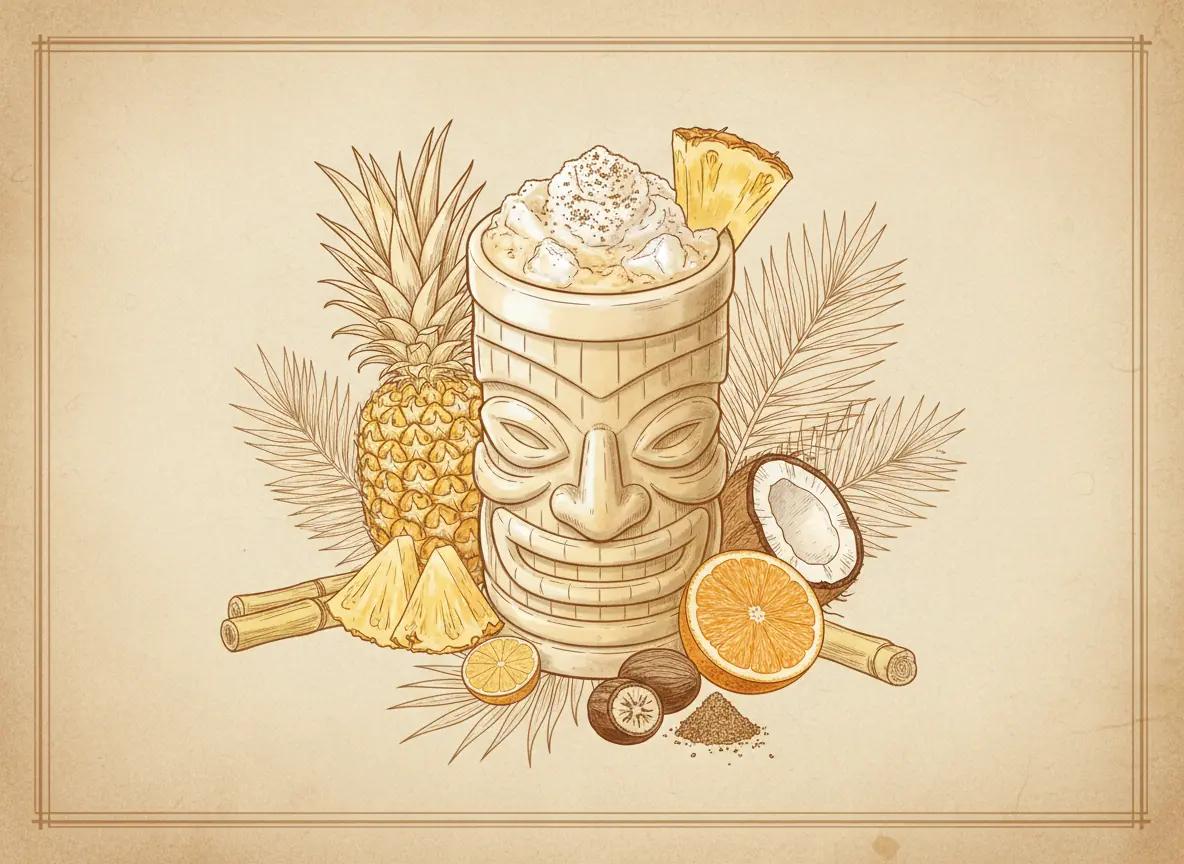
Painkiller
A Painkiller is 60ml of Pusser’s Rum, 120ml of pineapple juice, 30ml of fresh orange juice and 30ml of cream of coconut, given a hard 10 to 12 second shake and strained onto cubed ice in a tiki mug or a big glass, with fresh nutmeg grated on top. About 2.4 UK units. Cream of coconut is coconut and sugar, usually with no dairy, but check the label. The name belongs to Pusser’s. Pusser’s prints the name with the registered symbol on its own Painkiller page, and the Oxford Companion says the company owns the trademark for the Pusser’s Painkiller cocktail. The recipe here is its own: four parts pineapple, one of cream of coconut and one of orange, with Pusser’s to suit. Difford’s Guide says it trademarked the name in the United States and the UK in 2003 and in 2010 forced a New York bar called Painkiller to rename itself PKNY. Pusser’s traces the drink to Daphne Henderson’s Soggy Dollar Bar on Jost Van Dyke, in the British Virgin Islands.
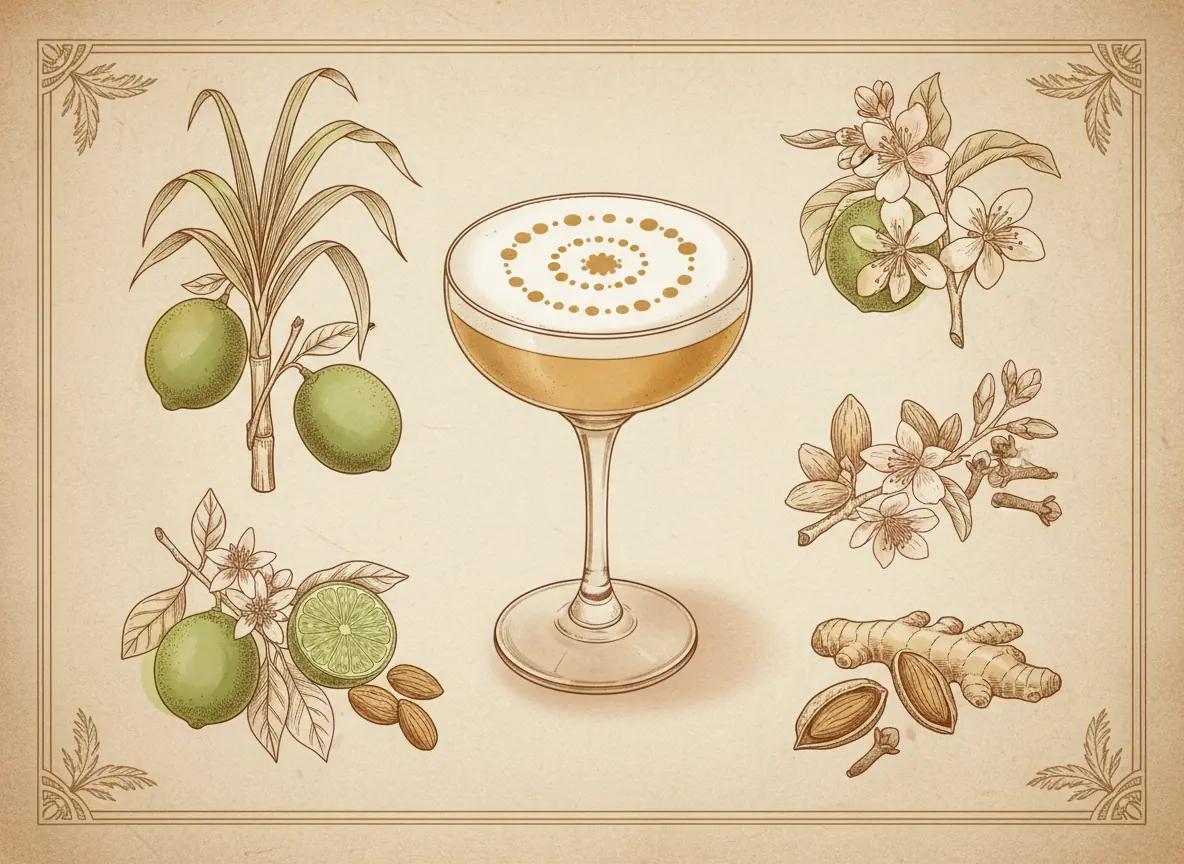
Tiki Sour
A Tiki Sour is a rum sour with tiki flavours: 50ml aged rum, 25ml fresh lime juice, 12.5ml orgeat and 7.5ml falernum, plus 15ml egg white if you want a foam, shaken first without ice and then with it, and double strained into a chilled coupe. Angostura, dotted on the foam, is the garnish. The frame is the classic sour of spirit, citrus, sweetener and egg. The contents come from tiki: almond from the orgeat, clove and ginger from the falernum, and an aged rum’s vanilla and oak. We have found no source that names a creator or a date for it. Orgeat is made from almonds and falernum often contains almond, so the drink is not for anyone with a nut allergy. A glass holds about 2.1 UK units.
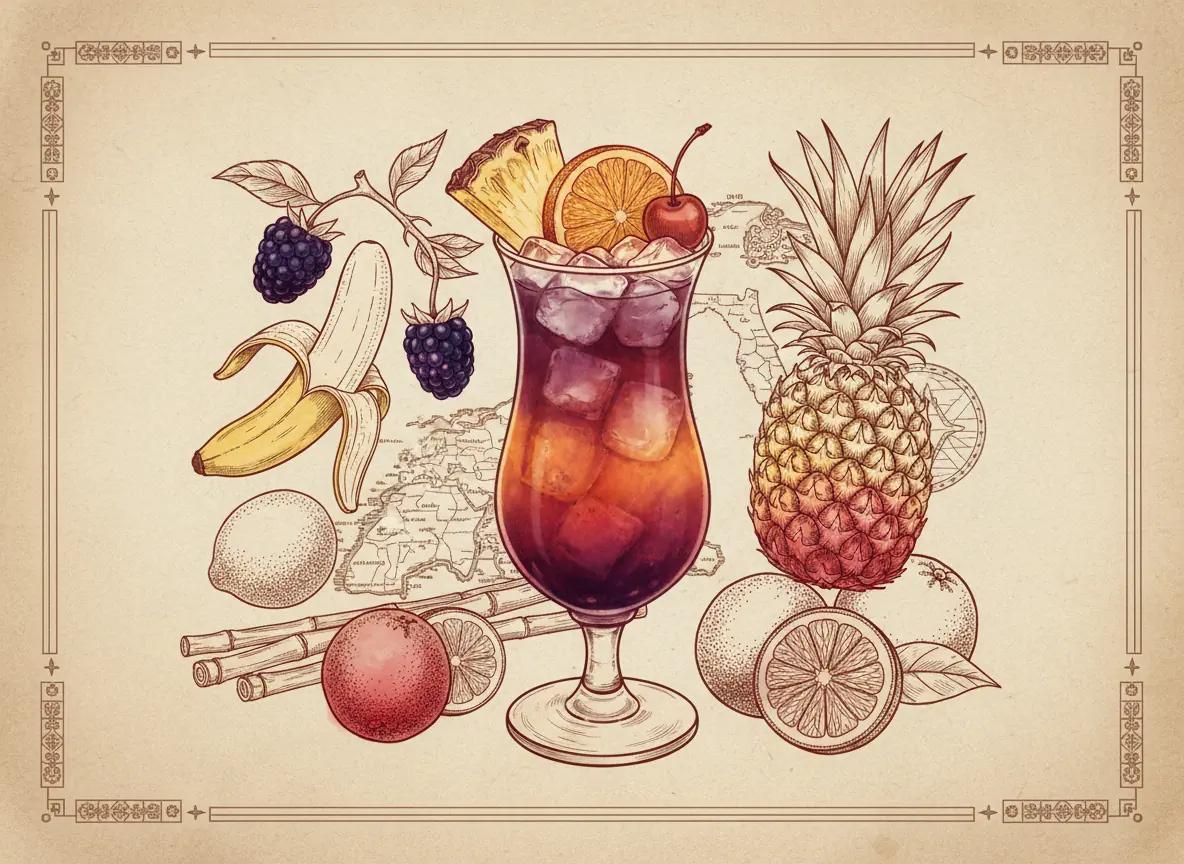
Rum Runner
A Rum Runner is a Florida Keys tiki drink: 30ml each of dark and white rum, 15ml each of blackberry and banana liqueur, 10ml grenadine, 15ml fresh lime juice, 45ml pineapple juice and 30ml orange juice, shaken hard and strained over crushed ice in a hurricane glass. A 15ml float of overproof rum is optional. Blended with the ice instead, it becomes the frozen Rum Runner the Keys are known for. The usual account, which Difford’s Guide quotes from the Holiday Isle Tiki Bar’s own site and calls legend, credits the bar’s manager John “Tiki John” Elber with mixing it to clear surplus rum and liqueur before a delivery; the bar took its name in 1971, so the early 1970s is the likely date. That first version had no fruit juice. Pineapple and orange came later and made it the long, fruity drink most bars pour now. It is stronger than it tastes: about 3.0 UK units a glass, 3.9 with the float. Fresh lime and a pomegranate grenadine are what keep it from tasting of boiled sweets.
Where this one sits
Recipe by Jerry Can Spirits · Updated 19 October 2026