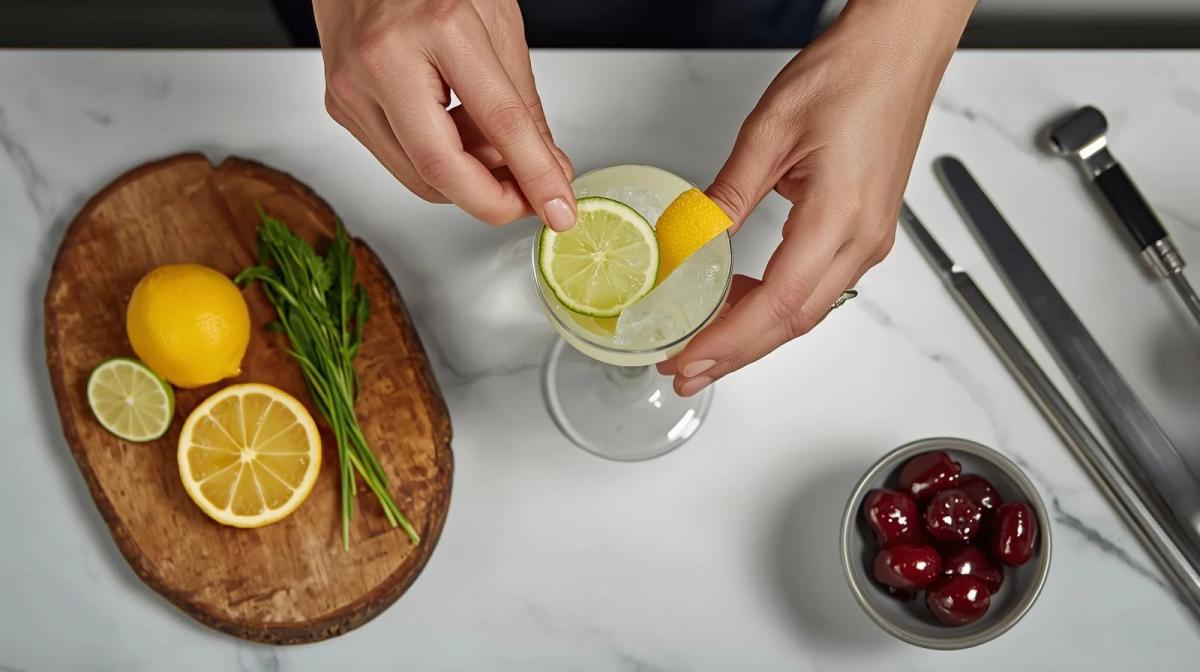
Garnishing Like a Pro: The Complete Guide to Cocktail Presentation
Cocktail Techniques19 min read

Garnishing Like a Pro: The Complete Guide to Cocktail Presentation

A garnish transforms a drink from mere liquid to proper cocktail. That citrus twist isn't decoration—it adds aromatic oils that hit your nose before each sip. The herb sprig isn't fussy, it's functional. Understanding why garnishes matter changes how you approach them. This guide covers essential techniques: citrus work from wheels to flamed twists, herb preparation that releases maximum aroma, and the principles behind garnish selection. Elevate every drink with professional finishing.

J
Jerry Can Spirits

24 January 2026

Why Garnishes Matter

Garnishes serve purposes beyond aesthetics. Understanding these functions transforms garnishing from decorative afterthought to essential cocktail component. Aroma accounts for much of what we perceive as flavour. A citrus twist expresses oils across the drink's surface; those oils hit your nose with every sip, fundamentally changing the tasting experience. Remove the twist and you have a different drink, technically identical in construction, but perceptibly diminished. Visual appeal sets expectations. Humans eat and drink with their eyes first; an attractively garnished cocktail tastes better than its identical but plain counterpart. This isn't superficiality, it's neuroscience. Presentation primes the palate for enjoyment. Texture and interaction provide engagement. An olive to eat, a straw to stir through ice, a sugar rim to taste with each sip, these elements create experience beyond simple drinking. They give guests something to do, extending and enriching the cocktail occasion. Finally, garnishes communicate care. A properly executed twist signals that someone thought about this drink, took time with its preparation, and cared about the experience of drinking it. That communication matters, whether you're hosting guests or simply making something for yourself.

Aromatic Function

The aromatic contribution of garnishes cannot be overstated. When you smell a cocktail, you're largely smelling its garnish, the citrus oils floating on the surface, the herb sprigs releasing volatile compounds, the bitters dashed on top. Citrus oils are the most common aromatic garnish. When you twist a lemon peel over a drink, you're expressing oils from the zest's surface. These oils create a fine mist that settles on the drink, delivering citrus aroma with every sip. The difference between a Martini with and without a twist is substantial, same liquid, different experience. Herbs work similarly. Fresh mint, basil, or rosemary release aromatic compounds when disturbed, whether muddled, slapped between palms, or simply resting in the drink where bubbles agitate them. Positioning herb garnishes where drinkers' noses will encounter them maximises their impact. Even flame affects aroma. A flamed orange twist caramelises citrus oils, creating toasted, bitter-sweet aromatics impossible to achieve otherwise. The theatrical flame serves genuine flavour purpose.

Visual Impact

The visual impact of garnishes extends beyond Instagram appeal. Proper presentation creates anticipation, signals quality, and enhances perceived flavour through psychological priming. Colour contrast makes drinks more appetising. A green lime wheel against amber rum, a red cherry in a golden whisky sour, orange zest atop dark coffee, these contrasts draw the eye and promise flavour complexity. Monochromatic drinks feel less interesting, regardless of actual taste. Proportionality matters enormously. A garnish should complement the drink's scale, neither dominating nor disappearing. An enormous citrus wheel overwhelms a delicate coupe; a tiny cherry looks lost in a large highball. Match garnish to glass. Freshness communicates through appearance. Wilted herbs, browning citrus, cloudy ice, these visual cues signal neglect even before tasting begins. Fresh, vibrant garnishes promise well-made drinks. The correlation between visual freshness and actual quality is strong enough that the former shapes perception of the latter.

Essential Citrus Techniques

Citrus forms the backbone of cocktail garnishing. Lemons, limes, oranges, and grapefruit appear in countless drinks; mastering their preparation is fundamental to professional-quality presentation. Each citrus cut serves different purposes. Wheels provide visual impact and subtle flavour infusion. Wedges offer juice expression at the drinker's discretion. Twists deliver aromatic oils. Half-moons combine visual appeal with accessibility. Understanding which cut suits which drink is the first step toward garnishing mastery. The tools matter less than technique, a sharp knife and steady hand outperform expensive equipment wielded carelessly. That said, a quality paring knife and reliable Y-peeler make consistent results easier to achieve. Invest in good tools; they'll last for years.

The Perfect Citrus Wheel

Wheels appear in countless cocktails, from Collins glasses to punch bowls. Cutting them properly ensures consistent thickness, clean edges, and maximum visual impact. Start with firm, unwaxed citrus at room temperature. Cold fruit is harder to cut cleanly; waxed fruit leaves unpleasant residue. Roll the fruit under your palm on the cutting board to loosen the flesh—this makes for juicier wheels. Cut off both ends to create stable flat surfaces, then slice the fruit perpendicular to its length. Aim for 5-7mm thickness—thin enough to bend slightly around a glass rim, thick enough to maintain structural integrity. Consistency matters more than exact measurement; practice until your wheels emerge uniform. Remove seeds with a knife tip or small fork. Seeds floating in drinks are unforgivable in professional presentation. Check both sides of each wheel; seeds hide. For half-moons, simply halve wheels along their natural axis. These fit glass rims better than full wheels while maintaining visual appeal. They're the standard garnish for whisky sours and similar drinks.

The Classic Citrus Twist

The twist is cocktail garnishing's most important technique. A properly executed twist delivers aromatic oils that fundamentally change how a drink smells and tastes. Master this and you've mastered the foundation. Use a sharp Y-shaped vegetable peeler or paring knife. The goal is a strip of zest approximately 5cm long and 2cm wide, with minimal pith attached. Pith is bitter and adds nothing desirable; pure zest delivers clean citrus oil. Hold the fruit firmly. Position your peeler at one pole and draw it toward the other in a confident stroke. Hesitation produces ragged edges; commit to the cut. The strip should be thin enough to show light through it. Holding the twist over your drink, skin-side down toward the liquid, twist sharply to express oils. You should see a fine mist spray across the drink's surface, in good light, against a dark background, it's clearly visible. This expression is the twist's entire purpose. After expressing, either drop the twist into the drink or discard it. Tradition varies by cocktail. In a Martini, the twist typically rests in the glass; in an Old Fashioned, it often does too. Some drinks specify "expressed and discarded" the oils remain, but the peel doesn't.

The Flamed Orange Twist

Flaming a twist caramelises citrus oils, creating complex, slightly bitter aromatics impossible to achieve otherwise. This theatrical technique serves genuine flavour purpose and impresses guests. Cut an orange twist larger than usual, approximately 5cm by 3cm. You need surface area for the flame to work effectively. Ensure minimal pith; the technique works best with pure zest. Hold a lit match or lighter flame between the twist and the drink, about 10cm from the liquid's surface. Hold the twist skin-side toward the flame, positioned to express oils through the fire. Warm the twist briefly, then twist sharply to express oils through the flame. The oils will ignite spectacularly, producing a brief flash of fire and depositing caramelised oils onto the drink's surface. You should smell the difference immediately, toasted, slightly burnt, more complex than standard expression. Practice this technique over water before performing it over expensive spirits. The timing requires calibration: too little warming produces weak expression; too much warming chars the zest unpleasantly. You want a brief, bright flash, not sustained burning.

Citrus Wedges and Alternatives

Wedges serve different purposes than wheels or twists. They offer juice to squeeze, rind to rim, and visual interest through their three-dimensional form. Cut citrus into wedges by first halving it pole-to-pole, then quartering or sixing each half depending on fruit size and desired wedge proportion. Remove the central pith line from each wedge—it adds nothing and looks untidy. Make a small cut through the flesh at each wedge's centre, creating a notch to perch on glass rims. This "Pacman" cut allows wedges to sit securely while remaining easy to squeeze. Wheels with spiral cuts combine twist technique with wheel presentation. Cut a wheel, then make a single cut from edge to centre. Twist the wheel gently and it forms a spiral that hooks elegantly over glass rims. Long spiral twists, cut continuously around the fruit in a single strip, provide dramatic garnishes for tall drinks. They require practice to execute cleanly but reward with stunning visual impact. Run the spiral down the inside of a Collins glass for professional presentation.

Working with Herbs

Herbs provide aromatic complexity that citrus alone cannot achieve. Mint, basil, rosemary, thyme—each offers distinct character that defines certain cocktails while enhancing countless others. Herb garnishing requires understanding how to release and preserve aromatics. Heavy-handed bruising destroys delicate herbs; insufficient preparation wastes their potential. The right technique varies by herb type and desired intensity. Freshness is non-negotiable with herbs. Wilted, browning, or past-prime herbs contribute nothing positive and much negative. Store herbs properly, prepare them at the last moment, and never use anything you wouldn't eat raw.

Mint Preparation

Mint is the most common cocktail herb, appearing in Mojitos, Juleps, and countless modern creations. Its preparation varies depending on application. For garnishing, select the most attractive sprigs with leaves arranged symmetrically. Trim stems to appropriate length—long enough to stand proudly from the drink, not so long that they overwhelm the glass. Rinse gently to remove any dirt, then shake or pat dry. To activate mint's aroma without muddling, "slap" the sprig between your palms. This bruises the leaves just enough to release oils without shredding them. The sound should be audible, a sharp clap. You'll smell mint immediately; that's the aroma your guest will experience. Position mint garnishes where drinkers' noses will encounter them. A sprig lying flat on the drink's surface works; a sprig standing upright against the glass, where the drinker's nose passes it with each sip, works better. Consider the drinking experience, not just the static appearance. For muddled mint (in Mojitos and similar), use the base of a muddler to press gently rather than grinding aggressively. You want to release oils, not pulverise leaves into bitter green paste.

Basil and Soft Herbs

Basil, coriander, and similar soft herbs require gentler handling than hardy mint. Their leaves bruise visibly and their aromatics dissipate quickly once disturbed. For garnishing, handle basil as little as possible. Select attractive leaves, rinse and dry gently, and position immediately before serving. Basil begins wilting the moment it's picked; warm drinks and direct sunlight accelerate decline. The "slap" technique works for basil too, though with lighter force than mint. You want to release aromatics without leaving visible damage. If your palms show green residue, you've over-worked the herb. Basil pairs naturally with strawberries, tomatoes, and stone fruits. Its sweet-savoury character makes it versatile in summer cocktails. Float a single beautiful leaf on a Strawberry Basil Smash; the visual simplicity lets quality speak. Coriander and other polarising herbs require consideration of your audience. Nothing ruins a drink faster than an unwelcome herb garnish. When in doubt, ask; when serving crowds, avoid controversy.

Woody Herbs: Rosemary and Thyme

Rosemary, thyme, and similar woody herbs provide intense aromatics that persist longer than soft herbs. They suit spirit-forward drinks and winter cocktails particularly well. Rosemary sprigs make dramatic garnishes. Select branches with good needle coverage and trim to appropriate length. For drinks served in rocks glasses, shorter sprigs that stand just above the rim work well; for tall drinks, longer branches create visual impact. To intensify rosemary's aroma, lightly torch it with a kitchen lighter before placing in the drink. Brief heat releases oils without burning the needles. The smoke itself adds aromatic dimension. This technique suits dark spirits, bourbon, aged rum, & smoky Scotch particularly well. Thyme is more subtle. Bundle several sprigs together for visibility; single sprigs disappear in drinks. Thyme works beautifully with gin, its herbal character complementing juniper. Position bundles so they brush the nose with each sip. Woody herbs also make excellent stirrers. A rosemary branch in an Old Fashioned serves both functional and aromatic purposes. Guests can use it to stir their drink while releasing fragrance.

Edible Flowers and Creative Garnishes

Beyond citrus and herbs, numerous other garnishes add interest to cocktails. Edible flowers provide colour and elegance; cocktail picks hold olives and cherries; rim treatments add flavour and visual appeal. Creative garnishing distinguishes memorable drinks from forgettable ones. While classics demand traditional garnishes, olive in a Martini, cherry in a Manhattan, original cocktails invite experimentation. The key is purposeful creativity; garnishes should enhance, not merely decorate.

Edible Flowers

Edible flowers transform cocktails into Instagram-worthy creations—but they offer more than aesthetics. Many contribute subtle flavours; all communicate luxury and attention to detail. Common edible flowers for cocktails include violas (pansies), nasturtiums, borage, lavender, rose petals, and chamomile. Each has distinct character: nasturtiums add peppery notes; rose petals contribute floral sweetness; chamomile suggests herbal tea. Always use flowers specifically grown for consumption—never florist flowers, which are typically treated with pesticides and preservatives toxic if ingested. Specialist suppliers or home gardens are the safest sources. When uncertain about a flower's edibility, don't use it. Float flowers on drink surfaces for maximum impact. They sit naturally on foamy drinks (sours, fizzes) and contrast beautifully against dark liquids. Frozen into ice cubes, they create staggered revelation as drinks are consumed, a violet appearing as ice melts provides moments of delight throughout the drinking experience. For clear spirits and pale drinks, choose flowers with strong colour contrast. Deep purple violas against a pale gin cocktail; bright orange nasturtiums floating on champagne. Let the drink's colour guide flower selection.

Olives, Cherries, and Cocktail Picks

Some garnishes are meant to be eaten—olives in Martinis, cherries in Manhattans and Whisky Sours. These functional garnishes follow their own rules. Olives for Martinis should be brine-cured and unstuffed for purists, though stuffed varieties (blue cheese, jalapeño, garlic) have their adherents. Keep olives refrigerated in their brine until service; room-temperature olives soften unpleasantly. Spear on cocktail picks; three olives is traditional for a dirty Martini, one or two for drier styles. Cocktail cherries vary enormously in quality. Luxardo maraschino cherries—dark, complex, preserved in syrup rather than dye—are the professional standard. Neon-red supermarket cherries have their place (nostalgic, childhood associations) but communicate different things. Know your audience and choose accordingly. Cocktail picks themselves offer design opportunities. Basic metal picks work fine; decorative picks with branded tops, interesting shapes, or quality materials elevate presentation. Bamboo picks suggest different occasions than stainless steel; jewelled vintage picks signal yet another aesthetic. Build pick garnishes with intention. A single cherry, a single olive, looks intentional. Three cherries stacked suggest abundance. An olive, pearl onion, and lemon twist on one pick creates a Gibson-Martini hybrid garnish. There are no fixed rules, but combinations should feel considered.

Rim Treatments

Rimmed glasses add flavour, texture, and visual interest. Salt for Margaritas, sugar for Sidecars, spice blends for creative cocktails, rim treatments fundamentally change the drinking experience. The technique is straightforward: wet the rim with citrus juice (or simple syrup for sugar rims), then dip the glass rim into the rimming material. Rotate gently to ensure even coverage. Tap off excess; heavy rims overwhelm and look amateurish. Rim only part of the glass, typically the outside half, to give drinkers choice. Some sips come with full rim effect; others don't. This accommodation matters; not everyone wants salt with every sip of their Margarita. Beyond basic salt and sugar, creative rim possibilities are endless. Tajín for Mexican-inspired drinks; crushed graham crackers for dessert cocktails; smoked salt for mezcal serves; dehydrated citrus powder for colour and flavour. Mix rim materials with complementary spices, chipotle salt, cinnamon sugar, lavender-vanilla sugar. Consider rim colour against drink colour. White salt against orange Margarita; red Tajín against pale Paloma; brown sugar against amber rum drinks. Contrast draws attention; harmony creates subtlety. Neither is inherently better; choose based on desired effect.

Garnish Selection Principles

Knowing how to execute garnishes matters less than knowing which garnishes to choose. Selection requires considering flavour compatibility, visual harmony, practical service, and cocktail tradition. The best garnishes feel inevitable, so appropriate that alternatives seem wrong. A Martini without its olive or twist; a Mojito without its mint bouquet; a Singapore Sling without its cherry, these absences would feel like omissions. Aspire to that inevitability in your own garnish choices.

Matching Garnish to Drink

Garnishes should echo, complement, or contrast drink flavours, never clash or sit irrelevantly. Echo means using garnish ingredients that appear in the drink. A lemon twist on a drink containing lemon juice reinforces citrus character. Mint garnish on a drink with crème de menthe continues the herb theme. This approach is safe and effective. Complement means using garnishes that pair well with drink flavours without duplicating them. Orange works with coffee; cherry works with bourbon; cucumber works with gin. These associations have been proven over generations of cocktail making. Contrast means using garnishes that provide deliberate opposition. A salty rim on a sweet drink; a bitter grapefruit twist on a rich liqueur; a fresh herb on a smoky mezcal. Contrast creates interest but requires careful calibration—too much contrast feels dissonant. Never garnish arbitrarily. If you can't explain why a garnish belongs on a drink, it probably doesn't. "It looks nice" isn't sufficient justification; visual appeal should follow from flavour logic.

Respecting Tradition

Classic cocktails have classic garnishes for good reasons. Before innovating, understand why traditions exist. The Martini's olive or twist isn't arbitrary. The olive's brine complements gin's dryness; the twist's oils add aromatic dimension. Both have survived a century of service because they work. Substituting a cherry would be wrong, not merely unconventional. The Whisky Sour's cherry and orange flag (a half-wheel with cherry speared through) has less sacred status, variations abound without controversy. The garnish adds colour and sweetness but isn't essential to the drink's identity. When creating original cocktails, study what classics in similar styles use. A new sour probably wants citrus and cherry; a new Old Fashioned variant probably wants an expressed orange twist; a new tropical drink probably wants elaborate fruit. These patterns exist because they work. That said, some traditions deserve questioning. Novelty straws, umbrellas, and plastic animals had their moments; most drinks improve without them. Respect tradition selectively, understand it first, then decide whether to follow.

Practical Considerations

The most beautiful garnish fails if it's impractical to execute, impossible to source, or annoying to drink around. Execution speed matters for service. A flamed twist takes 20 seconds; an elaborate fruit carving takes five minutes. Know what's achievable given your context. Home entertaining allows more elaborate garnishing than professional bartending, but even at home, guests waiting for drinks while you perfect a cucumber ribbon isn't good hosting. Ingredient availability limits options. Exotic flowers and unusual fruits may enhance specific drinks but aren't worth seeking if they require special ordering and arrive wilted. Build garnishing practice around reliably available ingredients, lemons, limes, oranges, mint, adding occasional specialties when opportunity arises. Drinkability trumps aesthetics. Garnishes that poke drinkers in the eye, fall into their mouths unpleasantly, or obstruct the glass rim have failed regardless of beauty. Test your garnishes by actually drinking from the garnished glass. If the experience is awkward, redesign.

Tools and Preparation

Professional garnishing requires appropriate tools and advance preparation. The right equipment makes techniques easier and results more consistent; proper preparation ensures you're not scrambling when guests arrive. You needn't spend heavily on equipment, a sharp knife and quality peeler handle most tasks. But as skills develop, specialised tools become worthwhile investments. Similarly, home entertaining allows simpler setups than professional bartending, but some organisational principles apply universally.

Essential Tools

A sharp paring knife handles most garnishing tasks. Keep it sharp—dull knives require force, which reduces control and produces ragged cuts. A steel for maintenance and occasional professional sharpening keeps edges effective. A Y-shaped vegetable peeler makes citrus twists easier than knife work alone. Quality models with sharp, wide blades produce consistent strips with minimal pith. Replace peelers when blades dull; they're inexpensive enough that struggling with tired equipment isn't worthwhile. A channel knife (also called a citrus zester) cuts narrow strips for spiral garnishes and decorative work. It's a single-purpose tool but invaluable for certain techniques. Cocktail picks in various lengths allow proper garnish presentation. Metal picks for olives and cherries; longer bamboo skewers for elaborate fruit combinations. Having variety available means appropriate picks for different drinks. A small cutting board dedicated to garnish work prevents cross-contamination and keeps your workspace organised. Wood or plastic matters less than having a clean, stable surface.

Advance Preparation

Most garnishes can and should be prepared before guests arrive. This front-loading transforms hosting from frantic to relaxed. Citrus wheels and wedges keep well for several hours in covered containers in the refrigerator. Cut them the morning of an evening event; they'll remain fresh through the night. Twists are better cut to order, they dry quickly once separated from fruit, but preparing citrus by washing and drying it saves service time. Herb sprigs can be selected and trimmed ahead, stored in damp paper towels in sealed containers. They'll maintain freshness for several hours. Don't slap or otherwise activate them until service. Olives and cherries simply need decanting into service-ready containers, small bowls or vessels that look appropriate on a bar setup. Remove from their jars in advance; fumbling with lids during service wastes time. Rim materials can be portioned onto small plates ready for dipping. Having salt, sugar, or spice blends pre-set saves scrambling. Organise your garnish station before events begin. Everything should be visible, accessible, and arranged for efficient workflow. Right-handed people typically work left-to-right; set up accordingly. Having to search for a lemon while a drink waits is avoidable failure.

Storage and Freshness

Garnishes should be fresh; serving wilted, browning, or past-prime garnishes undermines everything else you've done right. Proper storage extends freshness and ensures quality at service time. Citrus stores at room temperature for short periods, refrigerated for longer. Cut citrus deteriorates more quickly; if preparing ahead, keep pieces refrigerated and covered. Lemon juice browns exposed surfaces; a squeeze of fresh juice over cut wheels slows this. Herbs demand moisture. Store sprigs in damp paper towels inside sealed containers or bags. Never store herbs loose in refrigerators; the dry environment wilts them rapidly. Basil is particularly sensitive, it blackens when cold, so store at room temperature if using within hours. Edible flowers are the most fragile. Source them as close to service as possible. Store in the refrigerator between layers of damp paper towel, in rigid containers that prevent crushing. Accept that some loss is inevitable; buy extras. Quality assessment at service is non-negotiable. Check every garnish before it goes on a drink. One wilted mint sprig, one bruised lemon wheel, one browning basil leaf, any of these communicates carelessness regardless of the care taken with the liquid. When in doubt, discard and use fresh.

Garnish Types: Purpose, Preparation, and Best Applications

Citrus Twist

Primary PurposesAromatic oils
Shelf LifeCut to order
Best ForSpirit-forward drinks
DifficultyMedium

Citrus Wheel

Primary PurposesVisual & mild flavour
Shelf LifeHours (refrigerated)
Best ForLong drinks, punches
DifficultyEasy

Citrus Wedge

Primary PurposesOptional juice, visual
Shelf LifeHours (refrigerated)
Best ForHighballs, Margaritas
DifficultyEasy

Mint Sprig

Primary PurposesAromatic, visual
Shelf LifeHours (damp storage)
Best ForMojitos, Juleps
DifficultyEasy

Flamed Twist

Primary PurposesComplex aromatics
Shelf LifeCut to order
Best ForOld Fashioneds, dark spirits
DifficultyHard

Olive

Primary PurposesSavoury contrast, edible
Shelf LifeDays (in brine)
Best ForMartinis
DifficultyEasy

Cocktail Cherry

Primary PurposesSweet contrast, edible
Shelf LifeWeeks (in syrup)
Best ForManhattans, Whisky Sours
DifficultyEasy

Edible Flowers

Primary PurposesVisual, delicate flavour
Shelf LifeHours
Best ForElegant cocktails
DifficultyMedium

Rim Treatment

Primary PurposesFlavour, texture
Shelf LifePrepared ahead
Best ForMargaritas, dessert drinks
DifficultyEasy

Frequently Asked Questions

What's the purpose of expressing a citrus twist over a cocktail?

Expressing releases aromatic oils from the citrus zest onto the drink's surface. These oils create a fine mist that delivers citrus aroma with every sip. The oils are in the coloured part of the peel (the zest), not the bitter white pith beneath. Twisting the peel sharply, skin-side toward the drink, forces these oils out, you can often see the spray in good lighting.

How do I keep mint garnishes from wilting?

Store mint in damp paper towels inside a sealed container in the refrigerator. Select and trim sprigs in advance but don't "slap" or otherwise activate them until service, this preserves both appearance and aroma. Mint garnishes should be the last element added to drinks; even brief exposure to alcohol or acidic mixers accelerates wilting.

What garnish should I use if a recipe doesn't specify one?

Look at what's in the drink. If it contains citrus juice, a wheel or twist of that citrus usually works. If it contains herbs, a sprig of those herbs makes sense. For spirit-forward drinks without obvious garnish ingredients, an expressed citrus twist (lemon for gin, orange for whisky) adds aromatic dimension. When truly uncertain, a subtle garnish or no garnish is better than a random one.

Are cocktail umbrellas and novelty garnishes ever appropriate?

Novelty garnishes suit specific contexts: tiki drinks, nostalgic occasions, deliberately casual parties, or when humour is part of the drink's concept. They're inappropriate for serious cocktails served in serious settings. Know your context and match accordingly. A paper umbrella in a Mai Tai at a luau party works; in a Martini at a business dinner, it doesn't.

How do I rim a glass with salt or sugar?

Spread rimming material on a small flat plate. Wet the glass rim with a citrus wedge (for salt) or simple syrup (for sugar), rotating to coat evenly. Dip the outer edge of the rim into the material, rotating gently for even coverage. Tap off excess, heavy rims are amateurish and overwhelm drinks. Rim only the outer half of the glass to give drinkers choice about how much rim they taste with each sip.

Ready to Get Started?

Explore Our Craft Spiced Rum