Fog Cutter
A Fog Cutter is 45ml of white rum, 22.5ml each of gin and cognac, 60ml of fresh orange juice, 30ml of lemon and 15ml of orgeat, shaken hard and strained over crushed ice in a tiki mug, then floated with 15ml of amontillado sherry and finished with mint. About 3.9 UK units. Orgeat is made from almonds, so keep the drink away from anyone with a nut allergy. The Oxford Companion says Victor Bergeron, Trader Vic, invented it by 1940, and Difford’s Guide says it first appears in his 1946 Trader Vic’s Book of Food and Drink, where he writes that it is “a triple threat”. Difford’s adds that the 1972 revision of his guide carries the warning: “Fog Cutter, hell. After two of these, you won’t even see the stuff.” Under the three spirits sits an ordinary sour. The rum leads, the gin and cognac season it, and the citrus and orgeat hold the balance. The sherry stays on top and scents the first sips.
Glassware: Tiki Mug
Garnish: Mint sprig
Ingredients
45ml
A clean white rum at 40% ABV. It is the largest measure and the drink’s backbone; a heavy aged rum would crowd the gin and cognac.
22.5ml
A VS is enough. It adds grape and oak under the rum. Trader Vic’s printed recipe pours twice as much brandy as gin; ours pours them level.
60ml
Squeezed the same day. It is the body of the drink, and its acidity varies by season, so taste it before you build.
30ml
Squeezed the same day. With the orange it gives the acid that keeps three spirits in line.
15ml
Almond syrup, usually scented with orange flower water. It binds and sweetens, and it contains almonds, so the drink is not safe for anyone with a nut allergy.
15ml
Dry, nutty sherry at about 17% ABV, floated last. Fino is lighter and saltier; Trader Vic’s printed recipe floats cream sherry, which is sweeter.
Instructions
Squeeze the orange and lemon juice the same day.
Add the white rum, gin, cognac, orange juice, lemon juice and orgeat to a shaker.
Fill with ice and shake hard for 10 to 12 seconds.
Strain over crushed ice in a tiki mug or tall glass.
Float 15ml of amontillado slowly over the back of a bar spoon.
Garnish with a mint sprig and serve with a straw.
Our version
Trader Vic’s 1947 recipe pours 60ml of light rum, 30ml of brandy, 15ml of gin, 60ml of lemon, 30ml of orange and 15ml of orgeat, with a cream sherry float. Ours leads with orange rather than lemon, pours 45ml of rum with 22.5ml each of gin and cognac, and floats amontillado for a drier top.
Source: our own specification. Last checked 10 October 2026.
Expert Tip
Float the sherry last and leave it alone. Pour the 15ml of amontillado slowly over the back of a bar spoon onto the crushed ice. Stirred in, it vanishes into the juice and the dry opening goes with it. Taste the oranges first. Their acidity moves with the season, and 60ml of a sweet winter orange can tip the drink soft. A splash more lemon brings it back. Count the drinks. Nearly four units sit under that fruit, and the citrus hides most of them, which is the point of Trader Vic’s joke.
Behind the Fog Cutter
Flavour Profile
Trader Vic’s Warning
The Oxford Companion says the Fog Cutter was invented by Victor Bergeron by 1940 and was the first tiki drink served in a bespoke ceramic mug. Difford’s Guide says it first appears in his 1946 Trader Vic’s Book of Food and Drink, with the “TV” logo that marks a Trader Vic signature cocktail.
Above the 1946 recipe, Difford’s Guide says, Bergeron wrote: “This is delicious but a triple threat. You can get pretty stinking on these, no fooling.” Difford’s says that in the 1972 revision of his guide he put it more bluntly: “Fog Cutter, hell. After two of these, you won’t even see the stuff.”
Three Spirits Over a Sour
Take the spirits away and what remains is a sour: orange and lemon for acid, orgeat for sugar and texture. That frame is strong enough to carry 90ml of spirit.
The white rum leads at 45ml. Gin and cognac come in at 22.5ml each, enough to season and not enough to compete: juniper on the citrus, grape and oak underneath. Orgeat is the binder. Its almond and slight thickness round off three spirits that would otherwise sit apart.
The Amontillado Float
Fifteen millilitres of sherry poured over a spoon settles on the crushed ice and scents the top of the drink. The nose meets dry, nutty wine before the fruit, and that contrast is the drink’s signature.
Amontillado reads clearly over orange. Fino is lighter, oloroso rounder. Trader Vic printed cream sherry, a sweeter float that softens the finish.
Trader Vic’s Recipe and Ours
Trader Vic’s 1947 Fog Cutter, converted at 30ml to the ounce, and ours
Rum
- Trader Vic
- 60ml light rum
- Ours
- 45ml white rum
Brandy
- Trader Vic
- 30ml brandy
- Ours
- 22.5ml cognac
Gin
- Trader Vic
- 15ml
- Ours
- 22.5ml
Lemon juice
- Trader Vic
- 60ml
- Ours
- 30ml
Orange juice
- Trader Vic
- 30ml
- Ours
- 60ml
Orgeat
- Trader Vic
- 15ml
- Ours
- 15ml
Sherry float
- Trader Vic
- 15ml cream sherry
- Ours
- 15ml amontillado
UK units
- Trader Vic
- About 4.5
- Ours
- About 3.9
| Element | Trader Vic | Ours |
|---|---|---|
| Rum | 60ml light rum | 45ml white rum |
| Brandy | 30ml brandy | 22.5ml cognac |
| Gin | 15ml | 22.5ml |
| Lemon juice | 60ml | 30ml |
| Orange juice | 30ml | 60ml |
| Orgeat | 15ml | 15ml |
| Sherry float | 15ml cream sherry | 15ml amontillado |
| UK units | About 4.5 | About 3.9 |
Ours turns the citrus round so the orange leads, sets the gin and cognac level, and floats a dry sherry, for a softer drink about half a unit lighter.
How to Serve It
Over crushed ice in a tiki mug, sherry floated last, mint in the ice and a straw. For several, mix everything but the sherry in a cold jug ahead, shake to order, and float each glass as it goes out.
For rum and cognac over orange, lemon and orgeat, try a Scorpion; for rum, lime, curaçao and orgeat, a Mai Tai; for a drink built on three rums, a Zombie.
Make it at home
The Spirit
White RumWhite rum is clear rum, usually bottled at 40% ABV, either unaged or rested in oak and then charcoal-filtered back to clear. It is the light, dry rum of the Daiquiri, the Mojito and the Cuba Libre, and the rum most of our recipes mean when they want rum that sits under lime rather than over it.
More to explore
Frequently Asked Questions
What is in a Fog Cutter?
Who created the Fog Cutter?
Why does the Fog Cutter use three spirits?
What does the sherry float do?
Can I use a different sherry?
Is the Fog Cutter safe for a nut allergy?
How strong is a Fog Cutter?
Sources.
Correct as of 19 October 2026.
- The Oxford Companion to Spirits and Cocktails (Jeff Berry), “Fog Cutter” (secondary source: invented by Victor Bergeron by 1940; the first tiki drink in a bespoke ceramic mug; first printed in the 1946 Book of Food and Drink; two to a customer; the Samoan Fog Cutter).
- Difford’s Guide, “Fog Cutter” (secondary source: first in Trader Vic’s Book of Food and Drink, 1946, with the “TV” logo; “a triple threat”; the 1972 “Fog Cutter, hell” remark).
You Might Also Like
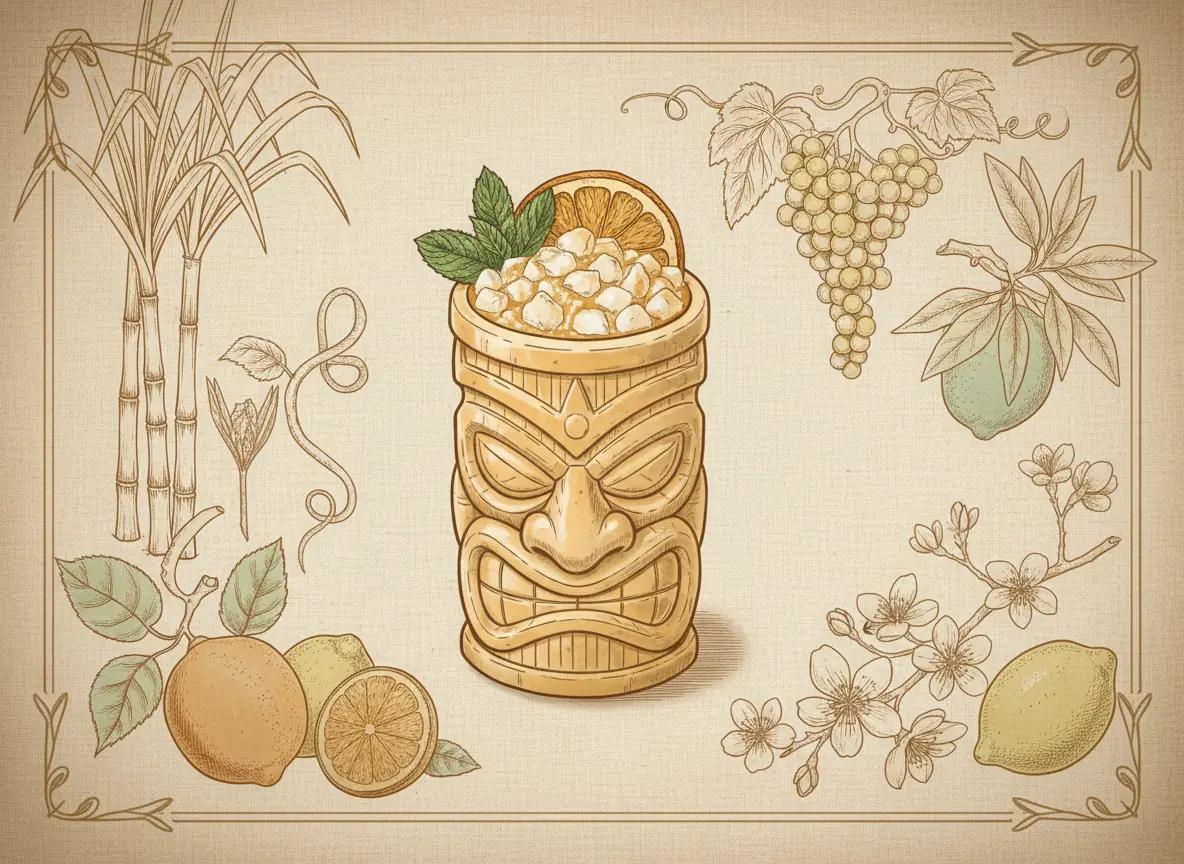
Scorpion
The Scorpion is Trader Vic’s rum and brandy sour: 45ml white rum, 22.5ml cognac, 50ml fresh orange juice, 30ml fresh lemon juice and 15ml orgeat, shaken hard and strained over crushed ice in a tiki mug or large rocks glass. The measures are adapted from Trader Vic’s Bartender’s Guide in its 1972 revised edition. Victor Bergeron, the Trader Vic of the restaurant chain, is credited with it; Punch dates his recipe to 1946, and Tasting Table traces the drink to a Honolulu punch in print by 1938. Difford’s Guide, citing Life magazine, has Vic serving the Scorpion in four-pint bowls made to serve four, and prints his 1972 recipes for a single glass and for a bowl for three or four. The single glass is the same drink at one person’s size. It comes out pale orange, almond-scented and drier than it looks, at about 2.7 UK units. Fresh orange and lemon and an orgeat made from almonds decide it. Orgeat contains nuts, which matters for anyone with an allergy.
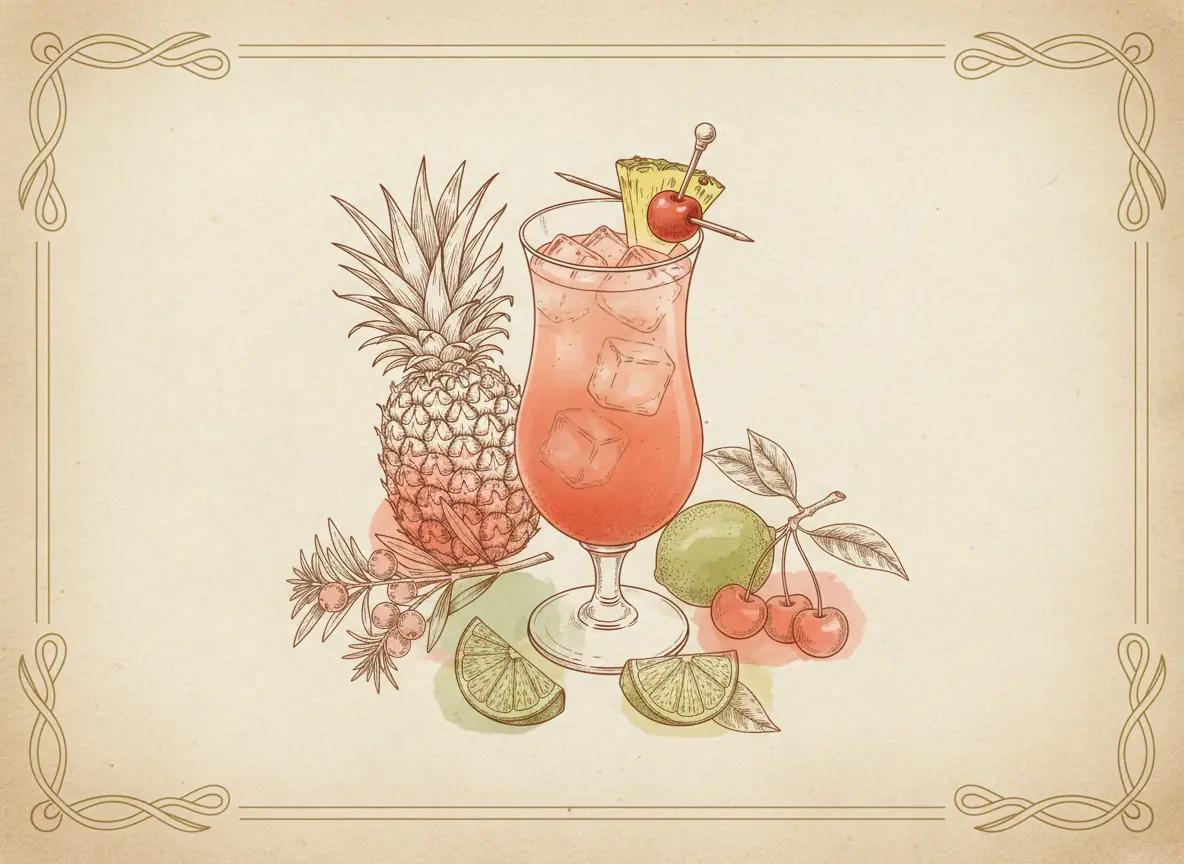
Singapore Sling
A Singapore Sling is 30ml gin, 15ml cherry liqueur, 7.5ml Cointreau, 7.5ml Bénédictine, 10ml grenadine, 120ml fresh pineapple juice, 15ml fresh lime juice and a dash of Angostura, shaken hard and strained over fresh ice in a sling or hurricane glass. That is the IBA specification, made here with Cherry Heering. It is a long, pink, fruit-led gin drink with more going on underneath than the colour suggests. It belongs to the Long Bar at the Raffles Hotel in Singapore, where Raffles, by its own account, credits its bartender Ngiam Tong Boon with creating it in 1915. The date is disputed, and the recipe first poured there is generally accepted to be lost. Fresh pineapple juice decides the result. There is 120ml of it, more than everything else in the glass combined, and juice pressed the same day gives the drink its light foam and its sharp edge. Carton juice gives a flat, sweet one.
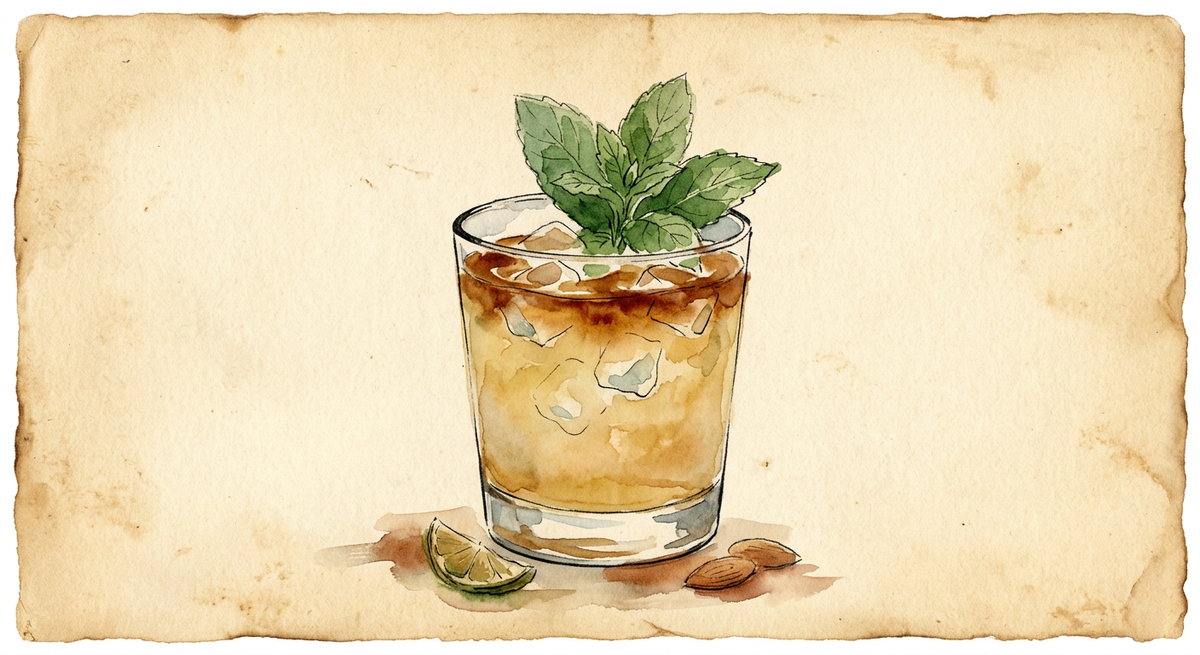
Mai Tai
A Mai Tai is aged rum, lime, orange curaçao and orgeat: 30ml amber Jamaican rum, 30ml Martinique molasses rum, 30ml fresh lime juice, 15ml orange curaçao, 15ml orgeat and 7.5ml sugar syrup, shaken hard and strained over crushed ice in a double rocks glass, with a spent lime shell and a sprig of mint. This is the IBA specification. There is no pineapple or orange juice in it. Victor “Trader Vic” Bergeron said he created it in 1944 and gave the first two to friends from Tahiti, one of whom said “Mai tai roa ae”, which gave it the name, as Famous Hotels quotes him. The Oxford Companion places his restaurant in Oakland and adds that Donn Beach’s widow, Phoebe, wrote in 2002 that he made a Mai Tai in 1933, though the Companion finds good reason to doubt that Vic copied it. Orgeat is almond syrup, so the drink contains nuts. A glass holds about 3.0 UK units.
Where this one sits
Recipe by Jerry Can Spirits · Updated 19 October 2026