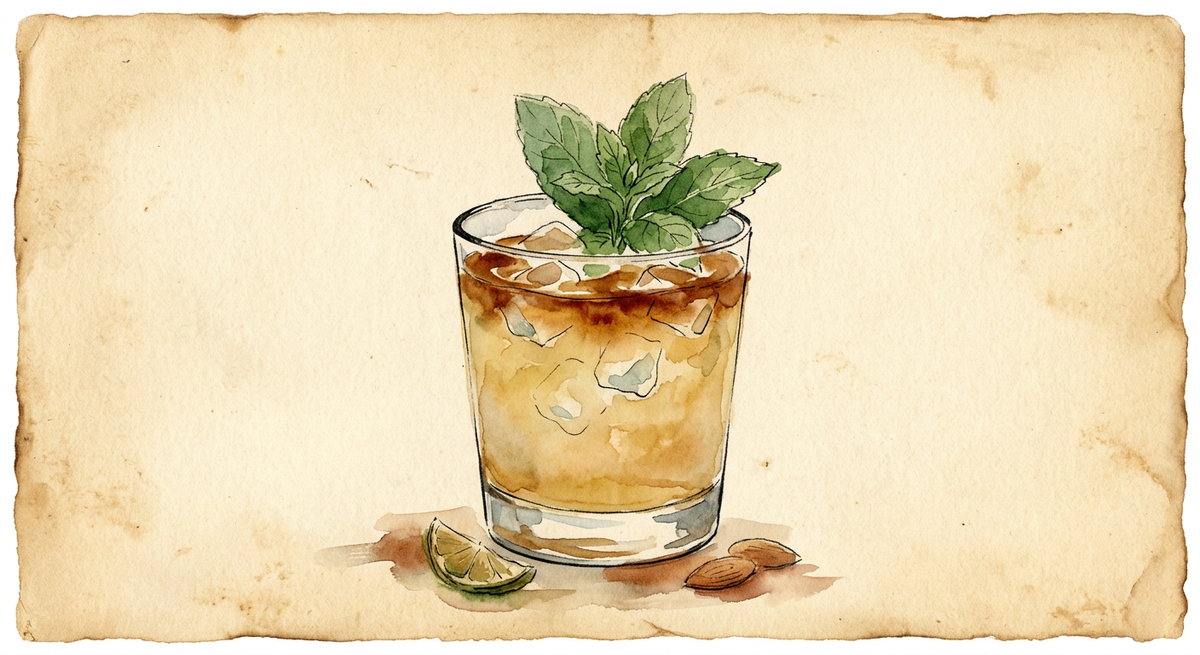
Mai Tai
A Mai Tai is aged rum, lime, orange curaçao and orgeat: 30ml amber Jamaican rum, 30ml Martinique molasses rum, 30ml fresh lime juice, 15ml orange curaçao, 15ml orgeat and 7.5ml sugar syrup, shaken hard and strained over crushed ice in a double rocks glass, with a spent lime shell and a sprig of mint. This is the IBA specification. There is no pineapple or orange juice in it. Victor “Trader Vic” Bergeron said he created it in 1944 and gave the first two to friends from Tahiti, one of whom said “Mai tai roa ae”, which gave it the name, as Famous Hotels quotes him. The Oxford Companion places his restaurant in Oakland and adds that Donn Beach’s widow, Phoebe, wrote in 2002 that he made a Mai Tai in 1933, though the Companion finds good reason to doubt that Vic copied it. Orgeat is almond syrup, so the drink contains nuts. A glass holds about 3.0 UK units.
Glassware: Rocks Glass
Garnish: Mint sprig
Ingredients
30ml
An amber Jamaican rum at about 40% ABV, the first of the IBA’s two rums. It carries the funk and overripe fruit of Jamaican rum. Trader Vic’s first Mai Tai used a 17-year-old Jamaican rum that became scarce, curacaoliqueur.com reports.
30ml
A Martinique rum made from molasses, not the grassy rhum agricole the island is better known for. It gives body and a drier, rounder note beside the Jamaican. Do not swap in an agricole, a spiced rum or a neutral white rum.
30ml
A full 30ml, squeezed the same day. It matches either rum in volume, which is why a Mai Tai tastes close to a rum sour. Keep one spent shell for the glass.
15ml
A dry orange curaçao, around 40% ABV, that seasons the rum with bitter orange rather than sweetening it; a sweet triple sec tips the drink towards sugar.
15ml
Almond syrup, usually scented with orange flower water; the marzipan richness comes from it. Because it is made from almonds, anyone with a nut allergy should not drink a Mai Tai.
7.5ml
Sugar and water, one to one by weight, at 7.5ml. It rounds the lime. Taste the orgeat first: if it is already sweet, leave the syrup out.
Instructions
Squeeze the lime juice the same day and keep one spent half-shell.
Add both rums, the lime juice, orange curaçao, orgeat and sugar syrup to a shaker.
Fill with cubed ice and shake hard for 10 to 12 seconds.
Strain into a double rocks glass filled with crushed ice.
Sink the spent lime shell, cut side up, then slap a sprig of mint and set it beside the shell.
Source: the IBA (Official IBA specification; method ours). Last checked 9 October 2026.
Expert Tip
The orgeat decides the drink. A good one is made with almonds, pours thick and smells of marzipan and orange flower; a thin, flavoured one turns the Mai Tai into sweet lime. Taste it before adding the 7.5ml of sugar syrup, and skip the syrup when the orgeat is already sweet. Keep the two rums distinct. The Jamaican brings overripe fruit and funk, the Martinique molasses rum a drier, rounder body. A grassy rhum agricole pulls the drink somewhere else. Squeeze the lime the same day and keep one spent half-shell. Sunk in the glass cut side up, it adds a bitter, oily edge the juice alone does not.
Behind the Mai Tai
Flavour Profile
Oakland, 1944
Trader Vic gave his own account. In 1944 he took a bottle of 17-year-old J. Wray Nephew Jamaican rum, added fresh lime, orange curaçao from Holland, French orgeat and a little rock candy syrup, and gave the first two to friends from Tahiti. One of them said “Mai tai roa ae”, which in Tahitian means out of this world, the best, and he named the drink Mai Tai, as Famous Hotels quotes him; the Oxford Companion places the restaurant in Oakland.
The Lost Rum
The 17-year-old Wray Nephew became scarce, curacaoliqueur.com reports of Vic’s guide, and every Mai Tai since stands in for it. The IBA’s answer is two rums: amber Jamaican for funk and fruit, and a Martinique rum made from molasses for body.
That Martinique rum should not be a rhum agricole. Agricole is made from fresh cane juice and tastes grassy, which pulls the drink away from the Jamaican.
The Mai Tai in Trader Vic’s account and in the IBA specification; Vic’s measures are from his Bartender’s Guide as curacaoliqueur.com quotes it (two ounces of rum, one lime, half an ounce of curaçao, a quarter ounce each of rock candy syrup and orgeat), the IBA’s from the IBA’s official recipe page
Trader Vic, 1944
- Rum
- 2oz 17-year-old J. Wray Nephew
- Lime
- One lime
- Curaçao
- ½oz
- Orgeat
- ¼oz
- Sugar
- ¼oz rock candy syrup
IBA, and ours
- Rum
- 30ml amber Jamaican, 30ml Martinique molasses rum
- Lime
- 30ml
- Curaçao
- 15ml
- Orgeat
- 15ml
- Sugar
- 7.5ml sugar syrup
| Version | Rum | Lime | Curaçao | Orgeat | Sugar |
|---|---|---|---|---|---|
| Trader Vic, 1944 | 2oz 17-year-old J. Wray Nephew | One lime | ½oz | ¼oz | ¼oz rock candy syrup |
| IBA, and ours | 30ml amber Jamaican, 30ml Martinique molasses rum | 30ml | 15ml | 15ml | 7.5ml sugar syrup |
Orgeat and Curaçao
Orgeat is almond syrup, often scented with orange flower water, and it is what separates a Mai Tai from a plain rum sour. Good bottles list almonds as an ingredient and taste of marzipan; thin ones taste of almond essence and sugar. It contains nuts.
The curaçao should be dry, so it seasons the rum with bitter orange. For a sour in the same family, with egg white, see the Tiki Sour.
Shaking and the Glass
Shake hard for 10 to 12 seconds with cubed ice and strain over crushed ice in a double rocks glass. Sink the spent lime shell cut side up, and slap a sprig of mint before setting it in beside it, so its oils reach the nose with each sip.
What Happened to It
How Strong It Is
Taking both rums and the curaçao at 40% ABV, a Mai Tai holds about 3.0 UK units. It is short, cold and sweetened, and it goes down faster than its strength suggests.
Make it at home
The Spirit
Aged RumAged rum is rum that has spent years in oak casks, usually ex-bourbon barrels, and taken on vanilla, caramel and dried fruit; our recipes count it at 40% ABV. In our recipes it is the rum for drinks where you should taste the spirit: the Old Cuban, the Mai Tai, the Rum Sour and the punch bowl.
More to explore
Frequently Asked Questions
Does a real Mai Tai contain pineapple juice?
Who invented the Mai Tai, Trader Vic or Donn Beach?
Which rums go in a Mai Tai?
How strong is a Mai Tai?
Does a Mai Tai contain nuts?
What does Mai Tai mean?
What was in the original 1944 Mai Tai?
Sources.
Checked between 18 October and 19 October 2026.
- The Oxford Companion to Spirits and Cocktails (Jeff Berry), “The Mai Tai” (secondary source: Bergeron’s 1944 account at his Oakland restaurant; Carrie Guild’s maita’i; Phoebe Beach’s 2002 claim for Donn Beach in 1933; the Royal Hawaiian list of 1953 and the Matson Line; the Hawaiian imitations; Vic’s 1972 Bartender’s Guide).
- Famous Hotels, “Bergeron, Victor J (1902-1984)” (quotes Bergeron: 17-year-old J Wray and Nephew, orange curacao from Holland, rock candy syrup, French orgeat; “Mai tai roa ae”, out of this world, the best).
- curacaoliqueur.com, “The Mai Tai History and its Recipes Explained” (secondary source quoting Trader Vic’s Bartender’s Guide: 2 oz rum, 1 lime, ½ oz curaçao, ¼ oz rock candy syrup, ¼ oz orgeat; the 17-year-old rum became scarce).
- IBA, “Mai-Tai” (official recipe: 30 ml amber Jamaican rum, 30 ml Martinique molasses rhum, 15 ml orange curaçao, 15 ml orgeat, 30 ml lime juice, 7.5 ml simple syrup).
You Might Also Like
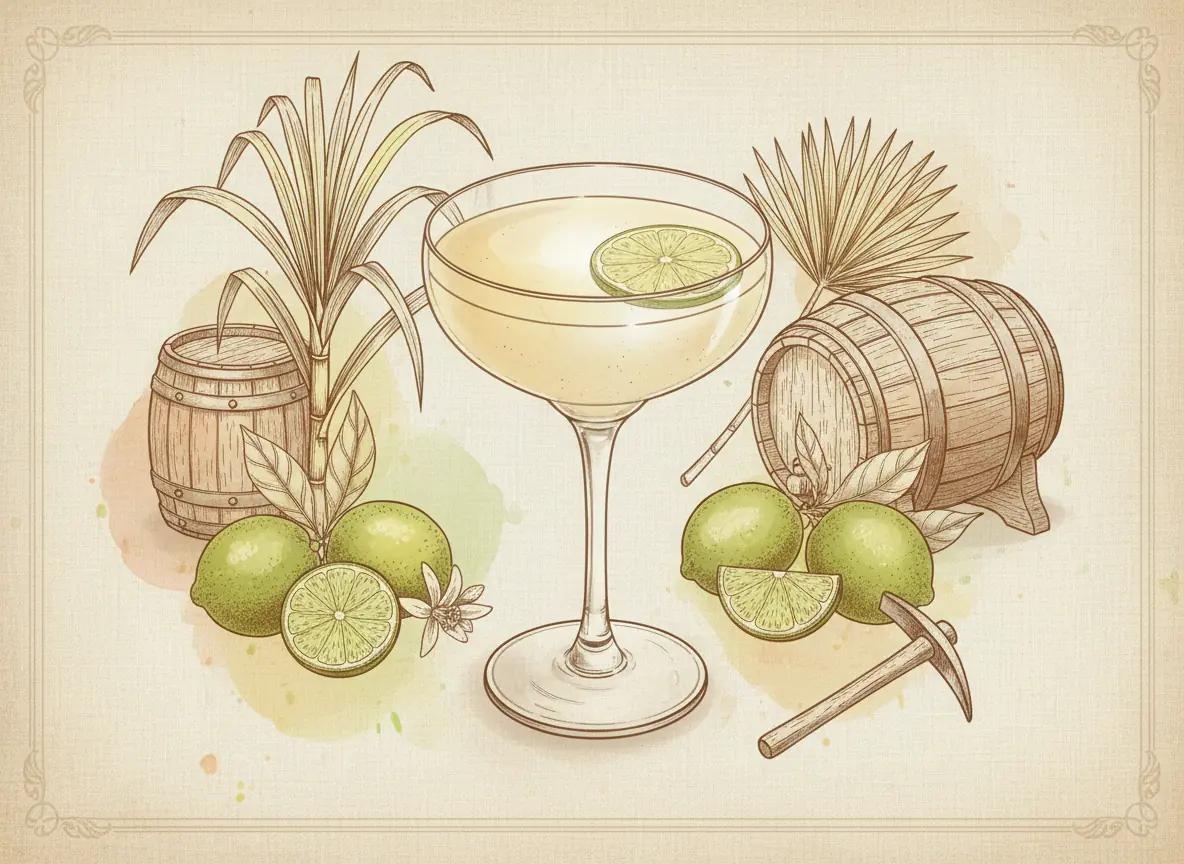
Daiquiri
A Daiquiri is 60ml white rum, 20ml fresh lime juice and two bar spoons of caster sugar. Stir the sugar into the rum and lime in the shaker until it dissolves, then add ice, shake hard for 10 to 12 seconds and double strain into a chilled coupe. About 2.4 UK units. Those are the IBA’s measures, and its method dissolves the sugar first too. The name belongs to Daiquirí, an iron-mining district and beach near Santiago de Cuba. Difford’s Guide credits Jennings Stockton Cox, an American engineer who led one of the first mining parties into Cuba’s iron-ore country after the Spanish-American War of 1898; the Oxford Companion has him making or supervising the first Daiquiri in 1896, and a Santiago bartender naming it in 1908. Difford’s says Constantino Ribalaigua Vert of Havana’s El Floridita made the frozen version famous. With three ingredients and no liqueur or bitters, the Daiquiri hides nothing. A flat rum, tired lime or undissolved sugar shows in the first sip.
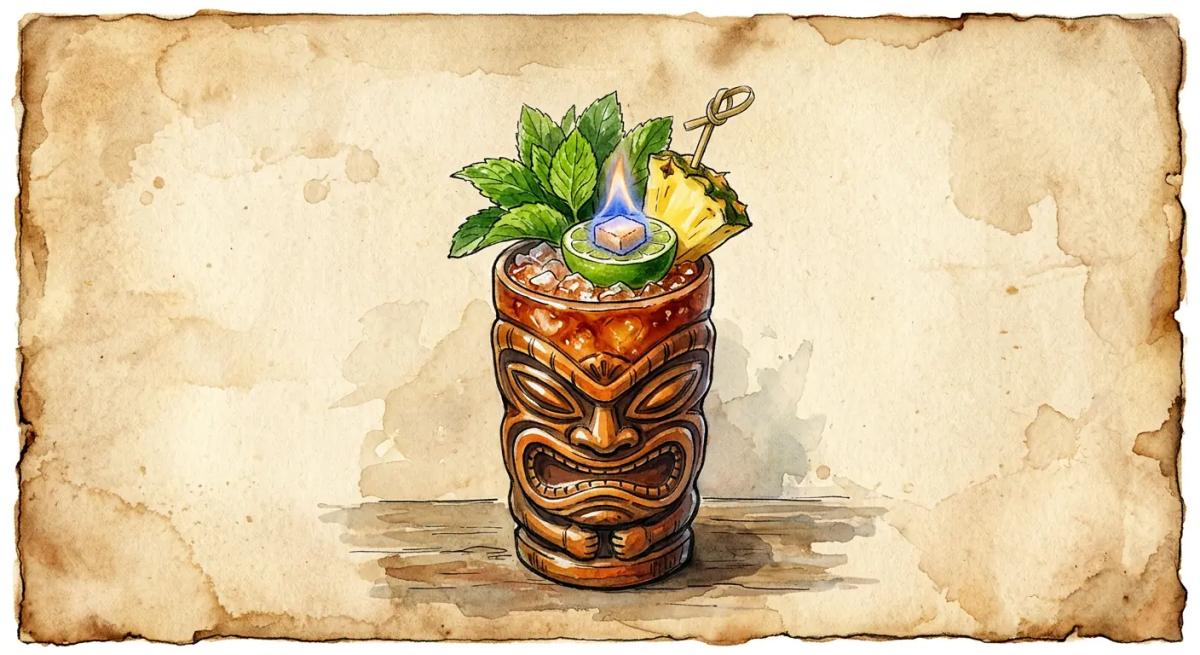
Zombie
A Zombie is 45ml Jamaican dark rum, 45ml gold Puerto Rican rum and 30ml Demerara rum with 20ml fresh lime juice, 15ml falernum, 15ml Donn’s Mix, a teaspoon of grenadine, a dash of Angostura and six drops of Pernod, flash blended with cracked ice and poured into a zombie glass with mint. Those are the IBA’s measures. About 5.0 UK units in one glass. The Oxford Companion says Donn Beach created it in 1934 at Don the Beachcomber’s in Hollywood, and refused to serve more than two to a customer. Difford’s Guide says his recipes were notated in a secret code of numbered bottles and elusive mixes, and the Companion says Jeff Berry found the original formula in 2006 in the notebook of a former Beachcomber’s headwaiter, Richard Santiago. Donn’s Mix, two parts grapefruit juice to one of cinnamon syrup, is what separates it from a strong rum punch.
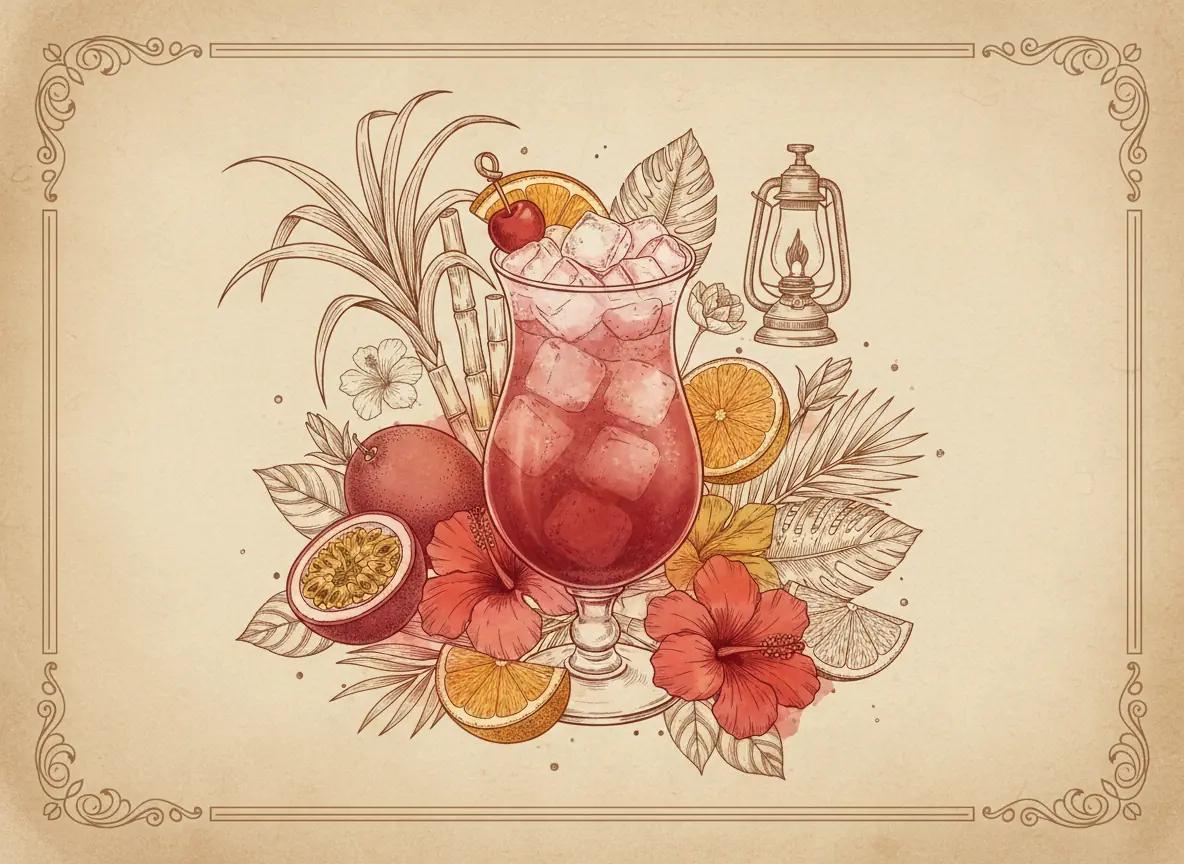
Hurricane
A Hurricane is 60ml of dark rum, 60ml of white rum, 45ml of passion fruit syrup, 30ml each of fresh lime and orange juice, and 15ml each of grenadine and simple syrup, shaken hard and strained over crushed ice in a hurricane glass. Garnish with orange and a cherry. At about 4.8 UK units it is a strong drink, a third of a week’s guideline in a single glass. The Hurricane most people know is Pat O’Brien’s, the New Orleans bar, where the Oxford Companion says it was introduced and head bartender Louis Culligan is credited with creating it. Difford’s Guide thinks it originated in 1939 at The Hurricane Bar in New York. The usual account is O’Brien’s own: during the Second World War whisky was only available to a bar that bought large amounts of rum, and the drink was a way to use it, served in a glass shaped like a hurricane lantern. Premixed versions later became the standard serve in the city. Made with fresh juice and a passion fruit syrup with real fruit in it, the Hurricane is a tart, balanced rum punch.
Jungle Bird
A Jungle Bird is 45ml of blackstrap rum, 22.5ml of Campari, 45ml of fresh pineapple juice, 15ml of fresh lime juice and 15ml of demerara syrup, shaken hard for 10 to 12 seconds and strained over fresh ice in a double rocks glass, with a pineapple wedge. About 2.4 UK units. These are the IBA’s measures. It is credited to Jeffrey Ong, beverage manager at the Aviary Bar of the Kuala Lumpur Hilton, where it was poured as a welcome drink for guests; Difford’s Guide dates it to the hotel’s opening on 6 July 1973. The recipe reached print in John J. Poister’s New American Bartender’s Guide in 1989. Campari is what sets it apart. Pineapple has the body and sugar to carry the bitterness, and a heavy rum underneath holds both.
Where this one sits
Recipe by Jerry Can Spirits · Updated 19 October 2026