
Rum Cocktails

58 recipes, page 1 of 3

This Field Manual holds 58 recipes built on rum: 20 white rum, 13 dark rum, 12 aged rum, 8 spiced rum, 2 overproof, 2 cachaça and 1 rhum agricole. Rum is made from sugarcane, and the split above is by style rather than by origin.

White rum is filtered and light, and it lets citrus lead, which is what a daiquiri and a mojito want. Dark rum carries caramel and stands up to lime and ginger in a dark and stormy. Aged rum spends time in oak and behaves more like whiskey, so it suits a stirred drink over ice. Spiced rum has botanicals added after distillation, which changes a drink more than swapping one white rum for another does.

Base Spirit

Difficulty Level

Airmail

The Airmail is the French 75’s tropical correspondent: golden rum, lime and honey under a champagne top, named in the 1930s for the postal service that was then shrinking the world. It surfaces with Cuban credentials and appears in the 1949 Esquire handbook, carrying the era’s aviation glamour with it, from the moment when crossing an ocean stopped meaning weeks at sea. Structurally it is a honey daiquiri that caught a flight. Rum, lime and honey syrup shaken as usual, then lengthened with champagne so the daiquiri’s warmth arrives with a sparkling wine’s lift underneath it. The honey is load-bearing rather than decorative: it rounds the rum in a way plain sugar cannot, and it survives the champagne’s dryness where a simple syrup would simply disappear. It remains badly underordered for a drink this good. As celebratory as a French 75, considerably warmer at the core, and the right bottle-of-fizz cocktail for rum drinkers who keep being handed gin.

Añejo Highball

The Añejo Highball is Dale DeGroff's rum buck, built in 2000 and dedicated to the Cuban bartenders of the 1920s and 30s. That dedication is not decoration: every ingredient in the glass is something a Havana bar of that era would have had to hand. Aged rum, orange curaçao, lime and Angostura go into the glass and ginger beer goes over the top. Most bucks run to three ingredients and rely on the ginger to carry them. This one seats five, and the two extra are aromatic rather than structural: the curaçao threads bitter orange through the ginger, and the bitters give a long drink the finish of a stirred one. It is a highball with more going on than a highball usually needs, which is the point of it. DeGroff published it into general circulation through his books and it has stayed there, one of the few modern recipes that turns up on menus without anyone feeling obliged to explain who wrote it.

Bacardi Cocktail

The Bacardi Cocktail is a daiquiri with grenadine in it, and it is one of a very small number of drinks anywhere with legally enforceable contents. In 1936 the New York Supreme Court held that a drink sold under the name has to be made with Bacardi rum, which remains a peculiar thing for a court to have had to decide. The drink predates the lawsuit. It is a Prohibition-era Havana daiquiri blushed with grenadine, carried north by the considerable traffic between New York and Cuba, and poured openly the moment repeal allowed it. The grenadine replaces most of the sugar rather than joining it, which is what keeps it a daiquiri rather than a cordial. Made honestly, with real pomegranate grenadine and lime squeezed to order, it is simply a very good daiquiri in evening colours. The law cares which bottle. The drink mostly cares that it is a good one.
Bahama Mama

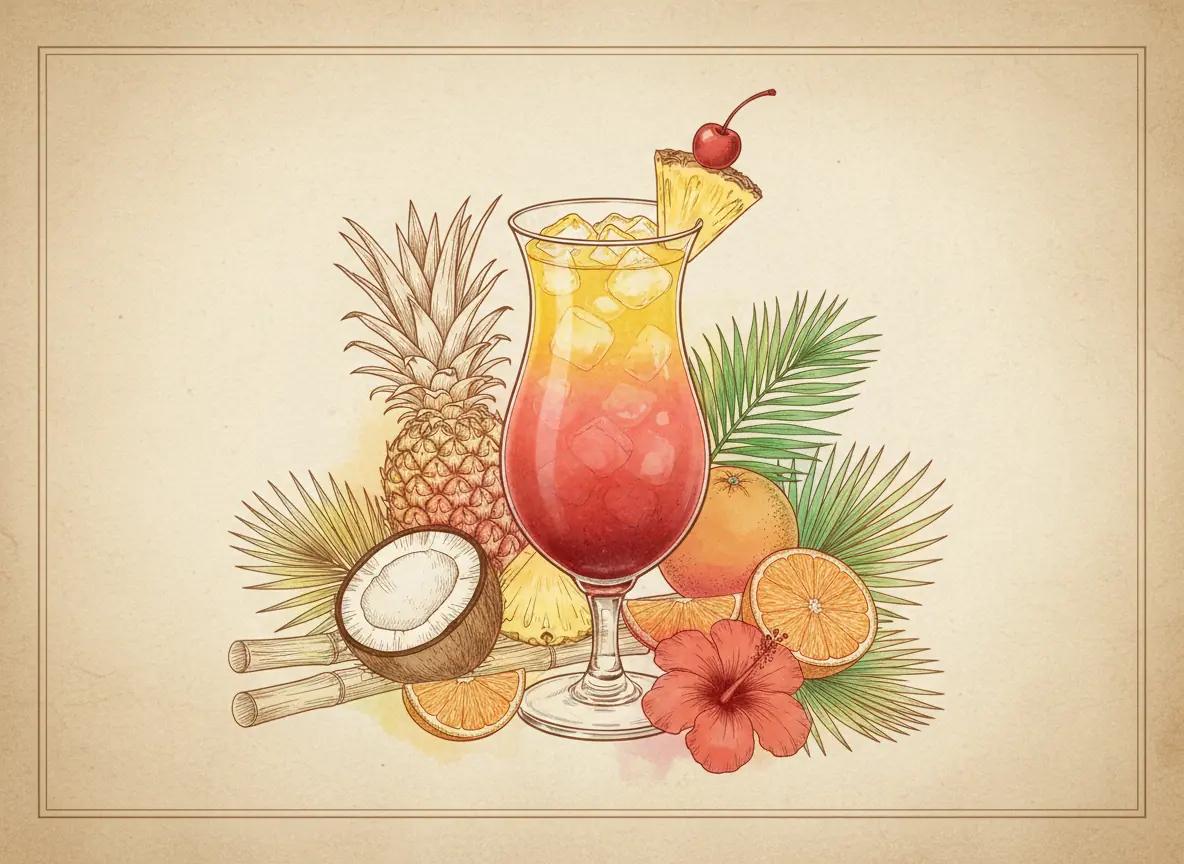
Bahama Mama

The Bahama Mama has no single documented origin and no named creator. It emerged from the tiki and Caribbean bar culture of the mid-twentieth century and spread through resort bars, hotel pools and beachside venues to become one of the most-ordered rum drinks in the world. Ubiquity has not been kind to it: the premixed, artificially sweetened versions poured in tourist bars carry the name and almost nothing else. Three rums do the work. Dark rum brings molasses depth and structural backbone; coconut rum brings tropical sweetness and the Caribbean character the name promises; overproof rum brings proof, aromatic intensity and the useful knowledge that the drink is stronger than it tastes. Fresh pineapple and orange define the fruit, fresh lime supplies the acid that stops the sweetness becoming undrinkable halfway down, and real grenadine adds colour and a faint pomegranate depth. In a drink this fruit-forward, every one of those choices is audible.

Banana Daiquiri

The Banana Daiquiri is the frozen daiquiri’s tropical firstborn, blended in the Caribbean resort era and built on the one fruit that blends thicker than ice cream. It is the drink the blender was waiting for. A mountaintop bar on St Thomas holds the most persistent claim, dating it to the 1950s, and has been pouring it to cruise traffic ever since. The modern spec doubles the banana. Fresh ripe fruit supplies the body and the honeyed sweetness, a measure of proper banana liqueur supplies the cooked depth and the proof, and each covers what the other lacks. Lime holds the daiquiri’s citizenship, and without it the drink is simply a milkshake with rum in it. Ripeness is the entire quality question, and it is not a close-run thing. A freckled banana makes velvet and a green one makes regret, and that single choice matters more than anything else in the build.
Caipirinha

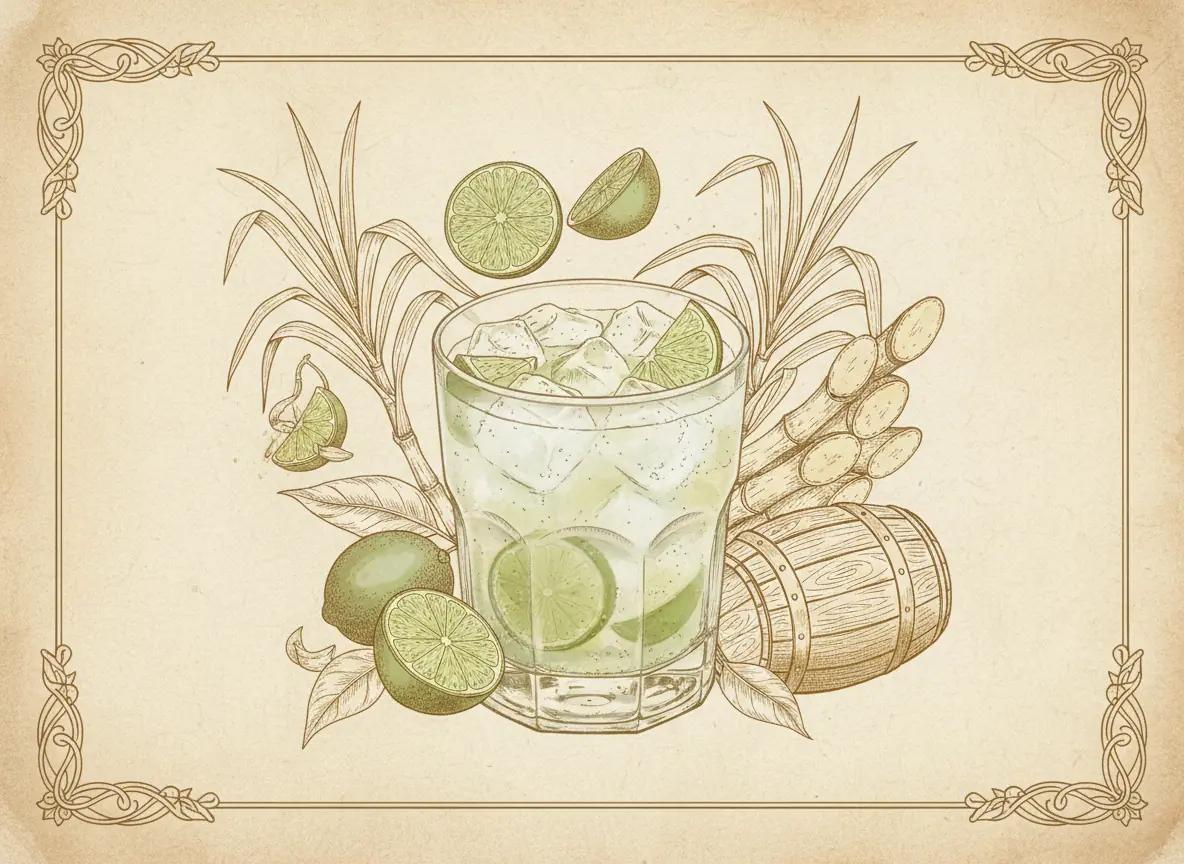
Caipirinha

Brazil’s national cocktail and one of the most deceptively simple drinks in the world. Pronounced “kai-pee-REEN-ya”, the name is the diminutive of caipira, a term for the rural people of São Paulo state, and translates as “little country girl”. The drink emerged from the sugarcane-rich countryside in the 19th century, created by landowning farmers and refined over generations. One origin story traces it to the 1918 Spanish flu epidemic, when Brazilians took cachaça mixed with lime, honey, and garlic as a folk remedy; honey gave way to sugar, garlic mercifully disappeared, and a cocktail was born. The Caipirinha was declared Brazilian Cultural Heritage in 2003 and Intangible Heritage of Rio de Janeiro in 2019, and by 2024 TasteAtlas ranked it the third best cocktail in the world. What sets it apart is cachaça. Not rum, though both come from sugarcane: rum is distilled from molasses, a by-product of sugar refining, while cachaça is distilled from fresh sugarcane juice, giving it a grassy, vegetal, slightly funky character that defines the drink entirely. Three ingredients. No shortcuts. No margin for error.

Canchánchara

The Canchánchara is Cuba's oldest drink and the daiquiri's direct ancestor: cane spirit, honey and lime, taken by the mambises who fought Spain through the independence wars of the 1860s. The ration was aguardiente. The honey and citrus made it drinkable, and were understood at the time as medicine as much as morale. Trinidad de Cuba keeps both the tradition and the crockery. The drink is built in the round clay cup that gives it its name: honey stirred against lime in the base until it dissolves, raw cane spirit poured over, a splash of water and, by modern mercy, ice. Nothing is shaken and nothing is strained. What it demonstrates is the island's master formula in its first draft. Refine the spirit, chill it and strain it and you have a daiquiri. Keep the honey and shake it and you have a Honeysuckle. Drink this one to understand where both came from, because the history is genuinely the flavour.

Cauldron Punch

The Cauldron Punch is the Halloween answer to a practical problem: fifteen guests, one host, and no appetite for shaking drinks all night. Dark rum and blackberry liqueur give it depth and a bruised purple-black colour, pomegranate juice pulls it towards blood red, and lime with simple syrup keeps the whole thing balanced rather than merely strong. Sparkling water, added just before the doorbell, lifts it out of syrup territory. Everything except the fizz can be mixed in the bowl and refrigerated hours ahead, which is the entire argument for punch as a format. The recipe scales in straight lines: double it for thirty, halve it for a quiet gathering, and the balance holds. The presentation does the costume work. A dark bowl, a ladle, gummy worms draped over the rim of each cup and, if the theatre demands it, a small piece of food-grade dry ice fogging the surface. Let dry ice sublimate completely before anyone drinks, and never let it near a glass. The punch underneath is a proper rum drink, dark fruit over Caribbean warmth, and it deserves to outlast the decorations.
Coquito

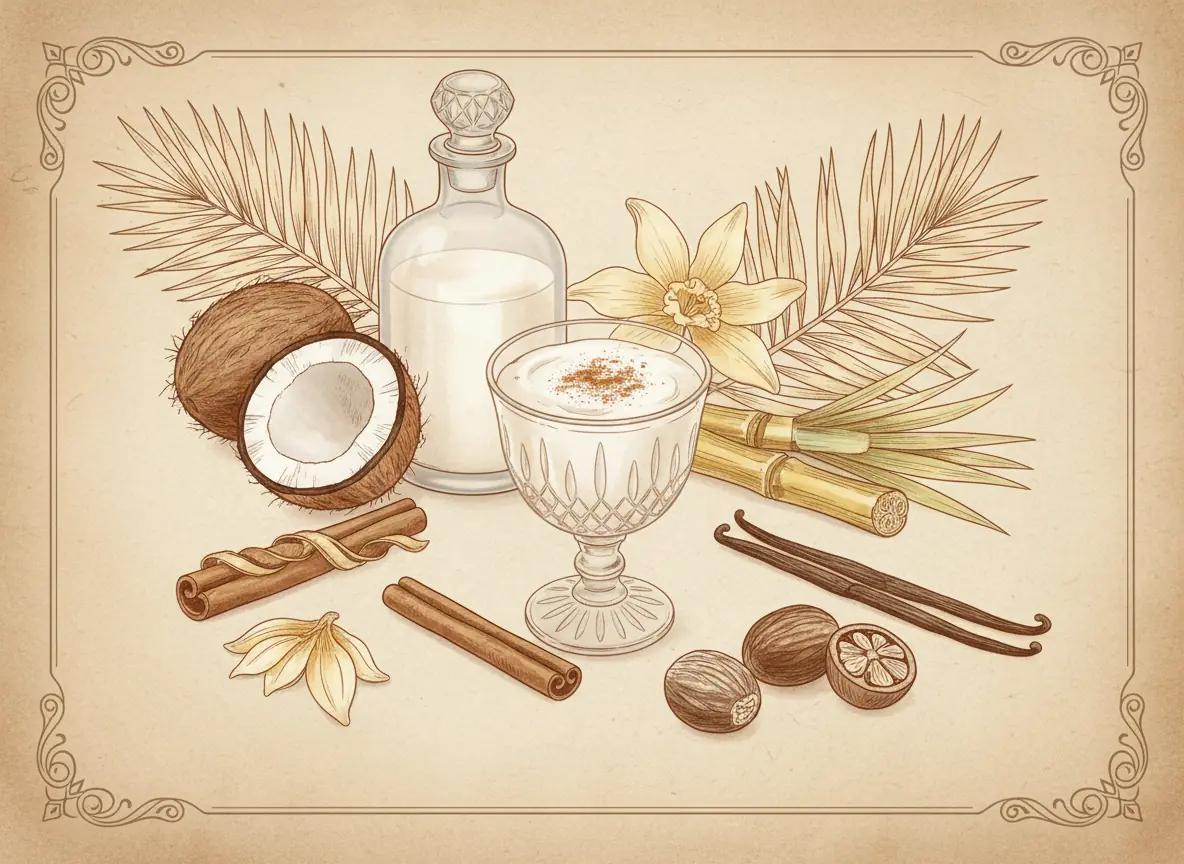
Coquito

Coquito is Puerto Rico’s most celebrated festive drink, a creamy, spiced coconut and rum punch that has been a fixture of Christmas and New Year across the island and in Puerto Rican communities worldwide for generations. The name translates as little coconut. It is mixed in batches, chilled overnight and shared generously, which is entirely consistent with the culture that produced it. Four coconut and dairy elements combine with white rum, vanilla and warm spice. Cream of coconut provides the structural sweetness and body, coconut milk a lighter character that stops the drink becoming one-dimensional, condensed milk a caramel depth, and evaporated milk a dairy richness that rounds everything together without the weight of cream. Blended and refrigerated overnight, the spices migrate into the coconut base and the rum integrates far more completely than in a fresh batch. Making it the day before is not an optional refinement. It is the standard the drink is built around.

Corn n’ Oil

The Corn n’ Oil is Barbados’s house cocktail, older than most of the classics and simpler than nearly all of them: falernum under, blackstrap rum over, bitters and a squeeze of lime. The name describes the look, near-black rum hanging over the pale falernum like oil on water, and nobody has improved on the image since. It works because the two Bajan ingredients were made for each other. Falernum brings lime, clove and almond sweetness; blackstrap answers with burnt molasses and liquorice depth. The unstirred build means the first sips are nearly neat rum and the last are nearly falernum, the drink sweetening as the glass empties. As a gateway into serious rum drinking it has no equal: four ingredients, no technique beyond a slow pour, and a finished drink with more character than most eight-ingredient efforts. Keep falernum and blackstrap in the house and it is never more than three minutes away.

Cuba Libre

The Cuba Libre was born in Havana around 1900, in the afterglow of the war that gave the drink its toast: Cuba freed from Spain, American soldiers in the bars, and the new American cola meeting the island’s rum over ice. A captain is said to have raised the glass with the independence cry, por Cuba libre, and the drink has carried the slogan ever since. The obvious objection, that this is just rum and coke, misses the one thing the drink insists on: the lime. A proper Cuba Libre squeezes half a lime into the glass and drops the spent shell in, and that acid is what turns a sweet mixer drink into a long cocktail with a spine. Rum and cola is a pleasant habit. The Cuba Libre is a recipe. It rewards the same care as any three-ingredient drink: a characterful rum, a cola with real spice rather than bare sweetness, and everything properly cold.
Daiquiri

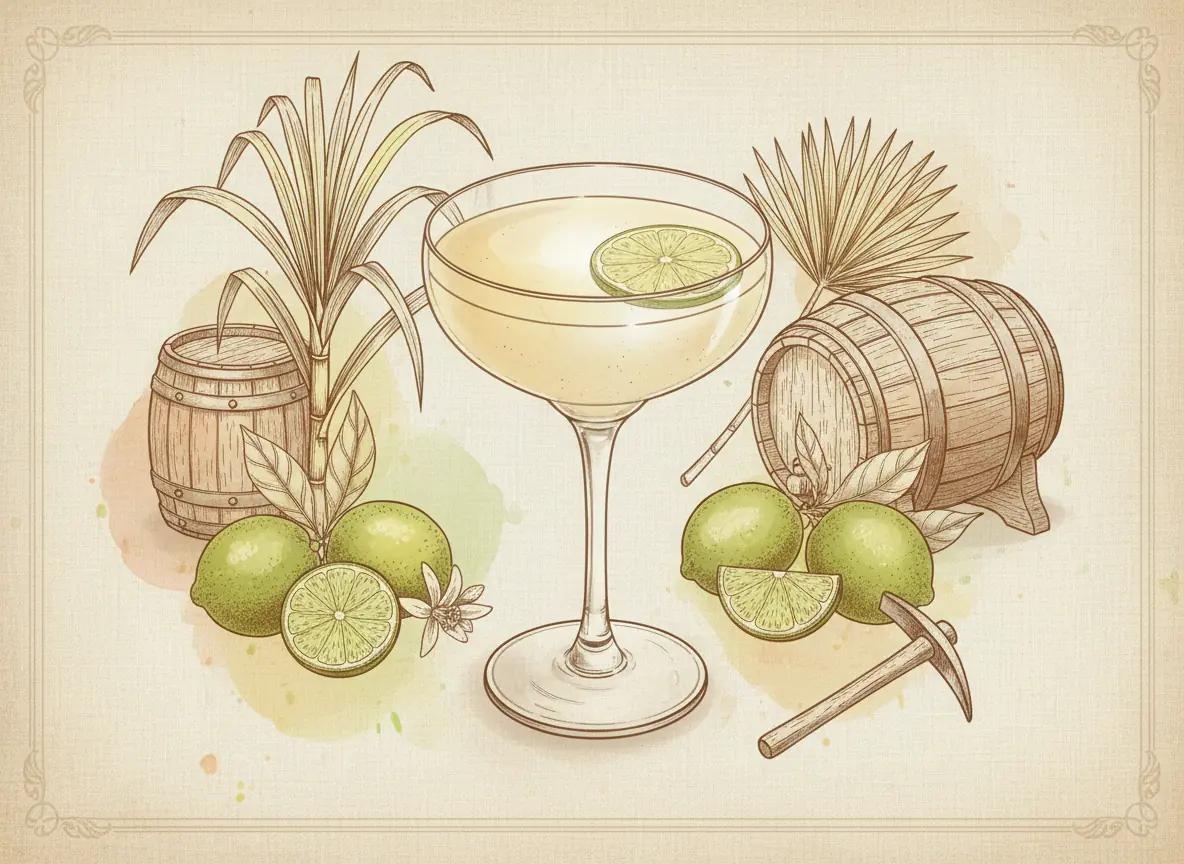
Daiquiri

The Daiquiri is a sour in its most elemental form: white rum, fresh lime juice and sugar syrup, shaken and served up. Three ingredients, no bitters, no liqueur, nothing to hide behind. It takes its name from a mining district on the south-eastern coast of Cuba, near Santiago, where Jennings Cox, an American mining engineer, is credited with combining local white rum with lime and sugar around 1898. Whether Cox invented it or documented what Cuban workers had been drinking for years is not something the record can resolve. What is not disputed is that it was refined and popularised in Havana at El Floridita by Constantino Ribalaigua Vert. The simplicity is the point and the problem at once. There is nothing in the construction to compensate for a poor rum, juice that was not squeezed fresh, or a syrup made carelessly. Every variable is fully exposed, which is why a properly balanced Daiquiri demonstrates more skill than a ten-ingredient tiki drink.

Dark ’n’ Stormy

The Dark 'n' Stormy is Bermuda's national highball and one of very few cocktails with a legal department. It was born after the First World War, when ginger beer brewed at a Royal Navy officers' club on the island met Gosling's Black Seal, the local black rum, and a sailor observed that the result was the colour of a cloud only a fool or a dead man would sail under. The legal part is not decoration. Gosling's trademarked the name and has gone to court to defend it, which makes the recipe binding rather than traditional: a Dark 'n' Stormy is Gosling's Black Seal and ginger beer, and a version built on any other bottle is a dark rum and ginger beer, often excellent and differently named. The build is the whole theatre. Ginger beer first over ice, lime squeezed if the day calls for it, and the rum poured last and slowly, where its density holds it as a black weather front above the golden fizz.

Doctor Funk

The Doctor Funk is the only drink in the tiki canon named after a real physician. Dr Bernard Funk practised in Samoa in the late nineteenth century, where his patients included Robert Louis Stevenson, and his standing prescription against the tropical heat was a mix of absinthe, lime and soda water. It was medicine by the standards of the day, and better company than most of it. When Don the Beachcomber opened his Hollywood bar in 1934 he added rum and grenadine to the doctor’s formula and put it on his first menu, which makes the Doctor Funk older than the word tiki itself: a genuine South Seas artefact smuggled into a genre that otherwise invented its own mythology. The absinthe is the drink; everything else is the delivery system. Lime and lemon keep it honest, grenadine tints it rather than sweetens it, and the soda stretches it into a long, dry, faintly mysterious cooler that drinks nothing like its neighbours on the menu.

Don's Special Daiquiri

Don's Special Daiquiri is what Donn Beach did to a daiquiri, which is to say he split the rum, added two sweeteners instead of one, and blended it with crushed ice until it arrived cold enough to hurt. It is a tiki drink in the strict sense — Don the Beachcomber, Hollywood, the 1930s — and it is considerably more sophisticated than the format's reputation allows. Thirty millilitres of gold Jamaican rum against fifteen of Cuban is the split that defines it: the Jamaican brings funk and fruit, the Cuban brings clean body underneath. Passion fruit syrup and honey syrup then do the sweetening between them, and lime supplies the only acid. Two sweeteners in one drink sounds like a mistake and is the whole design. Neither could produce this alone, and that principle runs through everything Beach built.

El Floridita Daiquiri

The El Floridita Daiquiri is the house version from the Havana bar that called itself la cuna del daiquiri, the cradle of the daiquiri. Two things separate it from the shaken original: five millilitres of maraschino, and the fact that it is blended rather than shaken. The maraschino is a seasoning rather than a sweetener. At that measure you would not identify it blind; what you notice is that the lime tastes brighter and the rum tastes rounder. It perfumes the drink without adding anything you could call cherry. The texture is the other half. Constantino Ribalaigua Vert, who ran the bar through the 1920s and 30s, used the newly available electric blender not to make slush but to shave the drink into fine, dry frost. It arrives in the coupe holding its shape like a snowbank and is drunk through a straw as it gives way. Texture as an ingredient in its own right, which almost nobody was doing at the time.
El Presidente

El Presidente

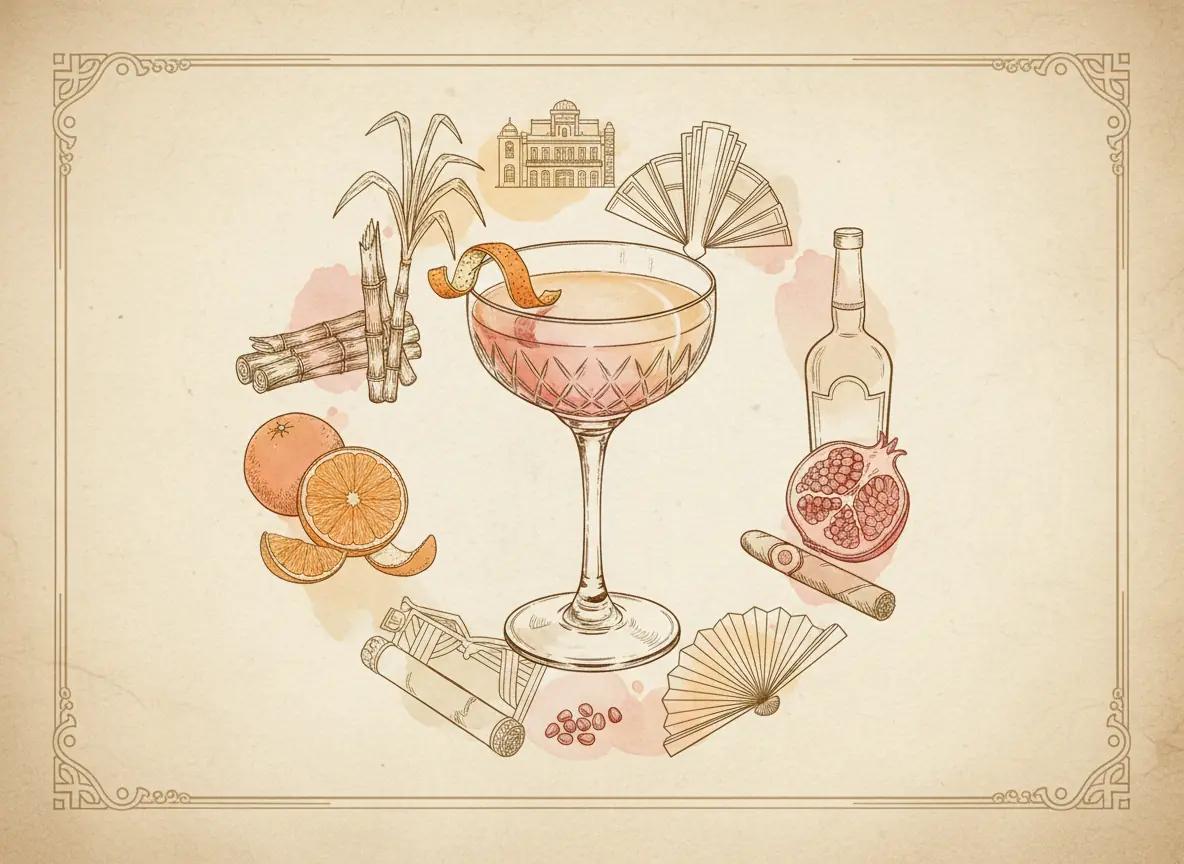
El Presidente was created in Havana during the 1910s or 1920s, most likely at the Vista Alegre bar, and named in honour of Mario García Menocal, President of Cuba in that era. It emerged from the same scene that produced the Daiquiri and the Mojito, shaped by Prohibition-era American tourists who arrived with money, time and a thirst their own country was legally denying them. It is a stirred rum drink in the Manhattan tradition: white rum and dry vermouth as the base, orange curaçao as the sweetening modifier, and a small measure of grenadine that adds colour, a faint pomegranate depth and a sweetness rounding the drier components. The result is spirit-forward and elegant rather than tropical, and one of the most underappreciated drinks in the classical canon. The dry vermouth determines the quality of the finished glass more than anything else. At this volume alongside the rum, a stale bottle defines the drink for the wrong reasons before the rum can make its case.
Explorers Gold

Explorers Gold

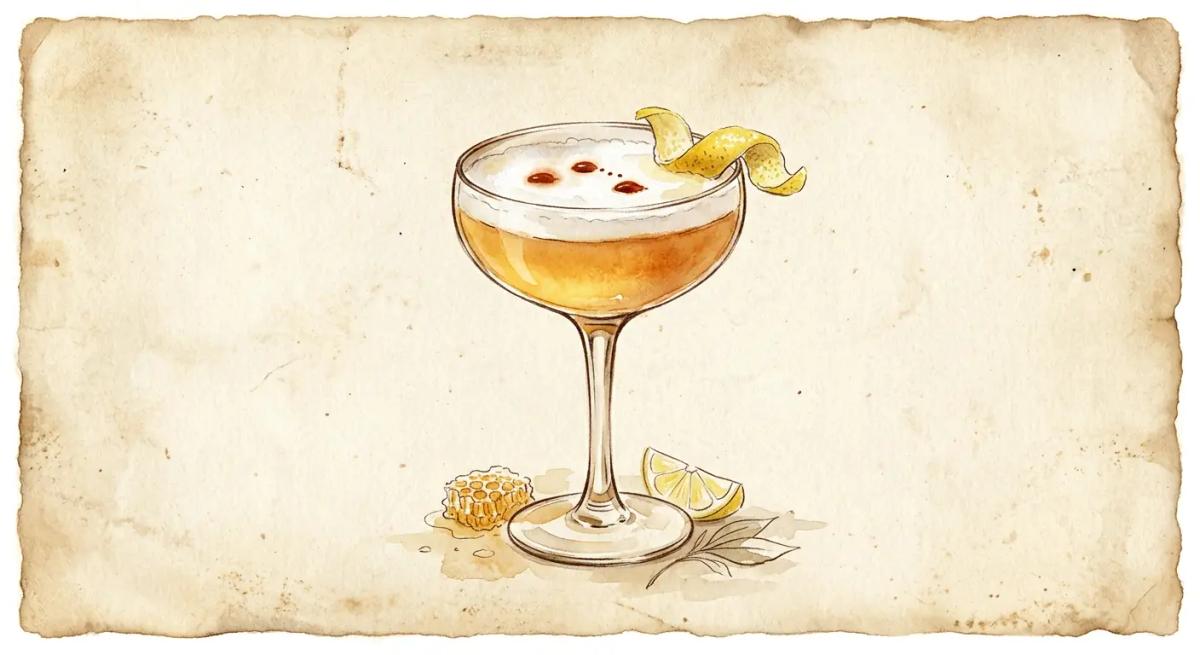
Explorers Gold is the Jerry Can Spirits rum and honey: a cold sour built on Expedition Spiced Rum, honey syrup and fresh lemon, with an egg white for texture and two dashes of Angostura across the foam. Rum and honey is older than cocktail bartending. Honey was the most widely available sweetener across Britain and the Caribbean before refined sugar became affordable, and the pairing turns up in everything from medicinal preparations to celebration drinks. The hot version survived in British domestic culture as a cold remedy; the cold version had to wait for bartending to mature enough to build a sour around it. What makes the pairing work here is that honey and a spiced rum occupy the same territory. Honey is floral and botanical; seven real spices, two natural sweeteners and bourbon oak is a profile it can lean into rather than sit on top of. The lemon keeps it from going cloying and the bitters tie the two halves together.

Guy Fawkes Grog

The Guy Fawkes Grog is rich, rum-forward and built for a crowd: honey dissolved in hot water, then dark rum, butterscotch liqueur and fresh lemon, held warm and ladled into mugs with cinnamon sticks. It serves about twelve, and it is a house recipe written for Bonfire Night rather than anything recovered from a ship’s log. The name is borrowed honestly. Grog is the Royal Navy’s old frame of rum cut with water, a daily ration that ran until 1970, and this keeps only that frame. The butterscotch and honey are entirely modern, and entirely the point on the fifth of November, when the flavour memory of the evening runs to bonfire toffee. It drinks sweeter than a Fireside Punch, with the butterscotch meeting the rum’s molasses depth and the honey rounding the join between them, so plan it as the second half of the evening rather than the first.

Hemingway Daiquiri

Ernest Hemingway wandered into El Floridita in 1932, tried the house daiquiri and issued his amendment: no sugar, double the rum. The bar named the result the Papa Doble, and its most loyal customer reportedly worked through them in scarcely credible quantities, a drink for a man who distrusted sweetness and wrote like it. The honest truth is that the original Papa Doble is a punishing drink: 120ml of rum, no sugar, all austerity. The version the world now calls the Hemingway Daiquiri is the civilised descendant, with grapefruit joining the lime and maraschino carrying all the sweetness, and it is a better cocktail than its patron ever ordered. He would probably have objected, which is part of the charm. What survives from the great man’s spec is the drink’s character: bone-dry, citrus-forward and bracing, the daiquiri stripped of its plush. Alongside its sibling, the maraschino-kissed Floridita No. 3, it shows how far one bar in Havana stretched three ingredients and a lime press.

Honeysuckle

The Honeysuckle is a daiquiri with honey syrup instead of sugar, and that single change does considerably more than sweeten it. Honey has floral weight and a waxy texture that plain syrup does not, so instead of simply balancing the lime it wraps around it. The drink comes out rounder and golden where a daiquiri is sharp and clear. The proportions are the daiquiri's own: sixty of rum, twenty-two of lime, twenty-two of honey syrup, shaken hard and served up. Nothing else changes and nothing else needs to. It is the least celebrated of the honey sours and arguably the most natural of them. The Bee's Knees does the same thing to gin and the Gold Rush does it to bourbon, and both are better known. But rum and honey have been drunk together in the Caribbean for as long as there has been rum, and of the three this is the pairing that needed the least persuading.
Hot Buttered Rum

Hot Buttered Rum

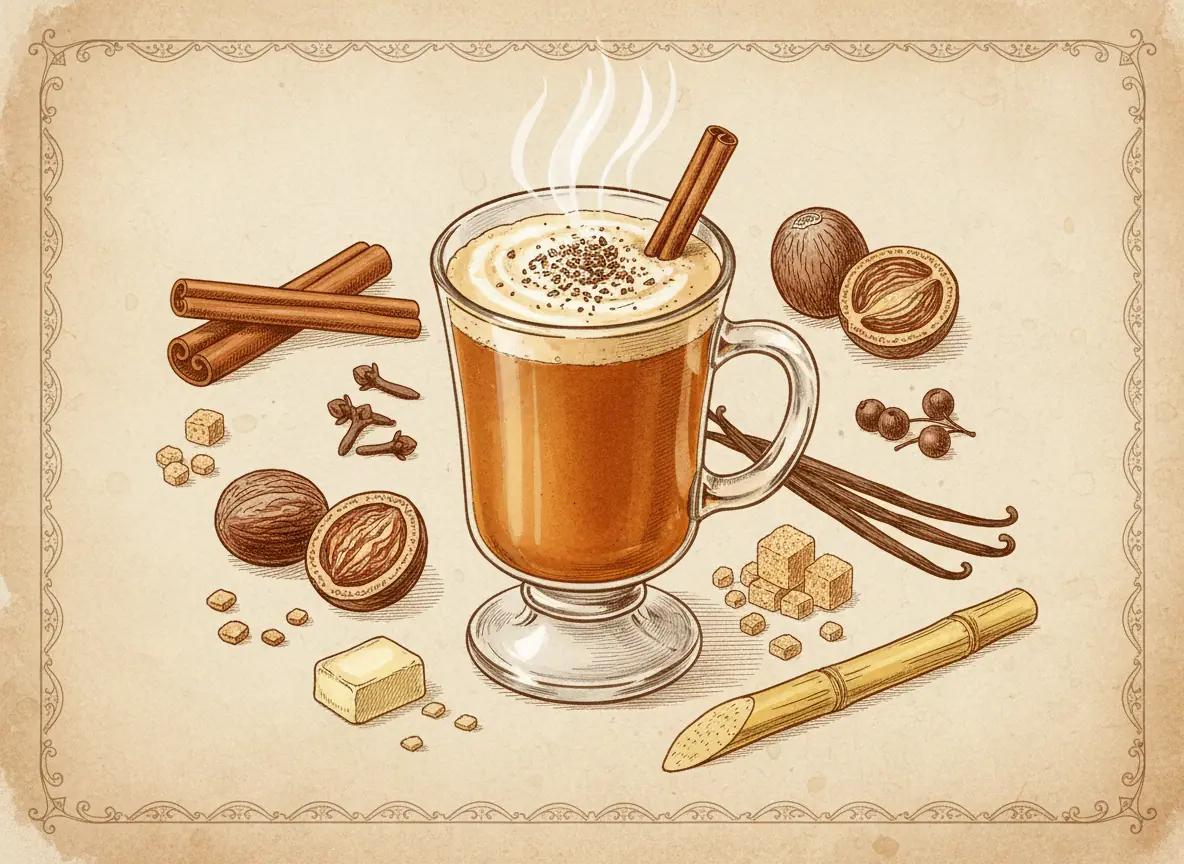
Hot Buttered Rum is one of the oldest documented American drinks, appearing in colonial records from the seventeenth century as a winter drink built around the rum arriving in New England ports from the Caribbean trade. It predates the cocktail as a formal category by more than a century, and it sits alongside the toddy and the flip as evidence that spirit, sweetness and warmth in one vessel is as old as distillation. The batter is what separates a properly made one from a glass of rum with butter melted into it. Softened butter, brown sugar, warm spices and a little vanilla, prepared in advance and stored cold, produce a richness and an integrated spice that adding each element separately cannot reach, and the butter emulsifies into the liquid as the batter dissolves. This is a drink for deep winter and genuine cold. It does not pretend to be refreshing or complex. It is warm, rich, direct and entirely honest about what it is.

Hotel Nacional

The Hotel Nacional is a pineapple daiquiri with ten millilitres of apricot brandy in it, and that small measure is what makes it worth knowing. Pineapple and rum on their own are holiday drinking. Add stone fruit underneath and the whole thing acquires depth: the apricot's kernel note runs beneath the pineapple and gives the drink a finish it otherwise would not have. It is named for the Hotel Nacional de Cuba, the clifftop hotel that opened in Havana in 1930 and went on to host most of the twentieth century, from Churchill and Sinatra to the mob conference of December 1946. The drink is generally attributed to its bar in the 1930s. It sits between the daiquiri's discipline and the piña colada's abandon, which is a useful place for a drink to be. The rum, the lime and the small syrup measure keep the sour structure intact, and the fruit sits on top of that rather than replacing it.
Hurricane

Hurricane

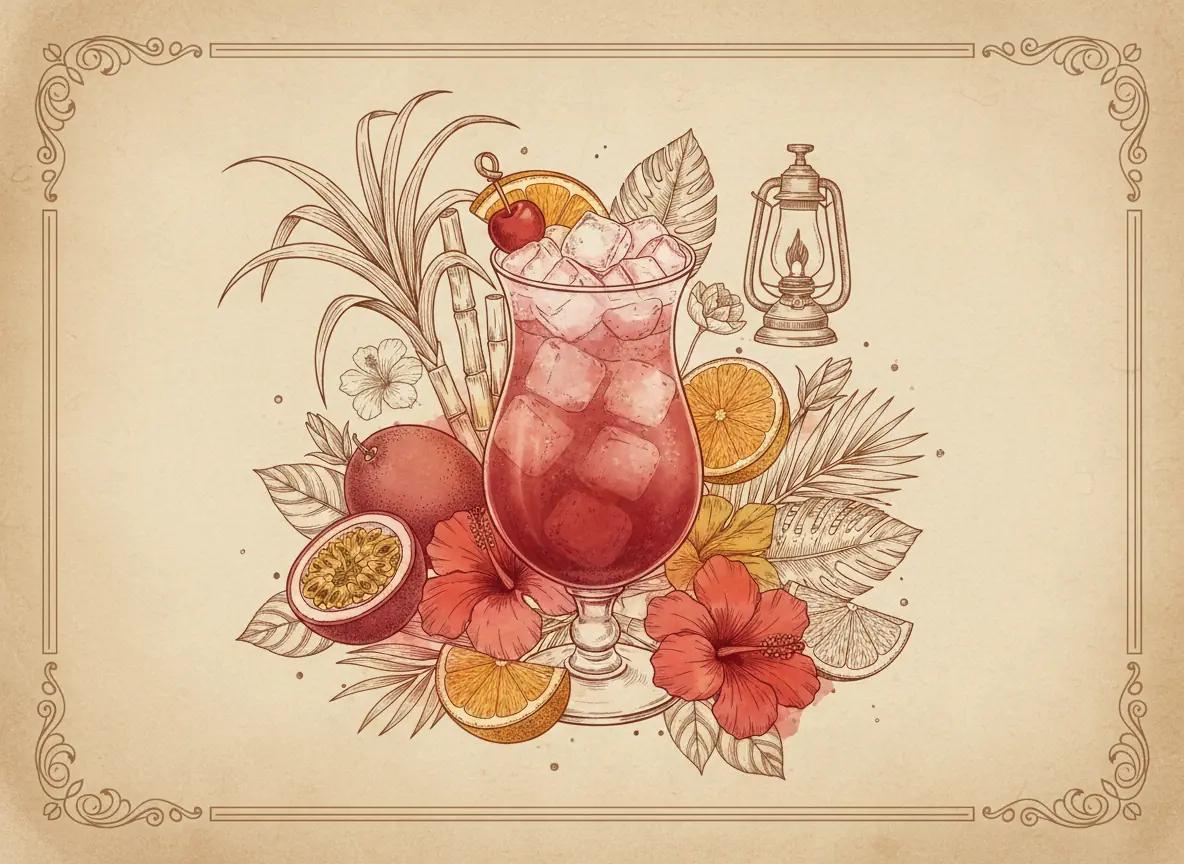
The Hurricane is Pat O'Brien's New Orleans drink from the 1940s: dark and white rum, passion fruit syrup, fresh lime and orange, and grenadine, over crushed ice in a glass shaped like a hurricane lamp. It exists because of a wartime supply problem. Whiskey was scarce, and distributors required bar owners to buy large allocations of rum, plentiful from Caribbean producers, before releasing any whiskey at all. O'Brien's answer was a drink strong enough, fruity enough and visually striking enough that people would order rum deliberately rather than as a substitute. It worked completely, and then its own fame ruined it. As the drink became attached to New Orleans tourism, premixed concentrate in souvenir glasses became the standard serve. What is documented here is the original structure: two rums, fresh juice squeezed to order, passion fruit syrup with real fruit in it. The Hurricane is a serious drink that has been treated carelessly for a very long time.