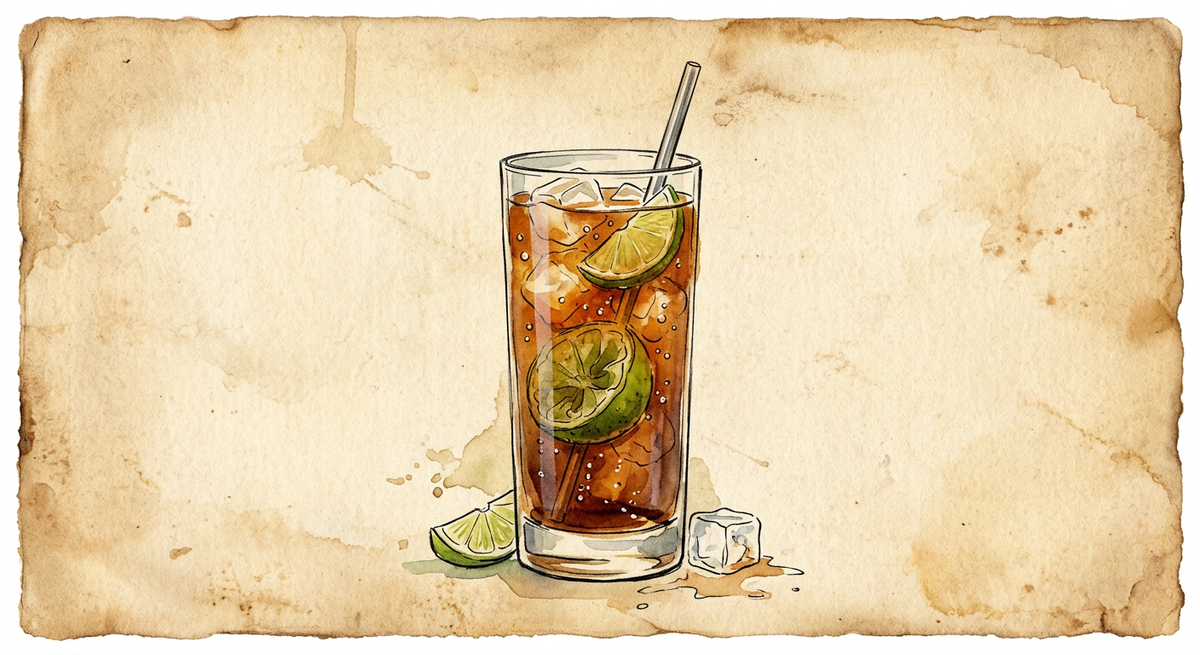
Cuba Libre
A Cuba Libre is 50ml of white rum, 120ml of cola and 10ml of fresh lime juice, built over ice in a highball and stirred once, with the squeezed lime dropped into the glass. About 2.0 UK units. The measures match the IBA’s. The Oxford Companion says Bacardi has long backed the story that an American soldier invented it in Havana in 1898 or 1900, but that the story has no contemporary documentation, and that Coca-Cola was available in Cuba from 1900. Difford’s Guide, following Bacardi’s narrative, cites a sworn affidavit by Fausto Rodriguez, who said he was present in August 1900 when the first one was poured. Given who published it, it is a claim worth weighing rather than a record. The name was the slogan of the Cuban independence movement: free Cuba. The lime is what separates it from a Rum and Coke. Cola is sweet and low in acid, and 10ml of lime gives the drink an edge and a dry finish.
Glassware: Highball Glass
Garnish: Lime shell spent, in the glass
Ingredients
50ml
At 40% ABV, in the Havana style: light and dry, with enough cane character to be heard through the cola. An aged rum makes a richer, slower drink.
120ml
Cold and freshly opened. At 120ml it is most of the glass, so a cola with some bite and bitterness behind the sugar makes a firmer drink than a flat, sweet one.
10ml
Squeezed into the glass from a lime cut the same day. It is what makes the drink a Cuba Libre rather than a Rum and Coke.
Instructions
Fill a highball glass with cubed ice.
Squeeze 10ml of fresh lime juice into the glass and drop the spent lime piece in.
Add the rum and top with the cold cola.
Stir once, gently.
Source: the IBA (Official IBA specification; the squeezed lime in the glass where the IBA garnishes with a wedge; method ours). Last checked 9 October 2026.
Expert Tip
Squeeze the lime into the glass and drop the spent piece in after it. The juice gives the acid; the peel oil sits on the surface and reaches the nose first. Fill the glass with ice and chill the cola. A half-filled glass melts and warms faster, and a warm Cuba Libre tastes of sugar. Stir once, gently. The lime only needs lifting through, and more stirring knocks the fizz out of the cola.
Behind the Cuba Libre
Flavour Profile
Where It Comes From
Cuba, in the early 1900s, though the Oxford Companion says an early Cuban origin cannot be discounted, since Coca-Cola was available in Cuba from 1900, but that the story most often told has no contemporary documentation, and the combination does not appear in print as the Cuba Libre until the late 1920s. The account below places the first one in a Havana bar.
The account most often cited is Fausto Rodriguez’s. In a sworn affidavit, Difford’s Guide reports, he said that in August 1900, as a 14-year-old messenger in the office of the US Army Signal Corps, he saw a man named Russell order Bacardi with Coca-Cola, and American soldiers nearby order a round. Difford’s says Bacardi used the affidavit in a 1960s advertisement, so treat it as a claim.
The Lime
The lime is what separates the Cuba Libre from a Rum and Coke.
Cola is sweet and low in acid. Ten millilitres of lime cuts the sugar and dries the finish, and the spent piece dropped into the glass adds peel oil to the surface of the drink.
The Rum
White rum is the IBA’s choice and the Havana style: light and dry, so the cola and lime stay in front. It needs some cane character, or the glass tastes of cola alone.
An aged rum makes a darker, slower drink, with caramel and dried fruit under the cola. It is a different drink rather than a better one; the choice is about the hour.
The Cola
At 120ml the cola is most of the glass. One with some bite and bitterness behind its sugar makes a firmer drink; a flat, sweet one leaves the lime working harder.
The IBA, Ours and the Rum and Coke
The Cuba Libre as the IBA gives it, as we pour it, and the Rum and Coke
Rum
- Cuba Libre (IBA)
- 50ml white rum
- Cuba Libre (ours)
- 50ml white rum
- Rum and Coke (ours)
- 50ml rum, any style
Cola
- Cuba Libre (IBA)
- 120ml
- Cuba Libre (ours)
- 120ml
- Rum and Coke (ours)
- 150ml
Lime
- Cuba Libre (IBA)
- 10ml fresh juice
- Cuba Libre (ours)
- 10ml fresh juice
- Rum and Coke (ours)
- None
Method
- Cuba Libre (IBA)
- Built over ice in a highball
- Cuba Libre (ours)
- Built over ice, stirred once
- Rum and Coke (ours)
- Built over ice, stirred once
Garnish
- Cuba Libre (IBA)
- Lime wedge
- Cuba Libre (ours)
- The squeezed lime, in the glass
- Rum and Coke (ours)
- None
UK units
- Cuba Libre (IBA)
- About 2.0
- Cuba Libre (ours)
- About 2.0
- Rum and Coke (ours)
- About 2.0
| Element | Cuba Libre (IBA) | Cuba Libre (ours) | Rum and Coke (ours) |
|---|---|---|---|
| Rum | 50ml white rum | 50ml white rum | 50ml rum, any style |
| Cola | 120ml | 120ml | 150ml |
| Lime | 10ml fresh juice | 10ml fresh juice | None |
| Method | Built over ice in a highball | Built over ice, stirred once | Built over ice, stirred once |
| Garnish | Lime wedge | The squeezed lime, in the glass | None |
| UK units | About 2.0 | About 2.0 | About 2.0 |
How to Serve It
Tall, cold and straight away: a highball full of ice, one gentle stir, and no garnish beyond the lime already in the glass.
It builds in seconds, so make it glass by glass for a group rather than batching it; cola poured ahead goes flat.
Without the lime it is a Rum and Coke; with tequila and a salted rim, a Batanga.
Make it at home
The Spirit
White RumWhite rum is clear rum, usually bottled at 40% ABV, either unaged or rested in oak and then charcoal-filtered back to clear. It is the light, dry rum of the Daiquiri, the Mojito and the Cuba Libre, and the rum most of our recipes mean when they want rum that sits under lime rather than over it.
More to explore
Frequently Asked Questions
What is the difference between a Cuba Libre and a Rum and Coke?
What does Cuba Libre mean?
Who invented the Cuba Libre?
Should I use white or aged rum?
Is the Cuba Libre an IBA cocktail?
How strong is a Cuba Libre?
Sources.
Correct as of 19 October 2026.
- The Oxford Companion to Spirits and Cocktails (David Wondrich), “The Cuba Libre” (secondary source: Bacardi’s story of an American soldier in Havana in 1898 or 1900 without contemporary documentation; a “Cuba Libre cocktail” in Washington in 1898; the rum and Coca-Cola combination in print as the Cuba Libre only from the late 1920s; Coca-Cola available in Cuba from 1900).
- Difford’s Guide, “Cuba Libre” (secondary source, following Bacardi’s narrative: Fausto Rodriguez’s affidavit, told to Emilio Bacardi on 21 December 1964, of August 1900 in a Havana bar; used by Bacardi in a 1960s advertisement; disputes over Coca-Cola in Cuba before 1900).
You Might Also Like
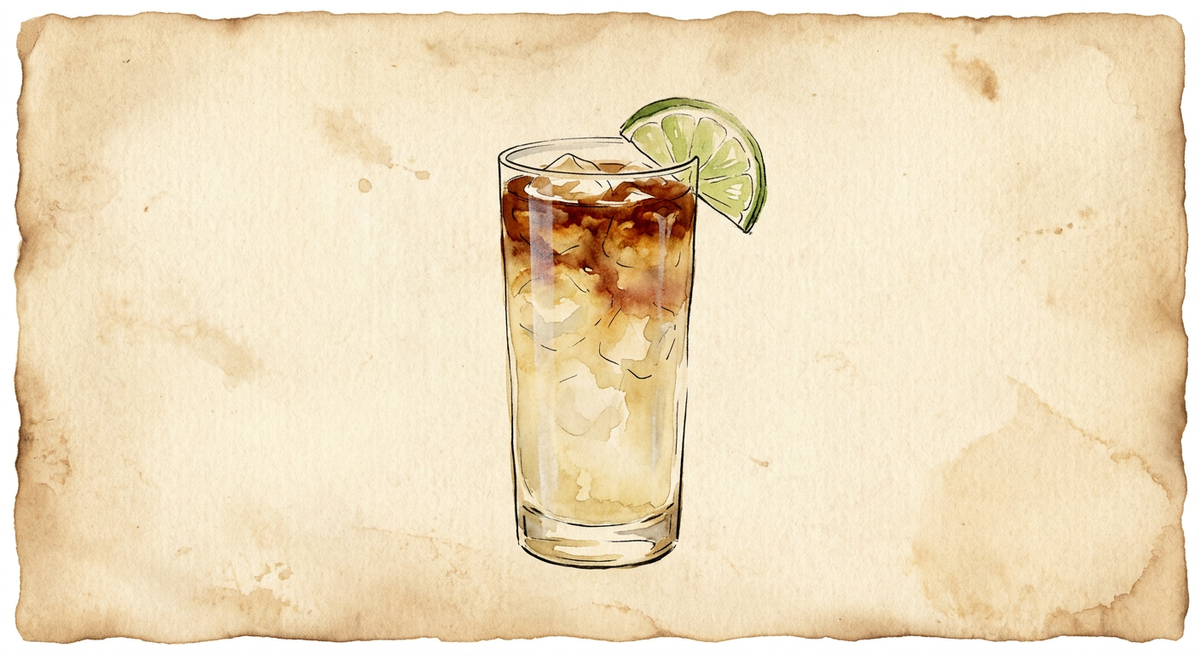
Dark ’n’ Stormy
A Dark ’n’ Stormy is 60ml of Gosling’s Black Seal rum floated over 100ml of ginger beer in a highball full of ice, with a lime wedge. About 2.4 UK units. Those are the IBA’s measures, and the name is a Gosling Brothers trade mark tied to Black Seal. The Oxford Companion says the drink purportedly originated among British sailors on shore leave in Bermuda after the First World War, though another origin story places it earlier, in the nineteenth century. Gosling’s own page puts ginger beer from a Royal Navy officers’ club with the local Black Seal rum, and a sailor is said to have called the colour that of a cloud only a fool or a dead man would sail under. The Oxford Companion says the Gosling family claimed a trademark for the cocktail’s recipe in 1991 and has repeatedly turned to the US Patent and Trademark Office to protect it, and Gosling’s own page writes the name with the registered symbol. The same build with another dark rum is a rum and ginger beer, and a sound one. The same build with another dark rum is a rum and ginger beer, and a sound one.
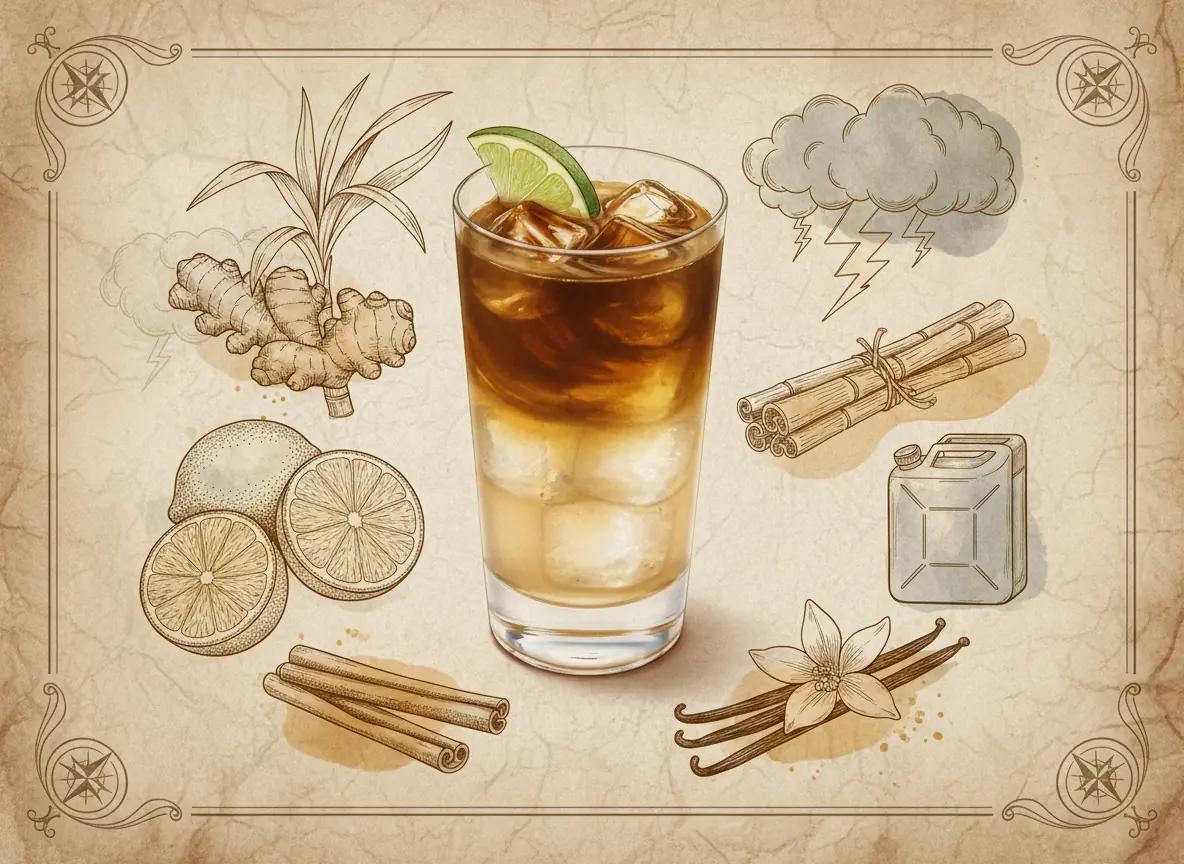
Storm & Spice
Storm & Spice is 50ml of Expedition Spiced Rum floated over 150ml of ginger beer and 15ml of fresh lime juice in a highball full of cubed ice, with two dashes of Angostura on top, a lime wedge and crystallised ginger. About 2.0 UK units from the rum at 40% ABV; the bitters add less than 0.1. It is our spiced-rum answer to the Dark ’n’ Stormy, the Bermudian highball of black rum and ginger beer. Gosling’s own site writes the name Dark ‘n Stormy® with the registered symbol and calls Black Seal Rum its essential ingredient, so this is a different drink on the same frame. A black rum brings weight and dark sugar. Expedition Spiced Rum brings vanilla, cinnamon and clove, which gives the ginger more to catch hold of. The build is the point. Ginger beer goes in first, then the rum is poured slowly over the back of a spoon so it sits dark over the pale ginger. Left layered, the first sips lead with rum. Stirred, the two run together.
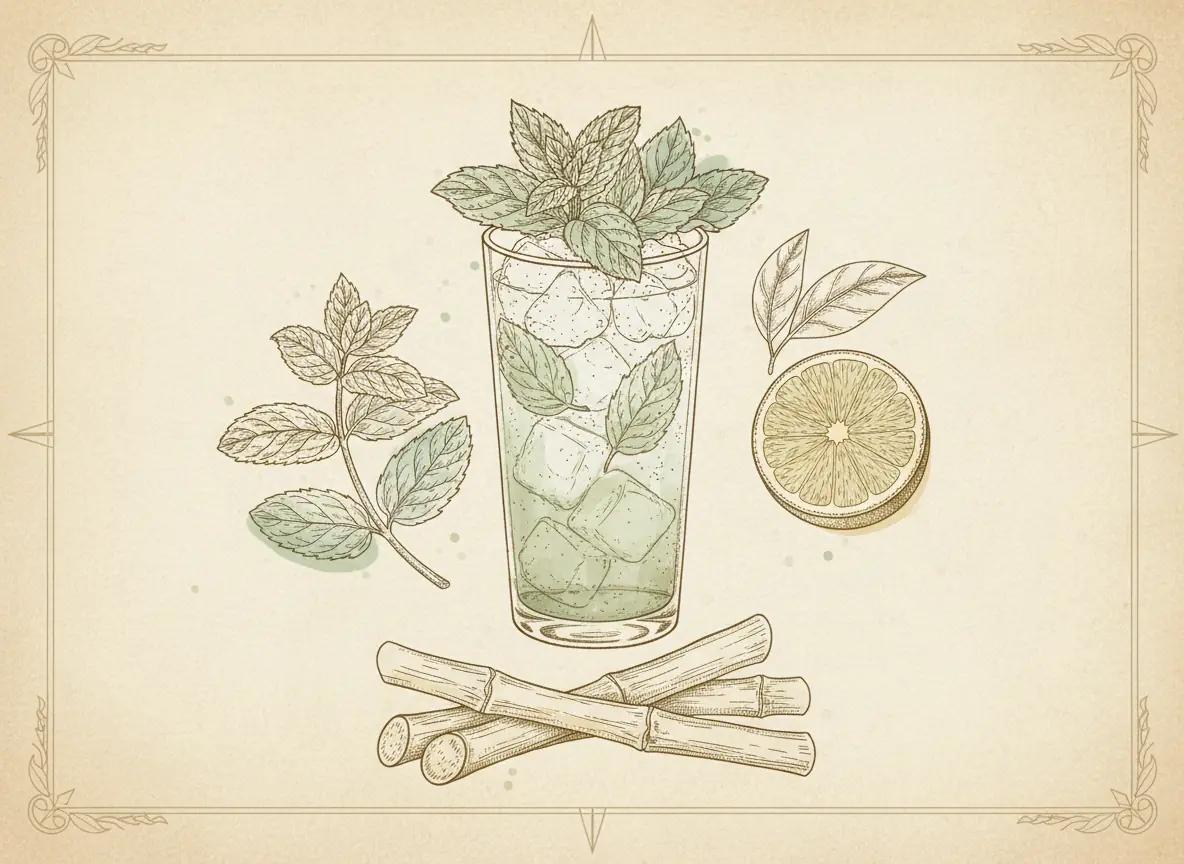
Mojito
A Mojito is 45ml of white rum, 20ml of fresh lime juice, two teaspoons of white cane sugar and six sprigs of mint, built in a highball. The mint is pressed gently with the sugar, the glass is filled with cubed ice, the rum and lime go in, and 75 to 100ml of chilled soda water tops it. About 1.8 UK units. Those are the IBA’s measures. The IBA only says to top up with soda, so the 75 to 100ml is ours. Press the mint once or twice and stop. Torn leaves make the drink bitter and grassy, and that, more often than the rum, is why a Mojito disappoints. The sugar grains help: they bruise the surface of the leaf as you press, and the lime then carries the oil through the glass.
Where this one sits
Recipe by Jerry Can Spirits · Updated 19 October 2026