Batanga
A Batanga is 50ml of blanco tequila and 120ml of cola over ice in a highball with half the rim salted, with half a lime squeezed in and its shell dropped after it, stirred once. About 2.0 UK units. At La Capilla, the bar it comes from, the stir is done with the knife that cut the limes. Punch reports that Don Javier Delgado Corona kept post behind the bar at La Capilla in the town of Tequila for almost 70 years, and he is credited with it. Garden & Gun has him opening La Capilla in 1961, and the Oxford Companion calls the Batanga a 1950s drink; Punch puts it in the late 1950s or early 1960s and says no one remembers exactly. He died in 2020, at 95, Punch says. It is a Cuba Libre with tequila in place of rum and salt on the rim. The salt does real work: it dulls the bitterness of the cola and lets the pepper of the agave through, so the glass drinks drier than tequila and cola sound.
Glassware: Highball Glass
Garnish: Half salt rim and Lime shell squeezed, dropped in
Ingredients
50ml
Blanco, unaged, at 40% ABV. Its pepper and raw agave stand up to 120ml of cola; an aged tequila turns softer and closer to rum and cola.
120ml
Cold and freshly opened. Chowhound names Mexican Coca-Cola, made with cane sugar, as the cola for the drink; any cola with some bite works.
Half a lime
Half a lime, cut and squeezed straight into the glass, with the shell dropped in after. Its cut face also wets the rim for the salt.
Instructions
Run the cut face of a lime half round half the outer rim of a highball and roll that edge in salt.
Fill the glass with cubed ice.
Squeeze in the lime half and drop the shell in.
Add the tequila and top with the cola.
Stir once, with the knife that cut the lime if you want La Capilla’s ritual.
Our version
Recipes for the Batanga vary in their proportions. Ours pours 50ml of blanco tequila and 120ml of cola, with half a lime squeezed in and half the rim salted, on the outside edge.
Source: our own specification. Last checked 9 October 2026.
Expert Tip
Salt half the rim. Run the cut lime round half the outside edge and roll it in flaky or medium-grind salt, leaving the inside bare so no salt falls into the cola. Use Mexican Coca-Cola if you can find it. Chowhound and Garden & Gun both name it for this drink, and Chowhound says it is made with cane sugar; any cola with some bite will do. Stir once. The knife is La Capilla’s ritual, and a clean bar spoon will do if you have no knife to hand. Stirring again only flattens the cola.
Behind the Batanga
Flavour Profile
Where It Comes From
La Capilla, the chapel, is a small bar in the town of Tequila in Jalisco. Don Javier Delgado Corona kept post behind its bar for almost 70 years, Punch reports, and the Batanga is the drink he is credited with.
Garden & Gun has Don Javier opening La Capilla in 1961, and the Oxford Companion calls the Batanga a 1950s Mexican take on the Cuba Libre. Punch puts the first Batanga in the late 1950s or early 1960s and says no one remembers exactly. Don Javier died in 2020, at 95, Punch says.
The Name
Punch quotes Don Javier’s great-nephew, the chef Fabián Delgado Padilla: a customer, a few rounds in, renamed the drink for the bamboo-raft shape the bar’s six-sided glass made if cut in half.
The Salt Rim
Salt dulls bitterness and lets other flavours forward. Against cola that matters: the drink stops tasting of syrup and caramel alone, and the tequila’s pepper comes through.
Salt half the rim, on the outside edge only, and the drinker can turn the glass for a salted sip or a plain one. A medium-grind or flaky sea salt holds to a wet rim better than fine table salt and dissolves more slowly.
The Knife
At La Capilla the drink was stirred with the knife used to cut the limes, and Punch quotes Don Javier’s great-nephew saying it is not a Batanga without it. The Oxford Companion says Don Javier mixed his with a large iron utility knife, used to cut limes, chiles, avocados and anything else in the bar that needed cutting, and that habitués of La Capilla claim this gives the drink an irreproducible je ne sais quoi.
Whether that changes the taste is arguable: Garden & Gun quotes the distiller Tony Salles saying a spoon does not give the same drink, and we have not tested it. It is the ritual people travel to see; a clean bar spoon is the fallback.
The Batanga Beside Its Relations
The Batanga beside the Cuba Libre and two tequila highballs
Batanga (ours)
- Spirit
- 50ml blanco tequila
- Citrus
- Half a lime, squeezed in
- Top
- 120ml cola
- Rim
- Half salted
Cuba Libre
- Spirit
- 50ml white rum
- Citrus
- 10ml lime
- Top
- 120ml cola
- Rim
- None
Paloma
- Spirit
- Blanco tequila
- Citrus
- Lime
- Top
- Grapefruit soda
- Rim
- Salted
Cantaritos
- Spirit
- 50ml blanco tequila
- Citrus
- 30ml orange, 15ml lime, 30ml grapefruit
- Top
- 90ml grapefruit soda
- Rim
- Half salted
| Drink | Spirit | Citrus | Top | Rim |
|---|---|---|---|---|
| Batanga (ours) | 50ml blanco tequila | Half a lime, squeezed in | 120ml cola | Half salted |
| Cuba Libre | 50ml white rum | 10ml lime | 120ml cola | None |
| Paloma | Blanco tequila | Lime | Grapefruit soda | Salted |
| Cantaritos | 50ml blanco tequila | 30ml orange, 15ml lime, 30ml grapefruit | 90ml grapefruit soda | Half salted |
How to Serve It
Tall, over plenty of ice, with salt on the rim and the lime shell in the glass. Build it quickly and drink it cold.
For rum in place of tequila, make a Cuba Libre; for grapefruit soda in place of the cola, a Paloma.
Make it at home
The Spirit
TequilaTequila is a Mexican spirit distilled from the blue agave plant, made, the Oxford Companion says, only in Jalisco and municipalities of four other states; our recipes use 40% ABV. A label reading 100% agave means every sugar came from the plant, where plain tequila needs only 51%. Most of our 26 tequila recipes ask for 100% agave blanco.
More to explore
Frequently Asked Questions
Who created the Batanga?
Why is it called a Batanga?
Why do you stir a Batanga with a knife?
How is a Batanga different from a Cuba Libre?
Which cola should I use?
How strong is a Batanga?
Sources.
Checked between 18 October and 19 October 2026.
- Punch, “Meet La Batanga, Mexico’s Answer to the Cuba Libre” (secondary source: Don Javier at La Capilla almost 70 years; late 1950s or early 1960s, no one remembers exactly; name from the bamboo-raft shape (great-nephew Fabián Delgado Padilla); “not a Batanga if you don’t stir the drink with the knife you used to cut the limes”; died 2020, at 95).
- The Oxford Companion to Spirits and Cocktails (David Wondrich), “The Batanga” (secondary source: a 1950s Mexican take on the Cuba Libre; Don Javier Delgado Corona, La Capilla, Tequila, from the 1950s until his death in 2020; stirred with a large iron utility knife; discovered by journalists in the early 1990s).
- Garden & Gun, “The Ultimate Tequila Cocktail from Tequila, Mexico” (secondary source: La Capilla opened 1961; Delgado died February 2020; Mexican Coca-Cola in glass bottles; steak knife; Salles’s view of the spoon).
- Chowhound, “The 3-Ingredient Cocktail Made for Mexican Coke Lovers” (secondary source: Mexican Coke is made with cane sugar rather than high-fructose corn syrup).
You Might Also Like
Paloma
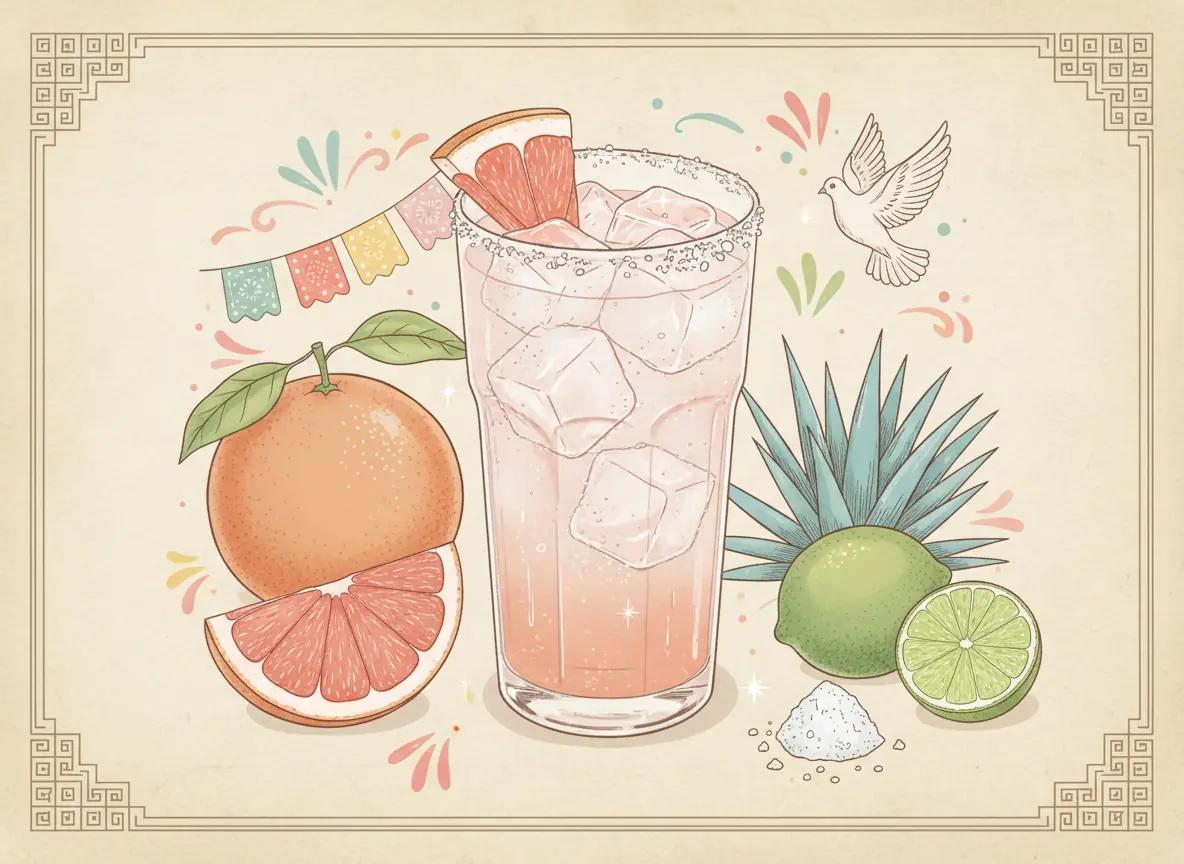
A Paloma is 50ml of blanco tequila, 5ml of fresh lime juice and a pinch of salt over ice in a highball, topped with 100ml of pink grapefruit soda and stirred gently once. Those are the IBA’s measures. We salt half the rim and add a grapefruit slice and a lime wheel. About 2.0 UK units. Paloma is Spanish for dove. The Oxford Companion traces the tequila and grapefruit soda combination to 1950, when a brochure for Squirt suggested mixing it with tequila, with Squirt launched in Mexico in 1955, and says it is unknown who adapted the combination to Mexican tastes. The soda does most of the work. It brings the grapefruit, the sugar and the fizz in one pour, so the recipe needs no syrup and only a little lime. The pinch of salt in the drink softens the grapefruit’s bitter edge and lets the agave through.
Cuba Libre
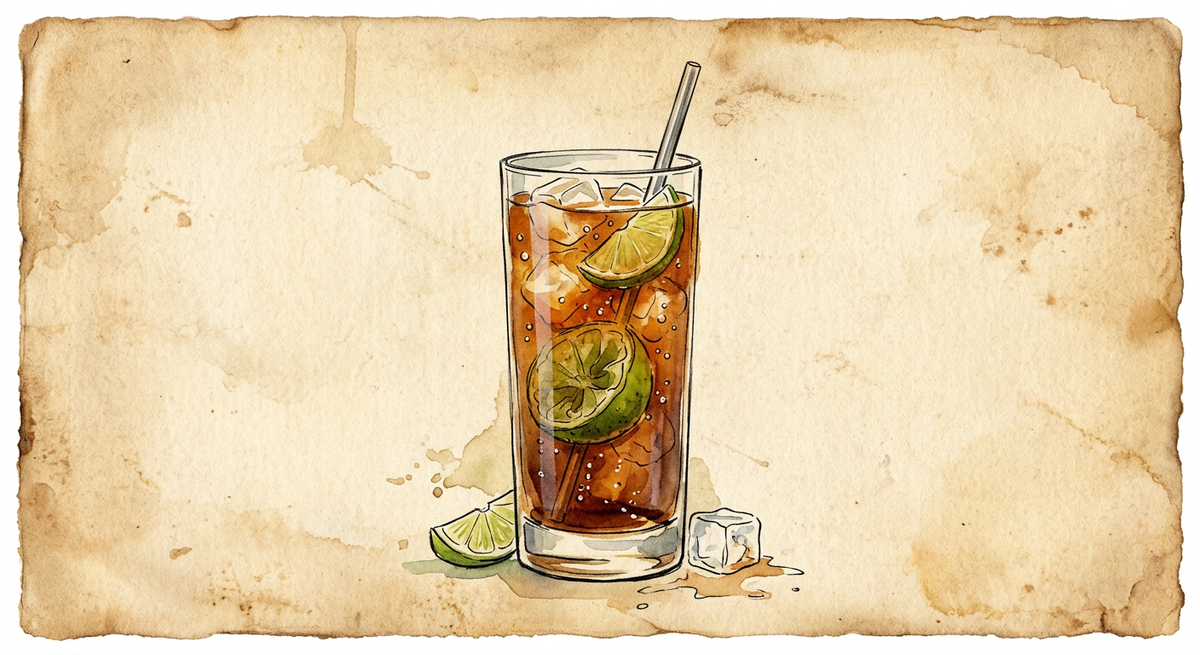
A Cuba Libre is 50ml of white rum, 120ml of cola and 10ml of fresh lime juice, built over ice in a highball and stirred once, with the squeezed lime dropped into the glass. About 2.0 UK units. The measures match the IBA’s. The Oxford Companion says Bacardi has long backed the story that an American soldier invented it in Havana in 1898 or 1900, but that the story has no contemporary documentation, and that Coca-Cola was available in Cuba from 1900. Difford’s Guide, following Bacardi’s narrative, cites a sworn affidavit by Fausto Rodriguez, who said he was present in August 1900 when the first one was poured. Given who published it, it is a claim worth weighing rather than a record. The name was the slogan of the Cuban independence movement: free Cuba. The lime is what separates it from a Rum and Coke. Cola is sweet and low in acid, and 10ml of lime gives the drink an edge and a dry finish.
Cantaritos
Cantaritos is 50ml of blanco tequila with 30ml of fresh orange juice, 15ml of fresh lime juice and 30ml of fresh grapefruit juice, built over ice in a soaked clay cup with half the rim salted, topped with 90ml of grapefruit soda and finished with a lime wheel. About 2.0 UK units. The name comes from the cup. Difford’s Guide describes it as made in the bars, cafés and roadside stalls of Jalisco and served in a clay pot that helps keep it cold, and InsideHook describes a roadside venue in Amatitán, Jalisco, pouring it into large clay pots for groups. We have found no source that names an inventor, and the measures vary; these are ours. It is a Paloma with more fruit. Orange brings the sweetness, lime the sharpness and grapefruit the bitter edge, which the soda then repeats.
Where this one sits
Recipe by Jerry Can Spirits · Updated 19 October 2026