Highballs
44 recipes, page 1 of 2
This Field Manual holds 44 recipes in the highball family. A highball is one spirit lengthened with one carbonated mixer, built in the glass over ice. There is no shaking and usually no third ingredient.
The technique is all there is, so it shows. A cold glass, ice to the top, mixer poured down the side and one stir at most: each of those keeps carbonation in the drink. A gin and tonic, a whisky highball and a rum and coke are the same build with different halves. The ratio does the rest, and two parts mixer to one is a strong highball where three to one is a long one.
Base Spirit
Difficulty Level
Americano
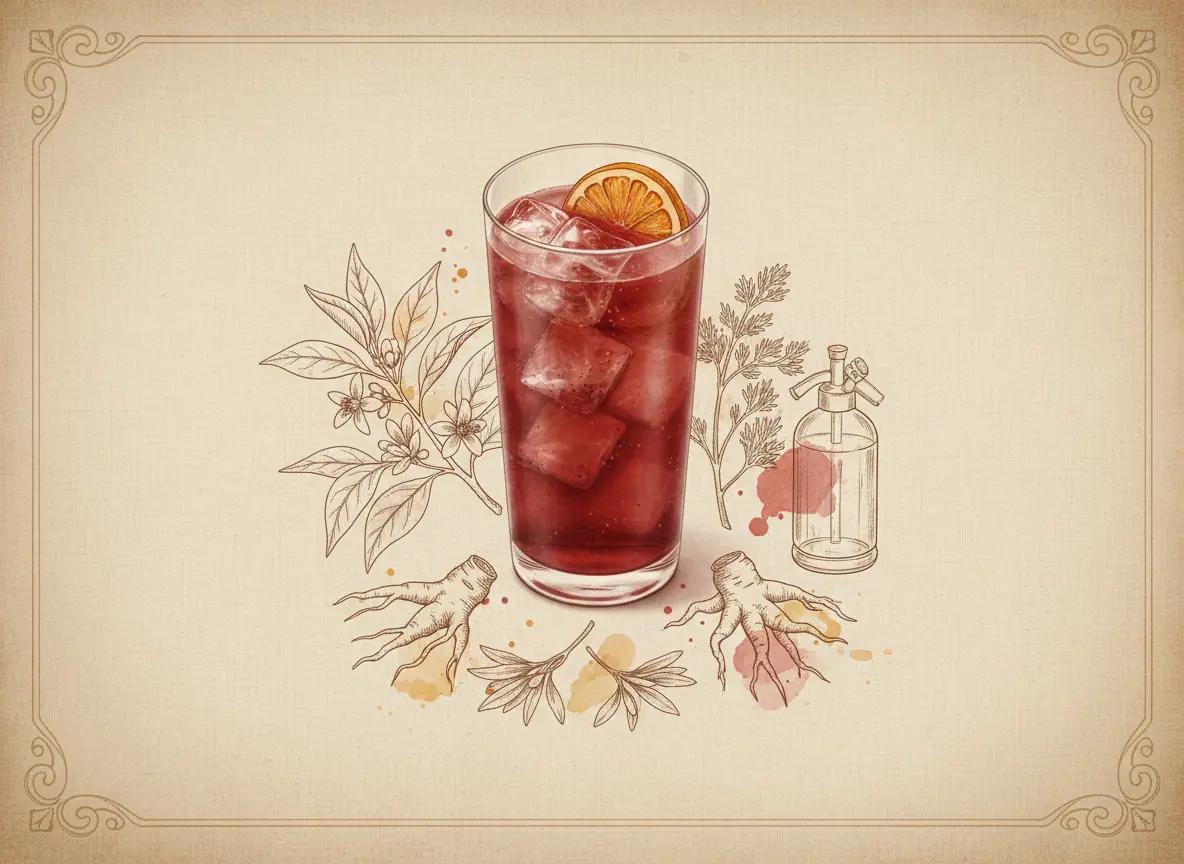
The Americano was born at Gaspare Campari's bar in Milan in the 1860s, served then as the Milano-Torino after its two principal ingredients: Campari from Milan and sweet vermouth from Turin. The name Americano came later, attributed to the American tourists and expatriates who ordered it in such volume that the drink became associated with them. It is the direct ancestor of the Negroni, predating it by roughly half a century. It is one of the simplest drinks in the canon and one of the most instructive. Three ingredients built directly in the glass, no shaking, no stirring beyond a single gentle turn to integrate the soda. The restraint is the point: this is a drink designed for length and sessionability, and for the specific pleasure of something bitter, sweet and effervescent taken slowly in warm weather before a meal. The sweet vermouth is the variable that decides the whole thing. At equal volume to the Campari it has nowhere at all to hide.
Añejo Highball
The Añejo Highball is Dale DeGroff's rum buck, built in 2000 and dedicated to the Cuban bartenders of the 1920s and 30s. That dedication is not decoration: every ingredient in the glass is something a Havana bar of that era would have had to hand. Aged rum, orange curaçao, lime and Angostura go into the glass and ginger beer goes over the top. Most bucks run to three ingredients and rely on the ginger to carry them. This one seats five, and the two extra are aromatic rather than structural: the curaçao threads bitter orange through the ginger, and the bitters give a long drink the finish of a stirred one. It is a highball with more going on than a highball usually needs, which is the point of it. DeGroff published it into general circulation through his books and it has stayed there, one of the few modern recipes that turns up on menus without anyone feeling obliged to explain who wrote it.
Batanga
The Batanga is the drink Don Javier stirred with the knife. Don Javier Delgado Corona created it in 1961 at La Capilla in the town of Tequila itself, naming it for a portly regular: tequila and cola over a salted rim, mixed with the blade he had just cut the limes with. He poured it for six decades and stirred every one the same way. The build is the Cuba Libre’s agave cousin with two signatures. The salt rim does real work against the cola, softening the sweetness and the bitterness at once so the drink runs considerably drier than its ingredients suggest. The knife stir folds the lime’s oil back into the glass, and is as much liturgy as it is method. Don Javier poured his last Batanga in 2020, at ninety-six, and the town still orders the drink as its own. It is the humblest classic in the agave canon and among the most loved anywhere.
Campari & Soda
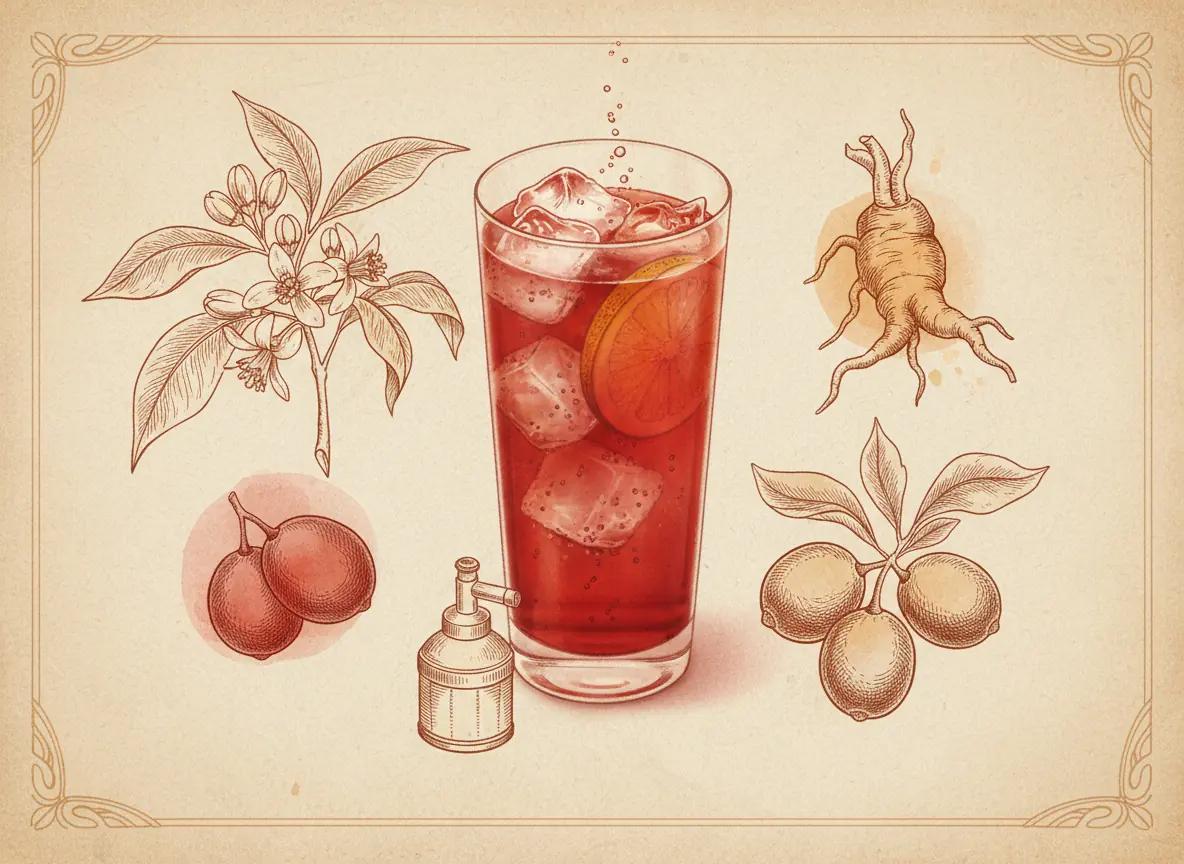
Campari & Soda has been served in Italian bars since the late nineteenth century and has never needed improving. Two ingredients, built in a glass, drunk before a meal. The simplicity is not a limitation, it is the entire point: Campari is complex enough that adding anything beyond soda and ice risks obscuring the thing that makes it worth drinking. The drink became a fixture of aperitivo culture partly through a piece of industrial design. In 1932 the company commissioned Fortunato Depero, a Futurist artist, to design a single-serve bottle that could be sold pre-mixed and carried to a table without a bartender. The inverted cone that resulted became one of the most recognisable pieces of drinks packaging in Europe, and it introduced the combination to a generation who might never have ordered it at a bar. The ratio matters more than it appears to. Too much soda and the bitterness goes dilute and loses its structure; too little and the drink is heavy and slow. The correct proportion lets the Campari lead while the soda lifts and extends it into something sessionable.
Cantaritos
Cantaritos is tequila with three citrus juices and grapefruit soda, salted and served in a small clay cup. The cup is not decoration: it is called a cantarito, it gives the drink its name, and soaked in water beforehand it chills the contents by evaporation. The citrus is the whole idea. Orange for sweetness, lime for sharpness, grapefruit for a bitter edge, and then grapefruit soda on top doubling the last of them. That is the huerta, the orchard, in one glass, and it is a good deal more interesting than the Paloma's single fruit. It comes from the roadside stands around Tequila and Amatitán in Jalisco, where they are sold by the thousand with the cup included. The drink is folk repertoire and older than any attribution, and the giant communal cantaritos at the best-known stands hold litres. It is a group serve by nature, which is worth knowing before you make one.
Cape Codder
The Cape Codder is vodka, cranberry juice and a squeeze of lime, and the lime is not optional. Without it you have a glass of juice with vodka in it; with it the drink finishes dry and reads as a cocktail. That one squeeze is the difference between the version worth making and the version people order without thinking. It began as a marketing campaign. Ocean Spray, the Massachusetts cranberry growers' cooperative, promoted vodka and cranberry from the mid-1940s, reportedly first under the name Red Devil, and the drink took the name of the cranberry coast as it spread. By the 1960s vodka and cranberry was simply what people drank, and the Codder name kept the history attached to it. Cranberry is a shrewder mixer than its juice-aisle reputation suggests. Sweetened just enough to be drinkable, it keeps genuine tartness and a tannic edge, and that is what gives the finished drink its dry finish.
Cuba Libre
The Cuba Libre was born in Havana around 1900, in the afterglow of the war that gave the drink its toast: Cuba freed from Spain, American soldiers in the bars, and the new American cola meeting the island’s rum over ice. A captain is said to have raised the glass with the independence cry, por Cuba libre, and the drink has carried the slogan ever since. The obvious objection, that this is just rum and coke, misses the one thing the drink insists on: the lime. A proper Cuba Libre squeezes half a lime into the glass and drops the spent shell in, and that acid is what turns a sweet mixer drink into a long cocktail with a spine. Rum and cola is a pleasant habit. The Cuba Libre is a recipe. It rewards the same care as any three-ingredient drink: a characterful rum, a cola with real spice rather than bare sweetness, and everything properly cold.
Cucumber & Elderflower G&T
The Cucumber & Elderflower G&T is a gin and tonic with two English garden moves made on it: fifteen millilitres of elderflower liqueur, and a long cucumber ribbon pressed against the inside of the glass. Both do work. The elderflower answers the tonic's bitterness with a floral sweetness rather than plain sugar, which keeps the drink dry in effect while softening it in fact. The cucumber works by aroma more than by taste, perfuming every sip on the way through. It is a house serve rather than a classic, and it behaves like one: unfussy about brands and forgiving of proportions. A juniper-forward London Dry keeps it recognisably a G&T underneath the florals; a softer contemporary gin leans it further towards the garden. Either way the tonic should be good and poured gently, because quinine is doing the structural work the gin's dryness usually shares. Late April is its natural moment, when garden weather first becomes plausible.
Dark ’n’ Stormy
The Dark 'n' Stormy is Bermuda's national highball and one of very few cocktails with a legal department. It was born after the First World War, when ginger beer brewed at a Royal Navy officers' club on the island met Gosling's Black Seal, the local black rum, and a sailor observed that the result was the colour of a cloud only a fool or a dead man would sail under. The legal part is not decoration. Gosling's trademarked the name and has gone to court to defend it, which makes the recipe binding rather than traditional: a Dark 'n' Stormy is Gosling's Black Seal and ginger beer, and a version built on any other bottle is a dark rum and ginger beer, often excellent and differently named. The build is the whole theatre. Ginger beer first over ice, lime squeezed if the day calls for it, and the rum poured last and slowly, where its density holds it as a black weather front above the golden fizz.
Dragon’s Breath
The Dragon’s Breath is our long drink for St David’s Day: Penderyn and honey syrup built over ice in a highball, topped with ginger beer and finished with a squeezed lime wedge. The name promises fire and the ginger delivers a manageable version of it, heat at the top of the sip, honey smoothing the edges underneath, whisky holding the middle. It is a house serve in the buck tradition, spirit lengthened with ginger beer and citrus, aimed squarely at early March weather. The build asks almost nothing. No shaker, no strainer, one gentle stir, which makes it the drink to hand a crowd on the first of March while the stirred serves take their turn. What it does ask is a proper ginger beer with real bite, because the whisky is light on its feet and a soft mixer leaves the drink without its dragon. Warming and refreshing at once is a strange promise for one glass to keep, but that is the trick of it: cold serve, warm spice, and a Welsh whisky quietly running the whole thing.
El Diablo
El Diablo is the devil in a highball, and a Trader Vic creation from 1946: tequila and crème de cassis under a ginger beer top, lime squeezed and dropped, one of the first cocktails anywhere to treat tequila as worth building around. Vic printed it as the Mexican El Diablo when tequila was still exotic; the drink outlived the qualifier. The blackcurrant is the sly part. Cassis colours the drink a plausible devilish crimson and sweetens the seam between agave and ginger, the tequila’s pepper answers the ginger beer’s bite, and the lime keeps all three honest: a mule’s architecture wearing a darker suit. It drinks easier than its name and colour promise, which was presumably the joke. Among tequila highballs it sits between the Paloma’s sunshine and the serious stirred drinks: fruitier than the former, more playful than the latter, and the best possible answer to a ginger beer bottle already open from Storm & Spice duty.
English Garden
The English Garden is what it says on the glass: gin, elderflower, pressed apple and mint shaken into a long drink that tastes of the country it is named for. It has no inventor on record. The recipe surfaced in British bars sometime in the 2000s, spread faster than its paperwork, and settled into the repertoire as a contemporary classic nobody can quite pin down. It works because every ingredient pulls the same way. Elderflower and apple are hedgerow and orchard, gin’s botanicals are half a herb garden already, and the mint in the shaker with the cucumber on the glass folds in the kitchen plot. The lemon and a small measure of syrup hold the sweetness at cordial levels rather than pudding ones. It is the gin drink for people still deciding about gin, and the summer alternative for anyone who finds the Pimm’s jug too sweet: soft enough for a garden afternoon, structured enough to stand a second round.
Fernandito
The Fernandito is Fernet Branca and cola, and it is the most consumed cocktail in Argentina by a distance. Known locally as Fernet con Coca, it emerged in Córdoba in the 1980s among students who found the amaro undrinkable neat and the cola undrinkable sober, and it has since become a genuine national habit rather than a student one. Fifty millilitres of Fernet topped with cola over plenty of ice: there is no third ingredient, no garnish and no technique beyond a gentle stir. What makes it work is that Fernet's menthol and bitter herb sit in almost exact opposition to cola's caramel sweetness, and each makes the other drinkable. Argentina consumes roughly three quarters of the world's Fernet Branca. Branca opened a plant in Buenos Aires in 1941 and it has been running at capacity for most of the time since.
Fluffy Duck
The Fluffy Duck is the advocaat bottle’s night out: Dutch custard liqueur lifted with gin and orange, lengthened with soda into a 1970s party classic whose name describes the texture and whose texture keeps the promise. The build balances custard against botanicals. Advocaat and gin at matched measure, with the gin performing on custard exactly the trick juniper performs on cream in an Alexander, cutting the richness so the drink stays a drink. Orange juice brightens it, triple sec doubles the orange from the liqueur side, and the soda lofts the whole thing into the fluff the duck is named for. It drinks like a float that learned manners: sweet, soft and considerably more refreshing than a custard-based cocktail has any business being. Advocaat gets two outings a year in most households, and this is comfortably the better of them and the one that has nothing at all to do with Christmas.
Garibaldi
The Garibaldi is Campari and orange juice, which for most of the twentieth century meant a perfectly blameless and slightly boring highball. Then Naren Young rebuilt it at Dante in New York around a single word, and the word is fluffy. Fresh orange juice aerated to a foam behaves like a different ingredient. It reads creamier and sweeter against Campari's bitterness, and instead of a bitter layer sitting under a sweet one, the two unify. Same shopping list, entirely different drink, which makes it the clearest lesson available in technique as an ingredient. The name is geography. Giuseppe Garibaldi unified Italy, and the drink unifies Milan's bitter with the south's oranges, which is either a lovely piece of symbolism or a very old bar joke. Either way the juice has to be squeezed at the glass: the aeration collapses within minutes, and the whole drink is built to race it.
Gin & Tonic
The Gin & Tonic is medicine that stayed for the party. Quinine, the bitter bark extract that treated malaria across the British Empire, was so foul in solution that officers of the East India Company cut it with sugar, soda and their gin ration, and by the 1850s the treatment had become the drink. Modern tonic still carries a token dose of the original prescription: the bitterness is heritage rather than flavouring. It is the most ordered mixed drink in Britain and among the least considered. Two ingredients and ice leave nothing to hide behind: the gin has to be worth tasting, the tonic has to be fresh and properly carbonated, and one part gin to two of tonic keeps the drink a partnership rather than a dilution. The Spanish rebuilt the serve in the 2000s as gastronomy, and the copa balloon full of ice is the standard here: more ice than seems polite, tonic down the glass wall, and a garnish chosen rather than assumed.
Gin Rickey
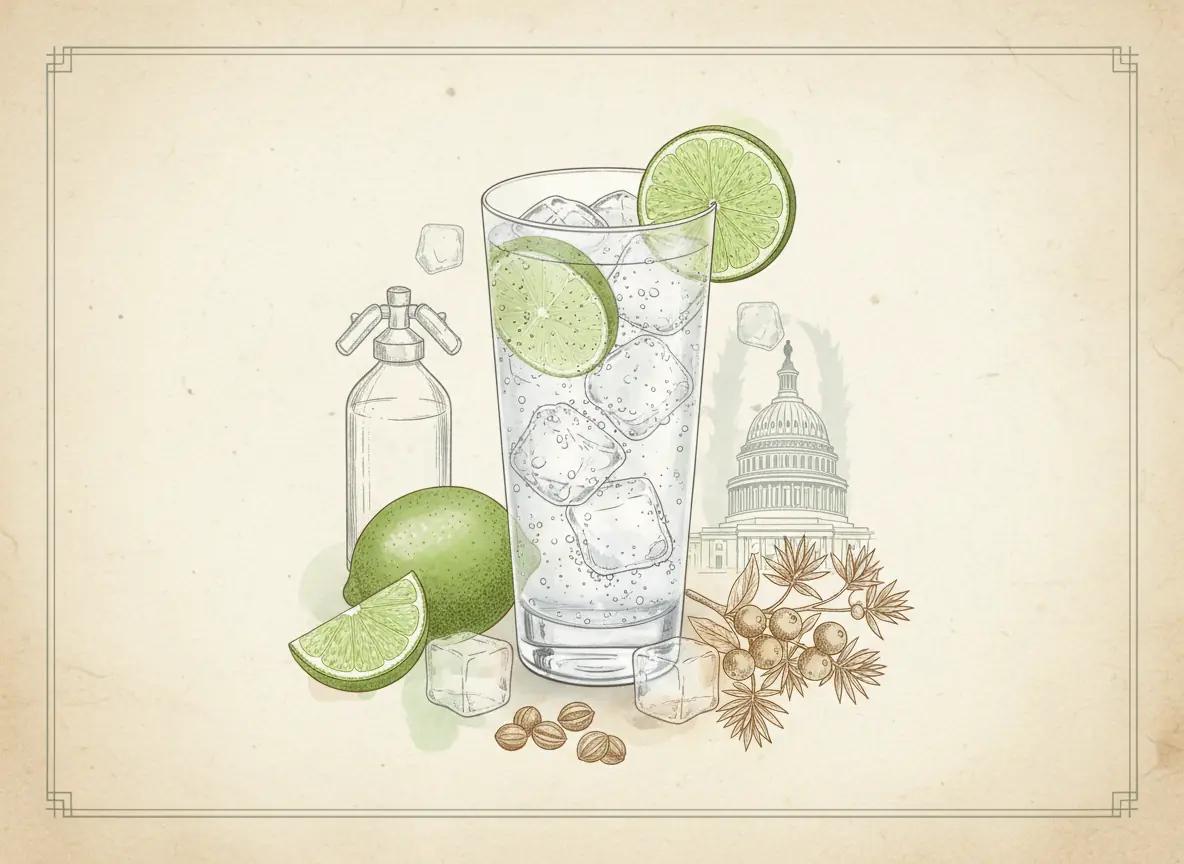
The Gin Rickey is gin, fresh lime juice and soda water over ice, and there is no sugar in it of any kind. That absence is the whole drink. It is what separates a Rickey from a Fizz, and it is why the gin matters more here than in almost anything else you can build. It is named after Colonel Joe Rickey, a Missouri lobbyist who drank his bourbon with lime and soda at Shoomaker's on Pennsylvania Avenue in 1880s Washington, consistently enough that the bartenders named the order after him. The gin version came shortly afterwards and overtook the original so completely that a Rickey now means gin unless you say otherwise. Rickey himself, by most accounts, thought the gin version was worse. He was outvoted. With no sweetener and only three ingredients, the freshness of the lime is the most consequential thing in the build. Squeezed to order it is bright and genuinely refreshing. Squeezed an hour earlier it is flat and slightly bitter, and nothing else in the glass can cover for it.
Ginger Snap
The Ginger Snap is warming spice in refreshing form: a bourbon highball where fresh lemon and cinnamon syrup sit under a fiery ginger beer, finished with a cinnamon stick. It is a house recipe written for Bonfire Night, built for the drinker who wants the season’s flavours without a hot mug in hand. The trick is that the warmth is sensory rather than thermal. Ginger provides the heat while the drink stays cold over ice, and the cinnamon syrup bridges autumn and winter drinking in a single 15ml measure. The lemon matters more than its volume suggests: 25ml holds the sweetness in check and keeps the drink sessionable across a long evening outdoors. The ginger beer decides the outcome. A properly fiery bottling gives the drink its name and its point; a mild one leaves it tasting of lemonade. Choose the hottest you can find, build it gently so the carbonation survives, and it reads like bonfire weather from the first sip.
Greyhound
The Greyhound is older than its vodka. Harry Craddock printed the grapefruit-and-gin original in the 1930 Savoy Cocktail Book, and the drink took both its name and its second spirit in post-war America, where the story ties it to the diners of the Greyhound bus terminals and vodka was busy eating gin’s market share. Grapefruit makes it interesting where orange makes drinks friendly. The juice brings genuine bitterness along with its sugar and acid, so the finished drink runs dry, brisk and slightly stern, closer in temperament to a Paloma than to a Screwdriver. Fresh-squeezed matters even more here than elsewhere, because bottled grapefruit flattens exactly the bitter brightness that is the entire point. It is the connoisseur’s default among the juice highballs, and it sits one rim of salt away from being a Salty Dog, which turns out to be a structural decision rather than a garnish and is worth testing with two glasses.
Harvey Wallbanger
The Harvey Wallbanger is a Screwdriver that took a swerve: vodka and orange juice with a float of Galliano, the tall golden Italian liqueur, and the most successful drinks-marketing campaign of the 1970s attached. The recipe is credited to Hollywood bartender Donato “Duke” Antone in the 1950s, but the fame belongs to Galliano’s importers, whose surfing cartoon mascot Harvey put the drink on every American bar and airline by 1975. The float is the whole idea: fifteen millilitres of Galliano’s vanilla-anise gold resting on the surface, so the drink opens herbal-sweet and finishes as a plain Screwdriver, the same descent-through-a-layer trick the New York Sour plays with wine. Stirred in, it is merely sweetened orange juice; floated, it is a drink with a beginning, middle and end. It collapsed with the decade and returned with the revival’s soft spot for honest kitsch: the modern reading pours fresh orange juice, keeps the float floating, and lets a very silly name introduce a rather clever structure.
Horse's Neck
The Horse's Neck began as a soft drink. Through the 1890s it was ginger ale over ice with a long spiral of lemon peel draped over the rim, and the peel — hanging down the side of the glass like a horse's neck — is where the name comes from. The brandy arrived later, some time around the turn of the century, and the version with it became known as a Horse's Neck with a Kick. What survives is one of the simplest long drinks in the canon: forty millilitres of cognac, a hundred and twenty of ginger ale, an optional dash of Angostura and that spiral. It is a highball in the strictest sense, built in the glass, stirred once and served. The garnish is not decoration. Cut properly it releases oil across the surface of the drink for as long as it sits there, and a Horse's Neck without it is simply brandy and ginger ale.
Jack’s Godfather Highball
Jack's Godfather Highball is the Godfather stretched out and given cola. Tennessee whiskey and amaretto, which is the whole of the original, then 75ml of cola over ice in a tall glass. The Godfather is a two-ingredient after-dinner drink: whiskey and almond liqueur, served short. It is rich and slightly heavy, which is fine for one at the end of an evening and tiring for two. Lengthening it solves that, but only if the cola has enough character to referee. A thin, purely sweet cola simply adds sugar to a drink that already has amaretto in it. The ratio shifts in the tall version. Thirty millilitres of whiskey to twenty of amaretto is closer to equal than the Godfather usually runs, because almond sits higher and reads louder once there is length and carbonation underneath it. It is a published brand serve rather than a bartender's creation, which is worth knowing and does not make it a worse drink.
John Daly
The John Daly is an Arnold Palmer with vodka in it: iced tea, lemonade and a measure of spirit, over ice in a tall glass. The Palmer is tea and lemonade at three to one, named after a golfer famous for restraint and precision. The John Daly is named after a golfer famous for neither, and the drink is exactly as honest about that as the name suggests. That is the entire joke and it is a good one. Same drink, same ratio, one addition, and the name does the rest of the work by telling you what kind of afternoon you are having. Nobody needs it explained twice. Daly himself has since put his name to a bottled version commercially, which completes the joke with a signature. Both golfers now endorse their own glass, which is a rare thing for a bar to have arranged more or less by accident.
Lynchburg Lemonade
Lynchburg Lemonade is Tennessee whiskey, triple sec, fresh lemon and sparkling lemonade over ice, named for the town where Jack Daniel's is distilled. It drinks dangerously easily, which was always both the point and the problem, and the reason a distillery eventually wanted it for itself. Tony Mason built it in 1980 at his bar in Huntsville, Alabama, and by the middle of the decade the distillery was running it as a national campaign. Mason sued for misappropriation. By the usual account a jury found in his favour and awarded him one dollar in nominal damages, on the grounds that he could not demonstrate a financial loss. That is the drink's permanent garnish: a genuinely good highball, a national marketing campaign, and an inventor who won his case and collected a dollar. Naming him is the least the recipe can do, and the story has outlived the campaign it lost to.