Highballs, page 2
44 recipes, page 2 of 2
Base Spirit
Difficulty Level
Michelada
The Michelada is cold lager seasoned like food: lime, salt, hot sauce and Worcestershire, poured over ice in a salt-rimmed glass. It is Mexico's standing answer to heat, hangovers and lunch, and there are as many versions of it as there are states. The beer is nine-tenths of the drink, which makes it the one decision that matters. A pale, crisp, cold Mexican lager is the canvas the seasoning needs. Anything with ambition, an IPA or a stout or a heavily hopped craft lager, brings its own flavours and starts arguing with the lime and the sauces rather than carrying them. What it does that no other beer drink manages is stay refreshing while being genuinely savoury. The lime keeps it bright, the Worcestershire gives it an umami floor, the hot sauce brings fermented heat rather than raw chilli burn, and the salt ties the whole thing together. It takes two minutes to build, it sessions by construction, and it belongs next to anything that has come off a grill.
Mizuwari
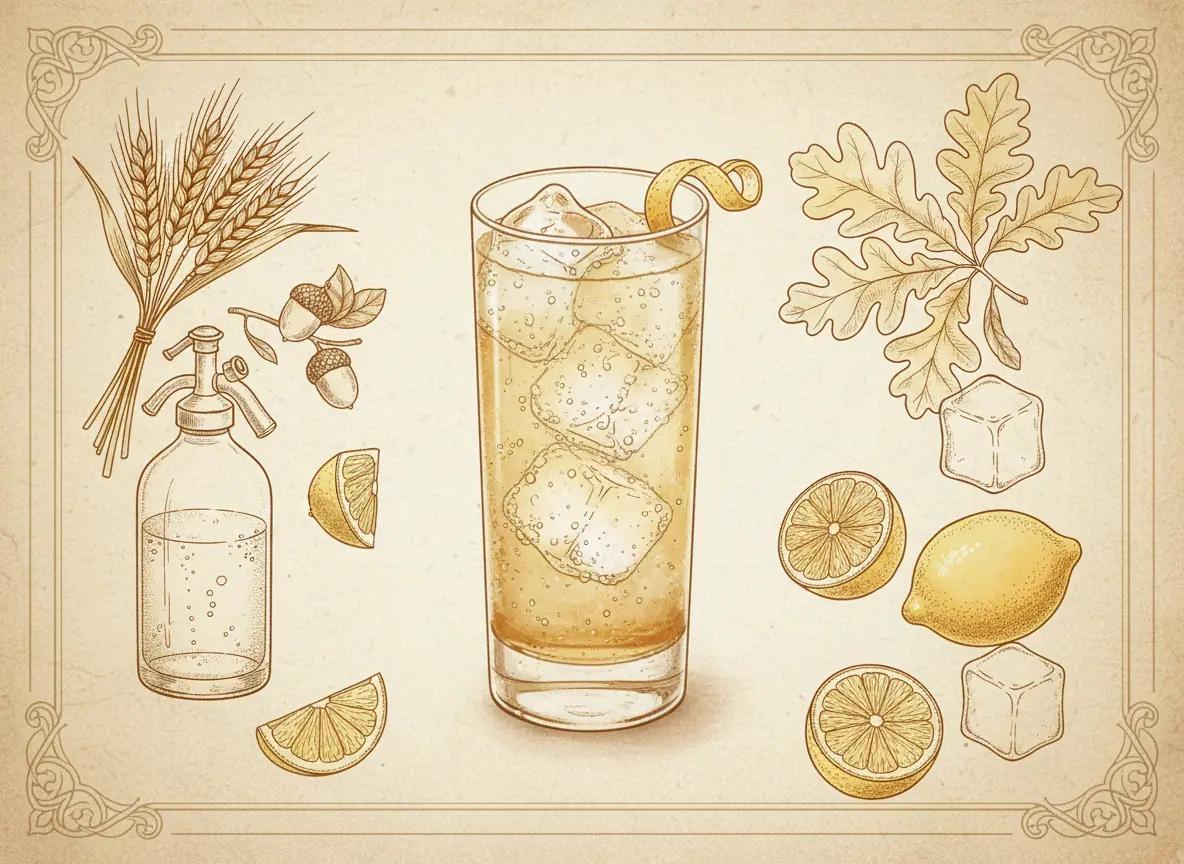
The Mizuwari is Japan’s answer to a question the West never thought to ask properly: what if whisky and water were the entire ceremony? The name means cut with water, and the izakaya and office-bar serve of whisky over ice with still water at roughly one to two built Japan’s whisky culture glass by patient glass. The ritual is the recipe. Ice stacked to the brim, whisky poured and stirred a dozen or so unhurried turns, water added and stirred a few more, with the dilution opening the malt’s quiet registers the way a splash opens a dram at a tasting. Nothing here is rushed and nothing at all is measured by eye. It is the highball’s still sibling and the session’s gentlest architecture. Japanese whisky takes its signature serve here, and the result is food-friendly, low in strength by construction, and about the clearest proof available anywhere that attention is itself an ingredient.
Mojito
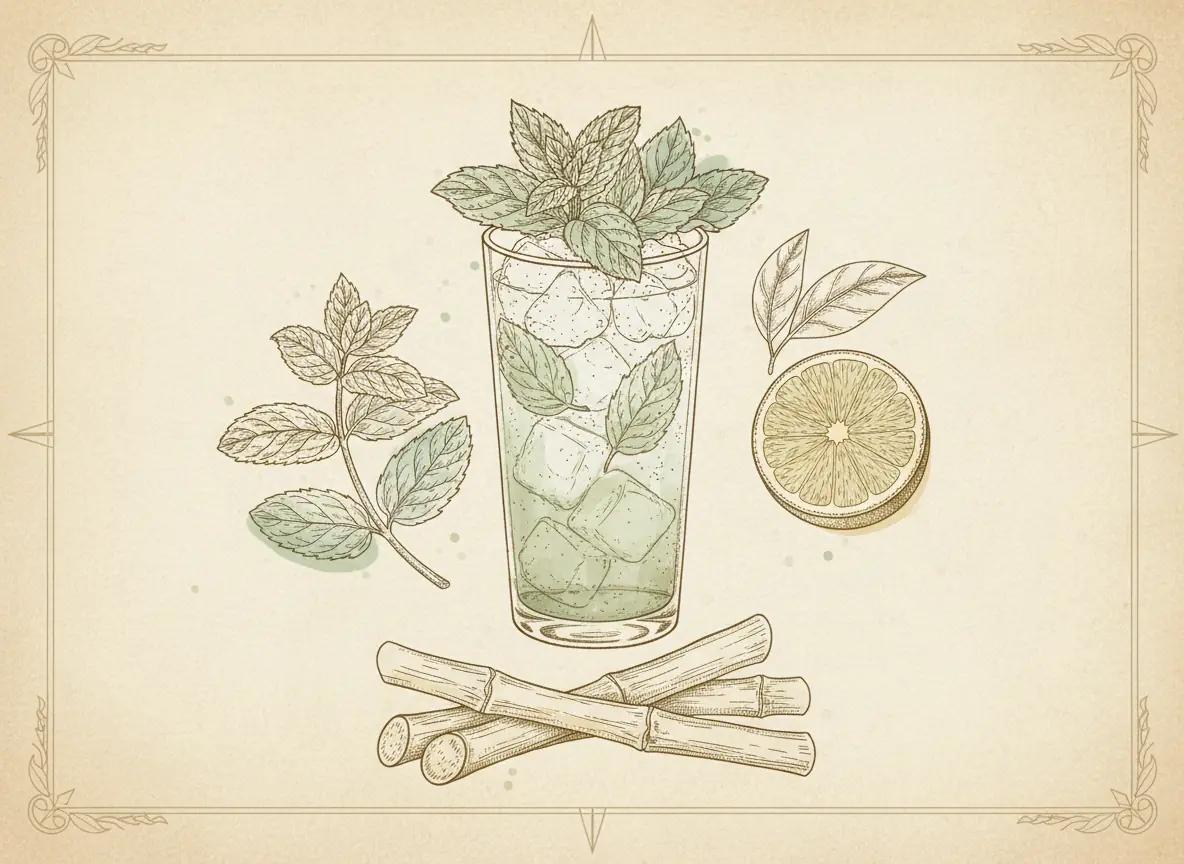
The Mojito is one of the oldest Cuban cocktails on record, its roots traced to a sixteenth-century proto-version called El Draque, named after Sir Francis Drake, whose fleet anchored off Havana in 1586. Drake’s sailors mixed local aguardiente, the rough precursor to Cuban rum, with mint, lime and sugar as a remedy for dysentery and scurvy. The combination has proved more enduring than the illness. The modern Mojito is built on white rum, with soda water extending it into a long, refreshing serve suited to the Cuban climate. Hemingway is associated with it through La Bodeguita del Medio, and whether that association is accurate or partly mythologised is debated. The drink does not need it. Technique matters here more than most high-volume bars are willing to invest in: mint pressed rather than muddled, lime squeezed fresh, sugar dissolved before the rum, and soda poured gently enough to survive into the first sip.
Paloma
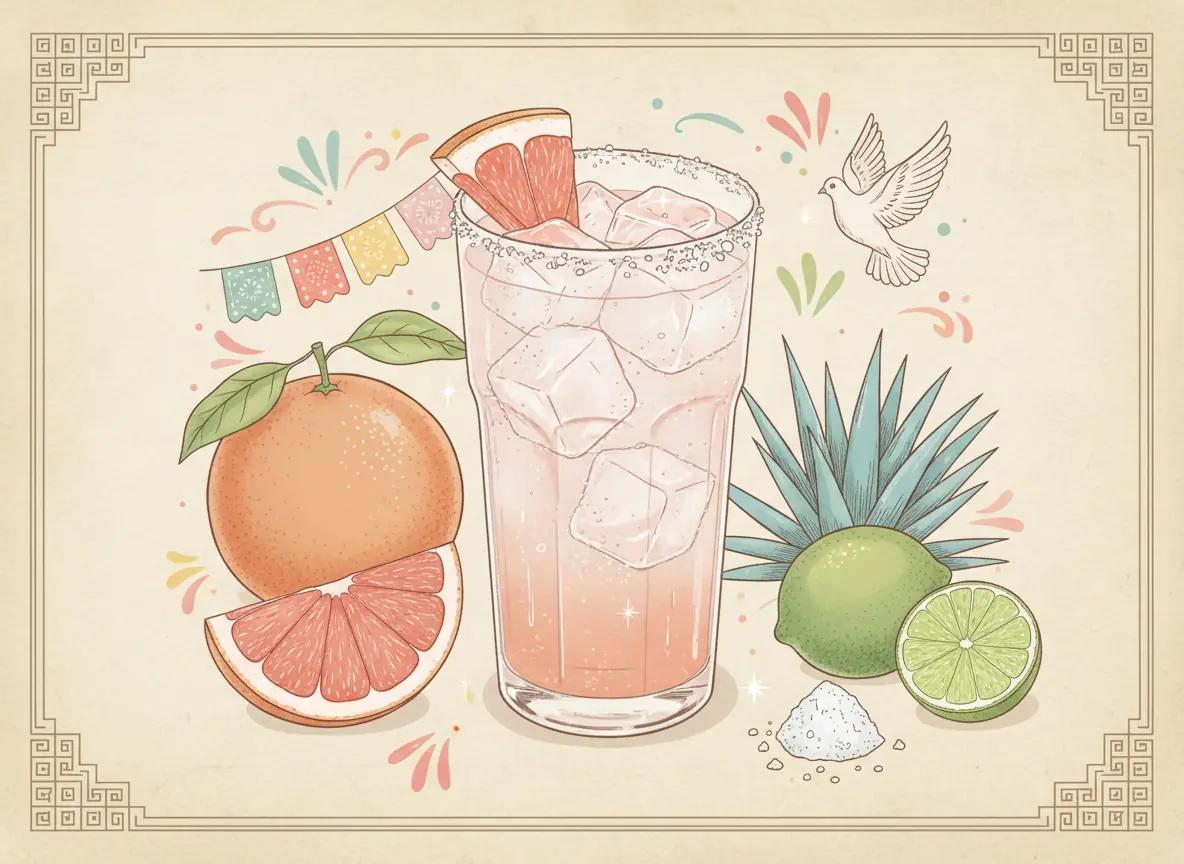
The Paloma is Mexico’s most popular cocktail by volume, considerably outselling the Margarita in the country that produces the tequila both are built on. Outside Mexico its profile is lower, partly because the defining grapefruit soda is less universally available than lime and triple sec. The name means dove, and the origin is most often attributed to Don Javier Delgado Corona of La Capilla in the town of Tequila, Jalisco, though the precise date and the accuracy of that attribution are not clearly established anywhere. What is established is that tequila and grapefruit have been a fixture of Mexican drinking long enough to become the country’s default tequila serve, which is a more meaningful endorsement than any bar guide. The salt rim is the element most often omitted by versions that miss what the drink is doing. Salt suppresses bitterness, which makes it a structural decision rather than a flavouring one.
Pimm’s Cup
The Pimm’s Cup is British summer by the glass: Pimm’s No. 1 lengthened with sparkling lemonade over ice, the glass built up with cucumber, strawberry, orange and mint until it reads half drink, half hedgerow. James Pimm ran a London oyster bar from the 1820s, and the gin cup he served there against the shellfish, steeped with quinine and a still-secret list of herbs, carried his name out of the bar and into the national summer. The genius is the modest strength. Lengthened three to one with lemonade, the drink lands gentler than a glass of wine, which is why it can session through an entire afternoon of tennis or garden idleness without casualties, and why Wimbledon pours it by the jugful every fortnight of the championships. The fruit is not decoration. Cucumber cools, strawberry sweetens the nose, orange feeds the liqueur’s own bitter peel, and mint sits over the top of every sip. Scale the same build into a jug and one measure of effort serves the whole garden, which is the drink’s oldest habit: the Victorian oyster houses that carried Pimm’s name served their cups by the communal measure from the beginning.
Presbyterian
The Presbyterian is whiskey topped with equal parts ginger ale and soda water, and the split is the entire recipe. Ginger ale on its own makes a sweet highball. Soda on its own makes a plain one. Half and half puts the ginger at seasoning strength while keeping the drink dry and the bubbles sharp. It has been in American bar books since the 1890s and nobody has ever settled where the name came from. Temperance-adjacent wit is the usual guess, on the basis that it is a notably restrained way to drink whiskey. A Scottish reference and a private club joke are the other candidates. The books do not say and probably never did. What survives is a genuinely good drink and about thirty seconds of work. It is the highball for people who find a whisky and ginger too sweet, which is most people who have had more than one.
Raspberry Lynchburg
The Raspberry Lynchburg is a Lynchburg Lemonade with Chambord taking half the triple sec's measure. Tennessee whiskey, black raspberry liqueur, a little orange, fresh lemon and sparkling lemonade over ice: a long, easy summer highball with a blush on it. The parent drink is Tennessee whiskey, triple sec, lemon and lemonade, named after the town where Jack Daniel's is distilled. This version came out of the UK bar circuit, where the Lynchburg Lemonade became a menu fixture and Chambord was on every back bar anyway. On a good many of those menus the variation now outsells the original. The swap is a halving rather than an addition, and that is the whole discipline of it. Chambord brings its own sugar, so fifteen millilitres of it replaces half the orange liqueur rather than joining it. Get that wrong and the drink stops being a highball and becomes a cordial with whiskey in it.
Rome With a View
Rome With a View is a Campari sour, which is a stranger idea than it sounds. Campari and dry vermouth split the base between them, thirty millilitres each, and there is no spirit in the glass at all. Underneath sits a full thirty millilitres of lime with fifteen of sugar, which is daiquiri proportion rather than aperitif proportion. That combination is what makes it work. Bitter drinks are usually built to be sipped slowly and citrus drinks are usually built to be drunk quickly. This one is both: bitter enough to hold attention, sour enough to refresh, and long enough with soda that a second is not a decision. It is attributed to Michael McIlroy, working in the Milk & Honey circle in New York around 2007. The name is a pun on Forster's novel and does not mean anything beyond that, which is a relief in a drink this well constructed.
Rum and Coke
Two ingredients, no technique, and one of the most ordered drinks on earth. Rum and Coke has no documented inventor and no published specification — it appeared wherever American cola met Caribbean rum, most plausibly in Cuba after 1900, and it has been poured by eye ever since. It is also not a Cuba Libre, whatever a menu tells you. The Cuba Libre is this drink plus lime, and that squeeze is not a garnish: it cuts the cola's sweetness and changes the whole balance. Order one in Havana and you get lime; order the other and you do not. What a two-ingredient drink exposes is quality. There is nothing to hide a harsh rum behind and nothing to disguise a flat, oversweet cola, which is why the difference between a careless one and a considered one is larger here than in almost anything with five ingredients in it.
Salty Dog
The Salty Dog is a Greyhound that learned the Paloma’s lesson early: the same spirit and grapefruit, rimmed with salt, and the rim changes everything. It surfaces in American bar culture through the 1950s and 60s as the Greyhound’s glamorous sibling, the name a sailor’s tease, and it survives because the chemistry behind it is real. Salt suppresses bitterness at the taste-bud level, so every sip that crosses the rim reads sweeter and rounder than the same liquid without it. Grapefruit’s bite arrives filed smooth, the fruit’s own sugar steps forward, and the drink becomes a genuinely different proposition from its unsalted twin. Rim half the glass and both drinks are available at once. It is the cheapest lesson in flavour science available behind a bar, and it is the correct order for anyone who finds a Greyhound a shade too stern: the same fruit, the same pour, and a considerably friendlier introduction to it.
Screwdriver
The Screwdriver is the simplest cocktail with a proper origin story: American engineers and oil workers in the mid-century, spiking cans of orange juice with vodka and stirring the result with the nearest tool to hand. The name was in print by 1949, Smirnoff's marketers took it up alongside the Moscow Mule, and vodka and orange became the default easy drink of the western world. Two ingredients leave nowhere to hide, which makes this a referendum on its juice. Fresh-squeezed orange turns it from a spiked carton into something genuinely worth ordering, bright and sweet-sharp and alive, and the vodka asks only to be clean and honestly measured. Fifty millilitres against a hundred and twenty is the ratio that keeps it a cocktail. It is also the trunk of a family tree. A Galliano float makes it a Harvey Wallbanger, sloe gin once made it a Slow Screw, and a good deal of the brunch canon descends from this glass.
Seabreeze
The Seabreeze is vodka, cranberry juice and grapefruit juice over ice, and the two juices are the entire drink. Cranberry is sweet-tart and grapefruit is bitter, and each corrects what the other would do alone: cranberry by itself reads as sweet, grapefruit by itself reads as austere. Together they finish dry. It belongs to a small family of vodka-and-juice highballs with nautical names. The Cape Codder is the parent, vodka and cranberry with lime. Add grapefruit and you get this. Add pineapple instead and you get a Bay Breeze. The naming is Cape Cod marketing rather than anything older, and the family settled into its current shape through the 1980s. It ruled the 1990s and has been slightly out of fashion since, which is unfair. It is one of very few drinks that is genuinely easy to make well, needs nothing you cannot buy in a supermarket, and still rewards using one fresh ingredient instead of two cartons.
Sex on the Beach
Sex on the Beach is the 1980s at full volume: vodka, peach schnapps, orange and cranberry, and a name engineered so that ordering it was the joke. The best-supported account has a Fort Lauderdale bartender inventing it during the spring break of 1987 to shift a newly launched peach schnapps, and naming it after the two things his customers had come to Florida for. The order advertised itself, and the drink became one of the most-poured on earth. The formula is sturdier than the reputation. Peach schnapps sweetens two juices that hold each other in check, orange bringing the sunshine and cranberry the acid and the colour, and the vodka gives a fruit cooler enough spine to count as a cocktail. Built properly, with fresh orange juice and an honest measure of spirit, it is exactly what it advertises and none of the sticky excess the name is remembered for. A beach in a glass, ideally within sight of one.
Slow Comfortable Screw Against the Wall
The Slow Comfortable Screw Against the Wall has the longest name in the canon and the most complete crossword behind it. Slow is sloe gin. Comfortable is Southern Comfort. Screw is the Screwdriver’s orange juice. Against the Wall is the Harvey Wallbanger’s Galliano float. Every word is a bottle, and the drink is its own sentence performed. The 1970s built it one order at a time, each escalation adding a word and an ingredient, and the point was always partly the theatre of having to say the whole thing out loud to a stranger. Nobody claims authorship. The decade wrote it collectively. What is easy to miss underneath the joke is that it is a decent fruit highball. Sloe gin’s plum and Southern Comfort’s peach sit over vodka and fresh orange, and the Galliano float finishes it with vanilla and anise exactly as it finishes a Wallbanger. Built with squeezed orange, it is considerably better than the name suggests.
Snowball
The Snowball is advocaat, sharp lemonade and a squeeze of lime, built tall over ice. It is a British Christmas fixture and it is a better drink than its reputation allows. Advocaat is a Dutch liqueur of egg yolk, sugar and brandy, thick and pale and closer to custard than to anything else on the back bar. On its own it is far too rich to drink. Lengthened with something sharp it turns into exactly what it should be, which is the entire trick of the Snowball. The lemonade is therefore the whole balance, and it has to be genuinely sharp. Advocaat brings all the sugar the glass can take, so a sweet lemonade produces something closer to a dessert than a drink. The lime is a modern addition and a good one, adding an acidity the original never had. It reached British sideboards after the war and the 1970s made it universal. Nostalgia keeps it there.
Stone Fence
The Stone Fence is as old as American drinking: spirit poured into cider and handed across a tavern bar. The colonial original was rum into hard cider, and legend has Ethan Allen’s Green Mountain Boys drinking exactly that at a Castleton tavern in May 1775, hours before they took Fort Ticonderoga without firing a shot. The story may be folklore; the drink is not. This build is the modern American reading: bourbon or rye over ice, cold pressed apple and two dashes of Angostura, built in the glass in under a minute. Fresh cloudy apple juice keeps it soft and sessionable, while a dry hard cider pulls it back toward the 1770s. The name is the drink’s own warning label. After a couple, the story goes, the stone fence between the tavern and home finds you rather than the other way round. Built long and unhurried, this version keeps the walk home honest.
Suffering Bastard
The Suffering Bastard is a war story with a garnish. Joe Scialom, the polyglot bartender at Shepheard’s Hotel in Cairo, built it in 1942 as a hangover cure for officers of the desert war, and the legend has gallons of it couriered toward El Alamein in thermos flasks. Gin and brandy under ginger beer: morale, medicine and mixture in one glass. The split base was battlefield economics before it was design. A bar running short of everything shares the lead between two bottles because neither has the stock to carry a drink alone, and the accident turned out to be architecture. Juniper brightness and oak warmth bracket the ginger in a way no single spirit manages. Lime and Angostura do the seasoning and the ginger beer does the reviving, a decade before the Moscow Mule made that combination famous. It survived the hotel’s burning and it travels well. The name was the diagnosis, and the cure still takes.
Tequila Sunrise
The Tequila Sunrise in its famous form was born at the Trident in Sausalito around 1971, where Bobby Lozoff and Billy Rice mixed tequila, orange juice and a sinking grenadine gradient for a Rolling Stones launch party. Mick Jagger approved so thoroughly that the band’s 1972 tour became, by their own account, the cocaine and tequila sunrise tour, and the drink went around the world with them. It is the most photographed cocktail of its decade for the same reason it is the most underestimated: the grenadine does not mix, it sinks, building the red-to-gold gradient that named the drink. The eye drinks first, and by the time the palate arrives, tequila and fresh orange have already made their simple, sunlit case. The rescue job is the ingredients. Fresh orange juice and real pomegranate grenadine make an honest drink of it; the bottled-juice and neon-syrup version earned every sneer it received. It is the same argument in its brightest colours: the recipe was never the problem.

Whiskey Highball
The Highball is one of the oldest and most debated drink formats in the canon, with origin stories placing it variously in American railroad culture, British officers’ messes, and the bars of late nineteenth century New York. The name most likely derives from the railway signal ball that indicated a clear track ahead, fitting for a drink fast to build and faster to consume. The format arrived in Japan in the early twentieth century and was adopted with a seriousness that turned a simple two-ingredient serve into a craft discipline. The Japanese Highball, whisky and soda water over ice in a tall glass, became one of the defining drinks of Japanese bar culture, and the attention given to ice temperature, glass preparation, carbonation preservation, and the ratio of whisky to soda made it the benchmark for the format. The version documented here applies those standards to a Scotch or Irish whiskey base. Two ingredients. The quality of each determines everything. A whiskey with genuine character and a well-chilled, high-carbonation soda, poured correctly over properly prepared ice, produce a drink greater than the sum of its parts; the format has nowhere to hide a characterless whiskey or a flat soda.
Woo Woo
The Woo Woo is the 1980s stripped to essentials: vodka, peach schnapps and cranberry juice, three pours over ice with a name that is its own toast. It rode the same 1984 schnapps wave that produced the Fuzzy Navel and Sex on the Beach, and of the three it is the leanest, with no orange sunshine, just peach sweetness against cranberry sharpness at party speed. Its virtue is exactly that economy. The cranberry's acid does all the balancing a drink this simple needs, the schnapps needs no help from syrup, and the whole thing assembles in about the time it takes to say the name twice. Poured honestly, with decent vodka, an actual measure and cold cranberry, it remains what it always was: a drink with no ambitions beyond the next half hour, executed perfectly within them. That is a narrower brief than most cocktails set themselves, and one of the few that is met exactly.