Salty Dog
A Salty Dog is 50ml of vodka and 120ml of fresh grapefruit juice in an iced highball with salt on half the rim, stirred once and garnished with a grapefruit wheel. About 2.0 UK units. It is a Greyhound with salt, and the salt changes the drink. Salt dulls the taste of bitterness, so every sip over the rim tastes rounder and sweeter than one from the bare side. A half rim gives you both. Difford’s Guide dates it to the late 1950s or early 1960s, with its first appearance in a recipe book in Ted Saucier’s Bottoms Up of 1962, though nobody is recorded as its creator and the origin of the name is unknown. That recipe uses vodka, as most do, and the Oxford Companion says some call for gin. Gin still works, and makes a drier, more aromatic glass.
Glassware: Highball Glass
Garnish: Half salt rim and Grapefruit wheel
Ingredients
50ml
A clean vodka at 40% ABV. Gin, the original spirit, makes a drier, more aromatic version at the same measure.
120ml
Squeezed the same day, pink or white. Grapefruit affects how some prescription medicines work; if you take any, check the leaflet first.
Instructions
Squeeze the grapefruit juice the same day.
Run a grapefruit wedge around half the rim of a highball glass and roll that half in flaky sea salt.
Fill the glass with ice and add the vodka.
Top with the grapefruit juice and stir once.
Garnish with a grapefruit wheel.
Expert Tip
Salt half the rim, not all of it. The contrast between salted and bare sips is what the drink is for, and a full rim takes the choice away. Wet the rim with a grapefruit wedge rather than water, roll it through flaky sea salt on a flat plate and tap off the excess. Fine table salt sticks too thickly and tastes harsh. Squeeze the grapefruit the same day. The salt needs bitterness to work against, and carton juice is sweeter and flatter, which leaves the rim with little to do.
Behind the Salty Dog
Flavour Profile
The Origin
Difford’s Guide dates the Salty Dog to the late 1950s or early 1960s, with its first appearance in a recipe book in Ted Saucier’s Bottoms Up of 1962, and the Oxford Companion traces the name to 1916, when American soldiers at Eagle Pass, Texas, drank a mixture of lime juice, salt and carbonated water under it. Nobody is recorded as its creator, and where the name comes from is not known.
Its unsalted relation has a firmer record. Harper’s Magazine described gin and grapefruit juice served as a greyhound in 1945, and an unnamed gin and grapefruit cocktail appears earlier, in the Savoy Cocktail Book of 1930. Vodka later replaced gin in both drinks.
What the Salt Does
Grapefruit is bitter as well as sweet and sour, and much of that bite comes from naringin in the fruit. Salt suppresses the taste of bitterness, so a sip that crosses the rim tastes sweeter and rounder.
The effect is larger than most people expect from a rim. That is why the salt covers only half the glass: you get both versions of the drink and choose between them sip by sip.
The Rim Itself
Flaky sea salt sticks best and crunches cleanly. Fine table salt goes on too thick and tastes harsh.
Wet the rim with grapefruit rather than water, roll it through salt on a flat plate, and tap off the excess. A caked rim has nothing in the glass to balance it.
Against the Greyhound
Grapefruit and salt in three drinks
Salty Dog
- Spirit
- 50ml vodka
- Grapefruit
- 120ml fresh juice
- Salt
- Half rim
Greyhound
- Spirit
- 50ml vodka
- Grapefruit
- 120ml fresh juice
- Salt
- None
Paloma
- Spirit
- 50ml blanco tequila
- Grapefruit
- 100ml grapefruit soda
- Salt
- Half rim and a pinch in the drink
| Drink | Spirit | Grapefruit | Salt |
|---|---|---|---|
| Salty Dog | 50ml vodka | 120ml fresh juice | Half rim |
| Greyhound | 50ml vodka | 120ml fresh juice | None |
| Paloma | 50ml blanco tequila | 100ml grapefruit soda | Half rim and a pinch in the drink |
The Greyhound is dry and brisk, an aperitif with a bitter edge. The Salty Dog is softer from the first sip. If you think you dislike grapefruit, it is usually the bitterness you dislike, and the salt deals with it.
Leave the salt off and you have the Greyhound, the drier of the two.
How to Serve It
Very cold, over plenty of ice in a highball, half rimmed, with a grapefruit wheel. Serve it before dinner.
Make it at home
The Spirit
VodkaVodka is spirit made from a farmed crop, usually grain or potatoes, distilled and refined so that the taste of that crop is deliberately reduced. Under the retained Regulation (EC) 110/2008 its minimum is 37.5% ABV and it may not be given a predominant flavour, which separates it from flavoured vodka and from gin; our recipes count it at 40%. In a mixed drink it adds strength and body while the other ingredients carry the taste.
More to explore
Frequently Asked Questions
What does the salt do?
What salt should I use?
Why only half the rim?
Salty Dog or Greyhound: what changes?
Was the Salty Dog made with gin?
How strong is a Salty Dog?
Does the juice need to be fresh?
Sources.
Correct as of 19 October 2026.
- Difford’s Guide, “Salty Dog” (secondary source: a cocktail of the late 1950s or early 1960s, first in a recipe book in Ted Saucier’s Bottoms Up, 1962 (vodka, grapefruit juice, a dash of salt)).
- The Oxford Companion to Spirits and Cocktails (Paul Clarke and David Wondrich), “A Salty Dog” (secondary source: a highball of grapefruit juice, salt and vodka (some recipes gin); roots to 1916 and soldiers at Eagle Pass, Texas, drinking lime juice, salt and carbonated water under the name).
You Might Also Like
Greyhound
A Greyhound is 50ml of vodka and 120ml of fresh grapefruit juice in a highball full of ice, stirred once and garnished with a grapefruit wheel. About 2.0 UK units. Salt half the rim and the same drink becomes a Salty Dog. Without the salt, nothing softens the grapefruit’s bitterness, and that bitterness is the point: this is a sharp, bracing drink, nearer an aperitif than a Screwdriver. Difford’s Guide’s earliest Greyhound recipe, from Stanley M. Jones’s 1977 Complete Barguide, is a Salty Dog without the salt, made with vodka. The Oxford Companion says some Salty Dog recipes call for gin, and the Savoy Cocktail Book of 1930 prints a Colonial Cocktail of dry gin, grape fruit juice and maraschino. Gin at the same 50ml gives a drier glass with more perfume.
Paloma
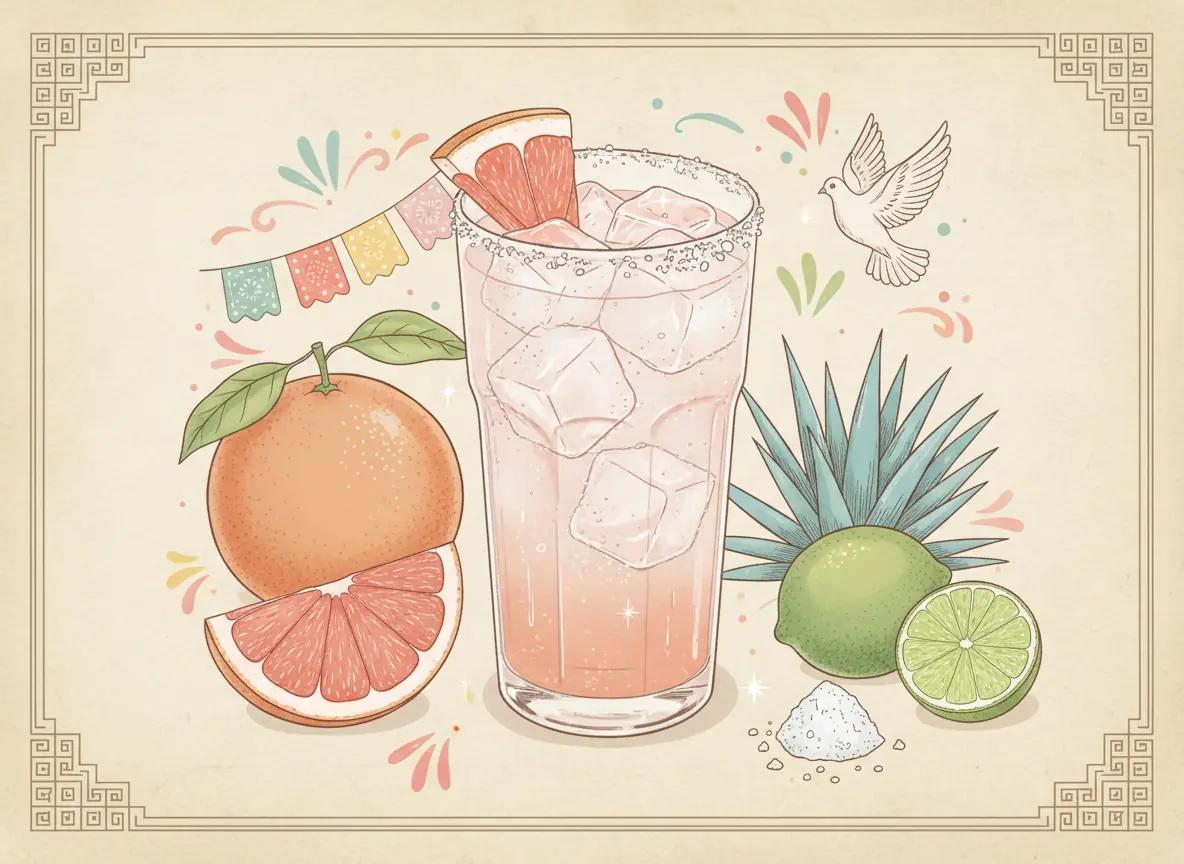
A Paloma is 50ml of blanco tequila, 5ml of fresh lime juice and a pinch of salt over ice in a highball, topped with 100ml of pink grapefruit soda and stirred gently once. Those are the IBA’s measures. We salt half the rim and add a grapefruit slice and a lime wheel. About 2.0 UK units. Paloma is Spanish for dove. The Oxford Companion traces the tequila and grapefruit soda combination to 1950, when a brochure for Squirt suggested mixing it with tequila, with Squirt launched in Mexico in 1955, and says it is unknown who adapted the combination to Mexican tastes. The soda does most of the work. It brings the grapefruit, the sugar and the fizz in one pour, so the recipe needs no syrup and only a little lime. The pinch of salt in the drink softens the grapefruit’s bitter edge and lets the agave through.
Cape Codder
A Cape Codder is vodka and cranberry juice with a squeeze of lime: 50ml vodka and 120ml cranberry juice, built over ice in a highball, with a lime wedge squeezed over the top and dropped in. The lime is the difference between a cocktail and vodka in juice. Cranberry sold for drinking is sweetened, and the squeeze puts back the edge. The drink began as a sales idea, by the account in Chilled Magazine. Chilled Magazine says it first appeared in print in 1945, in the newsletter of Ocean Spray, a cooperative of around 700 family farmers by its own account, as the Red Devil, and quotes a New Yorker advertisement of 1965 that already uses the Cape Codder name, after the cranberry-growing peninsula. It is the parent of the Seabreeze and the Bay Breeze, and a more distant relative of the Cosmopolitan. Each drink carries about 2.0 UK units. Check the label on the juice: the drink is only as good as the cranberry in it.
Where this one sits
Recipe by Jerry Can Spirits · Updated 19 October 2026