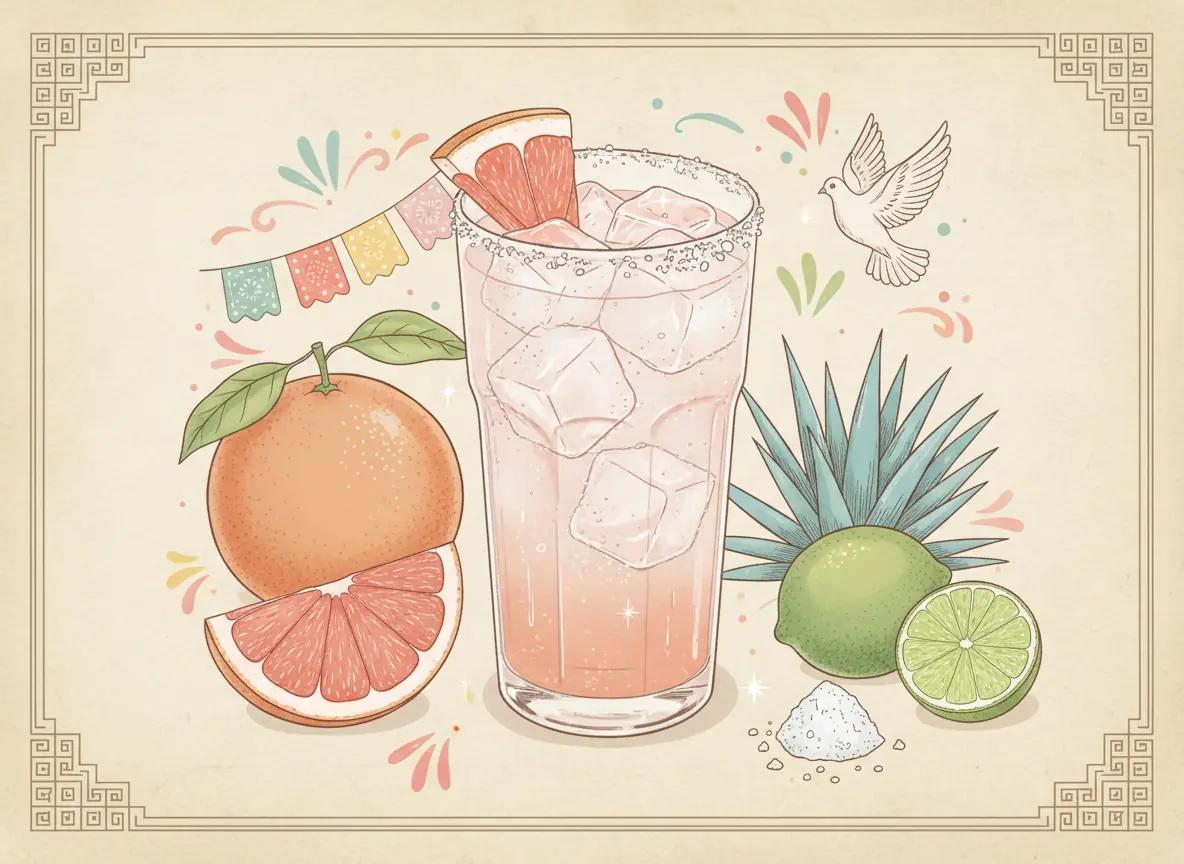
Paloma
A Paloma is 50ml of blanco tequila, 5ml of fresh lime juice and a pinch of salt over ice in a highball, topped with 100ml of pink grapefruit soda and stirred gently once. Those are the IBA’s measures. We salt half the rim and add a grapefruit slice and a lime wheel. About 2.0 UK units. Paloma is Spanish for dove. The Oxford Companion traces the tequila and grapefruit soda combination to 1950, when a brochure for Squirt suggested mixing it with tequila, with Squirt launched in Mexico in 1955, and says it is unknown who adapted the combination to Mexican tastes. The soda does most of the work. It brings the grapefruit, the sugar and the fizz in one pour, so the recipe needs no syrup and only a little lime. The pinch of salt in the drink softens the grapefruit’s bitter edge and lets the agave through.
Glassware: Highball Glass
Garnish: Grapefruit slice, Lime wheel and Half salt rim
Ingredients
50ml
The IBA specifies 100% agave tequila; we use a blanco at our working 40% ABV. Unaged tequila holds on to its pepper and green agave, which in our view suit grapefruit better than oak does.
100ml
The IBA calls for pink grapefruit soda. It carries the sugar and the fizz, so there is no syrup. Chill it well and pour it down the side of the glass to keep the bubbles.
A pinch
A pinch in the drink, over the ice, as the IBA writes it. It cuts the grapefruit’s bitterness. The half salt rim is our addition.
Instructions
Run a spent lime half around the outside edge of half the rim of a highball glass, then roll that edge in flaky salt.
Fill the glass with cubed ice.
Add the tequila, squeeze in the lime juice and add a pinch of salt.
Top with 100ml of chilled pink grapefruit soda, poured down the side of the glass.
Stir gently, once.
Garnish with a grapefruit slice and a lime wheel.
Source: the IBA (IBA specification; half salt rim and grapefruit garnish ours). Last checked 10 October 2026.
Expert Tip
Put salt in the drink as well as on the rim. A pinch over the ice is part of the IBA recipe, and it takes the bitter edge off the grapefruit in every sip, salted rim or not. Salt only half the rim. Sips from the salted side taste rounder and sweeter, sips from the bare side show the grapefruit’s full bite, and a guest who wants less salt can choose. Taste the soda cold before you buy a case of it. It is two thirds of the drink, and 5ml of lime cannot rescue one that is thin or cloying.
Behind the Paloma
Flavour Profile
A Mexican Highball
The Paloma is tequila lengthened with grapefruit soda, with lime and salt. The Oxford Companion says the combination goes back to 1950, when a brochure for Squirt suggested mixing it with tequila, and that it picked up its lime and salt in Jalisco, among the bars of the Parián in San Pedro Tlaquepaque.
We have found no bar or bartender on record as its creator. The IBA lists it among its New Era cocktails and gives 50ml of 100% agave tequila, 5ml of lime, a pinch of salt and 100ml of pink grapefruit soda.
Why Grapefruit Suits Agave
Blanco tequila is peppery and green, with a cooked-agave sweetness underneath. Grapefruit is sweet, sour and bitter at once, and the bitterness matters: it gives the agave something sharp to meet, where orange would only add sugar.
The soda brings the sweetness and the fizz in one pour, which is why there is no syrup in the recipe. The 5ml of lime freshens the fruit.
Salt in the Glass
In our experience salt lowers the bitterness the tongue picks up. That is why the IBA puts a pinch into the drink itself, over the ice, instead of leaving salt to the rim.
We add a half rim as well. Sips from the salted side taste sweeter and rounder; sips from the bare side show the grapefruit’s whole edge.
Soda or Fresh Juice
Make the soda version first: it is the IBA’s, and the everyday one. Fresh grapefruit juice topped with soda water is the common alternative, which the Companion also notes: many bartenders took to replacing the soda with grapefruit juice, sugar and sparkling water, though purists prefer the original. It is brighter and more bitter, and it needs a little sugar syrup, added by taste, because grapefruit swings so widely in sweetness through the year.
The IBA’s Recipe and Ours
The Paloma as the IBA gives it, and ours
Tequila
- IBA
- 50ml, 100% agave
- Ours
- 50ml blanco, 100% agave
Fresh lime
- IBA
- 5ml
- Ours
- 5ml
Salt
- IBA
- A pinch
- Ours
- A pinch, plus a half salt rim
Pink grapefruit soda
- IBA
- 100ml
- Ours
- 100ml
Method
- IBA
- Built over ice, stirred gently
- Ours
- Built over ice, stirred gently once
Glass
- IBA
- Highball
- Ours
- Highball
Garnish
- IBA
- Lime slice
- Ours
- Grapefruit slice and lime wheel
UK units
- IBA
- Not stated
- Ours
- About 2.0
| Element | IBA | Ours |
|---|---|---|
| Tequila | 50ml, 100% agave | 50ml blanco, 100% agave |
| Fresh lime | 5ml | 5ml |
| Salt | A pinch | A pinch, plus a half salt rim |
| Pink grapefruit soda | 100ml | 100ml |
| Method | Built over ice, stirred gently | Built over ice, stirred gently once |
| Glass | Highball | Highball |
| Garnish | Lime slice | Grapefruit slice and lime wheel |
| UK units | Not stated | About 2.0 |
How to Serve It
Cold, in a tall glass packed with ice, with the soda poured down the side so it keeps its fizz. Stir once and hand it over straight away.
For tequila shaken with lime and orange liqueur, make a Margarita; for tequila, lime and cola with salt, a Batanga.
Make it at home
The Spirit
TequilaTequila is a Mexican spirit distilled from the blue agave plant, made, the Oxford Companion says, only in Jalisco and municipalities of four other states; our recipes use 40% ABV. A label reading 100% agave means every sugar came from the plant, where plain tequila needs only 51%. Most of our 26 tequila recipes ask for 100% agave blanco.
Master the Techniques
More to explore
Frequently Asked Questions
What is in a Paloma?
What does Paloma mean?
What grapefruit soda should I use?
Can I use fresh grapefruit juice instead of soda?
Why is there salt in a Paloma?
Which tequila should I use?
How does a Paloma differ from a Margarita?
How strong is a Paloma?
Sources.
Correct as of 19 October 2026.
- IBA, “Paloma” (official specification: 50 ml 100% agave tequila, 5 ml fresh lime, a pinch of salt, 100 ml pink grapefruit soda; add ice and salt, fill with soda, stir gently; garnish with a slice of lime).
- The Oxford Companion to Spirits and Cocktails (David Wondrich), “The Paloma” (secondary source: roots in a 1950 Squirt brochure; Squirt launched in Mexico in 1955; Jalisco and the Parián in Tlaquepaque; the name Paloma, Spanish for “dove”, in Southern California in the late 1990s; grapefruit juice, sugar and sparkling water in craft bars).
You Might Also Like
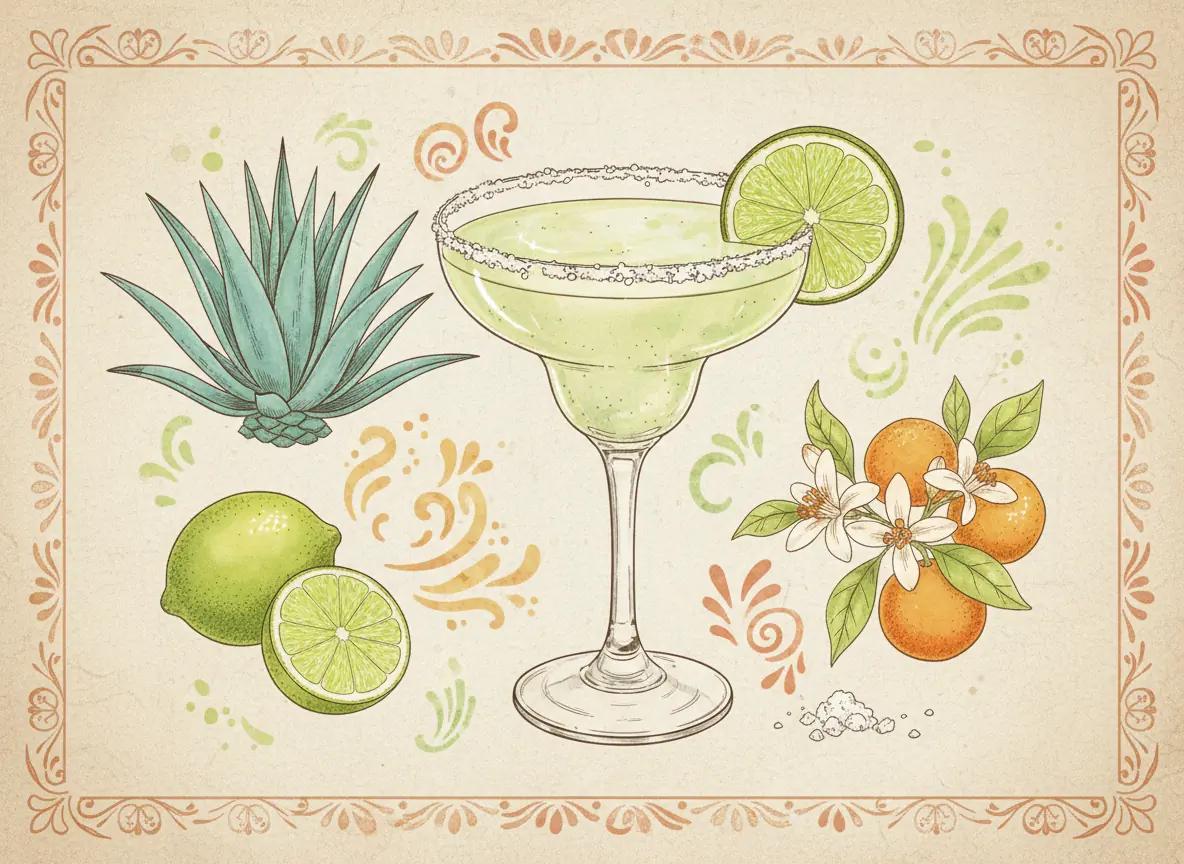
Margarita
A Margarita is 50ml of 100% agave blanco tequila, 20ml of triple sec and 15ml of fresh lime juice, shaken hard for 10 to 12 seconds and double strained into a chilled coupe with half the rim salted, with a lime wheel. About 2.8 UK units. Strained over fresh ice in a rocks glass, it is the same drink, longer and cooler. These are the IBA’s measures. The lime is the smallest pour, so the agave leads and the orange liqueur rounds it: the drink tastes of tequila first and sour second. The Oxford Companion to Spirits and Cocktails, in an entry by David Wondrich, calls the origins of the Margarita one of cocktail history’s most notorious swamps, with at least half a dozen plausible claimants, among them Carlos Herrera at Rancho La Gloria in 1947, Margarita Sames in Acapulco in 1948 and the bartender Santos Cruz in Galveston in the same year. It finds the drink under the name Margarita in print in September 1953, in a California newspaper column, followed soon after by Esquire.
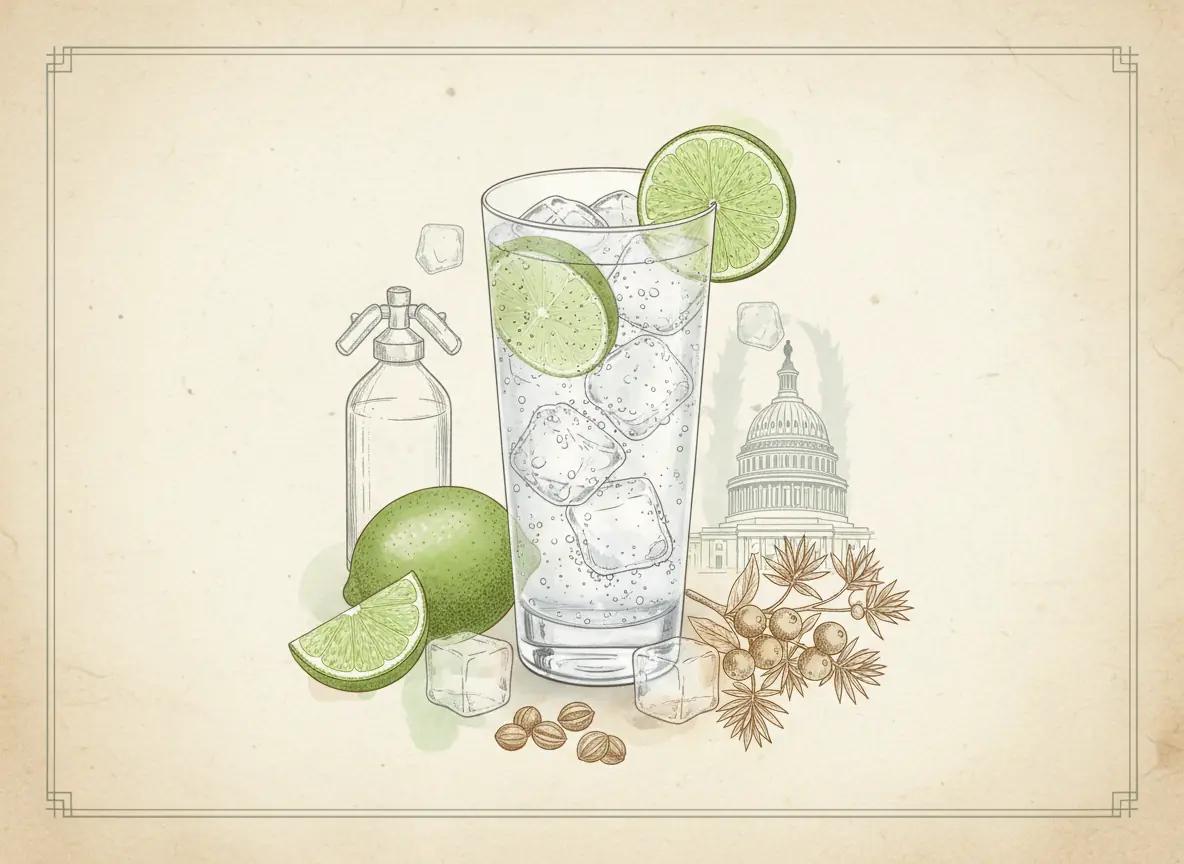
Gin Rickey
A Gin Rickey is 60ml of London Dry gin and 25ml of fresh lime juice over ice in a highball, topped with 100 to 125ml of cold soda water and finished with a lime wheel. There is no sugar in it. About 2.4 UK units. The Oxford Companion says the Rickey was popularised in the late 1880s at Shoomaker’s bar in Washington, D.C., by Colonel Joseph Kerr “Joe” Rickey, a lobbyist from Missouri, and the bartender George Williamson, that it began with bourbon, and that the Gin Rickey, first found in print in 1893, was the version most widely known by the mid-1890s. With no sugar to round anything off, the gin and the lime carry it. Squeeze the lime on the day and close to the drink: in our experience lime turns flat and bitter within hours, and a Rickey has nothing to hide that behind.
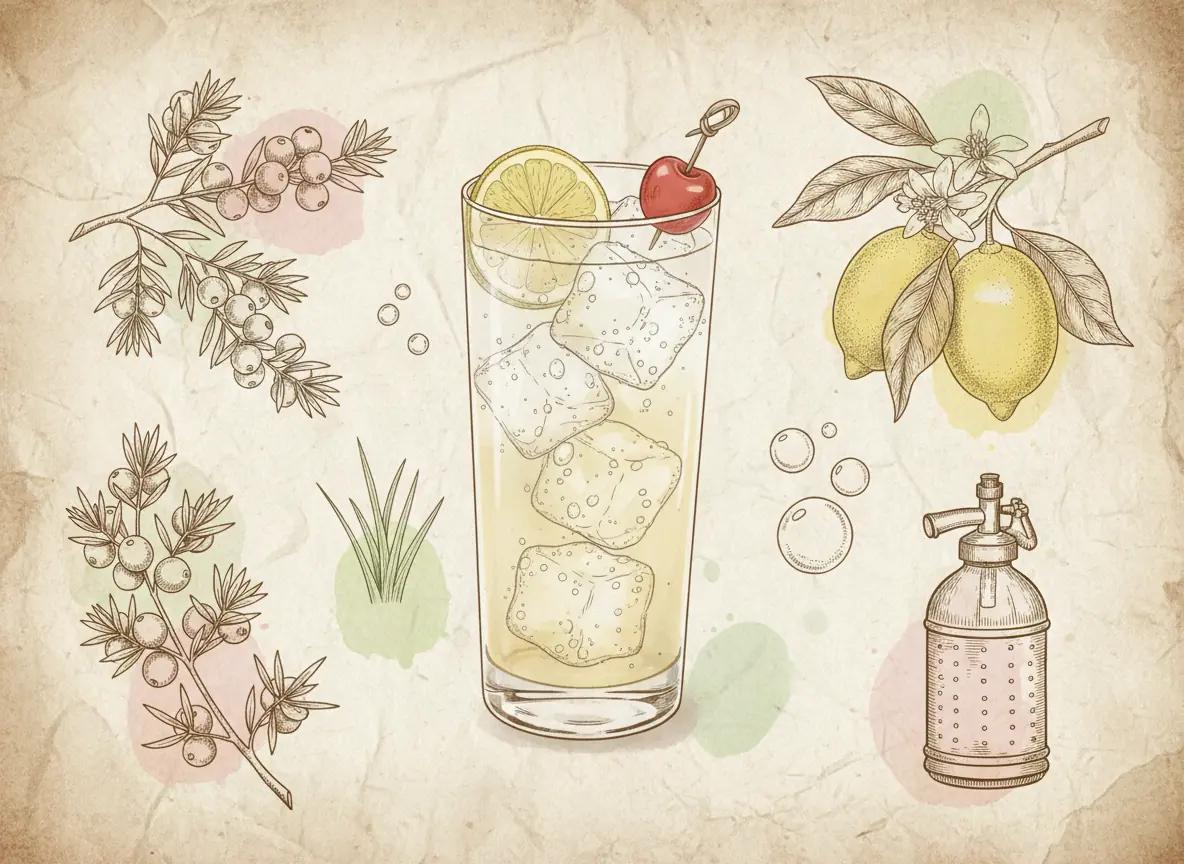
Tom Collins
A Tom Collins is 60ml London Dry gin, 30ml fresh lemon juice and 15ml sugar syrup built over ice in a collins glass, topped with 90ml of cold soda and stirred once, with a lemon slice and a cherry. It is a collins in the plainest sense: spirit, citrus and sugar, topped with soda. Difford’s Guide, a secondary source, reports one account that traces the name to the Great Tom Collins Hoax of 1874, in which people in New York were told that a man called Tom Collins had been insulting them and could be found in a bar some distance away. It also gives accounts of a real Mr Collins. The drink the name attached to may be older: Difford’s credits John Collins, head waiter at Limmer’s Hotel on Conduit Street in London, with the Collins. Early recipes used Dutch genever, and Old Tom gin came into them later; the IBA still specifies Old Tom for a Tom Collins. This version uses London Dry for a drier, sharper drink, and the Old Tom version follows as a variation.
Where this one sits
Recipe by Jerry Can Spirits · Updated 19 October 2026