
Vodka Cocktails

36 recipes, page 1 of 2

This Field Manual holds 36 recipes built on vodka. Vodka is distilled to strip character rather than to build it, which makes it the one spirit here defined by absence.

That absence is the reason to reach for it. In an espresso martini or a bloody mary the vodka carries strength and texture and lets coffee, or tomato and spice, do the work where gin would argue with both. In a moscow mule it lets ginger lead. The trade is that a vodka drink has nowhere to hide: with no botanicals to cover a thin mixer or warm ice, the build and the temperature are the whole drink.

Difficulty Level

Appletini

The Appletini has a precise birthplace: Lola’s in West Hollywood, 1996, where it debuted as the Adam’s Apple Martini and turned luminous green within a year of conquering Los Angeles. It was the flagship of the flavoured-martini era, the drink of a decade that wanted its cocktails to glow, and it has spent the years since as television shorthand for ordering something unserious. The other view is worth putting. Made properly, the Appletini is a decent sour in a green jacket: sour-apple schnapps carries genuine tartness, a measure of fresh lemon grounds the candy, and cold, exact execution does the rest. It fails when it is all schnapps and no discipline, which is a criticism of bartending rather than of apples. The Lemon Drop and Sex on the Beach sit in the same category. Everybody has met them, the era they defined is back on drinks lists, and the distance between the joke version and the good version is about fifteen minutes of care.

Black Russian

The Black Russian was mixed in 1949 at the Hotel Metropole in Brussels by barman Gustave Tops, for Perle Mesta, the American ambassador to Luxembourg and Washington's most famous party hostess. Vodka and coffee liqueur over ice, named for the vodka and the colour, with the Cold War providing the atmosphere free of charge. It is the simplest serious drink in the vodka canon: two ingredients, one glass, and a ratio doing all the work. Fifty against twenty keeps the coffee liqueur as a dark seasoning rather than a dessert; the vodka's cleanness is structural, giving the roast and sugar a neutral frame that whiskey or rum would crowd. Its fame was eventually eclipsed by its creamier child, but the parent remains the better nightcap: shorter, darker and more adult, an espresso martini stripped to the studs and better for it at the right hour. Two ingredients, one glass, and nothing at all to hide behind.

Black Widow

The Black Widow is a dark house serve built for Halloween: three blackberries muddled in the shaker, then vodka, blackberry liqueur, fresh lemon and a short measure of simple syrup, shaken hard and double strained into a coupe. It looks dangerous and drinks smoothly, which is the whole trick. The colour is honest. Blackberries and their liqueur produce a deep purple that reads as black in party light, with no dye involved anywhere, and a pinch of activated charcoal in the shaker takes it to true black for the committed. The double strain is not optional either: seeds and pulp cloud what ought to be a glossy, lightless surface. Underneath, it is a berry sour in good working order. Vodka keeps the canvas clean so the fruit does the talking, the liqueur supplies body and sweetness, and the lemon holds the edge. One blackberry on a pick is the only garnish it needs, and it is the rare party trick that survives the lights coming up.

Bloody Mary

The Bloody Mary is the only drink in the official canon whose recipe ends with an instruction rather than a measure. Vodka, tomato juice and lemon are fixed; the Worcestershire, Tabasco, celery salt and pepper are added to taste, and that is not vagueness. Seasoning tolerance varies more between people than almost anything else behind a bar, and a Bloody Mary built to somebody else's palate is a drink they will leave. Fernand Petiot claimed it at Harry's New York Bar in Paris in the 1920s and refined it at the St. Regis in New York, where it was renamed the Red Snapper because the management found the original name unsuitable. The gin version still carries that name and is a genuinely good drink. What separates a good one from the brunch cliché is treating it as a cocktail rather than a soup: measured, balanced, seasoned deliberately, and built rather than blended into submission.

Cape Codder

The Cape Codder is vodka, cranberry juice and a squeeze of lime, and the lime is not optional. Without it you have a glass of juice with vodka in it; with it the drink finishes dry and reads as a cocktail. That one squeeze is the difference between the version worth making and the version people order without thinking. It began as a marketing campaign. Ocean Spray, the Massachusetts cranberry growers' cooperative, promoted vodka and cranberry from the mid-1940s, reportedly first under the name Red Devil, and the drink took the name of the cranberry coast as it spread. By the 1960s vodka and cranberry was simply what people drank, and the Codder name kept the history attached to it. Cranberry is a shrewder mixer than its juice-aisle reputation suggests. Sweetened just enough to be drinkable, it keeps genuine tartness and a tannic edge, and that is what gives the finished drink its dry finish.

Chocolate Martini

The Chocolate Martini is the 1990s in a conical glass: vodka, chocolate liqueur and a measure of single cream shaken cold and finished with dark shavings, dessert and digestif holding one stem. It is a martini by glassware alone, and it has never apologised for that. Its history is told more confidently than it deserves. A popular story has Elizabeth Taylor and Rock Hudson improvising one from vodka and chocolate syrup on the set of Giant in 1955, an anecdote that is charming, unverifiable and repeated in most tellings. What is certain is the real arrival: the flavoured martini wave of the 1980s and 90s, when anything cold in a V-shaped glass could take the name. This one outlived nearly all of its peers because it did a real job. Kept to spec, with a dark liqueur and restraint on the cream, it is a genuine dessert cocktail rather than a novelty: colder than pudding, lighter than cake, and considerably stronger than it admits.

Cosmopolitan

The Cosmopolitan is the most famous cocktail of the 1990s and better than its fame: a pink drink with a sour’s bones, whose modern spec was settled by Toby Cecchini at Manhattan’s Odeon in 1988, upgrading a cruder original with fresh lime and Cointreau. Dale DeGroff polished its profile at the Rainbow Room, a certain television series did the rest, and for a decade no drink on earth was ordered more. Fame obscured the engineering: the Cosmo is a Kamikaze that went to finishing school, citrus vodka and orange liqueur balanced on fresh lime, with just enough cranberry to blush the glass and dry the finish. The juice is a colourist and an acid, not a fruit punch, and the drink properly made is crisp, tart and barely sweet: closer to a White Lady than to its own reputation. The backlash was as fashionable as the drink had been, and equally lazy. Made with fresh lime and a real orange liqueur, served properly cold in a properly chilled glass, the Cosmopolitan remains what it was at the Odeon: a very good sour wearing a very good outfit.

Dawa

The Dawa is Nairobi's answer to the caipirinha, and its name is Swahili for medicine. Vodka goes over lime quarters muddled with honey, the whole thing is filled with crushed ice, and a honey-coated wooden stick is left standing in the glass so the drinker can stir and sweeten it themselves. That stick is the drink. Everything else is a competent muddled sour, built on the same logic as a caipirinha with honey where the sugar would be. The stick turns it into a service ritual: the sweetness is not set by the bartender, it is dialled in by whoever is drinking, one turn at a time. It belongs to the Carnivore restaurant in Nairobi, where it has been poured since the 1980s and where the bartender who worked the tables with a tray of them became better known than most of the menu. It has since spread across East African bars and hotel terraces, which is unusual for a drink with a genuine address.
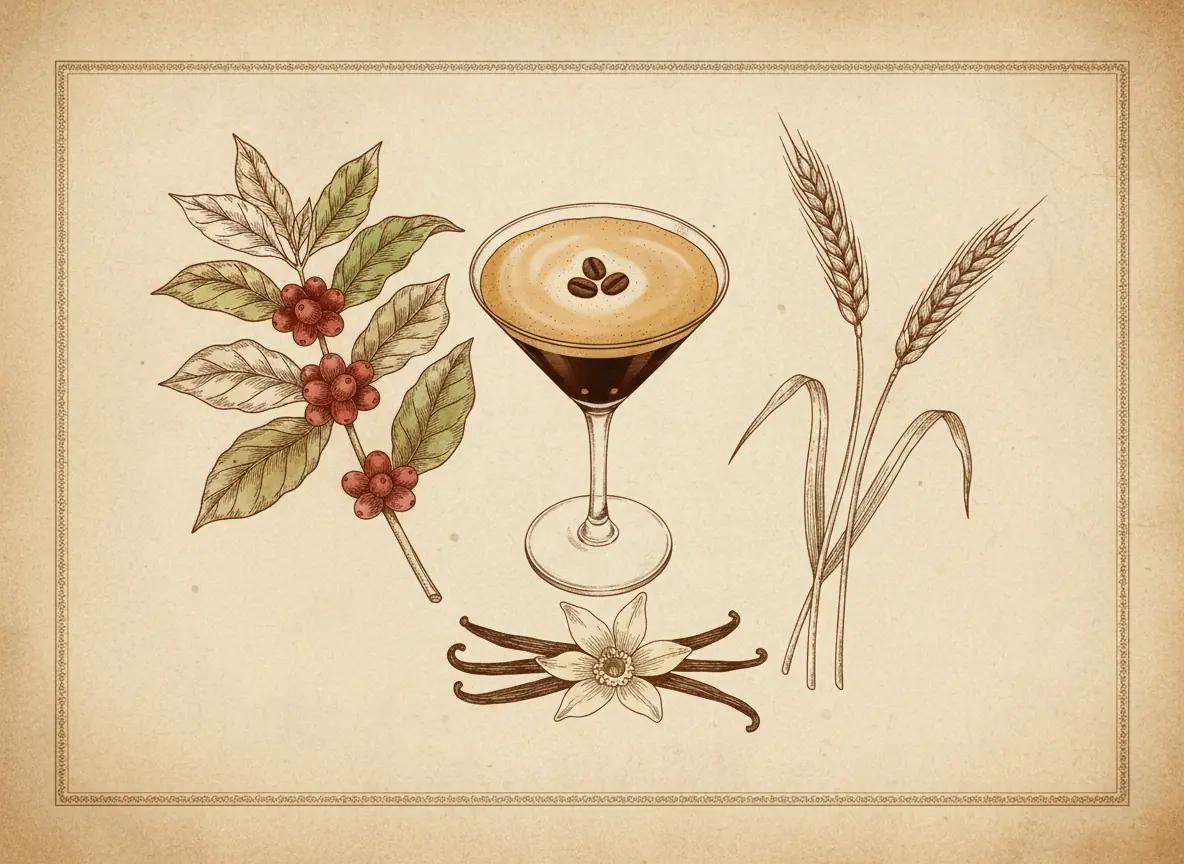
Espresso Martini

Espresso Martini

Dick Bradsell created the Espresso Martini in 1983 at the Soho Brasserie in London, reportedly at the request of a young model who asked for something that would "wake me up and then mess me up." The name has stuck despite the drink containing no gin and bearing no relation to a Martini beyond the glass it is served in. Bradsell used what was in front of him: freshly pulled espresso from the machine behind the bar, vodka, and coffee liqueur. The result became one of the most ordered cocktails in the world. The revival it has enjoyed over the last decade is not a surprise. It is a genuinely good drink. Cold, strong, silky, with the kind of foam that holds a garnish for ten minutes and makes every other cocktail look underdressed. The foam is the signature and the technique that produces it is the point of difference between an Espresso Martini and a good Espresso Martini. Use freshly pulled espresso. Not cold brew. Not instant. Not yesterday's coffee. The crema from a fresh shot is what produces the foam. Without it the drink is flat in every sense of the word.

French Martini

The French Martini is a New York drink with a French accent: it emerged in the late 1980s from Keith McNally’s downtown restaurants, Balthazar’s bar making it famous, and it led the charge of the flavoured-martini era with more dignity than most of its followers. Vodka, Chambord and pineapple juice: three ingredients, no citrus, and a drink that behaves like dessert while drinking like a cocktail. The trick is the pineapple. Shaken hard, fresh pineapple juice throws the silky white foam that crowns the drink, the same protein magic the Jungle Bird relies on, and under it the Chambord’s black raspberry velvet does the sweetening with royal manners. No citrus is needed because pineapple carries its own acidity: the drink balances on fruit alone. It survived the martini-glass era it helped create because the formula was always sound: rich but not cloying, glamorous but three ingredients deep. Shaken properly cold, foam intact, it remains the best argument the flavoured-martini decade ever made.

Greyhound

The Greyhound is older than its vodka. Harry Craddock printed the grapefruit-and-gin original in the 1930 Savoy Cocktail Book, and the drink took both its name and its second spirit in post-war America, where the story ties it to the diners of the Greyhound bus terminals and vodka was busy eating gin’s market share. Grapefruit makes it interesting where orange makes drinks friendly. The juice brings genuine bitterness along with its sugar and acid, so the finished drink runs dry, brisk and slightly stern, closer in temperament to a Paloma than to a Screwdriver. Fresh-squeezed matters even more here than elsewhere, because bottled grapefruit flattens exactly the bitter brightness that is the entire point. It is the connoisseur’s default among the juice highballs, and it sits one rim of salt away from being a Salty Dog, which turns out to be a structural decision rather than a garnish and is worth testing with two glasses.

Gypsy Queen

The Gypsy Queen is vodka and Bénédictine at two to one with a dash of Angostura, stirred and served up. It is a very simple drink and an unusual one, because it uses vodka the way most recipes use gin: as the base of a stirred, spirit-forward cocktail rather than as a neutral carrier for fruit. That turns out to be the point of it. Vodka contributes no flavour of its own, so the Bénédictine is completely exposed. Every one of its herbs, its honey sweetness and its warm spice arrives with nothing else in the glass to argue with or hide behind. If you want to know what Bénédictine actually tastes like, this is the drink to make. It is recorded from New York in the 1940s, which puts it a decade ahead of the vodka boom the Moscow Mule set off. The name belongs firmly to its era. The recipe has outlasted it.

Harvey Wallbanger

The Harvey Wallbanger is a Screwdriver that took a swerve: vodka and orange juice with a float of Galliano, the tall golden Italian liqueur, and the most successful drinks-marketing campaign of the 1970s attached. The recipe is credited to Hollywood bartender Donato “Duke” Antone in the 1950s, but the fame belongs to Galliano’s importers, whose surfing cartoon mascot Harvey put the drink on every American bar and airline by 1975. The float is the whole idea: fifteen millilitres of Galliano’s vanilla-anise gold resting on the surface, so the drink opens herbal-sweet and finishes as a plain Screwdriver, the same descent-through-a-layer trick the New York Sour plays with wine. Stirred in, it is merely sweetened orange juice; floated, it is a drink with a beginning, middle and end. It collapsed with the decade and returned with the revival’s soft spot for honest kitsch: the modern reading pours fresh orange juice, keeps the float floating, and lets a very silly name introduce a rather clever structure.

John Daly

The John Daly is an Arnold Palmer with vodka in it: iced tea, lemonade and a measure of spirit, over ice in a tall glass. The Palmer is tea and lemonade at three to one, named after a golfer famous for restraint and precision. The John Daly is named after a golfer famous for neither, and the drink is exactly as honest about that as the name suggests. That is the entire joke and it is a good one. Same drink, same ratio, one addition, and the name does the rest of the work by telling you what kind of afternoon you are having. Nobody needs it explained twice. Daly himself has since put his name to a bottled version commercially, which completes the joke with a signature. Both golfers now endorse their own glass, which is a rare thing for a bar to have arranged more or less by accident.

Kamikaze

The Kamikaze is the 1970s in a shaker: vodka, triple sec and lime, born by most accounts in the American bars of the disco era and named with the decade’s customary subtlety. It ran the party circuit for twenty years as both cocktail and shot, and its DNA went on to build the Cosmopolitan, which is essentially a Kamikaze that moved uptown. Underneath the name is a classical drink. This is the White Lady’s formula with vodka in place of gin, a clean citrus daisy that balances at equal parts and sharpens considerably when the vodka is doubled. The lime has to be fresh, which is the entire difference between the drink and its sour-mix reputation. Served up it is a crisp, grown-up sour; poured as shots it is the same drink at higher velocity. Either way, almost everybody has met it and almost nobody has met it made properly.

Lemon Drop Martini

The Lemon Drop is a vodka sour with a sugared rim, and the rim is structural rather than decorative. The liquid is balanced sharper than a standard sour precisely because every sip collects sweetness at the edge of the glass, so sugar and acid arrive in sequence rather than pre-mixed. It was born at Henry Africa's in San Francisco, the original fern bar, where Norman Hobday built drinks through the 1970s for people who found the old rooms intimidating. Bright, sweet-edged and unpretentious was the brief, and the Lemon Drop was the flagship: a lemon and vodka sour named after the boiled sweet. It grew a martini glass and a longer name in the decades after, but the architecture never moved. Made with fresh lemon and an honest hand on the syrup it is a genuinely good sour wearing party clothes, and the fern-bar school it comes from was mocked for years before the revival quietly admitted it had a point.

Moscow Mule

The Moscow Mule is the drink that taught America to drink vodka, and it was born of two business problems having lunch. In 1941 John Martin could not sell the Smirnoff brand he had recently bought, and Jack Morgan of the Cock 'n' Bull on Sunset Strip could not sell his house-made ginger beer. They solved each other over a table. The copper mug, by the best telling, came from a third party with an unsellable stock of them. Three surpluses, one immortal drink. The build is a buck at its most direct: vodka for clean strength, fiery ginger beer for everything else, lime to hold the line. Vodka's neutrality is a commercial handicap almost everywhere and the design here: nothing interferes with the ginger and lime running at full brightness. The mug turned out to be engineering as well as marketing, which nobody involved had planned and everybody has benefited from since.
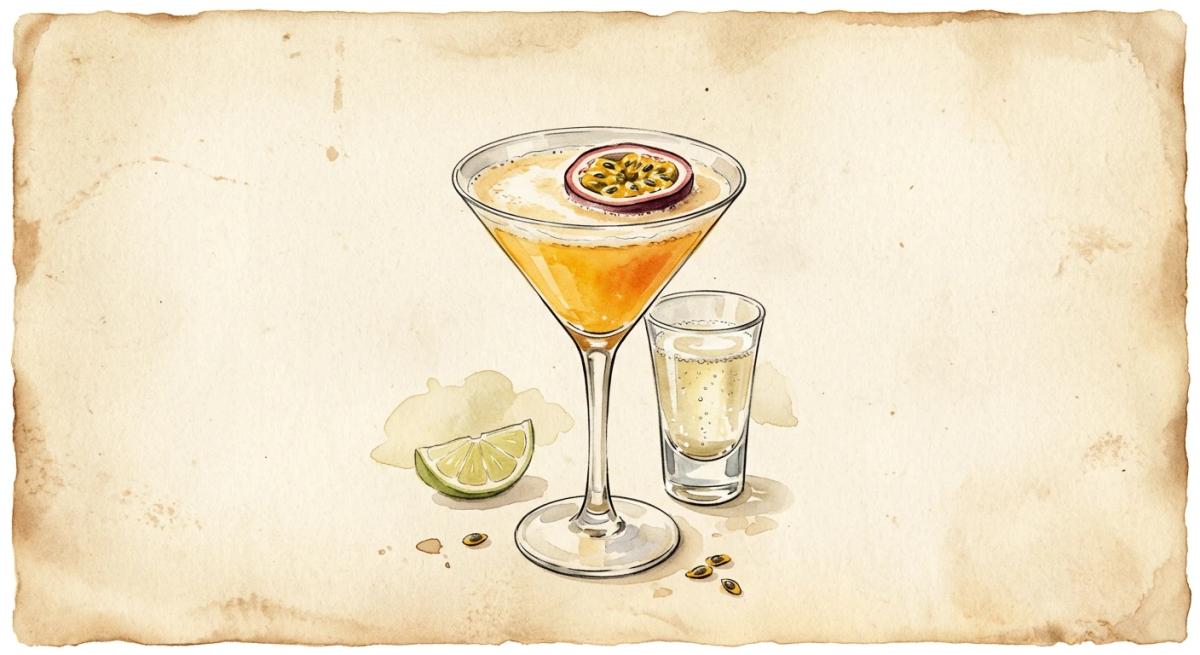
Pornstar Martini

Pornstar Martini

The Pornstar Martini was created by Douglas Ankrah at the Townhouse bar in Knightsbridge, London, in 2002, and became one of the most successful cocktail creations of the twenty-first century within a decade. Ankrah originally named it the Maverick Martini, after a bar he had visited in South Africa, and renamed it within months. It has ranked among the most ordered cocktails in the United Kingdom ever since. Vanilla vodka, passion fruit purée, passion fruit liqueur and fresh lime combine into a shaken sour with genuine complexity behind an accessible appearance. The signature serve pairs it with a shot of chilled Champagne alongside, and that two-part experience is as much a part of the drink’s identity as any single ingredient. Passion fruit defines it. Fresh fruit provides an aromatic complexity that neither purée nor liqueur replicates alone, and the canonical build uses both, plus half a fresh fruit floated on the surface.

Russian Spring Punch

The Russian Spring Punch is Dick Bradsell's, built in London in the late 1980s, and it is a lemon sour with crème de cassis in it and champagne on top. Bradsell is reported to have rated it among his own best work, which from the man who also made the Bramble and the Espresso Martini is a substantial claim. The structure is more interesting than the ingredient list looks. Underneath the champagne is a genuine sour: twenty-five millilitres of lemon against a short ten of syrup, with the cassis bringing most of the sweetness and all of the colour. The vodka is deliberately silent and structural, there to bring the whole thing to strength without adding a flavour. Then the champagne does the job soda would do in a collins, except that it brings acid and depth of its own as well as bubbles. The result is long, pale purple, and considerably drier than the description suggests. It is the most elegant thing anyone has done with blackcurrant.

Salty Dog

The Salty Dog is a Greyhound that learned the Paloma’s lesson early: the same spirit and grapefruit, rimmed with salt, and the rim changes everything. It surfaces in American bar culture through the 1950s and 60s as the Greyhound’s glamorous sibling, the name a sailor’s tease, and it survives because the chemistry behind it is real. Salt suppresses bitterness at the taste-bud level, so every sip that crosses the rim reads sweeter and rounder than the same liquid without it. Grapefruit’s bite arrives filed smooth, the fruit’s own sugar steps forward, and the drink becomes a genuinely different proposition from its unsalted twin. Rim half the glass and both drinks are available at once. It is the cheapest lesson in flavour science available behind a bar, and it is the correct order for anyone who finds a Greyhound a shade too stern: the same fruit, the same pour, and a considerably friendlier introduction to it.

Screaming Orgasm

The Screaming Orgasm is vodka, amaretto, coffee liqueur and Irish cream, shaken and served over ice. It is a dessert, it is from the 1980s, and the name was the marketing. The plain Orgasm is the same drink without the vodka: three liqueurs, no spirit. Adding the vodka is what makes it screaming, which is the sort of joke the bar-call era ran on. A great many drinks from that decade were named to make ordering them slightly awkward, and the awkwardness was the selling point. Underneath the name it is competently built. Amaretto brings almond, coffee liqueur brings roast and bitterness, Irish cream brings body and sweetness, and the vodka stiffens the whole thing without adding a flavour that would have to be accommodated. It is the White Russian's logic with two more bottles in it, and if you can get past ordering it out loud it is a genuinely good after-dinner drink.

Screwdriver

The Screwdriver is the simplest cocktail with a proper origin story: American engineers and oil workers in the mid-century, spiking cans of orange juice with vodka and stirring the result with the nearest tool to hand. The name was in print by 1949, Smirnoff's marketers took it up alongside the Moscow Mule, and vodka and orange became the default easy drink of the western world. Two ingredients leave nowhere to hide, which makes this a referendum on its juice. Fresh-squeezed orange turns it from a spiked carton into something genuinely worth ordering, bright and sweet-sharp and alive, and the vodka asks only to be clean and honestly measured. Fifty millilitres against a hundred and twenty is the ratio that keeps it a cocktail. It is also the trunk of a family tree. A Galliano float makes it a Harvey Wallbanger, sloe gin once made it a Slow Screw, and a good deal of the brunch canon descends from this glass.

Seabreeze

The Seabreeze is vodka, cranberry juice and grapefruit juice over ice, and the two juices are the entire drink. Cranberry is sweet-tart and grapefruit is bitter, and each corrects what the other would do alone: cranberry by itself reads as sweet, grapefruit by itself reads as austere. Together they finish dry. It belongs to a small family of vodka-and-juice highballs with nautical names. The Cape Codder is the parent, vodka and cranberry with lime. Add grapefruit and you get this. Add pineapple instead and you get a Bay Breeze. The naming is Cape Cod marketing rather than anything older, and the family settled into its current shape through the 1980s. It ruled the 1990s and has been slightly out of fashion since, which is unfair. It is one of very few drinks that is genuinely easy to make well, needs nothing you cannot buy in a supermarket, and still rewards using one fresh ingredient instead of two cartons.

Sex on the Beach

Sex on the Beach is the 1980s at full volume: vodka, peach schnapps, orange and cranberry, and a name engineered so that ordering it was the joke. The best-supported account has a Fort Lauderdale bartender inventing it during the spring break of 1987 to shift a newly launched peach schnapps, and naming it after the two things his customers had come to Florida for. The order advertised itself, and the drink became one of the most-poured on earth. The formula is sturdier than the reputation. Peach schnapps sweetens two juices that hold each other in check, orange bringing the sunshine and cranberry the acid and the colour, and the vodka gives a fruit cooler enough spine to count as a cocktail. Built properly, with fresh orange juice and an honest measure of spirit, it is exactly what it advertises and none of the sticky excess the name is remembered for. A beach in a glass, ideally within sight of one.