French Martini
A French Martini is 45ml of vodka, 15ml of raspberry liqueur and 15ml of fresh pineapple juice, shaken very hard with ice for 12 to 15 seconds and double strained into a chilled coupe, where the pineapple settles into a pale foam. No garnish. About 2.0 UK units. The measures are the IBA’s. The longer shake is deliberate. Most shaken drinks want 10 to 12 seconds; this one wants a little more, because fresh pineapple juice foams when it is shaken hard and the foam is the finish. Carton juice gives far less. There is no citrus. Pineapple brings its own acidity, and the raspberry liqueur, usually Chambord, does all the sweetening. Difford’s Guide says it emerged in New York in the late 1980s and reached the menu of Keith McNally’s Pravda in 1996, and it is a Martini in name and glass only.
Glassware: Coupe Glass
Garnish: None; the foam is left bare
Ingredients
45ml
Any clean vodka at 40% ABV. It gives strength and structure and leaves the fruit to carry the flavour, so a mid-priced bottle is enough.
15ml
Chambord is the usual choice: its own page gives a black raspberry liqueur at 16.5% Alc. by Vol., and Difford’s Guide says it is made with cognac. At 15ml it is the only sweetener and sets the colour.
15ml
Pressed the same day. Shaken hard, it gives the foam that finishes the drink, and its acidity is why there is no citrus. Carton juice foams poorly.
Instructions
Chill a coupe.
Add the vodka, raspberry liqueur and fresh pineapple juice to a shaker.
Fill with ice and shake very hard for 12 to 15 seconds.
Double strain into the chilled coupe and let the foam settle.
Serve without a garnish.
Source: the IBA (Official IBA specification; shaken 12 to 15 seconds for the foam and served without the IBA’s lemon peel oil; method ours). Last checked 9 October 2026.
Expert Tip
Shake for the full 12 to 15 seconds, and harder than you would a sour. The foam is built in the shaker, and a short shake leaves a thin skin of bubbles that is gone within a minute. Use fresh pineapple juice. Juice pressed the same day foams readily; heat-treated carton juice gives a weak head and a flatter, sweeter drink. Double strain to keep the fibre out, then let the glass stand for a few seconds so the foam separates cleanly from the drink beneath it.
Behind the French Martini
Flavour Profile
The Origin
Difford’s Guide says the French Martini emerged in New York in the late 1980s, when pretty much any drink served in a V-shaped glass was named Martini; in 1996 Dale DeGroff put it on the menu of Keith McNally’s Pravda, and it took off when it reached McNally’s Balthazar in SoHo later that year. The Oxford Companion says it first appears in print in 1995. In our view it spread with the fashion for drinks in a Martini glass. The IBA now lists it among its New Era cocktails.
The Foam
Fresh pineapple juice shaken hard throws a fine, pale foam that rises and sets as a cap. It is the finish and the quality test: no foam means tired juice or a short shake.
That is why the shake runs 12 to 15 seconds rather than the usual 10 to 12. The extra time builds the head; the double strain keeps fibre out of it.
The Raspberry Liqueur Measure
Chambord, the bottle most bars use, is black raspberry and blackberry with cognac, vanilla and honey, rich enough to sweeten and colour the whole drink from 15ml.
Push it towards 25ml and the drink turns into dessert, the pineapple reduced to texture. Cut it to 10ml and the colour fades with the raspberry. The IBA’s 15ml sits between.
Why No Citrus
Most shaken drinks of this shape carry lemon or lime. This one has none, and it does not need any.
Pineapple juice is already acidic, fresh juice more so than carton. It provides the sourness that stops the drink tasting flat; citrus on top would push it sharp.
Ours Against the IBA
The French Martini as the IBA writes it and as we make it
Vodka
- IBA
- 45ml
- Ours
- 45ml
Raspberry liqueur
- IBA
- 15ml
- Ours
- 15ml, usually Chambord
Pineapple juice
- IBA
- 15ml, fresh
- Ours
- 15ml, pressed the same day
Shake
- IBA
- Shake well with ice
- Ours
- Very hard, 12 to 15 seconds
Strain
- IBA
- Strained
- Ours
- Double strained
Glass
- IBA
- Chilled cocktail glass
- Ours
- Chilled coupe
Garnish
- IBA
- Lemon peel oil squeezed over
- Ours
- None
| Element | IBA | Ours |
|---|---|---|
| Vodka | 45ml | 45ml |
| Raspberry liqueur | 15ml | 15ml, usually Chambord |
| Pineapple juice | 15ml, fresh | 15ml, pressed the same day |
| Shake | Shake well with ice | Very hard, 12 to 15 seconds |
| Strain | Strained | Double strained |
| Glass | Chilled cocktail glass | Chilled coupe |
| Garnish | Lemon peel oil squeezed over | None |
A Martini in Name
In our view the late 1980s and 1990s produced many drinks in a Martini glass, and few have lasted. This one has a spirit, a sweetener and an acid, the same outline as a sour, which is why it holds up.
It is not a Martini in any structural sense. It took the name from the glass, as many drinks of that decade did.
How to Serve It
Cold and promptly, in a chilled coupe, with the foam left bare. After dinner it does the work of a pudding without the weight of one.
For another vodka drink from the same years, with lime and cranberry, make a Cosmopolitan.
Make it at home
The Spirit
VodkaVodka is spirit made from a farmed crop, usually grain or potatoes, distilled and refined so that the taste of that crop is deliberately reduced. Under the retained Regulation (EC) 110/2008 its minimum is 37.5% ABV and it may not be given a predominant flavour, which separates it from flavoured vodka and from gin; our recipes count it at 40%. In a mixed drink it adds strength and body while the other ingredients carry the taste.
More to explore
Frequently Asked Questions
Why does my French Martini have no foam?
Is there gin in a French Martini?
Is it very sweet?
What is Chambord?
How strong is a French Martini?
Why shake it longer than other drinks?
Does a French Martini have a garnish?
Sources.
Correct as of 19 October 2026.
- Difford’s Guide, “French Martini Cocktail Recipe” (secondary source: emerged in New York in the late 1980s; Dale DeGroff put it on the menu of Keith McNally’s Pravda in 1996, and it took off at McNally’s Balthazar in SoHo that year).
- Chambord, “Chambord Black Raspberry Liqueur” (maker’s own page: “Chambord Black Raspberry Liqueur, 16.5% Alc. by Vol.”).
- Difford’s Guide, “Chambord black raspberry liqueur” (secondary source: an infusion of raspberries and blackberries in neutral spirit with Madagascar vanilla, Moroccan citrus peel, honey and cognac).
- The Oxford Companion to Spirits and Cocktails (Fernando Castellon and David Wondrich), “The French Martini” (secondary source: first in print in 1995; Chambord imported from 1979; on the opening menu of Pravda in early 1996).
You Might Also Like
Cosmopolitan
A Cosmopolitan is 40ml of citrus vodka, 15ml of Cointreau, 15ml of fresh lime juice and 30ml of cranberry juice, shaken hard for 10 to 12 seconds and double strained into a chilled coupe, with an orange twist. About 2.2 UK units. The measures are the IBA’s. The Oxford Companion says the Cosmopolitan has a confused and contested history, that most claims lack supporting evidence, and that the recipe served worldwide was most likely formulated in 1988 by Toby Cecchini at the Odeon in New York, with Absolut Citron, Cointreau, fresh lime and cranberry, after a cruder San Francisco drink of the same name that the San Francisco Chronicle called “a Kamikaze with cranberry juice” in 1987. Cecchini told Punch the same year, 1988. Under the colour it is a sour: vodka, orange liqueur and lime, with cranberry for tint and a little extra acid. Made with fresh lime and served very cold, it is tart and dry, a long way from the sweet pink drink of its reputation.
Pornstar Martini
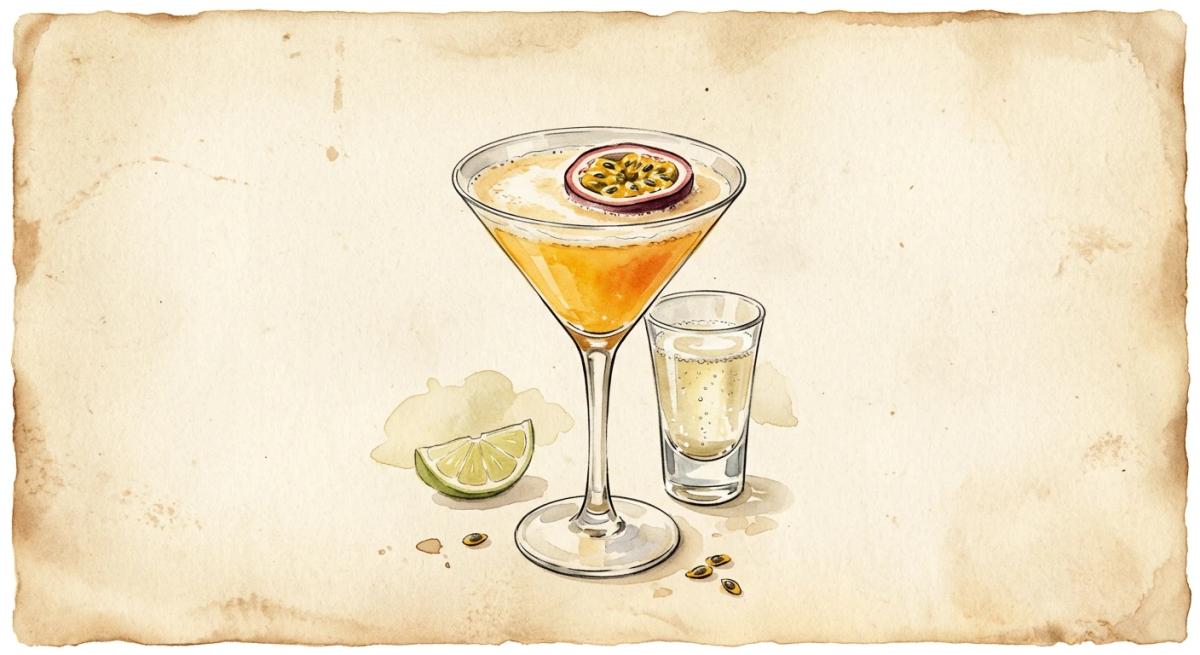
A Pornstar Martini is 50ml vanilla vodka, 20ml passion fruit liqueur, 50ml passion fruit purée and 10ml vanilla syrup, shaken, double strained and served in a chilled martini glass with half a passion fruit floating on top. A 50ml shot of chilled Champagne is served alongside. About 2.2 UK units in the glass and 2.8 with the Champagne. Douglas Ankrah created it in 2002 at Townhouse, his bar in Knightsbridge, by Difford’s Guide’s account, which says he first called it the Maverick Martini after a Cape Town nightclub; his 2004 book, as Difford’s quotes it, headed the recipe Maverick Martini or Porn Star Martini. In November 2018 the Morning Advertiser reported CGA figures that put it first among UK cocktails by share of serves in managed outlets. Passion fruit does the work. The purée gives sharpness and body, the liqueur sweetness and perfume, and the vanilla rounds both. The Champagne is a separate drink, sipped alongside or after.
Espresso Martini
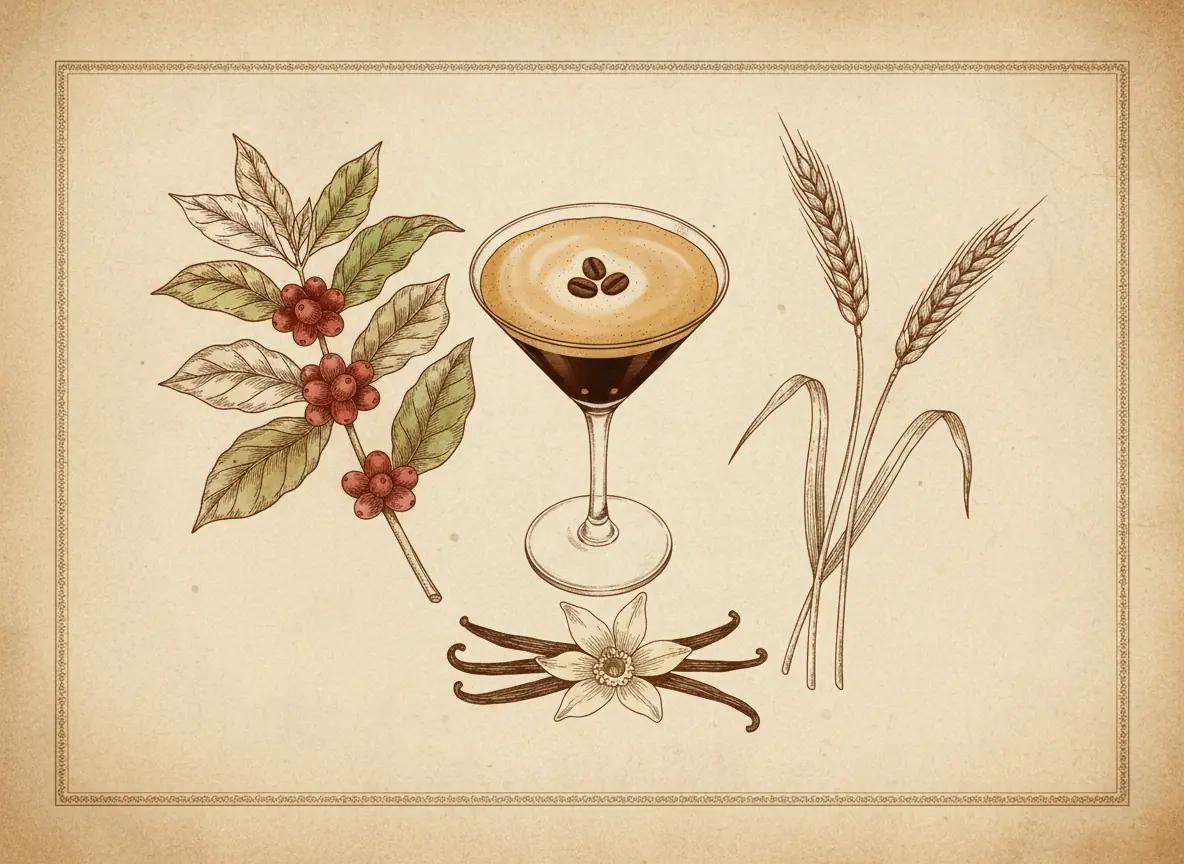
An Espresso Martini is 50ml of vodka, 30ml of Kahlúa, 10ml of sugar syrup and one freshly pulled espresso of about 30ml, shaken hard for 10 to 12 seconds and double strained into a chilled martini glass, with three coffee beans laid on the foam. About 2.5 UK units, and the caffeine of a single shot. The Oxford Companion says Dick Bradsell created it at the Soho Brasserie in London in 1983, for a famous model who asked for a drink to wake her up and then mess her up; he never said who she was. The measures are the IBA’s. Vodka gives strength and cold without flavour, so the coffee leads. The foam comes from the crema of a shot pulled moments before the shake, which is why the espresso goes in last.
Where this one sits
Recipe by Jerry Can Spirits · Updated 19 October 2026