Cosmopolitan
A Cosmopolitan is 40ml of citrus vodka, 15ml of Cointreau, 15ml of fresh lime juice and 30ml of cranberry juice, shaken hard for 10 to 12 seconds and double strained into a chilled coupe, with an orange twist. About 2.2 UK units. The measures are the IBA’s. The Oxford Companion says the Cosmopolitan has a confused and contested history, that most claims lack supporting evidence, and that the recipe served worldwide was most likely formulated in 1988 by Toby Cecchini at the Odeon in New York, with Absolut Citron, Cointreau, fresh lime and cranberry, after a cruder San Francisco drink of the same name that the San Francisco Chronicle called “a Kamikaze with cranberry juice” in 1987. Cecchini told Punch the same year, 1988. Under the colour it is a sour: vodka, orange liqueur and lime, with cranberry for tint and a little extra acid. Made with fresh lime and served very cold, it is tart and dry, a long way from the sweet pink drink of its reputation.
Glassware: Coupe Glass
Garnish: Orange twist expressed, and flamed if you like
Ingredients
40ml
Lemon-flavoured vodka at about 40% ABV, as the IBA specifies. Plain vodka works too, with a generously expressed twist to supply the peel oil.
15ml
A dry orange liqueur at 40% ABV. It sweetens and adds orange perfume; a sweeter, weaker triple sec tips the drink towards sugar.
30ml
The sweetened cranberry juice drink sold in cartons, which is what the measures assume. Pure unsweetened cranberry juice is far sharper. Thirty millilitres tints the drink and adds a little acid.
Instructions
Squeeze the lime juice the same day.
Chill a coupe in the freezer.
Add the vodka, Cointreau, lime juice and cranberry juice to a shaker.
Fill with cubed ice and shake hard for 10 to 12 seconds.
Double strain into the chilled coupe.
Express an orange twist over the surface, flamed if you like, and drop it in.
Source: the IBA (Official IBA specification; served in a chilled coupe with an orange twist where the IBA uses a large cocktail glass and a lemon twist; method ours). Last checked 9 October 2026.
Expert Tip
Chill the coupe in the freezer. A Cosmopolitan has no ice in the glass, and as it warms the lime fades and the sugar comes forward. A small glass, drunk promptly, stays cold to the last sip. Keep the cranberry to 30ml. It tints and sharpens; more turns the drink red, sweet and flat. The colour to aim for is a pale pink. Use fresh lime and a dry orange liqueur. Bottled lime juice and a sweet triple sec make the sticky version many people remember. Shake hard and double strain, so no ice chips water it down in the glass.
Behind the Cosmopolitan
Flavour Profile
Where It Comes From
The Oxford Companion says the Cosmopolitan has a confused and contested history, with bartenders from coast to coast laying claim to it and most claims lacking supporting evidence. It says Jesse Selvin of the San Francisco Chronicle met a cruder vodka drink of the same name at Julie’s Supper Club in San Francisco in 1987, “a Kamikaze with cranberry juice”. Punch quotes Dale DeGroff saying that Cheryl Cook is said to have invented the drink in Miami, but that her version had no fresh lime juice.
The version that spread came from the Odeon in New York. The Oxford Companion says it was most likely formulated there in 1988 by Toby Cecchini, who replaced the bottled Rose’s with fresh lime and the cheap triple sec with Cointreau, and used Absolut Citron, released that year; Cecchini himself told Punch it was 1988. His recipe used Absolut Citron, Cointreau, fresh lime and cranberry juice.
The Sour Underneath
Take away the colour and the Cosmopolitan is vodka, orange liqueur and lime, the frame of the Kamikaze. The Margarita and the White Lady are built the same way: spirit, orange liqueur and citrus.
The cranberry does two jobs. It tints the glass and adds a little acid and tannin, which dries the finish. At 30ml it stays in a supporting role.
The Odeon, the IBA and Ours
The Cosmopolitan in the Oxford Companion’s recipe, at the IBA and here; the Companion column is its recipe, the IBA column the IBA’s official recipe page, and the units are our calculation with vodka at our working figure of 40% and Cointreau at 40% on its product page
Vodka
- Oxford Companion
- 60ml Absolut Citron
- IBA
- 40ml citron vodka
- Ours
- 40ml citrus vodka
Orange liqueur
- Oxford Companion
- 30ml Cointreau
- IBA
- 15ml Cointreau
- Ours
- 15ml Cointreau
Lime
- Oxford Companion
- 30ml fresh juice
- IBA
- 15ml fresh juice
- Ours
- 15ml, squeezed the same day
Cranberry
- Oxford Companion
- 30ml
- IBA
- 30ml
- Ours
- 30ml
Garnish
- Oxford Companion
- Not given
- IBA
- Lemon twist
- Ours
- Orange twist
UK units
- Oxford Companion
- About 3.6
- IBA
- About 2.2
- Ours
- About 2.2
| Element | Oxford Companion | IBA | Ours |
|---|---|---|---|
| Vodka | 60ml Absolut Citron | 40ml citron vodka | 40ml citrus vodka |
| Orange liqueur | 30ml Cointreau | 15ml Cointreau | 15ml Cointreau |
| Lime | 30ml fresh juice | 15ml fresh juice | 15ml, squeezed the same day |
| Cranberry | 30ml | 30ml | 30ml |
| Garnish | Not given | Lemon twist | Orange twist |
| UK units | About 3.6 | About 2.2 | About 2.2 |
Fame and the Backlash
Cecchini told Punch that Madonna and Sandra Bernhard were at the Odeon every day asking for “that pink drink”, and the Oxford Companion says the improved Odeon version was ubiquitous in New York by 1990, helped by Dale DeGroff’s adoption of it at the Rainbow Room. The HBO series Sex and the City then made it a totem of urban sophistication, the Companion adds.
Fame brought careless versions: bottled lime, sweet triple sec, too much cranberry and a large glass left to warm. Made to the measures here, it is tart and only lightly sweet.
How to Serve It
Very cold, up, in a chilled coupe rather than a large martini glass, so the smaller pour stays cold to the end. Express the orange twist over the top; flaming it warms the oil and adds a faint toasted note.
Without the cranberry it is close to a Kamikaze; for vodka and cranberry over ice, a Cape Codder; for gin, orange liqueur and lemon, a White Lady.
Make it at home
The Spirit
VodkaVodka is spirit made from a farmed crop, usually grain or potatoes, distilled and refined so that the taste of that crop is deliberately reduced. Under the retained Regulation (EC) 110/2008 its minimum is 37.5% ABV and it may not be given a predominant flavour, which separates it from flavoured vodka and from gin; our recipes count it at 40%. In a mixed drink it adds strength and body while the other ingredients carry the taste.
Master the Techniques
More to explore
Frequently Asked Questions
Who invented the Cosmopolitan?
Should a Cosmopolitan be red or pink?
Citrus vodka or plain?
How does ours compare with the IBA’s?
How is a Cosmopolitan different from a Kamikaze?
How strong is a Cosmopolitan?
Sources.
Checked between 18 October and 19 October 2026.
- The Oxford Companion to Spirits and Cocktails (Robert Simonson and David Wondrich), “Cosmopolitan” (secondary source: the recipe served worldwide most likely formulated in 1988 by Toby Cecchini at the Odeon, with Absolut Citron, Cointreau, fresh lime and cranberry; a cruder San Francisco drink described by Jesse Selvin in 1987; ubiquitous in New York by 1990 via the Rainbow Room; Sex and the City).
- Punch, “The Definitive History of the Cosmopolitan” (Cecchini: “In 1988 …” he reconstructed the drink at the Odeon with Cointreau, fresh lime, Citron and cranberry).
- IBA, “Cosmopolitan” (official recipe: 40 ml vodka citron, 15 ml Cointreau, 15 ml fresh lime juice, 30 ml cranberry juice; large cocktail glass; lemon twist).
- Cointreau, “Cointreau Triple Sec” (producer’s page: footer gives 40% Alc./Vol.).
You Might Also Like
Kamikaze
A Kamikaze is 45ml vodka, 22.5ml triple sec and 22.5ml fresh lime juice, shaken hard and strained into a chilled coupe with a lime wheel. It is a vodka sour sweetened with orange liqueur, at about 2.7 UK units, and the same mix divided between shot glasses is the Kamikaze shot. The Oxford Companion to Spirits and Cocktails gives no creator and says the drink emerged in the United States in the mid-1970s. The IBA listed it, at equal parts of each ingredient, until 2020. The 45ml pour here gives the vodka more room and makes a drier drink. Fresh lime is what matters. The sticky, sweet Kamikaze people remember was made with sour mix; with real lime the same three ingredients make a clean, sharp sour.
White Lady
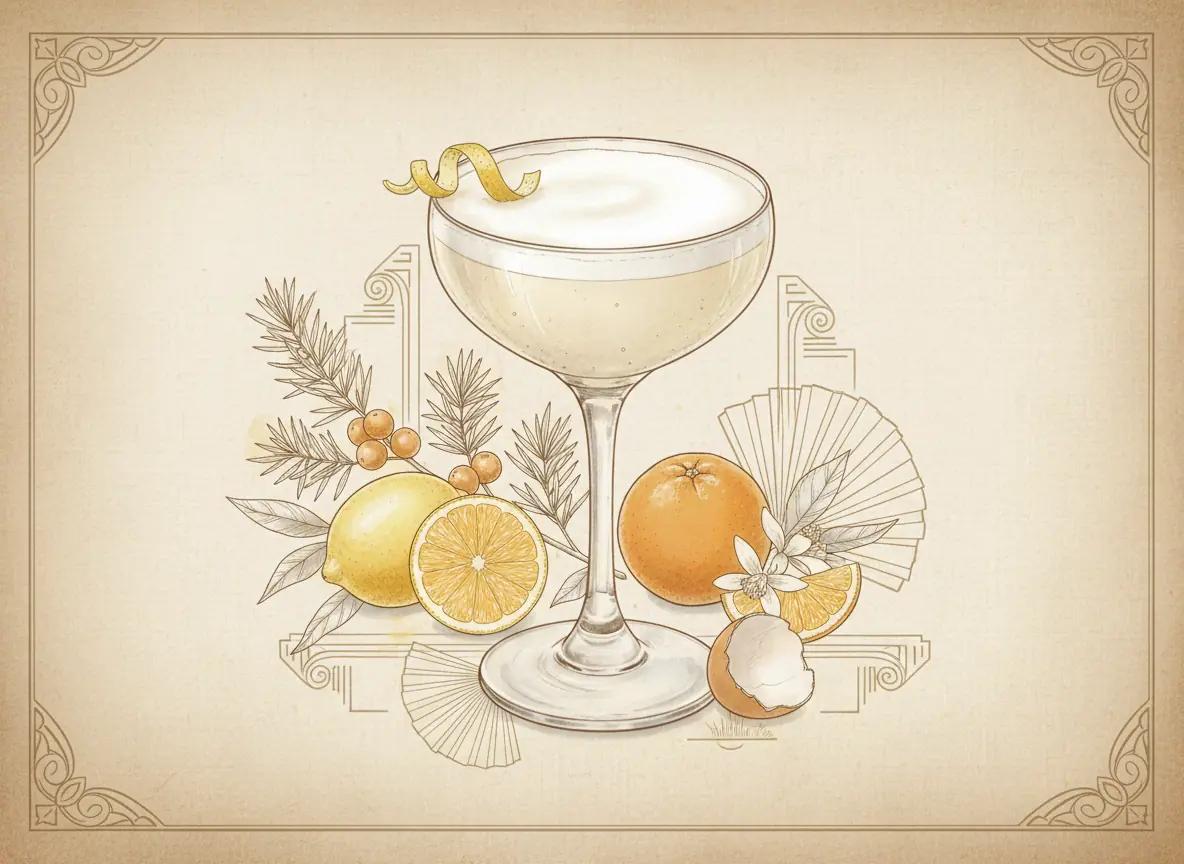
A White Lady is 40ml of London Dry gin, 30ml of Cointreau and 20ml of fresh lemon juice, shaken hard with ice for 10 to 12 seconds and double strained into a chilled coupe, with lemon peel expressed over the top. About 2.8 UK units. Those are the IBA’s measures, and there is no egg white in them. The name is older than the recipe. Difford’s Guide, a secondary source, says Harry MacElhone gave it in 1919, at Ciro’s Club in London, to a drink of brandy, crème de menthe and Cointreau. The gin, Cointreau and lemon version is credited to his rebuild at Harry’s New York Bar in Paris in 1929, though Difford’s says most dispute that, and The Savoy Cocktail Book printed it in 1930, also without egg. Egg white came later: Difford’s Guide finds the earliest recipe with it in The Sacramento Bee of 1936. It makes a softer, foamed drink, given here as a variation. The plain version is sharp and dry, the gin in front and the orange behind it.
Pornstar Martini
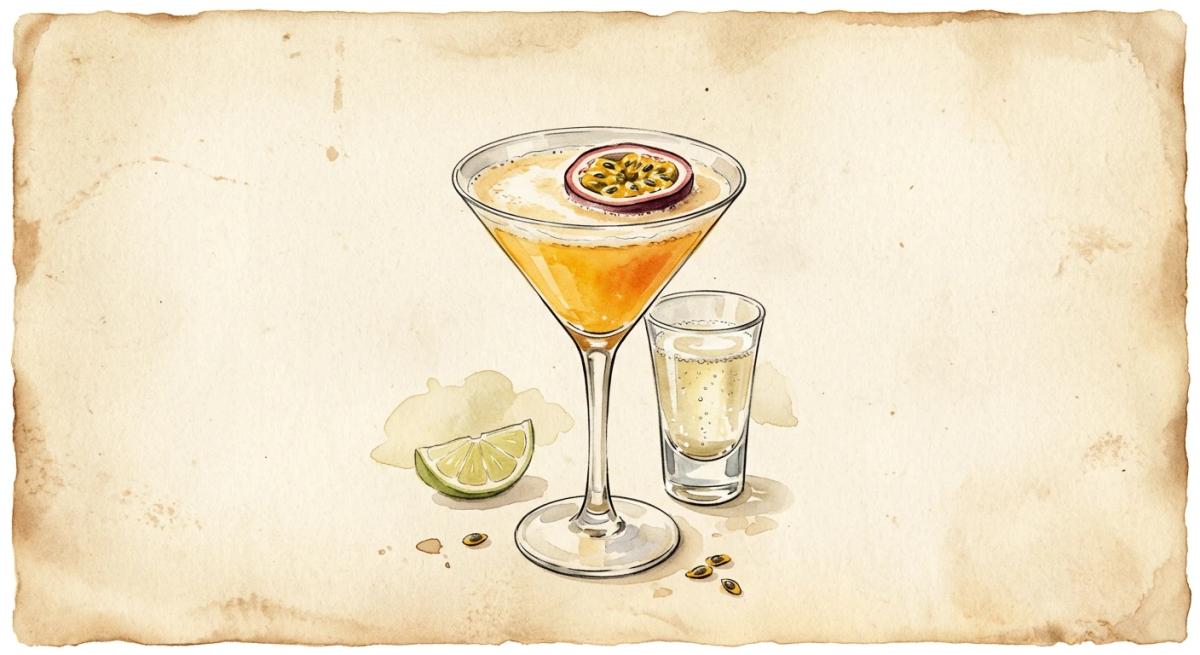
A Pornstar Martini is 50ml vanilla vodka, 20ml passion fruit liqueur, 50ml passion fruit purée and 10ml vanilla syrup, shaken, double strained and served in a chilled martini glass with half a passion fruit floating on top. A 50ml shot of chilled Champagne is served alongside. About 2.2 UK units in the glass and 2.8 with the Champagne. Douglas Ankrah created it in 2002 at Townhouse, his bar in Knightsbridge, by Difford’s Guide’s account, which says he first called it the Maverick Martini after a Cape Town nightclub; his 2004 book, as Difford’s quotes it, headed the recipe Maverick Martini or Porn Star Martini. In November 2018 the Morning Advertiser reported CGA figures that put it first among UK cocktails by share of serves in managed outlets. Passion fruit does the work. The purée gives sharpness and body, the liqueur sweetness and perfume, and the vanilla rounds both. The Champagne is a separate drink, sipped alongside or after.
Where this one sits
Recipe by Jerry Can Spirits · Updated 19 October 2026