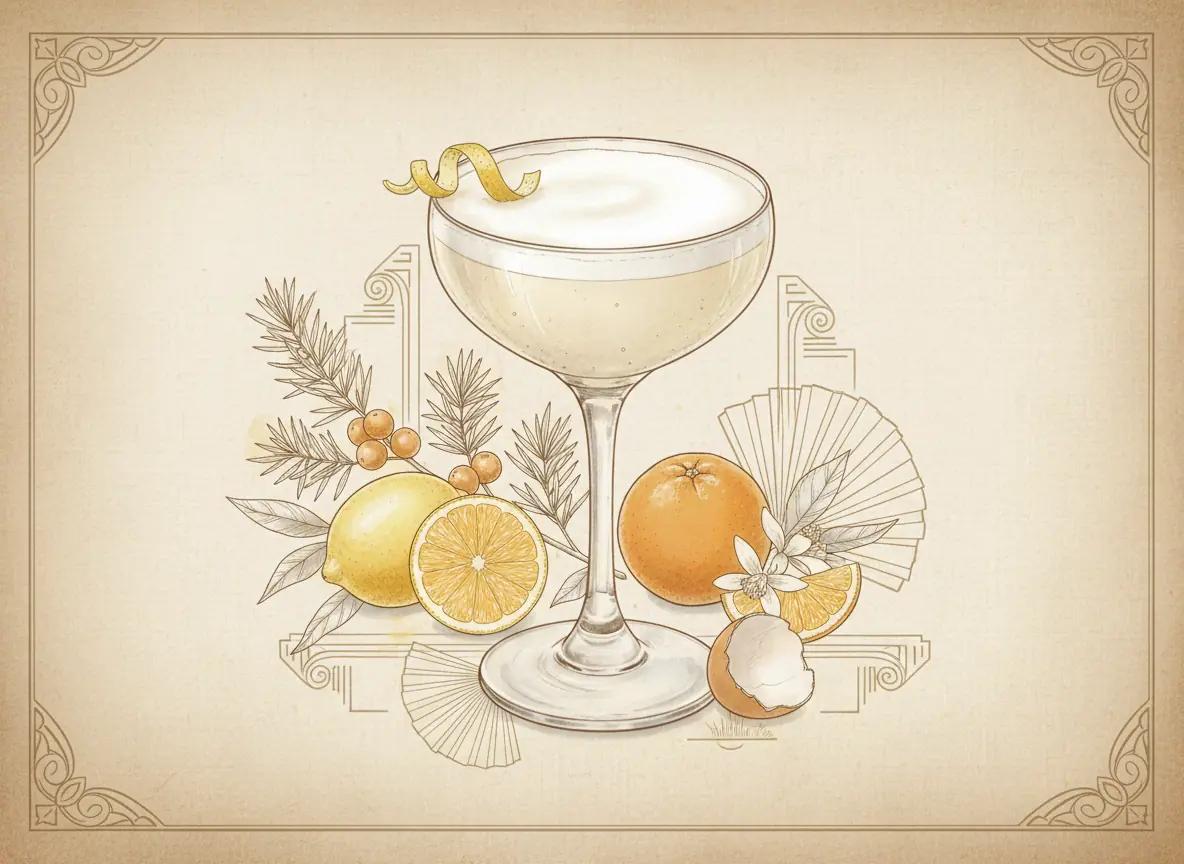
White Lady
A White Lady is 40ml of London Dry gin, 30ml of Cointreau and 20ml of fresh lemon juice, shaken hard with ice for 10 to 12 seconds and double strained into a chilled coupe, with lemon peel expressed over the top. About 2.8 UK units. Those are the IBA’s measures, and there is no egg white in them. The name is older than the recipe. Difford’s Guide, a secondary source, says Harry MacElhone gave it in 1919, at Ciro’s Club in London, to a drink of brandy, crème de menthe and Cointreau. The gin, Cointreau and lemon version is credited to his rebuild at Harry’s New York Bar in Paris in 1929, though Difford’s says most dispute that, and The Savoy Cocktail Book printed it in 1930, also without egg. Egg white came later: Difford’s Guide finds the earliest recipe with it in The Sacramento Bee of 1936. It makes a softer, foamed drink, given here as a variation. The plain version is sharp and dry, the gin in front and the orange behind it.
Variations
Glassware: Coupe Glass
Garnish: Lemon twist
Ingredients
40ml
A London Dry with clear juniper, at 40% ABV or a little more. The gin leads the drink, so a soft or heavily floral one gets lost under the orange.
30ml
Cointreau, at 40% ABV on Cointreau’s own nutrition page, or a triple sec of the same strength. It is the only sweetener in the drink, so a weak, sugary bottle tips the balance at once.
20ml
Squeezed the same day. It is the only acid in the glass and the only thing holding the Cointreau’s sugar in check.
Instructions
Chill a coupe in the freezer.
Add the gin, triple sec and lemon juice to a shaker.
Fill with cubed ice and shake hard for 10 to 12 seconds.
Double strain into the chilled coupe.
Express a strip of lemon peel over the surface and rest it on the rim.
Source: the IBA (Official IBA specification; lemon peel garnish and method ours). Last checked 9 October 2026.
Expert Tip
Balance it by taste, one change at a time. With no bitters or syrup to correct it, the three measures are the drink: too sweet, take the Cointreau down 5ml; too sharp, the lemon. Move both at once and you get a bigger drink at the same balance. Use Cointreau or a triple sec of the same strength, 40% ABV; Cointreau gives 40% on its own nutrition page. In our experience a cheaper one at 20% is mostly sugar, and the gin loses its frame. For the egg white version, dry shake for 10 to 15 seconds without ice, then add ice and shake hard for 10 to 12. The white is raw, so leave it out for anyone allergic to egg or avoiding raw egg.
Behind the White Lady
Flavour Profile
Where It Comes From
Difford’s Guide says Harry MacElhone created the first White Lady at Ciro’s Club in London in 1919, and prints his 1922 recipe from Harry’s ABC of Mixing Cocktails: a sixth of brandy, a sixth of crème de menthe and two thirds Cointreau, so mostly Cointreau.
The gin version is credited to him too, rebuilt at Harry’s New York Bar in Paris in 1929, but Difford’s Guide says there is no evidence for it and most dispute it, including the Savoy, which credits Harry Craddock. Difford’s reports a 1946 Eastbourne Chronicle article crediting Victor Cabrin of London’s Grosvenor House Hotel with inventing it in 1929, and Craddock’s Savoy Cocktail Book printed gin, Cointreau and lemon in 1930. What is established is that the drink was in print by then, and without egg.
The Egg White Came Later
Difford’s Guide notes that MacElhone’s and Craddock’s early recipes make no mention of egg white. Difford’s says it first appears in a recipe in The Sacramento Bee on 17 December 1936, and the first specialist cocktail book with it is Lucius Beebe’s The Stork Club Bar Book of 1946.
Both versions are worth making. With 15ml of egg white the drink gains a foam that carries the gin and orange to the nose and softens the lemon. Without it the drink is sharper and clearer, which is what the IBA specifies.
Gin and Cointreau
The pairing recurs in the Corpse Reviver No. 2, and it works for a plain reason. the Oxford Companion says Cointreau macerates fresh sweet orange peel and combines it with dried sweet and bitter orange peels in neutral spirit, and in our experience London Dry gins carry citrus peel among their botanicals, so the two orange notes reinforce each other.
Juniper and lemon then keep that orange from taking over. The orange should be clear but second; when the Cointreau measure creeps up, the drink starts tasting of liqueur.
Four Ways With the Same Frame
The White Lady, its egg white version, MacElhone’s 1919 drink as Difford’s Guide gives it, and the Sidecar
White Lady (ours, IBA measures)
- Spirit
- 40ml gin
- Orange liqueur
- 30ml Cointreau
- Lemon
- 20ml
- Egg white
- None
- UK units
- About 2.8
White Lady with egg white
- Spirit
- 40ml gin
- Orange liqueur
- 30ml Cointreau
- Lemon
- 20ml
- Egg white
- 15ml
- UK units
- About 2.8
MacElhone’s White Lady, 1919
- Spirit
- Brandy and crème de menthe, a sixth each
- Orange liqueur
- Cointreau, two thirds
- Lemon
- None
- Egg white
- None
- UK units
- Not given in ml
Sidecar
- Spirit
- 50ml cognac
- Orange liqueur
- 20ml Cointreau
- Lemon
- 20ml
- Egg white
- None
- UK units
- About 2.8
| Drink | Spirit | Orange liqueur | Lemon | Egg white | UK units |
|---|---|---|---|---|---|
| White Lady (ours, IBA measures) | 40ml gin | 30ml Cointreau | 20ml | None | About 2.8 |
| White Lady with egg white | 40ml gin | 30ml Cointreau | 20ml | 15ml | About 2.8 |
| MacElhone’s White Lady, 1919 | Brandy and crème de menthe, a sixth each | Cointreau, two thirds | None | None | Not given in ml |
| Sidecar | 50ml cognac | 20ml Cointreau | 20ml | None | About 2.8 |
The Sidecar Comparison
Both are spirit, orange liqueur and lemon in a shaken sour, so tasting them side by side shows what each base spirit does to the same frame.
Cognac brings dried fruit and oak and lands warm and round. Gin brings juniper and a drier, tighter finish. The Sidecar suits a cold evening; the White Lady suits the hour before dinner.
How to Serve It
Shake it hard and double strain it into a chilled coupe. Express a strip of lemon peel over the top, rest it on the rim, and add nothing else.
For cognac in place of gin, make a Sidecar; for gin and Cointreau with Lillet and absinthe, a Corpse Reviver No. 2.
Make it at home
The Spirit
GinGin is a spirit flavoured with juniper berries. Under the retained Regulation (EC) 110/2008, juniper must lead the taste, the floor is 37.5% ABV, and the route the flavour takes sets the grade: plain gin, distilled gin or London gin. Our recipes count it at 40%, and it carries the Martini, the Negroni and the Gin and Tonic.
Master the Techniques
More to explore
Frequently Asked Questions
What is a White Lady?
Who created the White Lady?
Does a White Lady have egg white in it?
How does it differ from a Sidecar?
Can I use triple sec instead of Cointreau?
My White Lady tastes too sweet. What do I change?
How strong is a White Lady?
Sources.
Checked between 18 October and 19 October 2026.
- Difford’s Guide, “White Lady Cocktail” (secondary source: MacElhone, Ciro’s Club, 1919 (brandy, crème de menthe, Cointreau; 1922 recipe); gin version disputed; Victor Cabrin, Grosvenor House, 1929 (Eastbourne Chronicle, 1946); Craddock, Savoy Cocktail Book, 1930; egg white from The Sacramento Bee, 17 December 1936, and The Stork Club Bar Book, 1946).
- IBA, “White Lady” (official specification: 40ml gin, 30ml triple sec, 20ml lemon juice; no egg white).
- The Oxford Companion to Spirits and Cocktails (Jim Meehan), “Cointreau” (secondary source: fresh sweet orange peel macerated, then combined with dried sweet and bitter orange peels in neutral beet spirit and water; 40% ABV; the White Lady called for Cointreau).
- Cointreau, “Nutritional information” (producer’s page: Cointreau l’Unique contains 40% of alcohol per volume).
You Might Also Like
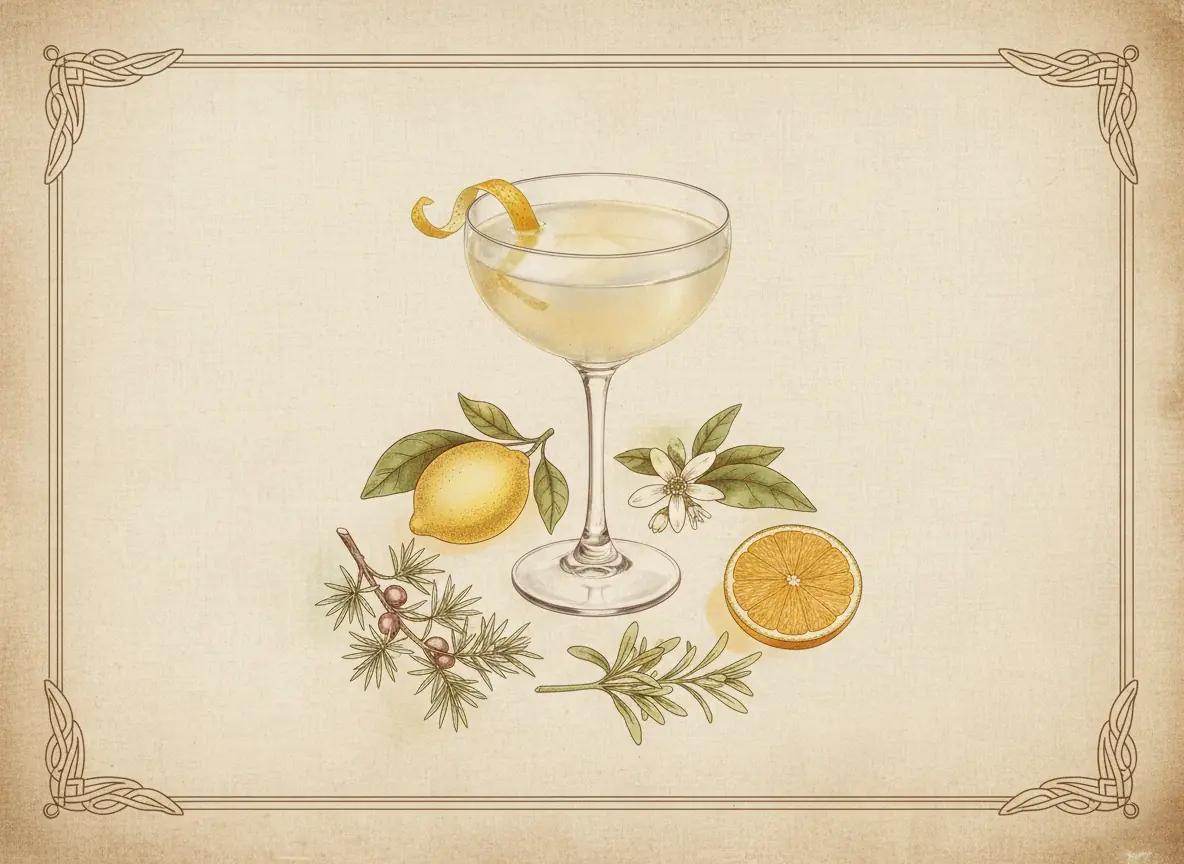
Corpse Reviver No. 2
A Corpse Reviver No. 2 is 30ml each of London Dry gin, Cointreau, Lillet Blanc and fresh lemon juice, shaken hard for 10 to 12 seconds and double strained into a chilled coupe rinsed with absinthe, with lemon peel expressed over the top. About 2.9 UK units. The four measures are the IBA’s. The IBA puts a dash of absinthe in the shaker; we rinse the glass with it, which leaves the scent with less of the anise. Lillet Blanc stands in for the Kina Lillet of older recipes; accounts differ on whether that was a more bitter wine. Harry Craddock printed it in the Savoy Cocktail Book in 1930, beside a No. 1. Under the No. 2 he added a warning: four taken in swift succession would unrevive the corpse again.
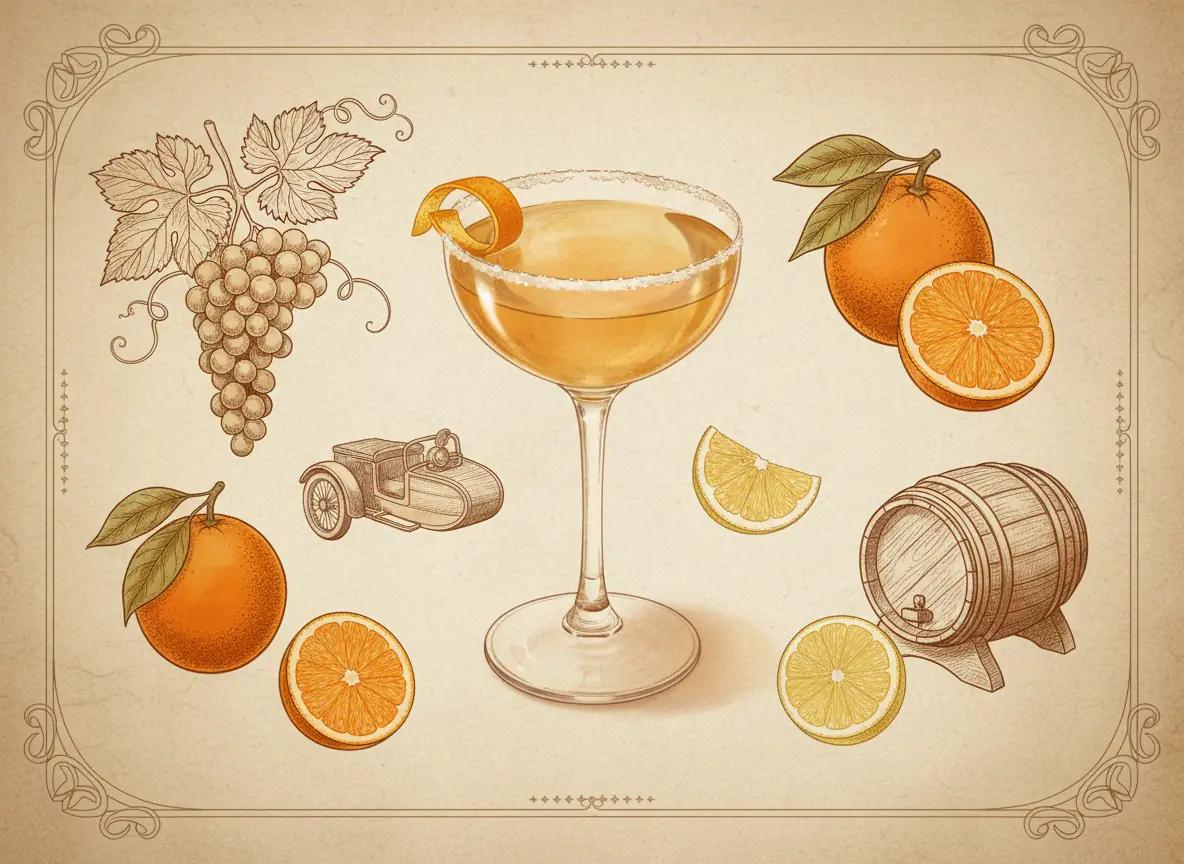
Sidecar
A Sidecar is a cognac sour: 50ml cognac, 20ml Cointreau or another triple sec and 20ml fresh lemon juice, shaken hard and double strained into a chilled coupe under an expressed strip of lemon peel. The IBA gives these measures, which put the cognac at two and a half parts to one each of orange and lemon. The Oxford Companion dates the first printed recipes to 1922, in Robert Vermeire’s Cocktails: How to Mix Them in May and Harry MacElhone’s Harry’s ABC of Mixing Cocktails at the end of the year, both at equal parts by Difford’s Guide. Both named Pat MacGarry of Buck’s Club in London; Difford’s says later editions of MacElhone’s book appear to take the credit for himself. The sugared rim came later: the earliest mention we have read is a 1932 American book, and the Oxford Companion says the drink has often been served with one since the 1930s. Ours has no rim. Each Sidecar carries about 2.8 UK units.
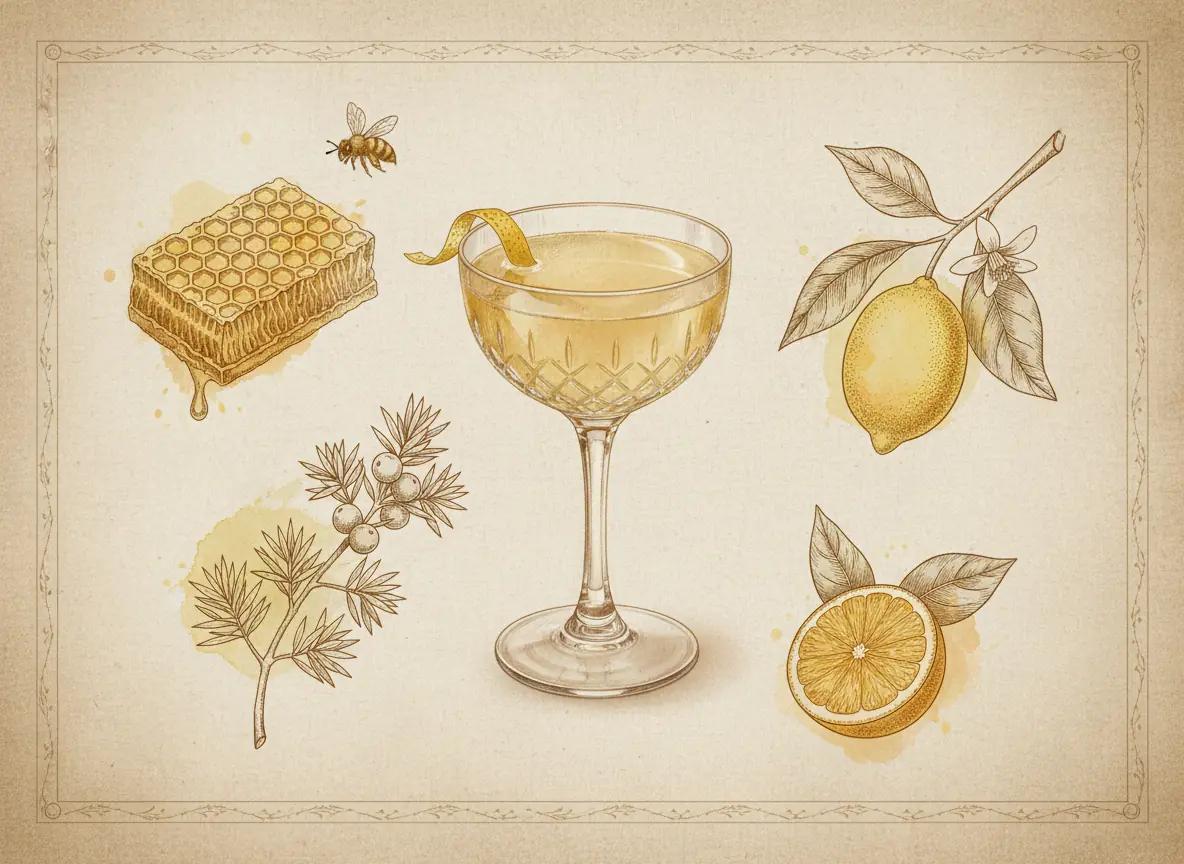
Bee’s Knees
A Bee’s Knees is 52.5ml of London Dry gin, 22.5ml each of fresh lemon and orange juice and two teaspoons (10ml) of honey syrup, made with two parts honey to one of warm water. Shake it hard for 10 to 12 seconds and double strain it into a chilled coupe, with a strip of lemon peel. About 2.1 UK units. The measures are the IBA’s. The orange is the part most recipes leave out. The oldest printings are gin, lemon and honey alone; David Embury suggested a little orange juice as a variation in 1948, and the IBA built it in. Orange softens the lemon, which is why two teaspoons of honey syrup are enough. The drink is often filed under American Prohibition, with honey and lemon covering for bathtub gin. Difford’s Guide, a secondary source, says the earliest printing tells a different story: Cocktails de Paris, published in 1929, credits it to Frank Meier of the Ritz in Paris, and Meier claimed it again in his own book in 1936.
Where this one sits
Recipe by Jerry Can Spirits · Updated 19 October 2026