Martinis
43 recipes, page 1 of 2
This Field Manual holds 43 recipes in the martini family. A martini is a spirit and an aromatised wine, stirred with ice and served without any. Everything else about it is contested.
The ratio moved across a century and never settled. Early specifications were close to equal parts gin and vermouth; the dry martini of the 1950s cut the vermouth to a rinse. Both are on this page. Gin and vodka behave differently in it: gin leaves botanicals to argue with the vermouth, vodka leaves texture and temperature to carry the drink. A dirty martini adds olive brine, which makes it a three-ingredient drink whatever the menu calls it.
Base Spirit
Difficulty Level
Adonis
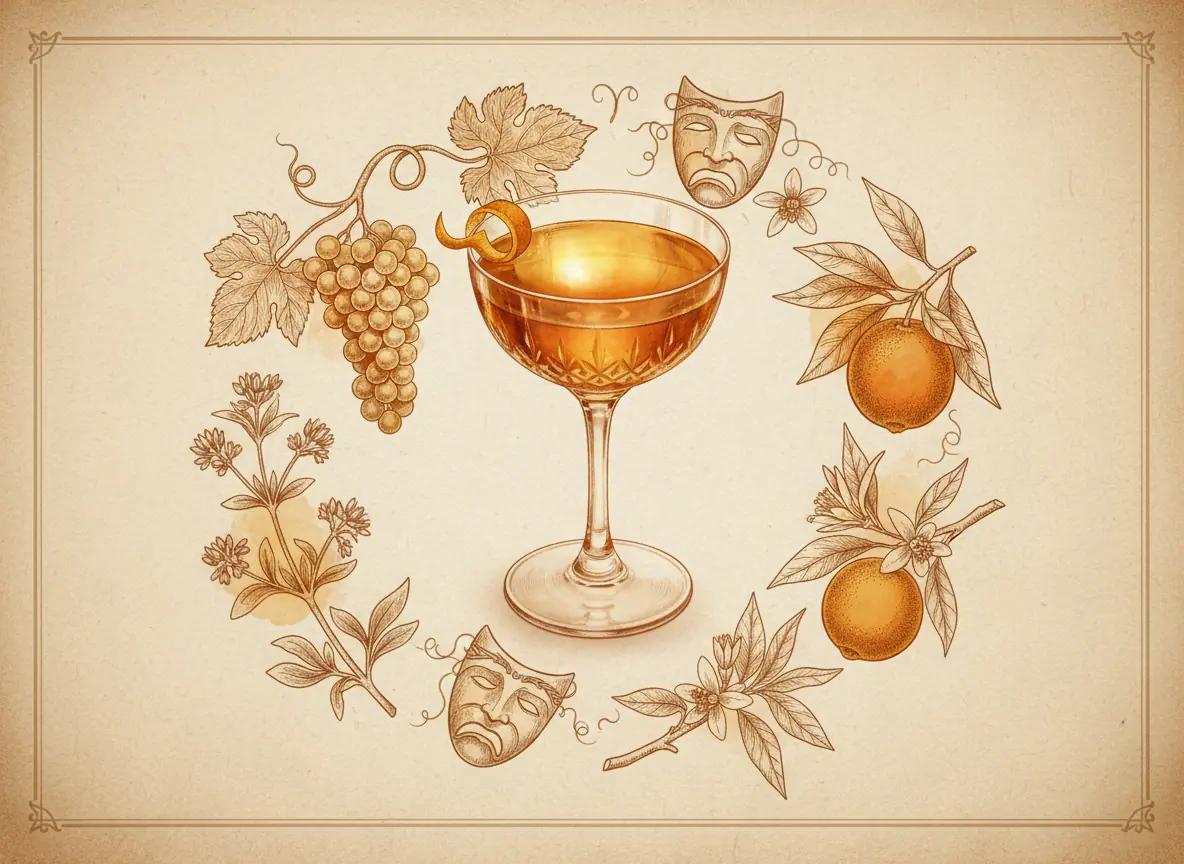
The Adonis was created at the Hoffman House bar in New York in 1884 to celebrate the extraordinary run of the Broadway musical of the same name, which became one of the longest-running shows of the nineteenth century. It is a two-spirit build of dry sherry and sweet vermouth with orange bitters, stirred and served cold, and one of the earliest documented low-ABV cocktails in the American canon. Where its close relative the Bamboo is dry, saline and mineral, the Adonis is softer, rounder and more fruit-forward. The sweet vermouth introduces a warmth and body that dry vermouth does not, and the result sits more comfortably after a meal than before one. The choice between the two is largely a question of when they are being drunk. Fino or manzanilla sherry is the correct call. Its dry, saline character is the counterweight the vermouth's sweetness needs, and an amontillado pushes the drink toward richness at the cost of the delicacy that makes it interesting.
Alaska
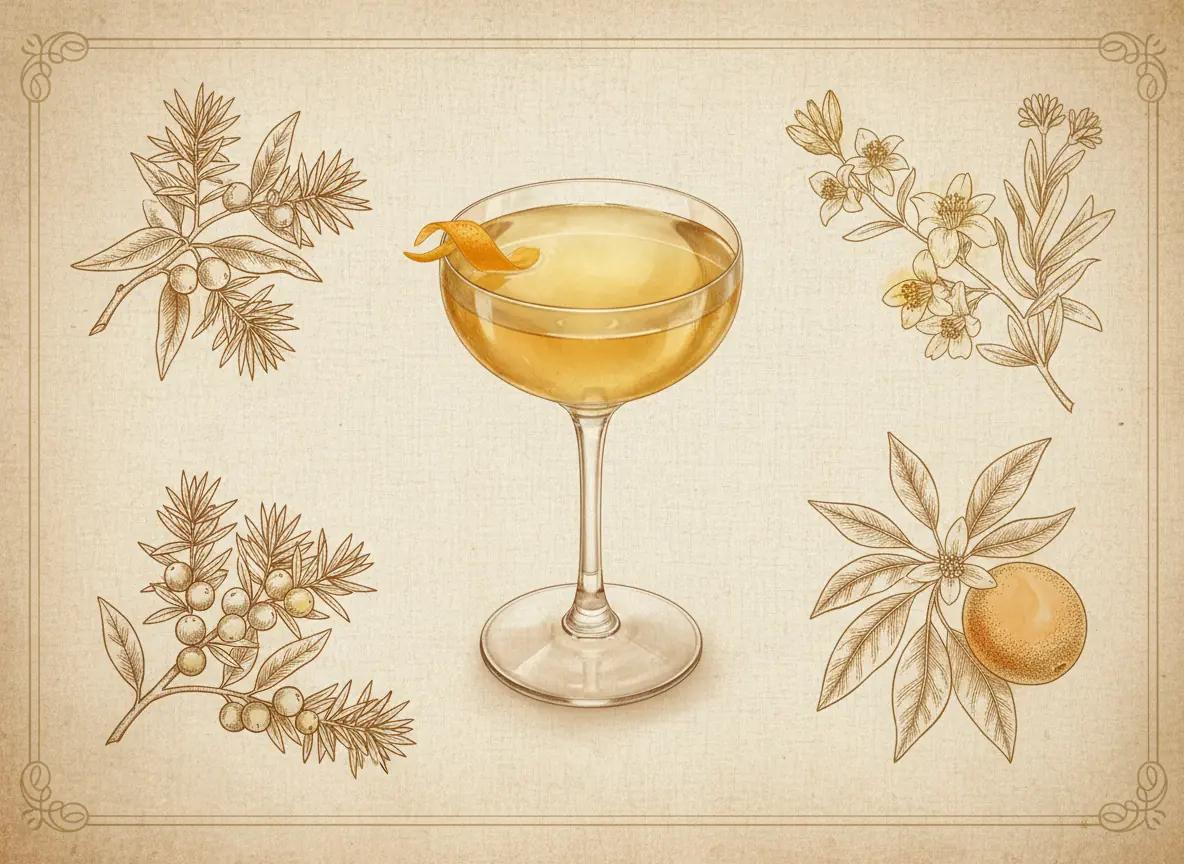
The Alaska is a two-ingredient stirred cocktail of considerable elegance and considerable potency. Gin and yellow Chartreuse in a ratio that has been debated since the drink first appeared in print, with orange bitters to bridge them. That is the entire recipe. What it produces is far greater than the sum of its parts. Yellow Chartreuse is the gentler sibling of the green. Where green Chartreuse is bold, herbal, and assertive at 55% ABV, yellow is softer, sweeter, and more honeyed at 40%, with chamomile and saffron notes that give it a warmth and approachability the green does not always offer. Against a high-juniper London Dry gin the result is simultaneously botanical, sweet, complex, and completely spirit-forward. The Alaska first appeared in Jacques Straub’s 1914 Drinks and was subsequently documented by Hugo Ensslin in his 1916 Recipes for Mixed Drinks. Why it is named Alaska remains genuinely unclear; no convincing origin story has attached itself to the name. What is clear is that the drink itself is precise, demanding, and quietly one of the best things you can make with two bottles.
Alexander
The Alexander is the cream family’s founding document, and it surprises most drinkers: the original is gin. Gin, white crème de cacao and cream in equal thirds, out of the American bars of the 1910s with the contested paternity typical of the period. Troy Alexander at Rector’s is among the claimants and nobody has ever settled it. The brandy version conquered later and took the qualified name with it, which is how the ancestor ended up sounding like a variation on its own child. Equal thirds is the constitution, and juniper against cream is the founding argument: botanical sharpness cutting the dairy where cognac would simply join it. It drinks lighter and stranger than the famous one. Where a Brandy Alexander is plush and unambiguously a pudding, this reads closer to an aperitif in a dessert dress, which is the pair’s whole division of labour and a good reason to keep the older bottle in play.
Angel Face
The Angel Face is the equal-parts gamble of the 1930 Savoy Cocktail Book: gin, apricot brandy and calvados, and nothing else. No citrus, no bitters, no safety net. Its name and its origins beyond Craddock’s pages are lost, which rather suits it, because the drink reads like a dare that happened to work. It works because each part covers another’s exposure. The gin’s juniper dries the apricot’s jam, the calvados brings an orchard depth that gives the juniper somewhere to land, and the apricot sweetens the seam between the two. There is no sour architecture and no long stirring ritual to hide inside, which makes it one of the most honest tests of three bottles there is. It drinks stronger than its charm suggests, all three parts being full strength, and it belongs to the same family as the Last Word: drinks balanced like card houses, standing on nothing but proportion. This one has stood since 1930.
Appletini
The Appletini has a precise birthplace: Lola’s in West Hollywood, 1996, where it debuted as the Adam’s Apple Martini and turned luminous green within a year of conquering Los Angeles. It was the flagship of the flavoured-martini era, the drink of a decade that wanted its cocktails to glow, and it has spent the years since as television shorthand for ordering something unserious. The other view is worth putting. Made properly, the Appletini is a decent sour in a green jacket: sour-apple schnapps carries genuine tartness, a measure of fresh lemon grounds the candy, and cold, exact execution does the rest. It fails when it is all schnapps and no discipline, which is a criticism of bartending rather than of apples. The Lemon Drop and Sex on the Beach sit in the same category. Everybody has met them, the era they defined is back on drinks lists, and the distance between the joke version and the good version is about fifteen minutes of care.
Bamboo
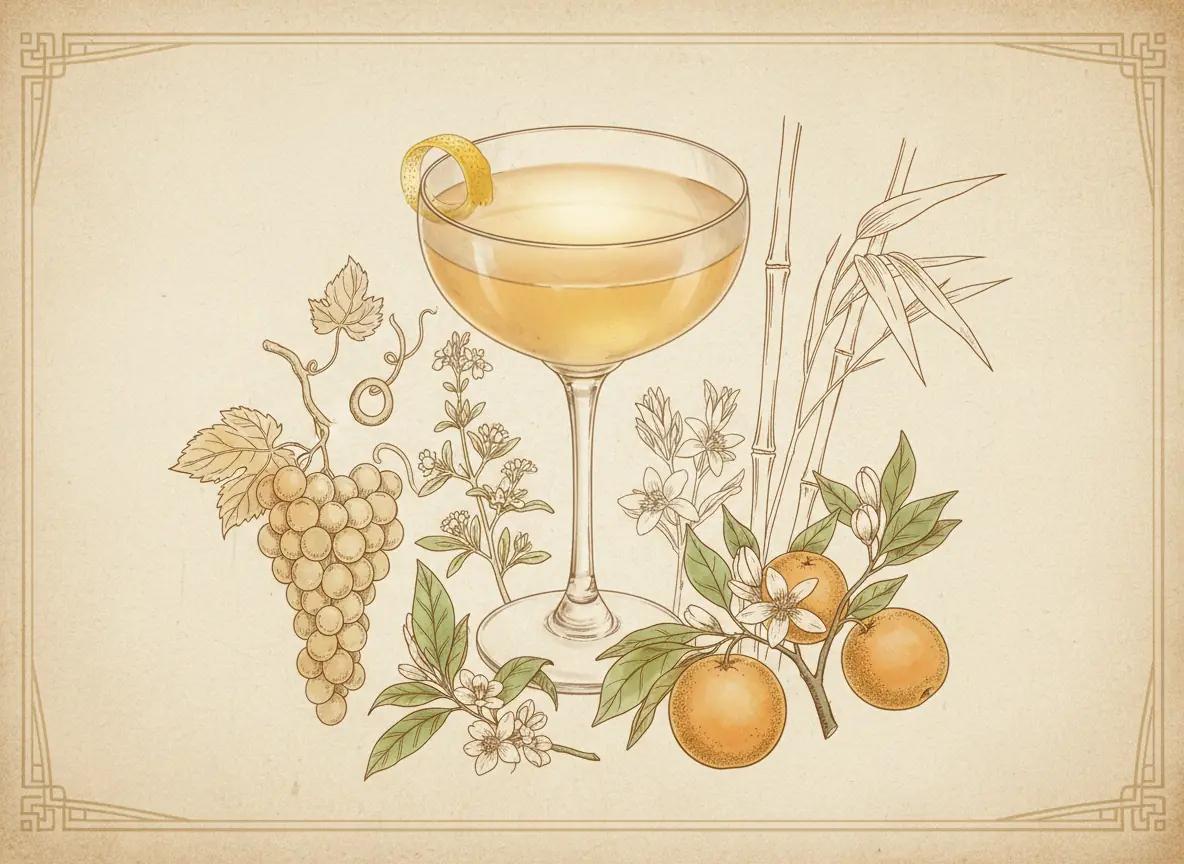
The Bamboo was created by Louis Eppinger at the Grand Hotel in Yokohama around 1890, making it one of the earliest documented low-ABV cocktails and one of the first drinks of note created outside Europe or North America. Eppinger was a German-born bartender who ran the Grand Hotel bar for decades, and the travellers who passed through carried his drinks back with them. The Bamboo was the most enduring of them. Equal parts dry sherry and dry vermouth with orange bitters, stirred and served cold. The format sits in the Martini family, spirit-forward and stirred, but the absence of a distilled base produces something considerably lighter and more delicate than anything built on gin or whiskey. It asks for attention rather than demanding it. Fino or manzanilla performs best: dry, saline and nutty in a way that gives the drink genuine complexity at a fraction of the alcohol. The sherry choice changes the Bamboo more than any other variable in the build.
Bijou
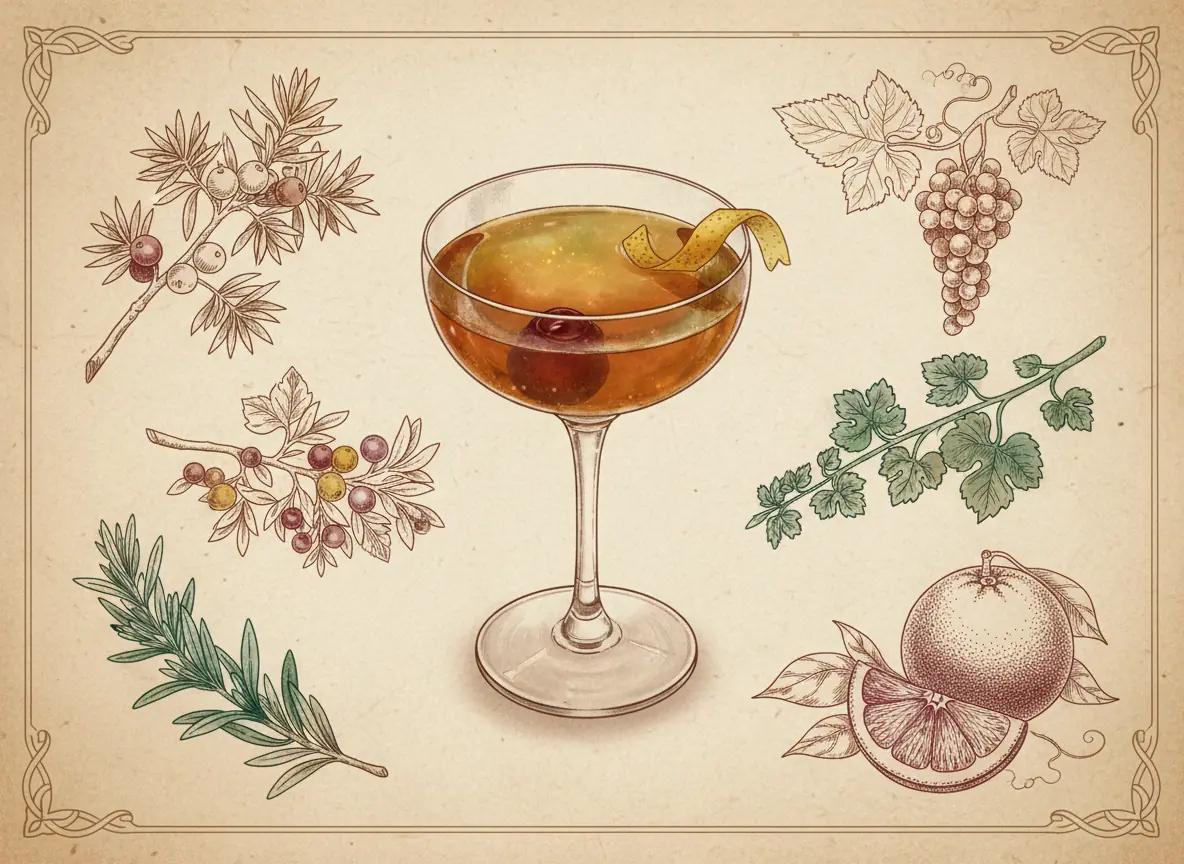
The Bijou was created by Harry Johnson and published in his 1900 Bartenders' Manual, the name taken from the French word for jewel. The three base ingredients each represent a precious stone: gin for diamond, sweet vermouth for ruby, green Chartreuse for emerald. It is one of the most demanding drinks in the classic canon to balance correctly. Green Chartreuse is a 130-botanical French liqueur made by Carthusian monks since 1737, and it does not share space quietly. It brings herbal complexity, sweetness and considerable alcoholic weight to the glass. The gin must be assertive enough to hold its own, the sweet vermouth must be fresh, and the orange bitters tie the three together. The proportions are not equal parts, whatever the jewel conceit suggests: forty millilitres of gin against twenty each of Chartreuse and vermouth is what keeps the drink standing upright rather than collapsing into herbal sweetness. The result is rich, complex and entirely spirit-forward. This is not a drink for the uninitiated and it does not pretend to be.
Bradford
The Bradford is a shaken martini with nineteenth-century paperwork. Harry Johnson's Bartenders' Manual and its contemporaries record the Bradford à la Martini: the same gin, vermouth and orange bitters, given the shaker instead of the mixing glass. That matters because it proves the shaken-versus-stirred argument is older than anybody currently having it. Both camps existed in the 1880s and both had a name for what they were pouring, which is a more civilised arrangement than the modern one, where shaking a martini is generally treated as a mistake rather than a preference. Shaking changes real things. The drink lands colder and slightly more dilute, aerated into a brief cloud with a scatter of ice shards on the surface, brighter and less silky than its stirred twin. The texture fades within a minute, which is why it is served the moment the strainer stops moving, and why its partisans call it livelier while its critics call it bruised.
Brandy Alexander
The Brandy Alexander is equal parts cognac, dark crème de cacao and cream, shaken hard and served up under a heavy grating of nutmeg. It is the definitive dessert cocktail of the twentieth century and it has never seriously been challenged for the title. It is a variation that overtook its parent. The original Alexander is a gin drink with white crème de cacao, and it is genuinely good. Somebody swapped cognac in after the First World War and took the cacao dark at the same time, and the result was so much better suited to the end of a meal that within a few decades the child had taken the family name. Ask for an Alexander in most bars now and you will be handed this. Two darkenings, then: brandy's oak where juniper was, chocolate depth where cocoa butter sat. The equal thirds and the violence of the shake never moved.
Breakfast Martini
The Breakfast Martini began, by its creator’s cheerful account, with a domestic scene: Salvatore Calabrese’s wife insisting he eat something before work, one spoon of orange marmalade, and a bartender’s occupational inability to taste anything without wondering what it would do in a shaker. At the Lanesborough’s Library Bar in 1996 the spoonful went into a gin sour, and the flavoured-martini era gained its most durable London entry. The marmalade is the whole machine. One barspoon sweetens, bitters and textures the drink at once, with Seville peel doing the work of a liqueur and a syrup together, while the triple sec doubles the orange from the brighter side. The result lands silky, bitter-edged and unmistakably British: a sour wearing a dressing gown. It sits beside the White Lady in the long gin-and-orange succession, the golden-age spec and the marmalade one separated by seventy years and a single spoon of preserve, which is a smaller gap than it sounds.
Bronx
The Bronx was once the third cocktail in America, behind only the Martini and the Manhattan in the pre-Prohibition order of things. It is credited to Johnnie Solon of the Waldorf-Astoria bar around 1906, who named it for the zoo after a customer’s crack about the animals people claim to see when they drink. A Perfect Martini with orange juice sounds like vandalism; for two decades it was the height of fashion. The build is exactly that: gin with both vermouths, split sweet and dry, and a short measure of fresh orange juice shaken through. The juice is the ingredient that dates the drink and the ingredient that makes it. Squeezed fresh it brightens the vermouths into something sunlit; from a carton it commits the murder the reputation never recovered from. Prohibition gin and post-war cartons did the damage between them, and the revival has been slow to forgive. Made honestly it is a genuinely lovely thing.
Champs-Élysées
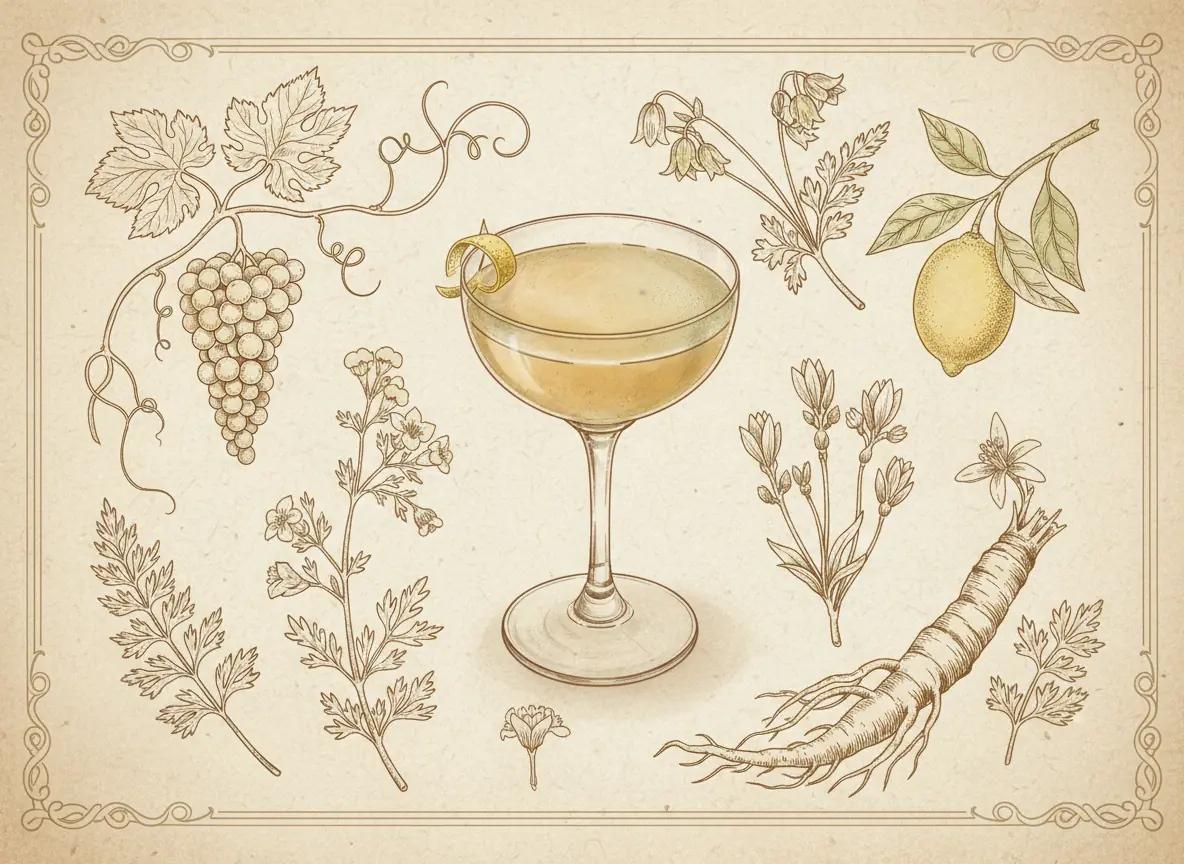
The Champs-Élysées first appeared in print in the 1927 cocktail book Here’s How, attributed to the anonymous “Barflies and Cocktails” collection published in Paris. The name signals its provenance clearly. This is a Parisian drink, built from French ingredients, that wears its origins without apology. At its core it is a Sidecar with green Chartreuse in place of Cointreau. That single substitution changes everything. Where the Sidecar is clean, citrus-forward, and accessible, the Champs-Élysées is herbal, complex, and considerably more demanding. Green Chartreuse is not a passive ingredient: it brings 130 botanicals, 55% ABV, and an intensity that reshapes everything it touches. The result is a drink that is simultaneously bright and deep, tart and herbal, elegant and challenging. It is one of the finest things that brandy, citrus, and Chartreuse have ever produced together, and it remains quietly underappreciated outside serious cocktail circles. That is unlikely to be the experience of anyone who tries it.
Chocolate Martini
The Chocolate Martini is the 1990s in a conical glass: vodka, chocolate liqueur and a measure of single cream shaken cold and finished with dark shavings, dessert and digestif holding one stem. It is a martini by glassware alone, and it has never apologised for that. Its history is told more confidently than it deserves. A popular story has Elizabeth Taylor and Rock Hudson improvising one from vodka and chocolate syrup on the set of Giant in 1955, an anecdote that is charming, unverifiable and repeated in most tellings. What is certain is the real arrival: the flavoured martini wave of the 1980s and 90s, when anything cold in a V-shaped glass could take the name. This one outlived nearly all of its peers because it did a real job. Kept to spec, with a dark liqueur and restraint on the cream, it is a genuine dessert cocktail rather than a novelty: colder than pudding, lighter than cake, and considerably stronger than it admits.
Chrysanthemum
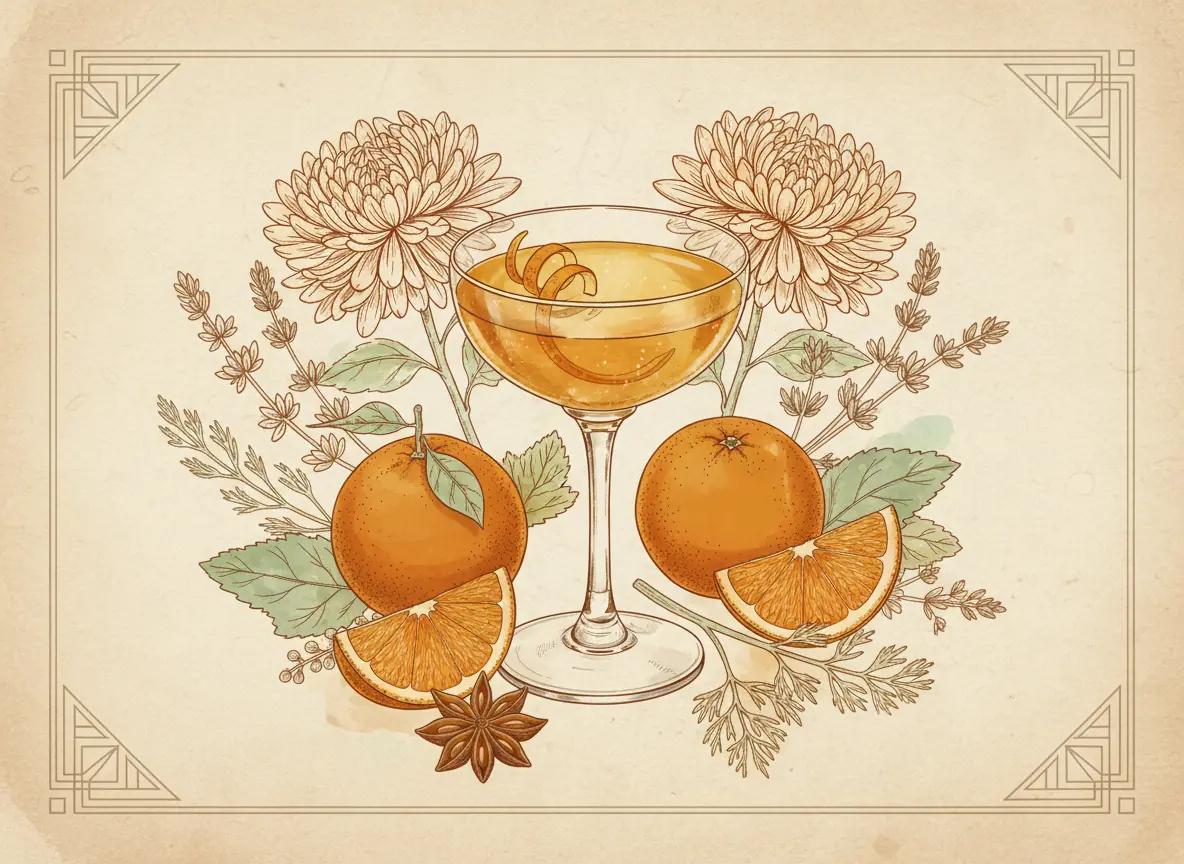
The Chrysanthemum appeared in Hugo Ensslin’s 1916 “Recipes for Mixed Drinks”, one of the last significant American cocktail guides published before Prohibition. A three-ingredient stirred drink built entirely on fortified wine and liqueur, with no distilled spirit base, it sits alongside the Bamboo and the Adonis as one of the earliest documented low-ABV cocktails in the American canon. Dry vermouth leads at double the volume of the Bénédictine, which provides herbal complexity, honey warmth, and mid-palate depth. The absinthe is present as a rinse or a small measured addition, functioning as it does in the Sazerac and the Corpse Reviver No. 2: an aromatic seasoning that changes the drink’s character without being identifiable as a discrete element. The result is delicate and layered, asking for attention rather than demanding it. The freshness of the dry vermouth is the most critical variable: vermouth that has been open at room temperature for months will define the Chrysanthemum entirely and produce a flat, slightly medicinal result that neither the Bénédictine nor the absinthe can rescue. Refrigerate after opening, replace within four weeks, and treat it as the perishable wine-based product it is.
Coronation No.1
The Coronation No.1 is two fortified wines in equal measure, seasoned with a barspoon of maraschino and a couple of dashes of orange bitters. There is no spirit in it at all, which makes it about a third the strength of a Martini and a great deal more useful across a long evening. The name belongs to a family of drinks written for royal occasions, and this one is usually placed at Edward VII's coronation in 1902. The date is traditional rather than documented, but the manners fit: it is restrained, dry and built for repetition rather than effect. The structure is the same one the Bamboo and the Adonis use, aromatised wine talking to fortified wine, with the maraschino as the difference. A very small amount of cherry funk lifts two austere wines into something that reads as an occasion. That is the whole trick, and it is worth a barspoon of anyone's time.
Cosmopolitan
The Cosmopolitan is the most famous cocktail of the 1990s and better than its fame: a pink drink with a sour’s bones, whose modern spec was settled by Toby Cecchini at Manhattan’s Odeon in 1988, upgrading a cruder original with fresh lime and Cointreau. Dale DeGroff polished its profile at the Rainbow Room, a certain television series did the rest, and for a decade no drink on earth was ordered more. Fame obscured the engineering: the Cosmo is a Kamikaze that went to finishing school, citrus vodka and orange liqueur balanced on fresh lime, with just enough cranberry to blush the glass and dry the finish. The juice is a colourist and an acid, not a fruit punch, and the drink properly made is crisp, tart and barely sweet: closer to a White Lady than to its own reputation. The backlash was as fashionable as the drink had been, and equally lazy. Made with fresh lime and a real orange liqueur, served properly cold in a properly chilled glass, the Cosmopolitan remains what it was at the Odeon: a very good sour wearing a very good outfit.
East India No.2
The East India No.2 is fino sherry and dry vermouth in equal measure, bridged by orange bitters with a single dash of Angostura underneath. There is no spirit in it, which puts it at roughly a third of a Martini's strength and makes it a drink you can have more than one of. It is the second of two drinks under the East India name in the Savoy Cocktail Book. The first is a brandy drink built on curaçao and pineapple, a relic of the trade the name refers to. The No.2 shares nothing with it but the flag: it is a fortified-wine aperitif and belongs to a completely different tradition. What it does is strip the Coronation No.1 back. Take the maraschino out of that drink and this is what remains: two pale wines and two kinds of bitters, with nothing sweet to soften the join. Whether that is an improvement depends entirely on how dry you like things.
Espresso Martini
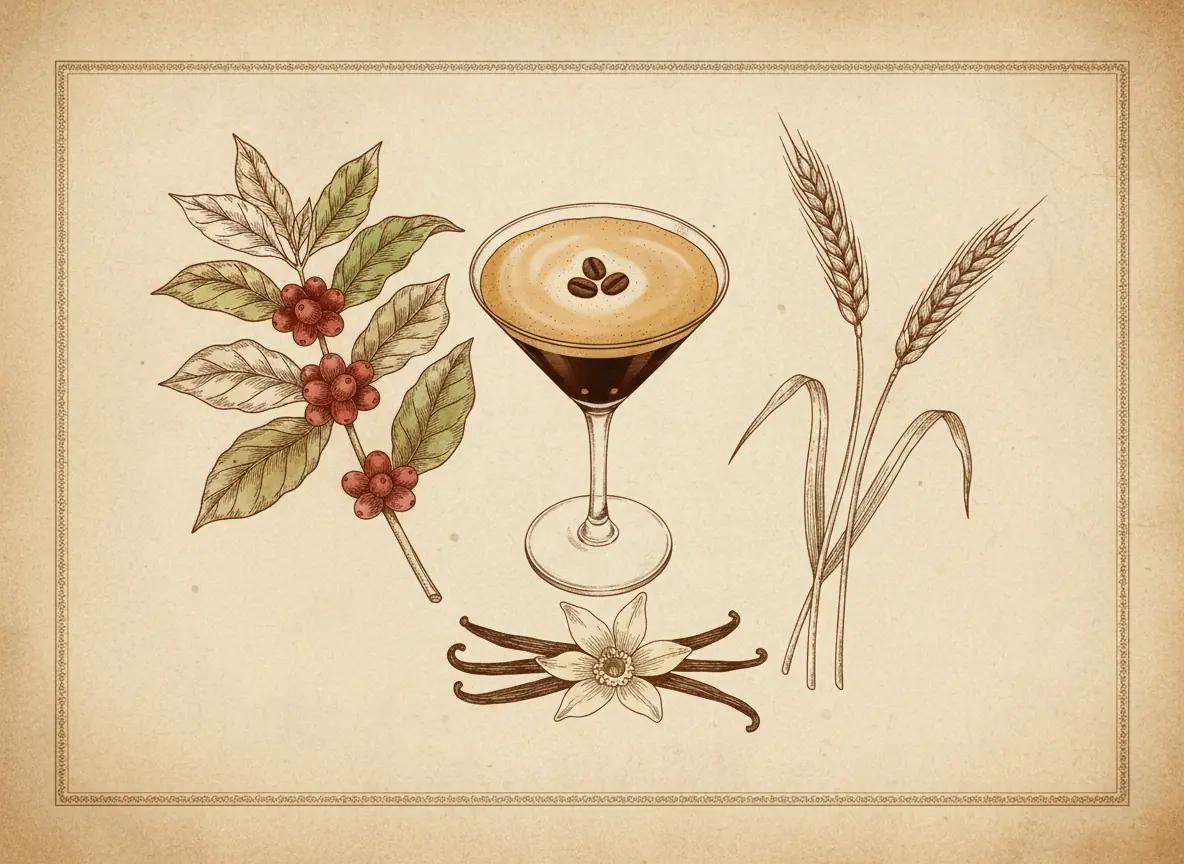
Dick Bradsell created the Espresso Martini in 1983 at the Soho Brasserie in London, reportedly at the request of a young model who asked for something that would "wake me up and then mess me up." The name has stuck despite the drink containing no gin and bearing no relation to a Martini beyond the glass it is served in. Bradsell used what was in front of him: freshly pulled espresso from the machine behind the bar, vodka, and coffee liqueur. The result became one of the most ordered cocktails in the world. The revival it has enjoyed over the last decade is not a surprise. It is a genuinely good drink. Cold, strong, silky, with the kind of foam that holds a garnish for ten minutes and makes every other cocktail look underdressed. The foam is the signature and the technique that produces it is the point of difference between an Espresso Martini and a good Espresso Martini. Use freshly pulled espresso. Not cold brew. Not instant. Not yesterday's coffee. The crema from a fresh shot is what produces the foam. Without it the drink is flat in every sense of the word.
Ford Cocktail
The Ford is the 1890s martini at its most courteous: Old Tom gin and dry vermouth at equal strength, seasoned with a barspoon of Bénédictine and orange bitters, from George Kappeler’s 1895 Modern American Drinks. It is the gin drink the Gilded Age actually poured while history was busy mythologising the dry martini. Equal parts is the era’s signature and the drink’s character. The Old Tom’s gentle sweetness meets the vermouth’s herbs at eye level, the Bénédictine threads honeyed spice through the seam, and the orange bitters brighten the whole thing in the period manner. Nothing dominates and everything converses. The revival rediscovered it when Old Tom returned to production, and it has become the standard demonstration of what the sweetened gin style was actually for: not a curiosity but a different and gentler martini tradition, one that the twentieth century’s long march toward dryness simply steamrolled on its way past.
French Martini
The French Martini is a New York drink with a French accent: it emerged in the late 1980s from Keith McNally’s downtown restaurants, Balthazar’s bar making it famous, and it led the charge of the flavoured-martini era with more dignity than most of its followers. Vodka, Chambord and pineapple juice: three ingredients, no citrus, and a drink that behaves like dessert while drinking like a cocktail. The trick is the pineapple. Shaken hard, fresh pineapple juice throws the silky white foam that crowns the drink, the same protein magic the Jungle Bird relies on, and under it the Chambord’s black raspberry velvet does the sweetening with royal manners. No citrus is needed because pineapple carries its own acidity: the drink balances on fruit alone. It survived the martini-glass era it helped create because the formula was always sound: rich but not cloying, glamorous but three ingredients deep. Shaken properly cold, foam intact, it remains the best argument the flavoured-martini decade ever made.
Gibson
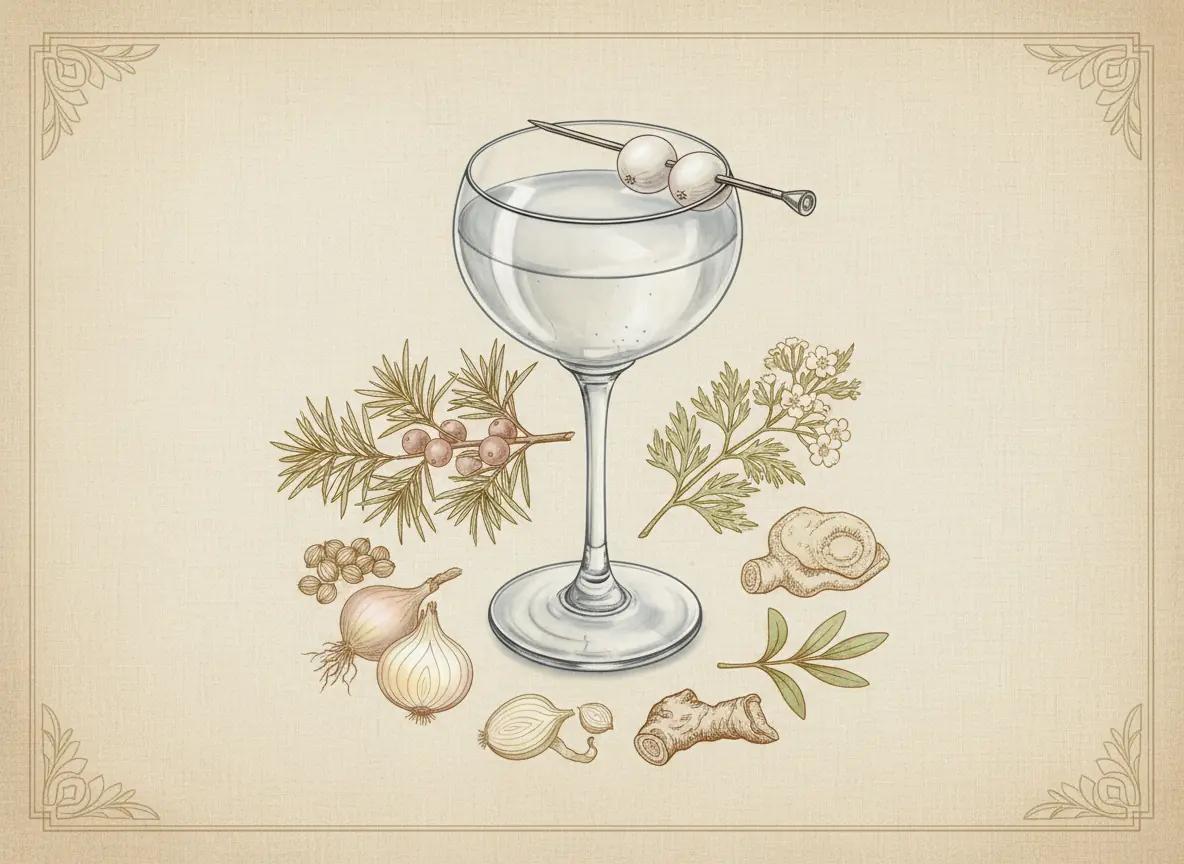
The Gibson is a Martini with one substitution: a cocktail onion in place of the lemon twist or olive. That substitution is the entire definition of the drink, and the source of a reasonable debate about whether a garnish change can constitute a distinct cocktail. It can. The pickled onion is not decoration: it introduces brine, acidity and a faint sweetness from the pickling liquor as it sits. The origin is disputed. The most cited account attributes it to a San Francisco businessman named Walter D.K. Gibson, who either requested the onion as a personal preference or used it to identify his glass at parties where he drank water rather than gin. Neither version is verifiable. The build is identical to the Martini in every respect except the garnish. The onion should be a quality pickled pearl onion with genuine brine character, because a cheap one introduces a synthetic note the gin and vermouth cannot absorb.
Gin & It
The Gin & It is the martini’s English aunt: gin and Italian sweet vermouth, the It of the name, poured together with ceremony and, in the classic London reading, no ice at all. It ruled the West End’s theatre bars and hotel lounges through the first half of the twentieth century, ordered as gin-and-Italian by drinkers who considered American ice an affectation. It is the sweet martini at its most relaxed. Where a Martinez dresses the same pairing with maraschino and a Hanky Panky with fernet, the Gin & It simply lets gin and red vermouth talk to each other, and the room-temperature tradition rewards trying once: the botanicals of both bottles arrive noticeably louder unchilled. The modern serve stirs it cold and settles toward two to one, and both readings are given here. Either way it is the fastest sweet martini in the canon and the best use of an open vermouth this side of a Negroni.
Golden Cadillac
The Golden Cadillac is a Grasshopper with Galliano where the crème de menthe should be, and the swap turns a cold after-dinner mint into something closer to crème brûlée. Galliano's vanilla and soft anise sit against white crème de cacao and cream in equal thirds, and the drink comes out gold, thick and unapologetically a dessert. Its origin is unusually well documented for a drink of this kind. It was made in 1952 at Poor Red's, a barbecue roadhouse in El Dorado, California, for a couple who had just bought a gold Cadillac. The bar kept making them, and kept making them, and ended up one of the largest single accounts for Galliano anywhere in the world. That is the whole appeal. It is not a subtle drink and it was never trying to be. It is a small-town bar's celebration cocktail that outlived the celebration by seventy years and is still being shaken in the same room.
Grasshopper
The Grasshopper is New Orleans’ green dessert: born by the standard account at Tujague’s in the French Quarter around 1918, second prize in a New York competition and first prize in posterity. Green crème de menthe and white crème de cacao share cream in equal thirds, the colour named it, the South adopted it, and the 1950s supper clubs canonised it. The build is the Alexander constitution in mint dress, with one significant difference: the two liqueurs take the base spirit’s place between them, so there is no spirit anywhere in the glass at all. It is the family’s first all-liqueur member, and gentle by construction rather than by any act of restraint. Green crème de menthe is constitutional here, which makes this the one drink where the usual preference for the white bottle inverts. The colour is the name, and any other combination of the two bottles muddies the grasshopper into a khaki brown.