Gin Blossom
A Gin Blossom is 45ml of gin, 45ml of bianco vermouth, 22.5ml of apricot eau-de-vie, with 2 dashes of orange bitters. Stir until very cold, strain into a coupe and express an orange peel over the top. About 3.4 UK units, taking the gin and the eau-de-vie as 40% ABV and the vermouth as 16%. Punch credits it to Julie Reiner of Brooklyn’s Clover Club and describes it as a modern play on the Martini. Bianco vermouth stands in for dry, and the apricot adds fruit. Vermouth matches the gin in volume, and the apricot spirit is the smaller third. Three clear liquids, stirred cold, with nothing else in the glass.
Glassware: Coupe Glass
Garnish: Orange peel expressed over the surface
Ingredients
45ml
Punch suggests Plymouth. A softer gin lets the apricot and vermouth through, where a hard juniper gin competes with them.
45ml
A white aromatised wine at a working 16% ABV. Punch suggests Martini & Rossi bianco, with Contratto Bianco for a drier, more bitter drink. Keep the bottle in the fridge once opened.
22.5ml
A fruit spirit distilled from apricots, 37.5% ABV at the legal minimum and counted at 40% here. It is not apricot brandy, which is a sweetened liqueur, so do not swap one for the other without cutting the measure.
Instructions
Chill a coupe.
Pour the gin, bianco vermouth, eau-de-vie and bitters into a mixing glass, then add ice.
Stir for a full 30 seconds.
Strain into the cold coupe.
Express an orange peel across the surface. It is the only garnish.
Source: its creator's published specification (Julie Reiner, published at Punch (punchdrink.com/recipes/gin-blossom/), which names her as creator; measures, method and garnish as printed there (1 1/2oz gin, 1 1/2oz bianco vermouth, 3/4oz apricot eau de vie, 2 dashes orange bitters)). Last checked 1 November 2026.
Expert Tip
Open the bianco fresh and keep it in the fridge. It is a wine, and a bottle that has sat out for weeks gives the drink a flat, sherry-like note. Measure the eau-de-vie exactly. At 22.5ml it is a fifth of the glass, and the apricot should read as a note, not the main flavour. Stir to the full 30 seconds. With three clear ingredients there is nothing to hide a drink that is still warm.
Behind the Gin Blossom
Flavour Profile
Julie Reiner’s Martini
Punch presents the Gin Blossom as Julie Reiner’s modern play on the Martini. Reiner is the Clover Club bartender in Brooklyn. Punch gives no date for the drink, so none is claimed here.
Three flavours, one measure each
Punch describes the pairing as the fruit of apricot, the floral and vanilla notes of a bianco vermouth such as Martini Bianco, and the herbal side of the gin. Each gets close to the same volume, which is why none can be pushed aside. The gin and vermouth match at 45ml, and the eau-de-vie takes the remaining 22.5ml.
Eau-de-vie, not liqueur
An eau-de-vie is a clear spirit distilled from fermented fruit and bottled without sugar. That is the specification here. A sweetened apricot brandy, listed on our ingredient page as a 25% ABV liqueur, sweetens the drink and softens the dryness the vermouth and gin build.
Choosing the vermouth and the gin
Punch suggests Plymouth for the gin and Martini & Rossi for the bianco. For a drier, slightly more bitter version Reiner points to Contratto Bianco, which Punch calls a spicy, bitter orange-tinged bianco from Turin. Plymouth gin is the named choice; a sharper London dry works but tightens the drink. Our vermouth explained guide sets out the styles.
The Gin Blossom beside other gin and vermouth drinks
Gin Blossom
- Gin
- 45ml
- Vermouth
- 45ml bianco
- Extra
- 22.5ml apricot eau-de-vie
- Bitters
- 2 dashes orange
Martini
- Gin
- 60ml
- Vermouth
- 10ml dry
- Extra
- None
- Bitters
- None listed
Gin and It
- Gin
- 50ml
- Vermouth
- 25ml sweet
- Extra
- None
- Bitters
- None listed
Martinez
- Gin
- 45ml
- Vermouth
- 45ml sweet
- Extra
- 5ml maraschino
- Bitters
- 2 dashes orange
| Drink | Gin | Vermouth | Extra | Bitters |
|---|---|---|---|---|
| Gin Blossom | 45ml | 45ml bianco | 22.5ml apricot eau-de-vie | 2 dashes orange |
| Martini | 60ml | 10ml dry | None | None listed |
| Gin and It | 50ml | 25ml sweet | None | None listed |
| Martinez | 45ml | 45ml sweet | 5ml maraschino | 2 dashes orange |
Make it at home
The Spirit
GinGin is a spirit flavoured with juniper berries. Under the retained Regulation (EC) 110/2008, juniper must lead the taste, the floor is 37.5% ABV, and the route the flavour takes sets the grade: plain gin, distilled gin or London gin. Our recipes count it at 40%, and it carries the Martini, the Negroni and the Gin and Tonic.
More to explore
Frequently Asked Questions
Who created the Gin Blossom?
What is bianco vermouth?
What is apricot eau-de-vie?
Can I use apricot brandy liqueur instead?
How strong is a Gin Blossom?
Is the Gin Blossom a Martini?
Sources.
Correct as of 1 November 2026.
- Punch, “Gin Blossom” (recipe and credit: Julie Reiner of Clover Club, Brooklyn; gin such as Plymouth, bianco vermouth such as Martini & Rossi, apricot eau de vie, orange bitters, stirred, coupe, expressed orange peel; Contratto Bianco suggested for a drier version).
- NHS, “Calculating alcohol units” (the 14-units-a-week guidance and the units calculation).
You Might Also Like
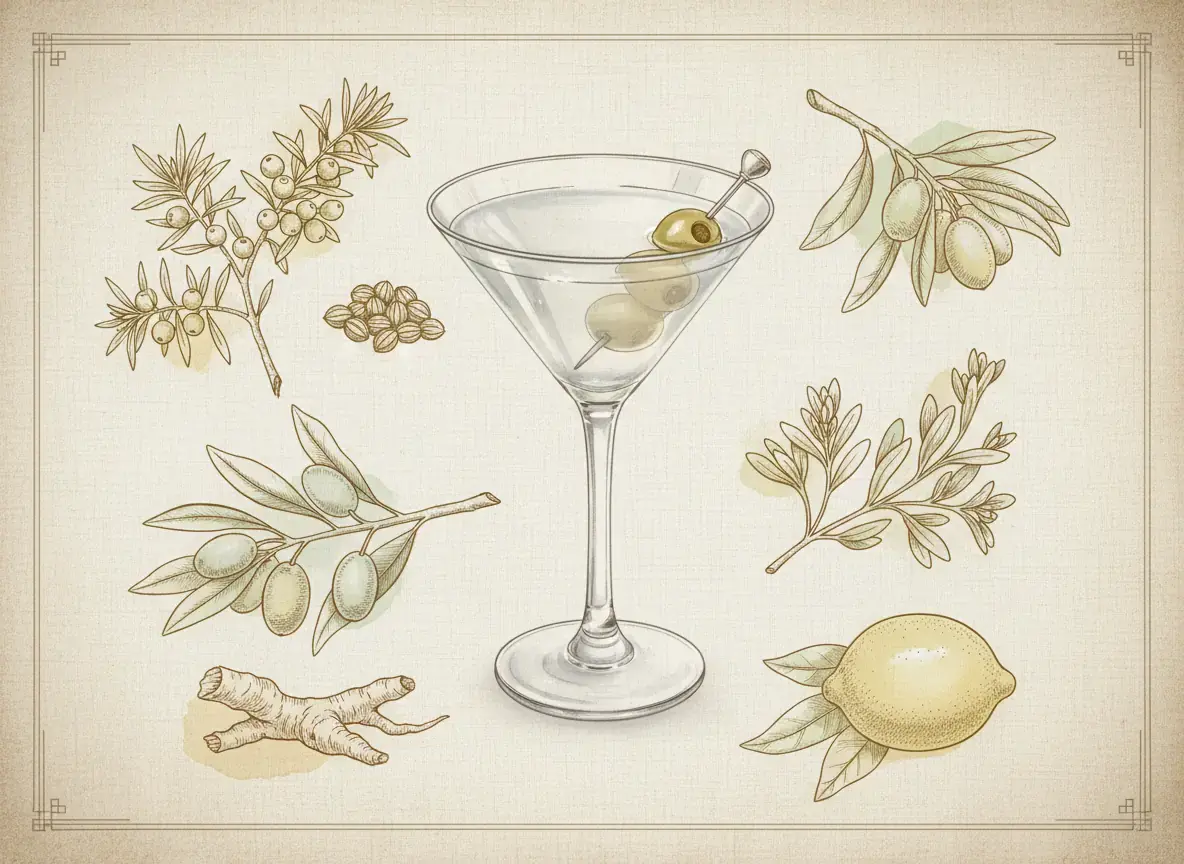
Martini
A Martini is 60ml of gin and 10ml of dry vermouth, stirred over ice for 20 to 30 seconds and strained into a chilled Martini glass, with oil from a strip of lemon peel expressed over the top, or green olives if you prefer them. That is the IBA’s Dry Martini, a six-to-one build, and about 2.6 UK units. At six to one the vermouth stops being a partner and becomes a seasoning: a dry wine note and a rounder finish under the juniper. Older recipes were far wetter, and the drink has been poured at every ratio from equal parts to a bare rinse. Nothing in a Martini is sweet or sour: it is gin, vermouth, cold and water. The stir supplies the last two, so it shapes the result as surely as the gin.
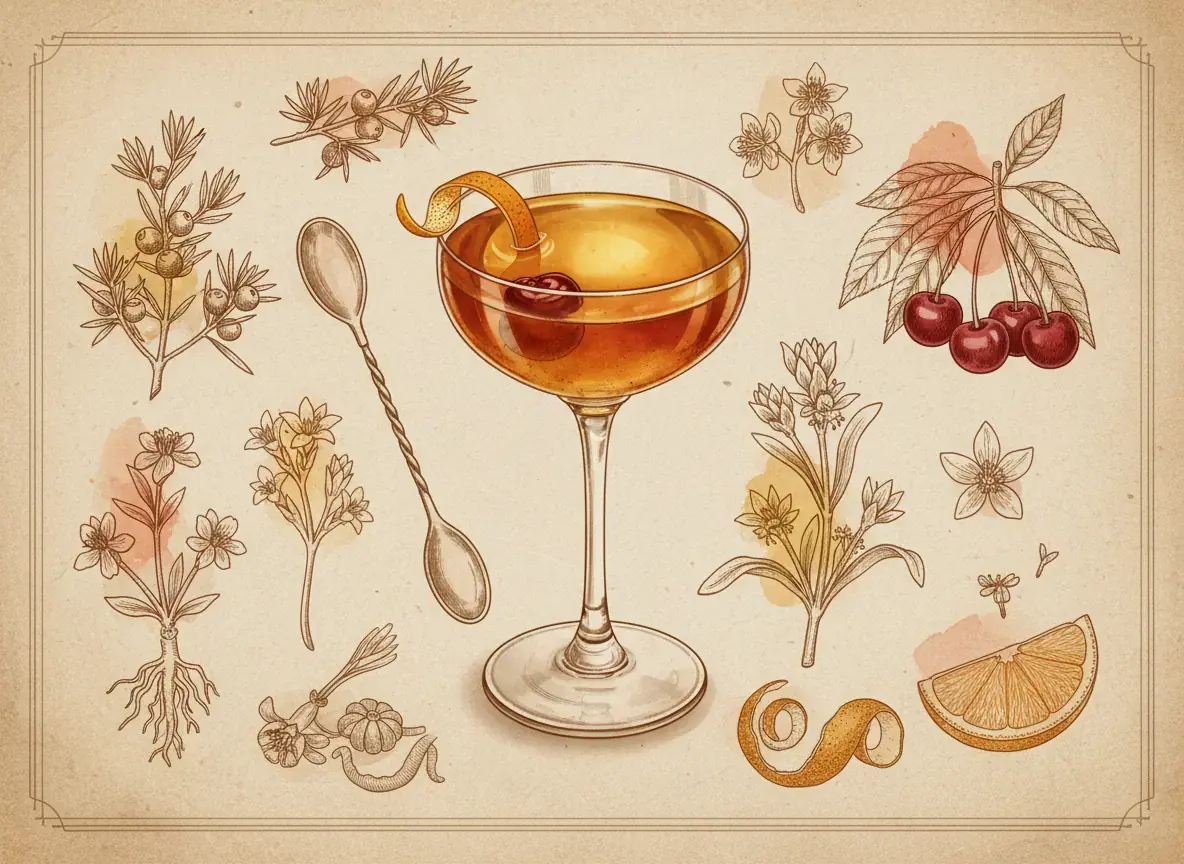
Martinez
A Martinez is 45ml London Dry gin and 45ml sweet vermouth with a bar spoon (5ml) of maraschino and two dashes of orange bitters, stirred with ice for 20 to 30 seconds and poured into a cold coupe under a twist of lemon peel. About 2.7 UK units. The measures follow the IBA. It is usually named as the Martini’s forerunner, and Punch says historians squabble over where it came from. O. H. Byron’s guide of 1884, in the Internet Archive’s scan, lists a Martinez as “Same as Manhattan, only you substitute gin for whisky”; Jerry Thomas’s Bar-Tender’s Guide of 1887, in the Internet Archive’s scan, gives a full recipe on Old Tom gin, with more vermouth than gin, maraschino and Boker’s bitters. Equal parts on London Dry makes a drier, sharper drink than those early versions. Old Tom gin, a shorter vermouth measure and Angostura make the softer, sweeter variation.
Gin & It
A Gin & It is 50ml London Dry gin and 25ml Italian sweet vermouth, stirred over ice for 20 to 30 seconds and strained into a chilled coupe, with an orange slice. It is a sweet Martini: two parts gin to one of red vermouth, about 2.4 UK units. The It is short for Italian. Difford’s Guide, a secondary source, quotes Dale DeGroff that the pairing was poured in Manhattan bars of the 1880s and 1890s as a sweet Martini. Under Prohibition it reached London as Gin and Italian and became a pub staple, and Difford’s dates the short name in print to 1936, in Frank Meier’s The Artistry of Mixing Drinks. Frank Meier’s 1936 recipe, as Difford’s Guide prints it, pours equal parts gin and Italian vermouth and says it should not be iced, and that version is worth tasting once. With one part in three vermouth, open a fresh bottle and keep it in the fridge.
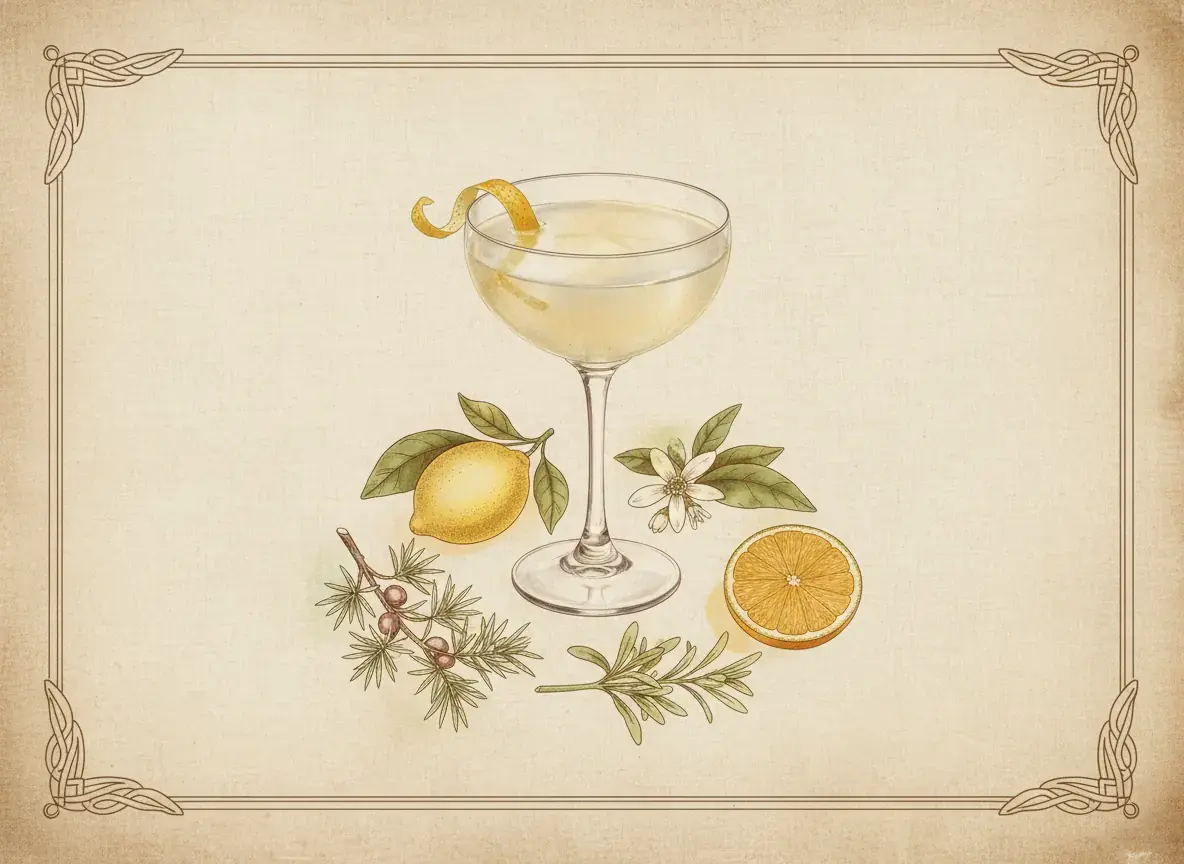
Corpse Reviver No. 2
A Corpse Reviver No. 2 is 30ml each of London Dry gin, Cointreau, Lillet Blanc and fresh lemon juice, shaken hard for 10 to 12 seconds and double strained into a chilled coupe rinsed with absinthe, with lemon peel expressed over the top. About 2.9 UK units. The four measures are the IBA’s. The IBA puts a dash of absinthe in the shaker; we rinse the glass with it, which leaves the scent with less of the anise. Lillet Blanc stands in for the Kina Lillet of older recipes; accounts differ on whether that was a more bitter wine. Harry Craddock printed it in the Savoy Cocktail Book in 1930, beside a No. 1. Under the No. 2 he added a warning: four taken in swift succession would unrevive the corpse again.
Where this one sits
Recipe by Jerry Can Spirits · Updated 1 November 2026