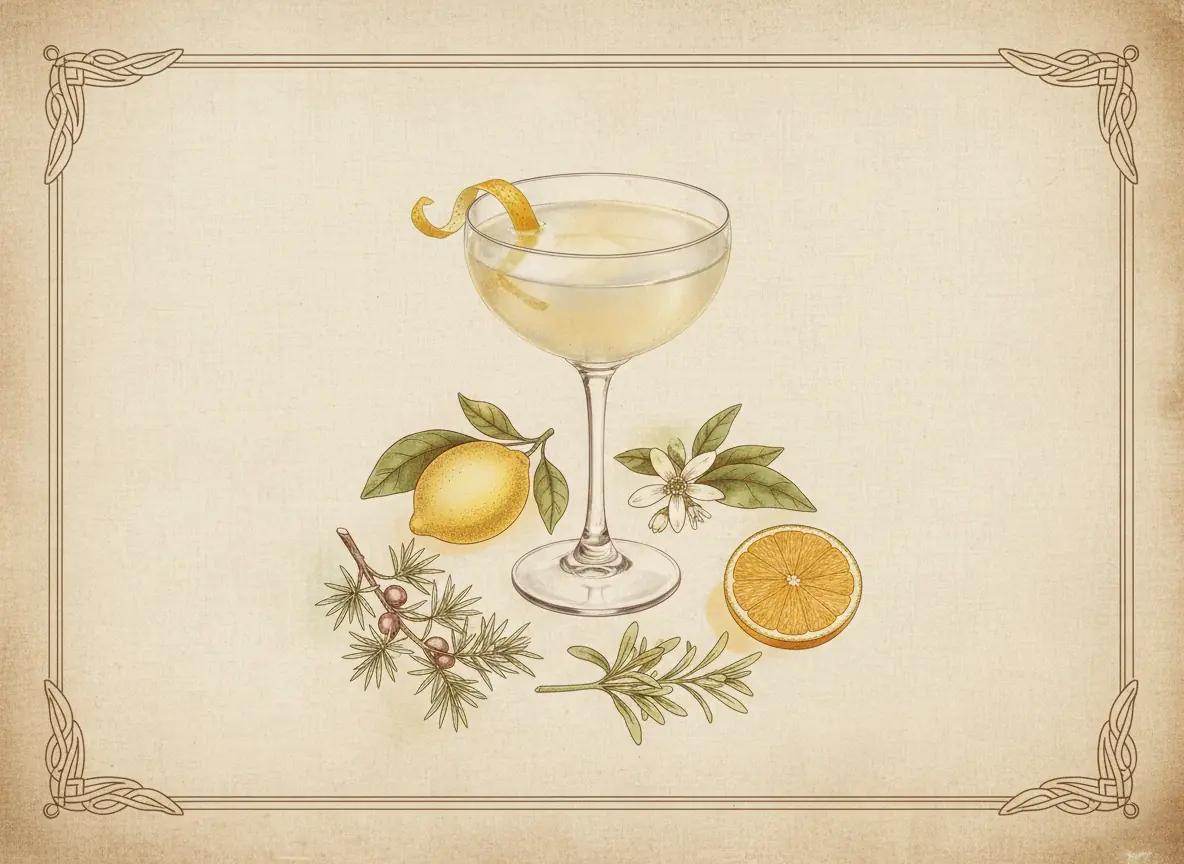
Corpse Reviver No. 2
A Corpse Reviver No. 2 is 30ml each of London Dry gin, Cointreau, Lillet Blanc and fresh lemon juice, shaken hard for 10 to 12 seconds and double strained into a chilled coupe rinsed with absinthe, with lemon peel expressed over the top. About 2.9 UK units. The four measures are the IBA’s. The IBA puts a dash of absinthe in the shaker; we rinse the glass with it, which leaves the scent with less of the anise. Lillet Blanc stands in for the Kina Lillet of older recipes; accounts differ on whether that was a more bitter wine. Harry Craddock printed it in the Savoy Cocktail Book in 1930, beside a No. 1. Under the No. 2 he added a warning: four taken in swift succession would unrevive the corpse again.
Glassware: Coupe Glass
Garnish: Lemon peel expressed over the drink and rested on the rim
Ingredients
30ml
A London Dry at 40% ABV. Its juniper keeps the drink dry against the Cointreau and the wine.
30ml
At 40% ABV, it brings orange and most of the sugar. A cheaper triple sec tastes sweeter and thinner at a quarter of the drink.
30ml
A Bordeaux aromatised wine at 17% ABV, the figure on Pernod Ricard’s product page. We keep an open bottle in the fridge and use it within the first month. Cocchi Americano, which Punch’s recipe gives as the alternative to Lillet, makes a more bitter drink in our experience.
1 barspoon, for the rinse
Swirled round the chilled glass and poured away. The IBA shakes a dash into the drink; a rinse gives the scent with less anise.
Instructions
Chill a coupe in the freezer and squeeze the lemon juice the same day.
Pour a barspoon of absinthe into the coupe, turn it to coat the inside and pour out the rest.
Add the gin, Cointreau, Lillet Blanc and lemon juice to a shaker.
Fill with cubed ice and shake hard for 10 to 12 seconds.
Double strain into the rinsed coupe.
Express a strip of lemon peel over the drink and rest it on the rim.
Source: the IBA (Official IBA specification for the four measures; absinthe as a glass rinse and lemon peel garnish are ours). Last checked 10 October 2026.
Expert Tip
Rinse, then pour it out. A barspoon of absinthe in the chilled coupe, turned until it coats the whole bowl, then tipped away. The film left behind scents every sip. A pool left in the bottom makes the last mouthful taste of anise and nothing else. Keep the Lillet in the fridge. It is a wine, and in our experience it fades within about a month once open. At a quarter of the drink, a tired bottle dulls everything. Measure all four. With equal parts nothing leads, so an extra splash of lemon or Cointreau tips the balance. Use a jigger, not an eye.
Behind the Corpse Reviver No. 2
Flavour Profile
The Savoy, 1930
Harry Craddock printed the Corpse Reviver No. 2 in the Savoy Cocktail Book in 1930, alongside a No. 1, and Difford’s Guide quotes the line under the No. 2: “four of these taken in swift succession will unrevive the corpse again.”
Craddock, whom the Oxford Companion says the Savoy installed at the helm of its American Bar in 1925, published his revivers in the Savoy Cocktail Book five years later. The name was older than his book: the Companion says a corpse reviver appears to have been served at an American-style bar in Piccadilly in the late 1850s, and the Gentleman’s Table Guide of 1871 lists one of brandy, maraschino and Boker’s bitters, so the phrase had been attached to more than one recipe before his.
Four Equal Parts
Underneath, it is a sour: spirit, citrus and sweetness. The sweetness comes in two forms. Cointreau brings sugar and orange; Lillet Blanc brings a lighter sweetness with wine and a trace of quinine. Together they let the lemon run at a full quarter of the drink without turning it sharp.
The gin is the backbone. Thirty millilitres is a modest measure of spirit for a shaken drink, which is why it drinks light, and why the absinthe on the glass carries so far.
Kina Lillet and What Replaced It
Older recipes call for Kina Lillet, a Bordeaux aromatised wine with a marked quinine bite. In 1986 the house reformulated it and sold it as Lillet Blanc, the bottle on the shelf now and the IBA’s choice. Accounts differ on whether the quinine was reduced: Difford’s Guide says it was cut sharply, DrinkBoy says the level never changed.
Cocchi Americano, from Piedmont, lists cinchona bark among its ingredients on Cocchi’s own page, and CLASS calls Lillet Blanc or Cocchi Americano both more than acceptable substitutes for the vanished Kina Lillet. In our experience it carries more quinine and makes a drier, more bitter drink. Both are right; they make different drinks.
Our Build Against the IBA’s
The IBA’s Corpse Reviver No. 2 beside ours
Gin
- IBA
- 30ml
- Ours
- 30ml London Dry
Cointreau
- IBA
- 30ml
- Ours
- 30ml
Lillet Blanc
- IBA
- 30ml
- Ours
- 30ml
Lemon juice
- IBA
- 30ml fresh
- Ours
- 30ml, squeezed the same day
Absinthe
- IBA
- A dash, in the shaker
- Ours
- A rinse of the glass, poured away
Glass
- IBA
- A chilled cocktail glass
- Ours
- A chilled coupe
Garnish
- IBA
- Orange zest
- Ours
- Lemon peel, expressed
UK units
- IBA
- About 2.9
- Ours
- About 2.9
| Element | IBA | Ours |
|---|---|---|
| Gin | 30ml | 30ml London Dry |
| Cointreau | 30ml | 30ml |
| Lillet Blanc | 30ml | 30ml |
| Lemon juice | 30ml fresh | 30ml, squeezed the same day |
| Absinthe | A dash, in the shaker | A rinse of the glass, poured away |
| Glass | A chilled cocktail glass | A chilled coupe |
| Garnish | Orange zest | Lemon peel, expressed |
| UK units | About 2.9 | About 2.9 |
How to Serve It
Cold and up, in the rinsed coupe with the lemon peel on the rim, before a meal. At about 2.9 units it drinks lighter than it is, which is the point of Craddock’s warning.
For the brandy and Calvados sibling, make a Corpse Reviver No. 1; for gin, Cointreau and lemon without the wine, a White Lady; for another equal-parts drink, a Last Word.
Make it at home
The Spirit
GinGin is a spirit flavoured with juniper berries. Under the retained Regulation (EC) 110/2008, juniper must lead the taste, the floor is 37.5% ABV, and the route the flavour takes sets the grade: plain gin, distilled gin or London gin. Our recipes count it at 40%, and it carries the Martini, the Negroni and the Gin and Tonic.
More to explore
Frequently Asked Questions
What is in a Corpse Reviver No. 2?
Where does the Corpse Reviver No. 2 come from?
How does the absinthe rinse work?
Lillet Blanc, Cocchi Americano or Kina Lillet?
How does the No. 1 differ from the No. 2?
Why equal parts?
What garnish goes on a Corpse Reviver No. 2?
How strong is a Corpse Reviver No. 2?
Sources.
Checked between 18 October and 19 October 2026.
- Difford’s Guide, “Corpse Reviver No.2 (Savoy Recipe)” (secondary source quoting the Savoy Cocktail Book (1930): ¼ wine glass each of lemon juice, Kina Lillet, Cointreau and dry gin, one dash of absinthe; “Four of these taken in swift succession will unrevive the corpse again”; the Gentleman’s Table Guide of 1871).
- IBA, “Corpse Reviver #2” (official specification: 30ml each of gin, Cointreau, Lillet Blanc and fresh lemon juice, 1 dash absinthe; garnish with an orange zest).
- Pernod Ricard, “Lillet” (owner’s brand page: Lillet Blanc, 17% ABV).
- Difford’s Guide, “Kina Lillet” (secondary source: reformulated in 1986, the quinine “dramatically reduced”, “Kina” dropped from the name).
- DrinkBoy (Robert Hess), “Lillet blanc” (secondary source: says the quinine level never changed and the 1986 reformulation only improved batch consistency).
- Cocchi, “Cocchi Americano” (maker’s page: 16.5% vol.; cinchona bark among the botanicals; drink within a month of opening).
- Cointreau, “Nutritional information” (maker’s page: Cointreau 40% alcohol per volume).
- The Oxford Companion to Spirits and Cocktails (Dinah Sanders), “Corpse Reviver” (secondary source: a drink at an American-style bar in Piccadilly in the late 1850s; later a generic term for a morning drink; Craddock’s 1930 recipes).
- The Oxford Companion to Spirits and Cocktails (Anistatia R. Miller and Jared M. Brown), “Craddock, Harry Lawson” (secondary source: installed at the helm of the Savoy’s American Bar in 1925; compiled the Savoy Cocktail Book in 1930).
- E. Ricket and C. Thomas (1871), Internet Archive, “The Gentleman’s Table Guide” (primary source: No. 92, Corpse Reviver, half a wineglass of brandy, half a wineglass of Maraschino, two dashes of Boker’s bitters).
- Punch, “Corpse Reviver No. 2” (secondary source: 1 ounce Lillet, or Cocchi Americano).
- CLASS (Clinton Cawood), “Classics: The story of the Corpse Reviver #2” (named-author trade press: with Kina Lillet gone, Lillet Blanc or Cocchi Americano are both more than acceptable substitutes).
You Might Also Like
Corpse Reviver No. 1
Our Corpse Reviver No. 1 is 30ml each of cognac, Calvados and sweet vermouth, stirred over ice for 20 to 30 seconds and strained into a chilled coupe, with no garnish. About 2.9 UK units. It is a short, stirred drink of two fruit brandies and vermouth, and nothing like the gin and lemon No. 2. The phrase came before the drink. The Oxford Companion says a Corpse Reviver appears to have been a real drink at an American-style bar in Piccadilly in the late 1850s, and the Gentleman’s Table Guide of 1871, in the Internet Archive scan, gives a recipe of half a wineglass each of brandy and maraschino with two dashes of Boker’s bitters. Harry Craddock printed a No. 1 and a No. 2 in the Savoy Cocktail Book in 1930, and the Companion says it was he who tethered the name to actual recipes. Difford’s Guide, quoting the Savoy, gives half brandy and a quarter each of apple brandy or Calvados and Italian vermouth, which is two parts brandy to one each of the others. Ours pours equal parts, which brings the apple forward and makes the vermouth a full partner.
Last Word
A Last Word is 22.5ml each of gin, green Chartreuse, maraschino liqueur and fresh lime juice, shaken hard for 10 to 12 seconds and double strained into a chilled Nick & Nora or coupe. About 2.9 UK units. The measures are the IBA’s; the cherry or lime twist is ours. The Oxford Companion says the drink first appears in print in the Detroit Athletic Club News in 1916, on a menu at 35 cents, a high price then. Ted Saucier’s Bottoms Up of 1951 prints the recipe, quoting a club source who says Frank Fogarty, a vaudeville monologist, introduced it there about thirty years earlier. In 2003 Murray Stenson put it on the menu at the Zig Zag Café in Seattle, from where it spread, the Companion says. Four strong flavours at equal volume, and none takes over. Chartreuse brings herbs and heat, maraschino cherry and a bitter almond edge, lime the acid, and gin holds them together.
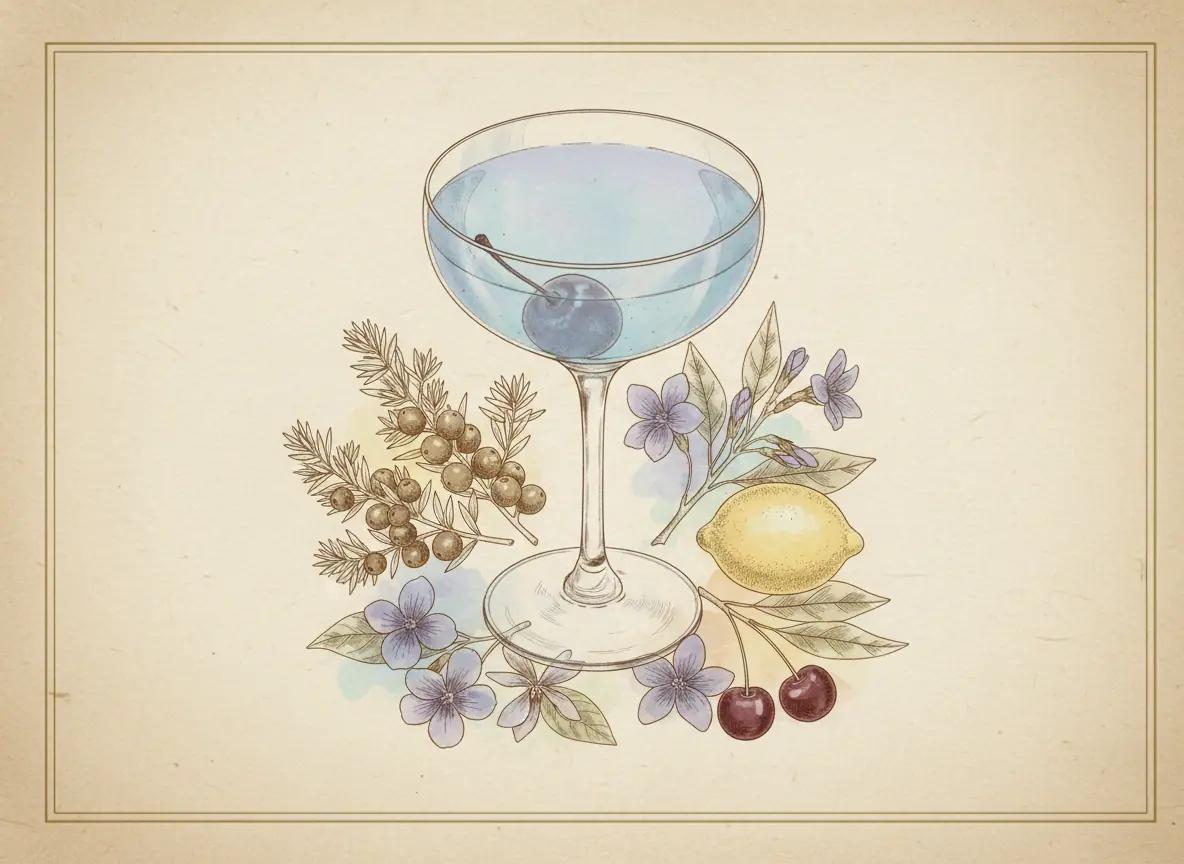
Aviation
An Aviation is gin, maraschino, lemon and a little crème de violette: 45ml gin, 15ml maraschino liqueur, 15ml fresh lemon juice and one bar spoon of crème de violette, shaken hard and double strained into a chilled coupe, with a cherry dropped in. The measures are the International Bartenders Association’s. The violette gives the drink its pale blue-violet colour. Hugo Ensslin, bar manager at the Wallick Hotel in New York, published the original formula for the classic Aviation in his 1916 Recipes for Mixed Drinks, the Oxford Companion says. In 1930 the Savoy Cocktail Book printed it without the violette, and many bartenders followed that version. Keep the violette to a bar spoon: more turns the drink soapy and purple. A glass holds about 2.4 UK units.
Where this one sits
Recipe by Jerry Can Spirits · Updated 19 October 2026