Gin & It
A Gin & It is 50ml London Dry gin and 25ml Italian sweet vermouth, stirred over ice for 20 to 30 seconds and strained into a chilled coupe, with an orange slice. It is a sweet Martini: two parts gin to one of red vermouth, about 2.4 UK units. The It is short for Italian. Difford’s Guide, a secondary source, quotes Dale DeGroff that the pairing was poured in Manhattan bars of the 1880s and 1890s as a sweet Martini. Under Prohibition it reached London as Gin and Italian and became a pub staple, and Difford’s dates the short name in print to 1936, in Frank Meier’s The Artistry of Mixing Drinks. Frank Meier’s 1936 recipe, as Difford’s Guide prints it, pours equal parts gin and Italian vermouth and says it should not be iced, and that version is worth tasting once. With one part in three vermouth, open a fresh bottle and keep it in the fridge.
Glassware: Coupe Glass
Garnish: Orange slice and Maraschino cherry in the lounge tradition
Ingredients
50ml
London Dry, 40% ABV or stronger. Its juniper has to hold against a full measure of sweet vermouth; a soft gin lets the vermouth take over.
25ml
Italian sweet red vermouth, the It of the name, such as Martini Rosso or Cocchi Storico Vermouth di Torino. We keep it in the fridge after opening and use it within about four weeks.
Instructions
Chill a coupe in the freezer or with ice water.
Add the gin and sweet vermouth to a mixing glass.
Fill the mixing glass with cubed ice and stir for 20 to 30 seconds.
Discard the ice from the coupe and strain the drink into it.
Rest a thin orange slice on the rim, or drop in a cocktail cherry, and serve.
Expert Tip
Use a fresh vermouth. At 25ml it is one part in three, and a bottle open since Christmas is the usual reason a Gin & It tastes flat. We keep it in the fridge once opened and use it within about four weeks. Stir for 20 to 30 seconds with a full mixing glass of cubed ice. There is no citrus or sugar to blend in, so the stir is only for cold and water; stop when the glass is cold to the touch. Try the room-temperature version once: equal parts, no ice, in a small glass. It is sweeter and louder, and it shows how much the cold mutes both bottles.
Behind the Gin & It
Flavour Profile
The Origin
Gin and sweet vermouth were being stirred together in New York by the 1880s, at bars such as the Hoffman House, where the drink went by the name sweet Martini, Dale DeGroff says, as Difford’s Guide quotes him. The Italian vermouth in it gave the name: Gin and Italian, shortened to Gin and It during Prohibition.
The short name was in print by 1936, in Frank Meier’s The Artistry of Mixing Drinks, the first print reference Difford’s Guide records. In Britain it became a pub staple, and the recipes Difford’s prints from Meier (1936) and Stanley Jones (1977) both say not to ice it. It lost ground as vermouth and gin fell from favour in the late 1980s, and Difford’s says it is now enjoying a renaissance.
The It
At two to one the vermouth is one part in three; at equal parts it is half the glass. Either way its condition decides the result, so we keep it in the fridge and use it within about four weeks.
A rich Italian red in the Torino style gives the drink its body, which the gin cuts through. The same bottle makes a Negroni, which is a good reason to keep one open and get through it.
Ice and Ratio
The older pour, equal parts and no ice as Difford’s Guide prints Meier’s 1936 recipe, is worth one try. It is warmer, sweeter and more aromatic than any chilled drink, and it shows how much cold and dilution quieten both bottles.
The modern pour, two to one and stirred for 20 to 30 seconds, puts the gin in front and keeps the vermouth as seasoning. For everyday drinking it is the better of the two.
Gin & It, Martini and Martinez
The same two bottles sit at the centre of a small family. What changes is the vermouth, and what goes in beside it.
Gin & It, Martini and Martinez compared; the units are our calculation at our working figures of 40% for gin, 16% for sweet vermouth and 18% for dry vermouth
Gin & It
- Spec
- 50ml gin, 25ml sweet vermouth
- Vermouth
- Italian sweet red
- Strength
- About 2.4 UK units
Gin Martini
- Spec
- 60ml gin, 10ml dry vermouth
- Vermouth
- French-style dry
- Strength
- About 2.6 UK units
Martinez
- Spec
- 45ml gin, 45ml sweet vermouth, 5ml maraschino, two dashes orange bitters
- Vermouth
- Italian sweet red
- Strength
- About 2.7 UK units
| Drink | Spec | Vermouth | Strength |
|---|---|---|---|
| Gin & It | 50ml gin, 25ml sweet vermouth | Italian sweet red | About 2.4 UK units |
| Gin Martini | 60ml gin, 10ml dry vermouth | French-style dry | About 2.6 UK units |
| Martinez | 45ml gin, 45ml sweet vermouth, 5ml maraschino, two dashes orange bitters | Italian sweet red | About 2.7 UK units |
Add maraschino and orange bitters and take the vermouth up to equal parts, and you have a Martinez. Add a little Fernet-Branca and you have a Hanky Panky. Swap in dry vermouth and cut it hard, and you are at the dry Martini. Each makes more sense once you have tasted the plain version.
How to Serve It
Stirred and strained into a chilled coupe, with an orange slice on the rim or a cherry in the glass. It takes two minutes and needs no bitters, citrus or syrup.
It suits the half hour before dinner, and it is the quickest use for an open bottle of sweet vermouth in the fridge door.
Make it at home
The Spirit
GinGin is a spirit flavoured with juniper berries. Under the retained Regulation (EC) 110/2008, juniper must lead the taste, the floor is 37.5% ABV, and the route the flavour takes sets the grade: plain gin, distilled gin or London gin. Our recipes count it at 40%, and it carries the Martini, the Negroni and the Gin and Tonic.
Master the Techniques
More to explore
Frequently Asked Questions
What does the It stand for?
What is a Gin and It?
Is a Gin and It served without ice?
How does it differ from a Martinez?
What ratio should I use?
How strong is a Gin and It?
Is a Gin and It the same as a sweet Martini?
Sources.
Correct as of 18 October 2026.
- Difford’s Guide, “Gin and It” (secondary source: Dale DeGroff on the Hoffman House sweet Martini; “Gin & It” shortened during Prohibition; first print reference Meier 1936; London pub staple; Meier and Jones both unchilled).
You Might Also Like
Martinez
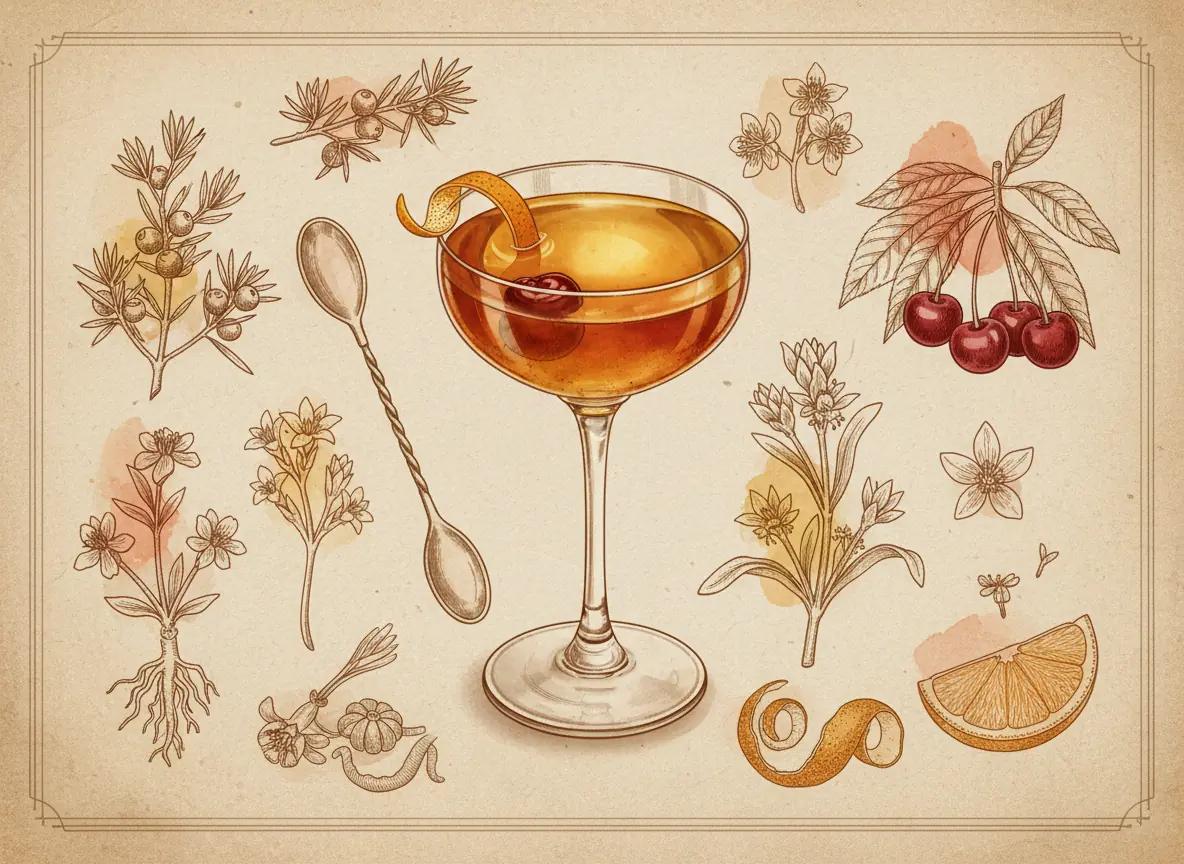
A Martinez is 45ml London Dry gin and 45ml sweet vermouth with a bar spoon (5ml) of maraschino and two dashes of orange bitters, stirred with ice for 20 to 30 seconds and poured into a cold coupe under a twist of lemon peel. About 2.7 UK units. The measures follow the IBA. It is usually named as the Martini’s forerunner, and Punch says historians squabble over where it came from. O. H. Byron’s guide of 1884, in the Internet Archive’s scan, lists a Martinez as “Same as Manhattan, only you substitute gin for whisky”; Jerry Thomas’s Bar-Tender’s Guide of 1887, in the Internet Archive’s scan, gives a full recipe on Old Tom gin, with more vermouth than gin, maraschino and Boker’s bitters. Equal parts on London Dry makes a drier, sharper drink than those early versions. Old Tom gin, a shorter vermouth measure and Angostura make the softer, sweeter variation.
Hanky Panky
A Hanky Panky is 45ml of London Dry gin, 45ml of sweet vermouth and 7.5ml of Fernet-Branca, stirred with ice for 20 to 30 seconds and strained into a chilled coupe, with an orange twist expressed over the top and dropped in. About 2.8 UK units. The measures are the IBA’s. Ada Coleman made it at the American Bar of the Savoy, where, the Oxford Companion says, she rose to head bartender before Harry Craddock displaced her in January 1926. The Companion quotes her telling The People in 1925 that she spent hours experimenting until she invented a new cocktail for the actor Charles Hawtrey, who had come in complaining of overwork. He either called it “the real hanky panky” on the spot or came in the next day asking for “that hanky panky stuff”, and the name stuck. Craddock put it in The Savoy Cocktail Book, in the Internet Archive’s scan. Equal gin and sweet vermouth make a sweet Martini. The Fernet-Branca, a bitter Italian amaro, adds menthol and dark herbs, cools the finish and keeps the vermouth from tasting syrupy.
Negroni
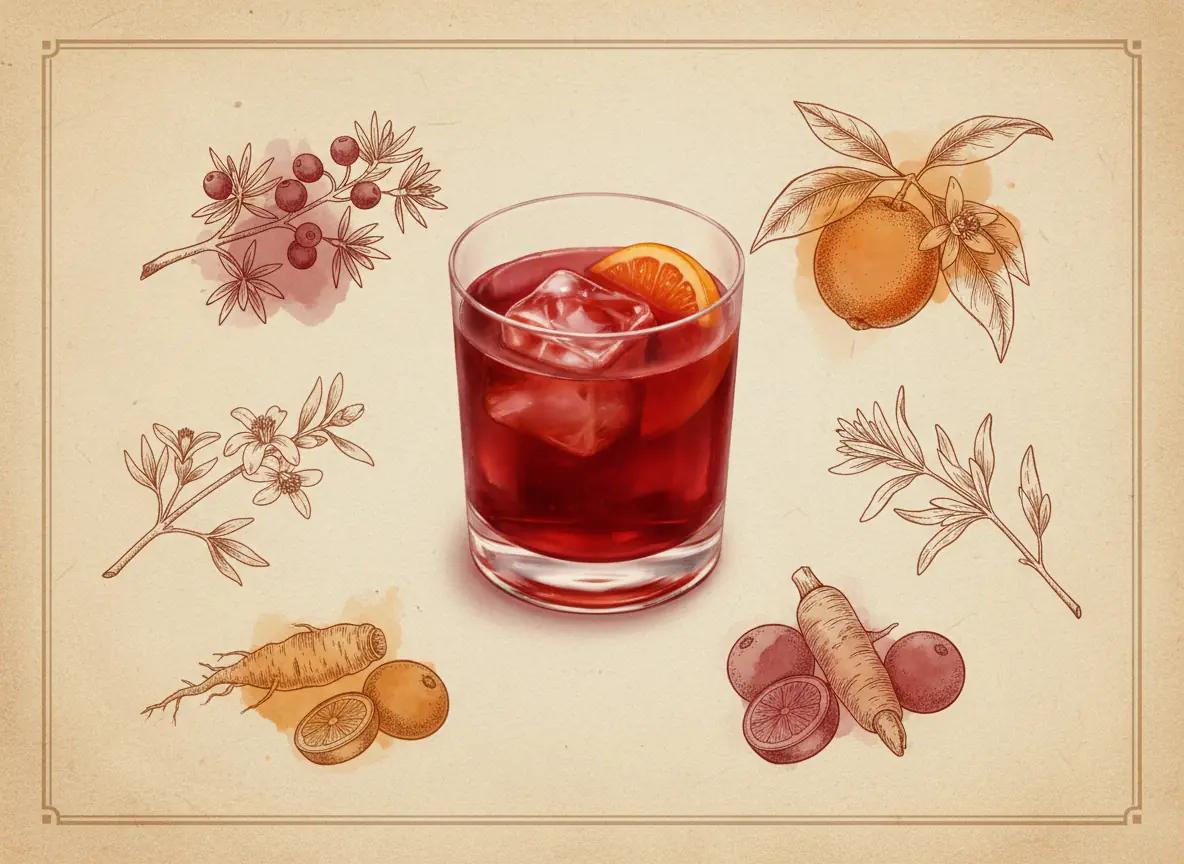
A Negroni is 30ml each of gin, Campari and sweet vermouth, stirred with ice for 20 to 30 seconds and strained over fresh ice in a rocks glass, with an orange peel expressed over the top. About 2.4 UK units. The measures are the IBA’s; the IBA builds the drink in the glass and garnishes it with half an orange slice. Difford’s Guide gives the most widely reported account: Florence in 1919, at the Casoni Bar, where the bartender Fosco Scarselli is said to have replaced the soda in Count Camillo Negroni’s Americano with gin. The Oxford Companion has the drink named in a surviving letter of October 1920 and then absent under that name until 1947. A French book of 1929 by Alimbau and Milhorat, in the Internet Archive’s scan, gives equal parts of the three as the Campari Mixte. Each third has a job. Gin gives strength and juniper, the red bitter gives bitterness and orange, and the vermouth gives body and sugar. With no juice or soda in the glass, a tired vermouth shows at once.
Where this one sits
Recipe by Jerry Can Spirits · Updated 18 October 2026