Martinez
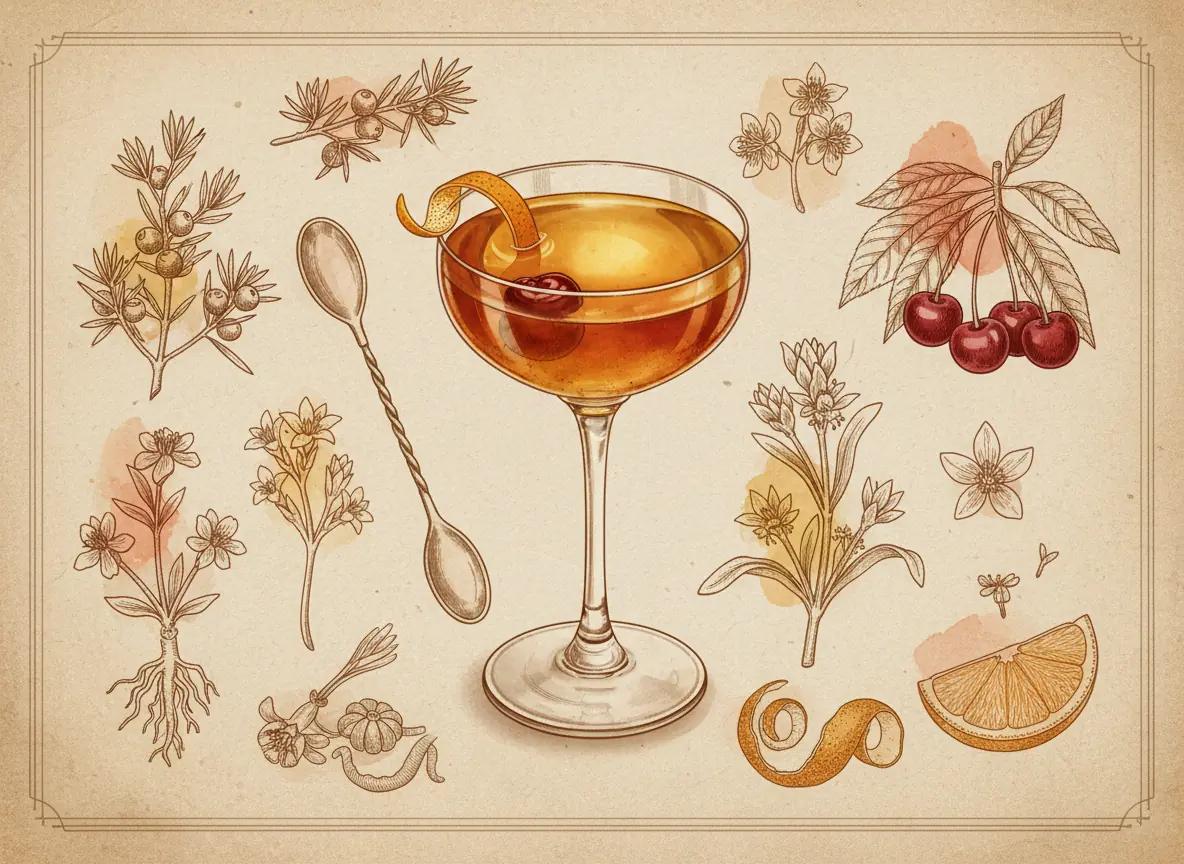
A Martinez is 45ml London Dry gin and 45ml sweet vermouth with a bar spoon (5ml) of maraschino and two dashes of orange bitters, stirred with ice for 20 to 30 seconds and poured into a cold coupe under a twist of lemon peel. About 2.7 UK units. The measures follow the IBA. It is usually named as the Martini’s forerunner, and Punch says historians squabble over where it came from. O. H. Byron’s guide of 1884, in the Internet Archive’s scan, lists a Martinez as “Same as Manhattan, only you substitute gin for whisky”; Jerry Thomas’s Bar-Tender’s Guide of 1887, in the Internet Archive’s scan, gives a full recipe on Old Tom gin, with more vermouth than gin, maraschino and Boker’s bitters. Equal parts on London Dry makes a drier, sharper drink than those early versions. Old Tom gin, a shorter vermouth measure and Angostura make the softer, sweeter variation.
Variations
Glassware: Coupe Glass
Garnish: Lemon peel and Maraschino cherry in place of the peel
Ingredients
45ml
The IBA’s gin, bottled at 40% ABV or more. Being drier than Old Tom, with firmer juniper, it needs an equal measure of vermouth for balance.
45ml
Italian-style sweet red vermouth, around 16% ABV. It matches the gin measure for measure, so freshness shows; we keep an opened bottle in the fridge.
5ml
Luxardo Maraschino, which Luxardo’s own page gives at 32% ABV: a clear cherry liqueur with, in our view, a bitter almond edge. A bar spoon only, because more turns the drink sweet. It is a liqueur, not the syrup from a jar of cherries.
2 dashes
The IBA’s choice. They lift the maraschino and the lemon oil; Angostura, which suits the Old Tom variation, sits lower and spicier.
Instructions
Chill a coupe in the freezer or with ice water.
Add the gin, sweet vermouth, maraschino and orange bitters to a mixing glass.
Fill with cubed ice and stir for 20 to 30 seconds.
Empty the coupe and strain the drink into it.
Express a strip of lemon peel over the surface and rest it on the rim.
Source: the IBA (Official IBA specification; method ours). Last checked 9 October 2026.
Expert Tip
Measure the maraschino. A bar spoon, 5ml, reads as a cherry and almond note under the gin; double it and the drink tips sweet, because the vermouth is already half the glass. At equal parts the vermouth matters as much as the gin. We store it in the fridge after opening and replace it after four weeks; in our experience a tired bottle tastes flat and faintly sour, and nothing else in the glass can cover for it. Give it the full 20 to 30 seconds of stirring. With no citrus to sharpen it, dilution has to, and an under-stirred Martinez is heavy and syrupy.
Behind the Martinez
Flavour Profile
The Origin
The Martinez is widely treated as the Martini’s direct ancestor, and Punch says historians squabble over where it came from: some say a bar in the city of Martinez, California, others that Jerry Thomas made it for a traveller headed there. Difford’s Guide thinks claims that Thomas invented it unlikely, since he left it out of his 1862 and 1876 editions.
The printed record is firmer. O. H. Byron’s guide of 1884, in the Internet Archive’s scan, lists a Martinez in a single line: “Same as Manhattan, only you substitute gin for whisky.” Jerry Thomas’s Bar-Tender’s Guide of 1887 gives a full recipe: a pony of Old Tom gin, a wine-glass of vermouth, two dashes of Maraschino and a dash of Boker’s bitters, shaken with two small lumps of ice and served with a quarter of a slice of lemon.
The Martinez and the Martini
Harry Johnson’s manual, in its 1900 edition, prints a Martini Cocktail of Old Tom gin and vermouth in equal parts, illustrated by a plate captioned “Martine Cocktail”. In our reading the Martini moved to dry vermouth and dropped the maraschino, while the Martinez kept its sweet vermouth and cherry.
Martinez, then and now; the 1887 row follows Jerry Thomas’s Bar-Tender’s Guide in the Internet Archive’s scan, the IBA row the IBA’s recipe, and the Old Tom variation is our own
Jerry Thomas, 1887
- Gin
- A pony of Old Tom
- Vermouth
- A wine glass of vermouth
- Modifier and bitters
- Two dashes of maraschino, a dash of Boker’s bitters
IBA
- Gin
- 45ml London Dry
- Vermouth
- 45ml sweet red vermouth
- Modifier and bitters
- 5ml maraschino, two dashes of orange bitters
Old Tom variation
- Gin
- 45ml Old Tom
- Vermouth
- 30ml sweet vermouth
- Modifier and bitters
- 7.5ml maraschino, two dashes of Angostura
| Version | Gin | Vermouth | Modifier and bitters |
|---|---|---|---|
| Jerry Thomas, 1887 | A pony of Old Tom | A wine glass of vermouth | Two dashes of maraschino, a dash of Boker’s bitters |
| IBA | 45ml London Dry | 45ml sweet red vermouth | 5ml maraschino, two dashes of orange bitters |
| Old Tom variation | 45ml Old Tom | 30ml sweet vermouth | 7.5ml maraschino, two dashes of Angostura |
Old Tom Gin
The Oxford Companion calls Old Tom a style of sweetened English gin prevalent in the nineteenth century, first in print in 1810. Annex II of Regulation (EC) No 110/2008, as retained, does not define it, so sweetness varies by bottle.
With a sweetened gin, a shorter measure of vermouth stops the glass going sticky, which is why the Old Tom variation takes 30ml of vermouth against the IBA’s 45ml and swaps in Angostura. Put Old Tom into the IBA build and it turns sweet; put London Dry into the Old Tom one and it turns thin.
The Maraschino Balance
Luxardo’s own page gives Luxardo Maraschino Originale at 32% ABV, made by infusing marasca cherries in larch-wood vats with leaves and branches of the same trees and distilling the result; in our view it has a faint bitter almond note. At a bar spoon it seasons the drink rather than sweetening it: the gin and vermouth carry the structure, and the maraschino and bitters finish it.
The same bottle does supporting work in the Aviation and the Last Word. More on what it is and how it is made under maraschino liqueur.
How to Serve It
Stirred cold and served without ice in a frozen coupe, under a twist of lemon peel. A maraschino cherry dropped into the glass is the common alternative, and it leans the drink towards the fruit. Pour it before dinner or after; it works at either end of the evening.
Make it at home
The Spirit
GinGin is a spirit flavoured with juniper berries. Under the retained Regulation (EC) 110/2008, juniper must lead the taste, the floor is 37.5% ABV, and the route the flavour takes sets the grade: plain gin, distilled gin or London gin. Our recipes count it at 40%, and it carries the Martini, the Negroni and the Gin and Tonic.
Master the Techniques
More to explore
Frequently Asked Questions
What is a Martinez?
How does it differ from a Martini?
Old Tom or London Dry gin?
How strong is a Martinez?
Where does the Martinez come from?
What is Old Tom gin?
Is maraschino the syrup from a jar of cherries?
Sources.
Correct as of 19 October 2026.
- Difford’s Guide, “Martinez (Difford’s Recipe)” (secondary source: the first known recipe in Byron’s 1884 Modern Bartenders’ Guide, “Same as Manhattan, only you substitute gin for whisky”; Thomas omitted it from 1862 and 1876 and prints it in 1887; claims that Thomas invented it unlikely; the gin was perhaps genever).
- Internet Archive, “The Bar-Tender’s Guide (Jerry Thomas, 1887)” (scanned reproduction of the 1887 edition: Martinez Cocktail, 1 dash Boker’s bitters, 2 dashes Maraschino, 1 pony Old Tom gin, 1 wine-glass Vermouth, 2 small lumps of ice; shake, strain into a large cocktail glass, a quarter of a slice of lemon).
- The Oxford Companion to Spirits and Cocktails (David Wondrich), “Old Tom gin” (secondary source: a style of sweetened English gin prevalent in the nineteenth century; first in print in 1810; used in the Martini and the Gin Fizz in the 1880s).
- legislation.gov.uk, “Regulation (EC) No 110/2008, Annex II” (retained text, read 19 October 2026: defines gin, distilled gin and London gin; Old Tom does not appear).
- Luxardo, “Maraschino Originale” (producer’s product page: 32% Alc. by Vol.; marasca cherries infused in larch-wood vats with leaves and branches for up to three years, then distilled).
- IBA, “Martinez” (official IBA recipe).
- Punch, “Martinez Cocktail Recipe” (secondary source: historians squabble over the origin, a bar in Martinez, California, or Jerry Thomas making it for a traveller; the first known published recipe is Byron, 1884).
- Internet Archive, “The Modern Bartenders’ Guide (1884), scan” (primary source, read as text: “Martinez Cocktail. Same as Manhattan, only you substitute gin for whisky.”).
- Internet Archive, “Harry Johnson’s New and Improved Bartenders’ Manual (1900), scan” (primary source, read as text: Martini Cocktail with gum syrup, Boker’s bitters, curaçao or absinthe, half a wine-glass of old Tom gin and half of vermouth, “see illustration, plate No. 13”; the plate is captioned “Martine Cocktail”, copyrighted 1888).
You Might Also Like
Martini
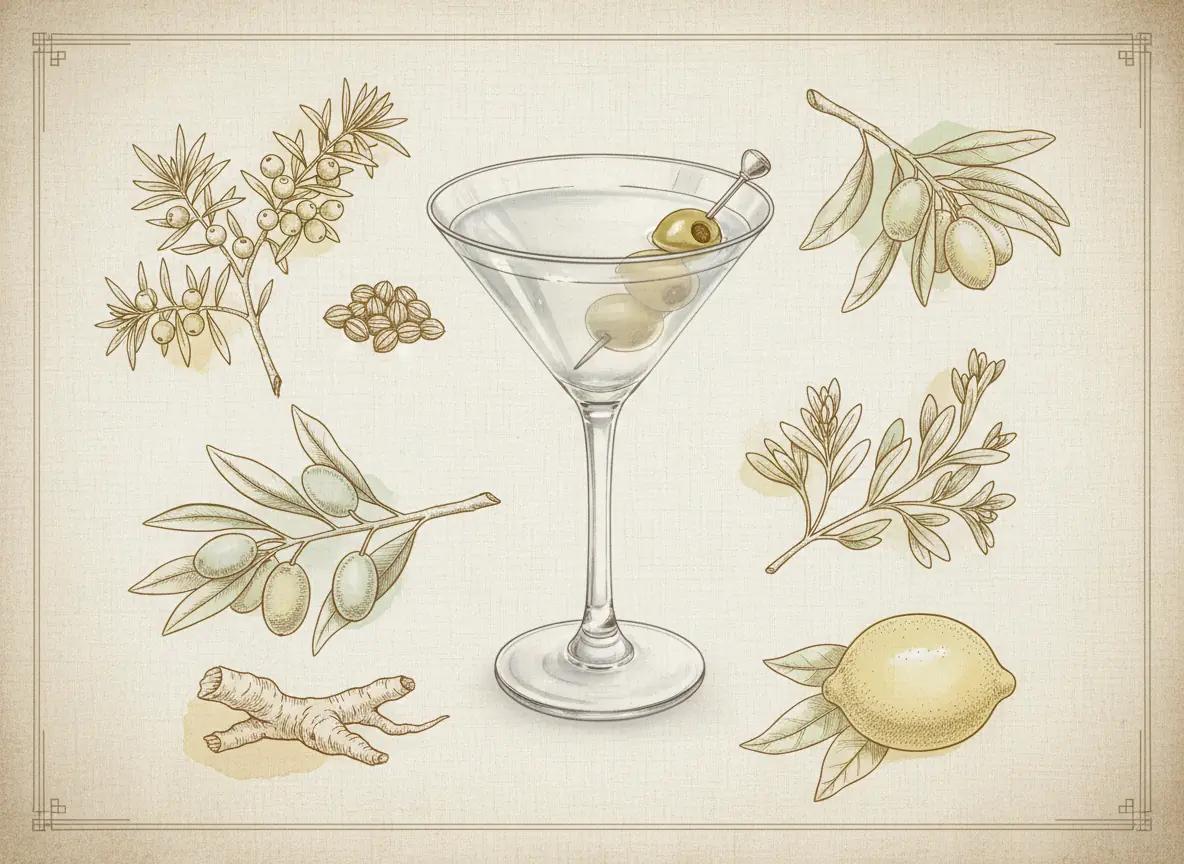
A Martini is 60ml of gin and 10ml of dry vermouth, stirred over ice for 20 to 30 seconds and strained into a chilled Martini glass, with oil from a strip of lemon peel expressed over the top, or green olives if you prefer them. That is the IBA’s Dry Martini, a six-to-one build, and about 2.6 UK units. At six to one the vermouth stops being a partner and becomes a seasoning: a dry wine note and a rounder finish under the juniper. Older recipes were far wetter, and the drink has been poured at every ratio from equal parts to a bare rinse. Nothing in a Martini is sweet or sour: it is gin, vermouth, cold and water. The stir supplies the last two, so it shapes the result as surely as the gin.
Bijou
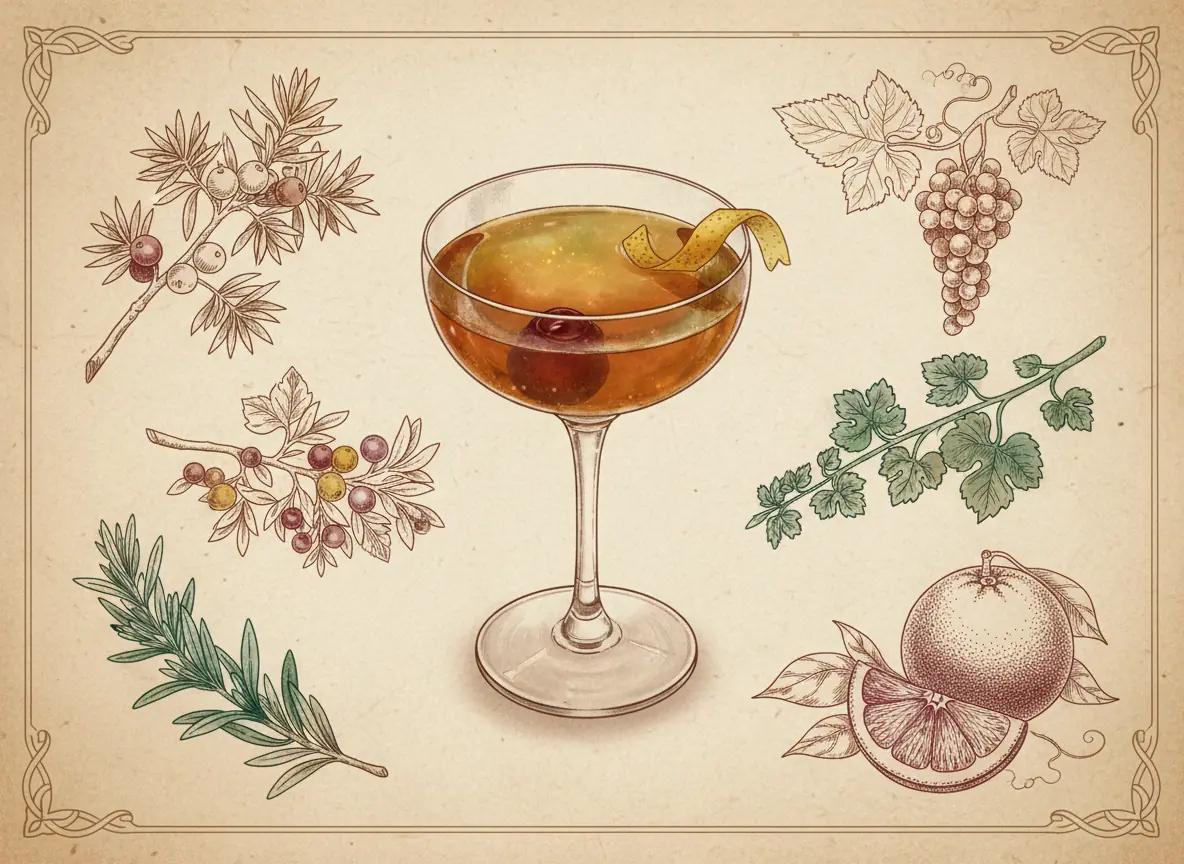
A Bijou is 40ml of London Dry gin, 20ml of green Chartreuse, 20ml of sweet vermouth and two dashes of orange bitters, stirred over cubed ice for 30 seconds and strained into a chilled Nick and Nora glass, with a lemon twist expressed over it and a cherry. About 3.0 UK units. The Oxford Companion says the drink appears to be Harry Johnson’s adaptation of a cocktail first recorded in St. Louis and Cincinnati in the spring of 1895, and that his version appeared in the 1900 edition of his Bartenders’ Manual. Bijou is French for jewel, and Difford’s Guide gives the explanation that each bottle stands for a stone by its colour: gin for diamond, vermouth for ruby, Chartreuse for emerald. At 55% ABV on Chartreuse’s own page, green Chartreuse is the force to manage. Many recipes pour the three in equal measures; ours doubles the gin so its juniper holds against the Chartreuse, with the vermouth giving body and the bitters tying the herbs together.
Last Word
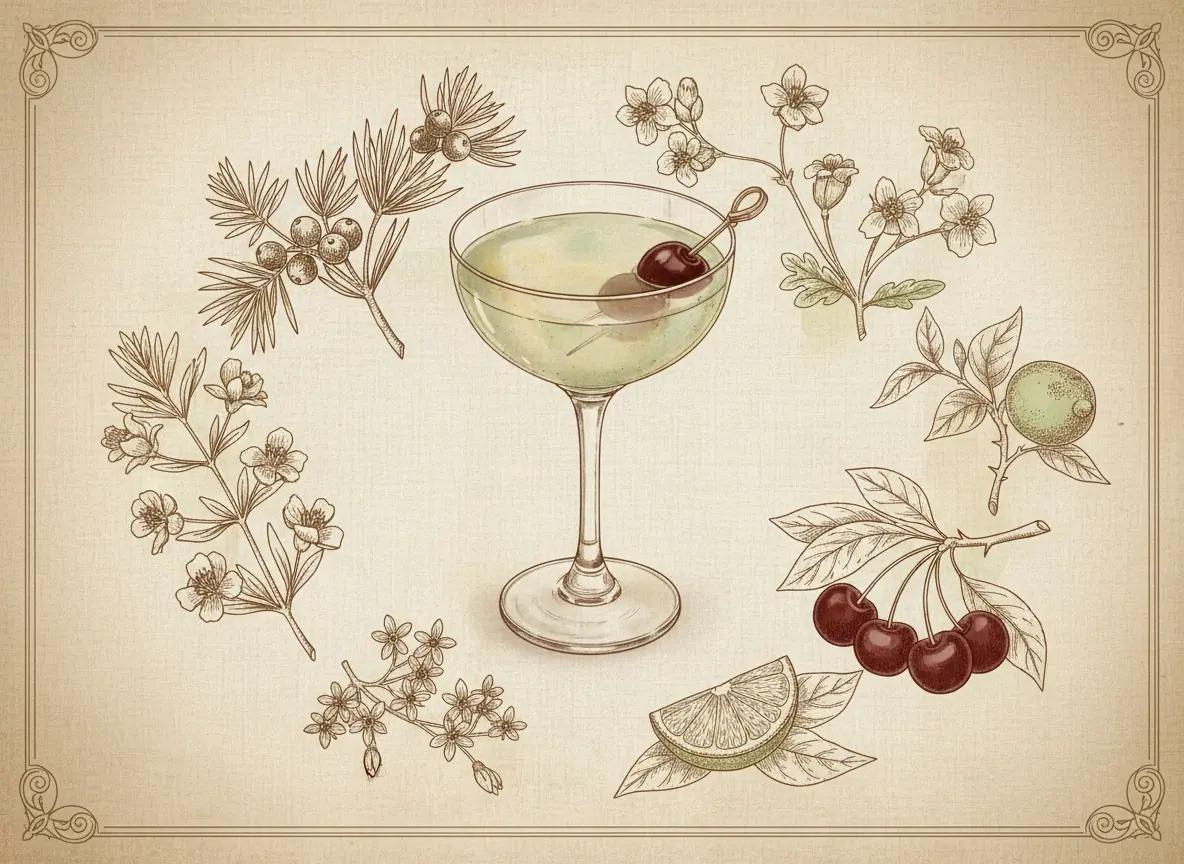
A Last Word is 22.5ml each of gin, green Chartreuse, maraschino liqueur and fresh lime juice, shaken hard for 10 to 12 seconds and double strained into a chilled Nick & Nora or coupe. About 2.9 UK units. The measures are the IBA’s; the cherry or lime twist is ours. The Oxford Companion says the drink first appears in print in the Detroit Athletic Club News in 1916, on a menu at 35 cents, a high price then. Ted Saucier’s Bottoms Up of 1951 prints the recipe, quoting a club source who says Frank Fogarty, a vaudeville monologist, introduced it there about thirty years earlier. In 2003 Murray Stenson put it on the menu at the Zig Zag Café in Seattle, from where it spread, the Companion says. Four strong flavours at equal volume, and none takes over. Chartreuse brings herbs and heat, maraschino cherry and a bitter almond edge, lime the acid, and gin holds them together.
Where this one sits
Recipe by Jerry Can Spirits · Updated 19 October 2026