Hanky Panky
A Hanky Panky is 45ml of London Dry gin, 45ml of sweet vermouth and 7.5ml of Fernet-Branca, stirred with ice for 20 to 30 seconds and strained into a chilled coupe, with an orange twist expressed over the top and dropped in. About 2.8 UK units. The measures are the IBA’s. Ada Coleman made it at the American Bar of the Savoy, where, the Oxford Companion says, she rose to head bartender before Harry Craddock displaced her in January 1926. The Companion quotes her telling The People in 1925 that she spent hours experimenting until she invented a new cocktail for the actor Charles Hawtrey, who had come in complaining of overwork. He either called it “the real hanky panky” on the spot or came in the next day asking for “that hanky panky stuff”, and the name stuck. Craddock put it in The Savoy Cocktail Book, in the Internet Archive’s scan. Equal gin and sweet vermouth make a sweet Martini. The Fernet-Branca, a bitter Italian amaro, adds menthol and dark herbs, cools the finish and keeps the vermouth from tasting syrupy.
Glassware: Coupe Glass
Garnish: Orange twist expressed and dropped in
Ingredients
45ml
A London Dry at 40% ABV, as the IBA specifies. The juniper gives the sweet vermouth and the amaro something firm to sit on.
45ml
Half the drink, at around 16% ABV. We keep it in the fridge once opened and use it within a month. Like all wine, it contains sulphites.
7.5ml
A bitter Italian amaro at 39% ABV, heavy with menthol and roots. At 7.5ml it seasons the drink rather than leading it, so measure it.
Instructions
Chill a coupe.
Add the gin, sweet vermouth and Fernet-Branca to a mixing glass.
Fill with cubed ice and stir for 20 to 30 seconds.
Strain into the chilled coupe.
Express an orange twist over the surface and drop it in.
Source: the IBA (Official IBA specification; method ours). Last checked 10 October 2026.
Expert Tip
Measure the Fernet-Branca: 7.5ml, a barspoon and a half. At 10ml the amaro starts to take over; at 5ml or less it fades, and what is left is a sweet Martini with an odd finish. The vermouth is half the drink, so it has to be fresh. We keep the bottle in the fridge once opened and use it within a month; in our experience old vermouth tastes flat and sour, and nothing else in the glass can hide it. Express the orange twist over the surface before you drop it in. The oil links the vermouth’s sweetness to the amaro’s menthol, and a twist dropped in unexpressed does almost nothing.
Behind the Hanky Panky
Flavour Profile
Where It Comes From
The Oxford Companion says Ada Coleman began at Claridge’s and moved in 1903 to the American Bar at the Savoy, where she rose to head bartender before Harry Craddock displaced her in January 1926. The Companion’s entry on the bar says the hotel retired her and Ruth Burgess on 17 December 1925.
The Companion’s entry on the Savoy’s American Bar says Ruth “Kitty” Burgess apparently presided over the bar first and that Coleman was moved there by the end of 1903. It says the two did not get along, and that customers assumed Coleman was head bartender despite Burgess’s seniority. The Companion’s Hanky Panky entry calls the drink the first canonical cocktail definitively attributed to a female bartender.
In 1925 Coleman told The People how the Hanky Panky began, as the Companion quotes her. The Companion says the actor Charles Hawtrey came in tired and overworked, and she spent hours experimenting until she invented a new cocktail. The Companion gives a likely date of mid-1921, when Hawtrey was starring in Ambrose Applejohn’s Adventure at the Savoy Theatre, next door to the hotel.
The Fernet Dose
Seven and a half millilitres is enough to thread menthol and bitter roots under the vermouth and give the finish somewhere cool to land, without taking the drink over.
The useful range is narrow. Push it to 10ml and the drink darkens into an amaro drink; drop to 5ml and the Fernet-Branca all but disappears. Measure it rather than pouring free-hand.
Vermouth and Gin
At equal parts the vermouth carries half the drink, so freshness matters more here than in a dry Martini. The gin stays London Dry, a firm frame for the sweetness and the amaro.
The IBA and Ours
The IBA’s Hanky Panky and ours
Gin
- IBA
- 45ml London Dry
- Ours
- 45ml London Dry
Sweet vermouth
- IBA
- 45ml
- Ours
- 45ml
Fernet
- IBA
- 7.5ml
- Ours
- 7.5ml Fernet-Branca
Method
- IBA
- Stirred with ice
- Ours
- Stirred 20 to 30 seconds
Glass
- IBA
- Chilled cocktail glass
- Ours
- Chilled coupe
Garnish
- IBA
- Orange zest
- Ours
- Orange twist, expressed and dropped in
UK units
- IBA
- About 2.8
- Ours
- About 2.8
| Element | IBA | Ours |
|---|---|---|
| Gin | 45ml London Dry | 45ml London Dry |
| Sweet vermouth | 45ml | 45ml |
| Fernet | 7.5ml | 7.5ml Fernet-Branca |
| Method | Stirred with ice | Stirred 20 to 30 seconds |
| Glass | Chilled cocktail glass | Chilled coupe |
| Garnish | Orange zest | Orange twist, expressed and dropped in |
| UK units | About 2.8 | About 2.8 |
How to Serve It
Stirred cold, strained into a chilled coupe, with the orange twist expressed over the surface and dropped in. It works after dinner, where the bitter finish does its best work.
For gin and sweet vermouth with maraschino, make a Martinez; for gin and sweet vermouth with Campari, a Negroni.
Make it at home
The Spirit
GinGin is a spirit flavoured with juniper berries. Under the retained Regulation (EC) 110/2008, juniper must lead the taste, the floor is 37.5% ABV, and the route the flavour takes sets the grade: plain gin, distilled gin or London gin. Our recipes count it at 40%, and it carries the Martini, the Negroni and the Gin and Tonic.
Master the Techniques
More to explore
Frequently Asked Questions
What is in a Hanky Panky?
Who was Ada Coleman?
Why is it called the Hanky Panky?
What does the Fernet-Branca do?
Can I use another amaro?
Should a Hanky Panky be shaken or stirred?
How strong is a Hanky Panky?
Sources.
Correct as of 19 October 2026.
- The Oxford Companion to Spirits and Cocktails (Theodora Sutcliffe), “Coleman, Ada” (secondary source: began at Claridge’s; moved to the American Bar at the Savoy in 1903; head bartender until Harry Craddock displaced her in January 1926).
- The Oxford Companion to Spirits and Cocktails (Dinah Sanders and David Wondrich), “The Hanky Panky” (secondary source: Coleman for Charles Hawtrey; her account to the People, 20 December 1925; the Sphere, 2 January 1926; a likely date mid-1921; the first canonical cocktail attributed to a female bartender).
- Internet Archive, “The Savoy Cocktail Book (Harry Craddock, 1930)” (scanned reproduction of the 1930 book: Hanky Panky Cocktail (Italian vermouth, dry gin, two dashes Fernet Branca; shake well, squeeze orange peel on top)).
- Branca USA, “Fernet-Branca” (importer’s site for the producer: Amaro 39% Alc./Vol.).
- IBA, “Hanky Panky” (official IBA recipe).
- The Oxford Companion to Spirits and Cocktails (Anistatia R. Miller and Jared M. Brown), “The Savoy Hotel’s American Bar” (secondary source: Ruth “Kitty” Burgess first; Coleman by the end of 1903; Kitty and Coley retired on 17 December 1925; Craddock at the helm).
You Might Also Like
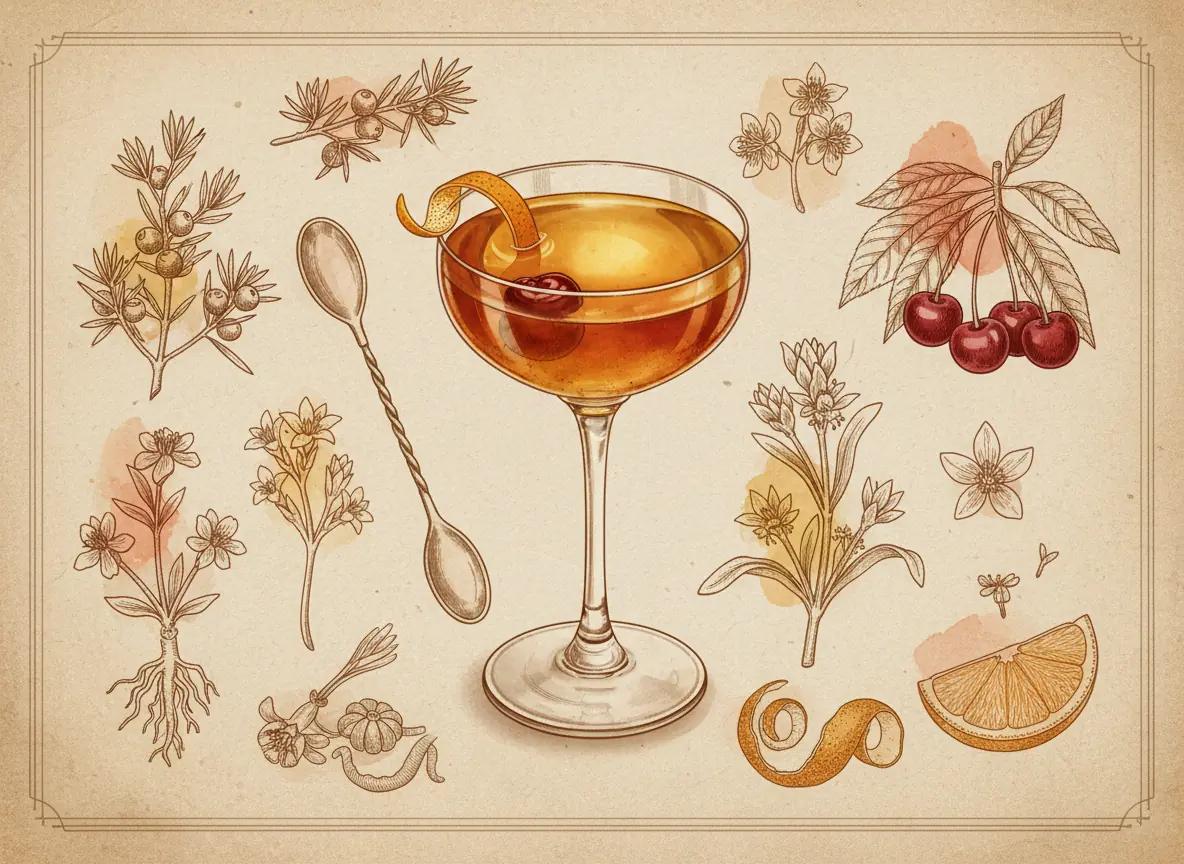
Martinez
A Martinez is 45ml London Dry gin and 45ml sweet vermouth with a bar spoon (5ml) of maraschino and two dashes of orange bitters, stirred with ice for 20 to 30 seconds and poured into a cold coupe under a twist of lemon peel. About 2.7 UK units. The measures follow the IBA. It is usually named as the Martini’s forerunner, and Punch says historians squabble over where it came from. O. H. Byron’s guide of 1884, in the Internet Archive’s scan, lists a Martinez as “Same as Manhattan, only you substitute gin for whisky”; Jerry Thomas’s Bar-Tender’s Guide of 1887, in the Internet Archive’s scan, gives a full recipe on Old Tom gin, with more vermouth than gin, maraschino and Boker’s bitters. Equal parts on London Dry makes a drier, sharper drink than those early versions. Old Tom gin, a shorter vermouth measure and Angostura make the softer, sweeter variation.
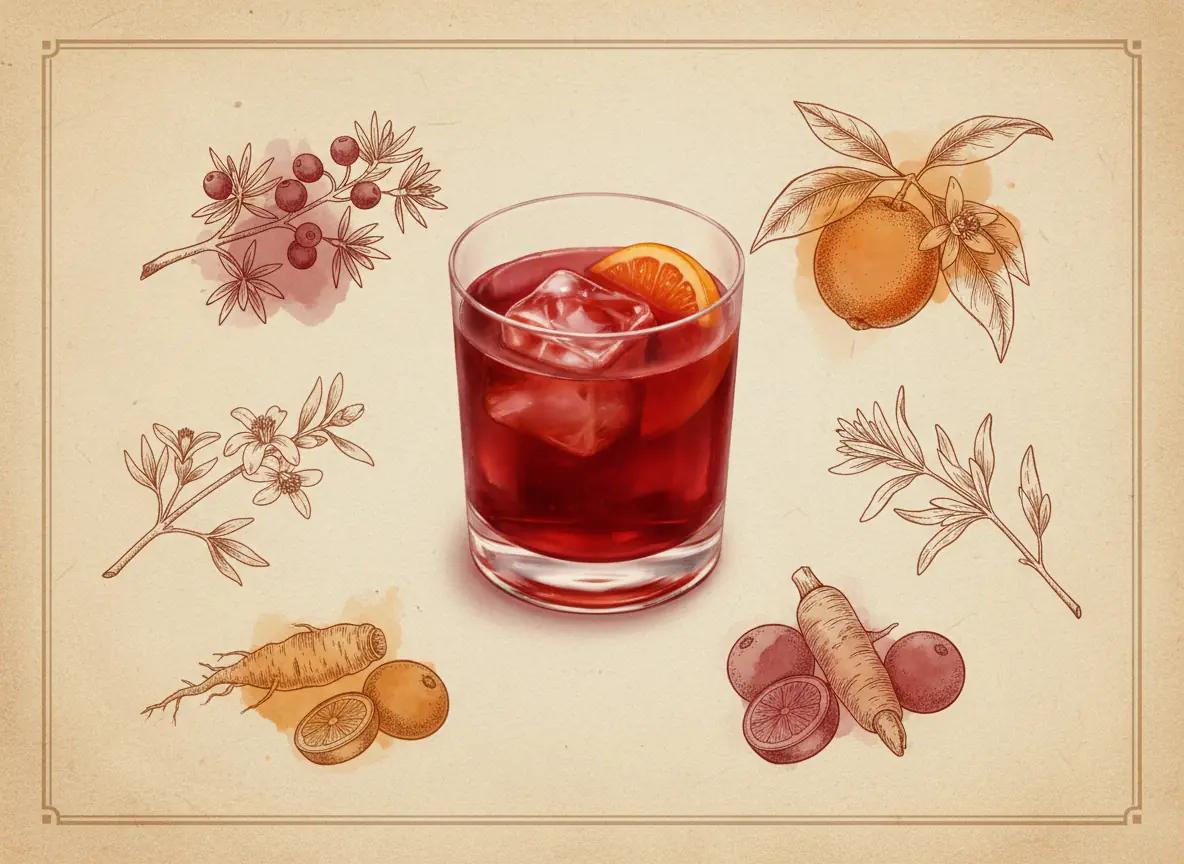
Negroni
A Negroni is 30ml each of gin, Campari and sweet vermouth, stirred with ice for 20 to 30 seconds and strained over fresh ice in a rocks glass, with an orange peel expressed over the top. About 2.4 UK units. The measures are the IBA’s; the IBA builds the drink in the glass and garnishes it with half an orange slice. Difford’s Guide gives the most widely reported account: Florence in 1919, at the Casoni Bar, where the bartender Fosco Scarselli is said to have replaced the soda in Count Camillo Negroni’s Americano with gin. The Oxford Companion has the drink named in a surviving letter of October 1920 and then absent under that name until 1947. A French book of 1929 by Alimbau and Milhorat, in the Internet Archive’s scan, gives equal parts of the three as the Campari Mixte. Each third has a job. Gin gives strength and juniper, the red bitter gives bitterness and orange, and the vermouth gives body and sugar. With no juice or soda in the glass, a tired vermouth shows at once.
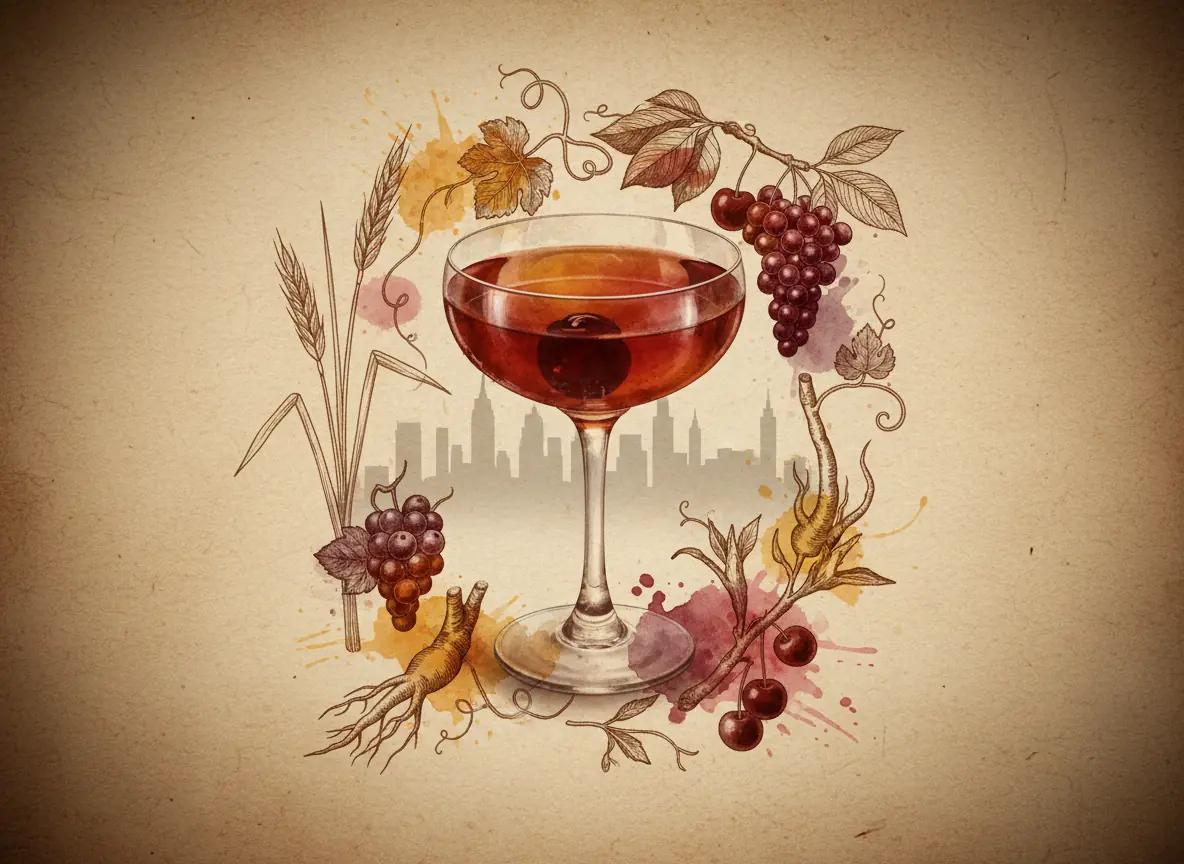
Manhattan
The IBA specifies 50ml of rye whiskey, 20ml of sweet vermouth and a dash of Angostura bitters, strained into a chilled glass with a cocktail cherry; we stir it over ice for 20 to 30 seconds and serve it in a coupe. That is five parts whiskey to two of vermouth. About 2.3 UK units. The Oxford Companion says the most commonly told story puts it at New York’s Manhattan Club on 29 December 1874, at a testimonial dinner for Samuel J. Tilden, later retold with Jennie Jerome, Lady Randolph Churchill, as host or inspiration, and calls that story simply not true: she had given birth to Winston Churchill in Oxfordshire less than a month earlier. The Companion names O. H. Byron’s Modern Bartenders’ Guide among the bar books that printed the drink in 1884, and we read Byron’s and Charlie Paul’s books of that year in the Internet Archive scans. With so little in the glass, the vermouth decides it. Twenty millilitres is over a quarter of the drink, and a bottle opened months ago tastes flat and sour against the rye. We keep it in the fridge and replace it within about four weeks.
Where this one sits
Recipe by Jerry Can Spirits · Updated 19 October 2026