Gin Cocktails
70 recipes, page 1 of 3
This Field Manual holds 70 recipes built on gin, the second largest spirit group here after whiskey. Gin is a neutral spirit redistilled with botanicals, juniper first by law. That botanical load is why gin holds its shape against citrus and vermouth where vodka steps back.
The style of gin changes the drink more than the brand does. A London dry is juniper-forward and dry, and it is what a martini and a negroni assume. A contemporary gin leads with citrus or florals instead, which suits a collins or a spritz where the gin is the loudest thing in the glass. Old Tom is sweeter and predates both, and a Tom Collins was built for it.
What counts as gin here
Base Spirit
Difficulty Level
20th Century
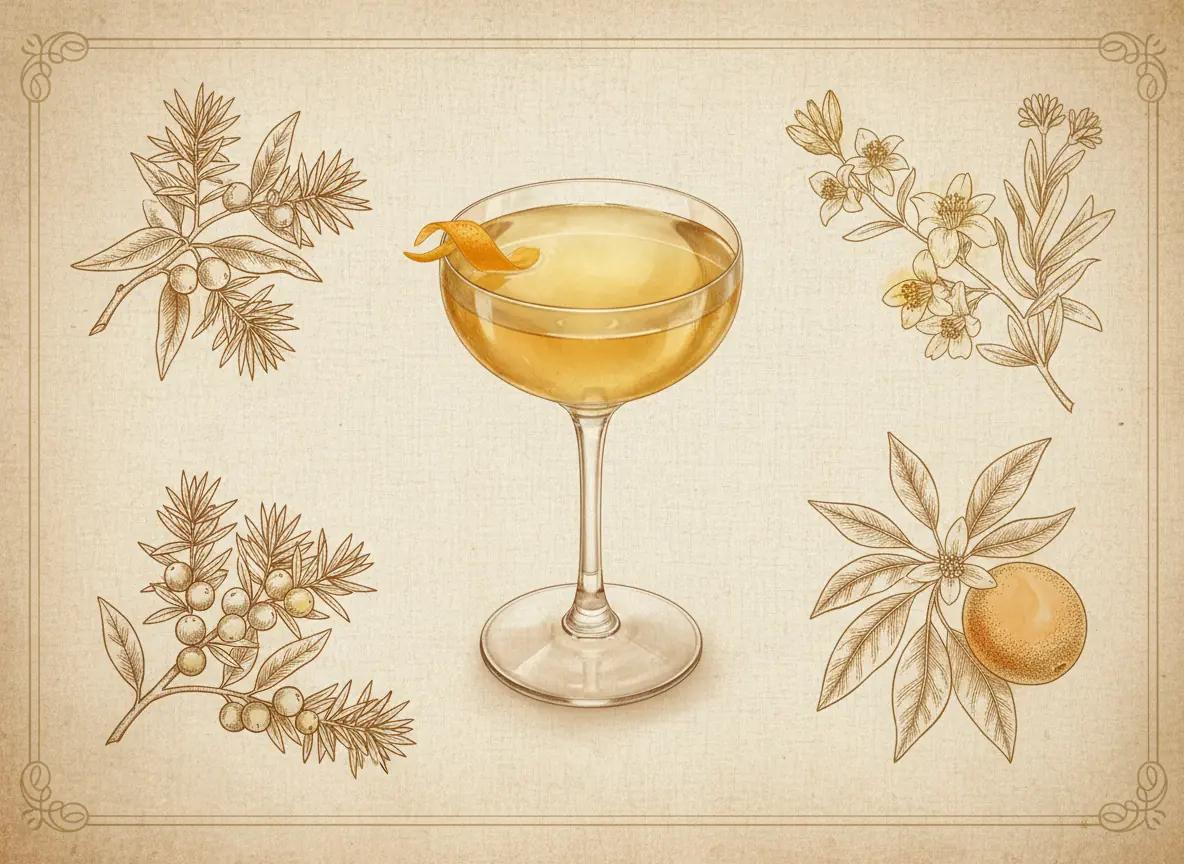
The 20th Century is named not for the era but for a train: the 20th Century Limited, the streamlined express that ran New York to Chicago in sixteen hours of art deco swagger, red carpet on the platform and a barber on board. The cocktail appeared in 1937, credited to a British bartender named C.A. Tuck, and it is the most art deco drink ever built: chrome lines, improbable engineering, and a finish like a first-class lounge. The engineering is the improbable part. Gin and lemon make familiar sense; white creme de cacao and Lillet Blanc should not belong anywhere near them. Yet the four lock together like patisserie: the cacao reads as white chocolate rather than sweetshop, the Lillet adds a bitter-edged aperitif polish, and the lemon keeps the whole thing moving at express speed. It vanished with the train and returned with the cocktail revival, and it remains the best answer to anyone who thinks chocolate has no place in a serious drink: it does, at fifteen millilitres, travelling first class.
Alaska
The Alaska is a two-ingredient stirred cocktail of considerable elegance and considerable potency. Gin and yellow Chartreuse in a ratio that has been debated since the drink first appeared in print, with orange bitters to bridge them. That is the entire recipe. What it produces is far greater than the sum of its parts. Yellow Chartreuse is the gentler sibling of the green. Where green Chartreuse is bold, herbal, and assertive at 55% ABV, yellow is softer, sweeter, and more honeyed at 40%, with chamomile and saffron notes that give it a warmth and approachability the green does not always offer. Against a high-juniper London Dry gin the result is simultaneously botanical, sweet, complex, and completely spirit-forward. The Alaska first appeared in Jacques Straub’s 1914 Drinks and was subsequently documented by Hugo Ensslin in his 1916 Recipes for Mixed Drinks. Why it is named Alaska remains genuinely unclear; no convincing origin story has attached itself to the name. What is clear is that the drink itself is precise, demanding, and quietly one of the best things you can make with two bottles.
Alexander
The Alexander is the cream family’s founding document, and it surprises most drinkers: the original is gin. Gin, white crème de cacao and cream in equal thirds, out of the American bars of the 1910s with the contested paternity typical of the period. Troy Alexander at Rector’s is among the claimants and nobody has ever settled it. The brandy version conquered later and took the qualified name with it, which is how the ancestor ended up sounding like a variation on its own child. Equal thirds is the constitution, and juniper against cream is the founding argument: botanical sharpness cutting the dairy where cognac would simply join it. It drinks lighter and stranger than the famous one. Where a Brandy Alexander is plush and unambiguously a pudding, this reads closer to an aperitif in a dessert dress, which is the pair’s whole division of labour and a good reason to keep the older bottle in play.
Army & Navy
The Army & Navy is a gin sour with orgeat in place of the sugar. That is the entire design, and it does what the same swap does in a Mai Tai: almond brings marzipan weight and a floral edge that plain syrup cannot supply, rounding the lemon and softening the juniper without blurring either. The spec turns up in bar books of the 1930s, and it owes its survival largely to David Embury, who included it in The Fine Art of Mixing Drinks in 1948 while complaining, as he did about most things, that everybody else had the proportions wrong. The name honours the Army-Navy game, the American service academies' football rivalry that has been played since 1890. The drink has a certain parade-ground neatness that suits it: three ingredients and a dash, up in a coupe, nothing surplus. It has outlived a great many drinks with better stories attached to them.
Aviation
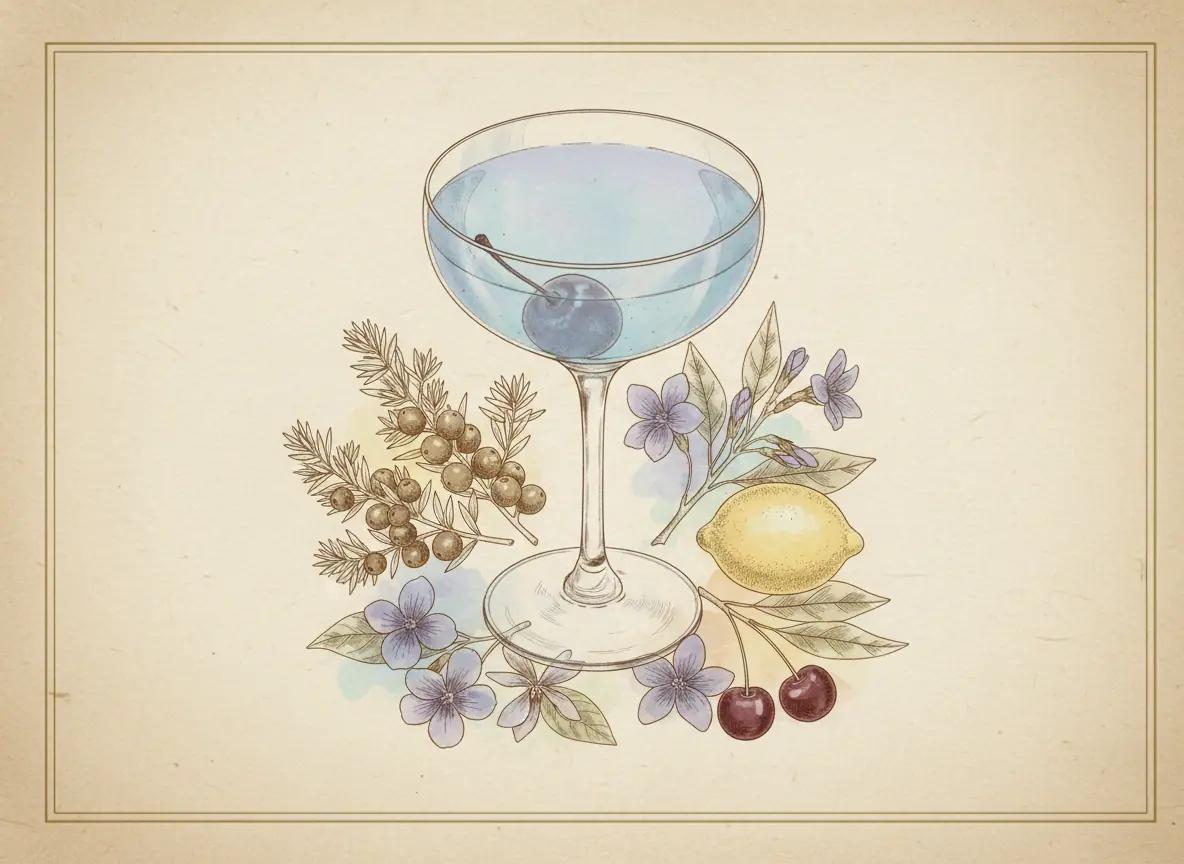
The Aviation is a gin sour with a sky in the glass. Hugo Ensslin published the original recipe in his 1916 Recipes for Mixed Drinks, the first known printed source: gin, maraschino liqueur, crème de violette, and fresh lemon juice. The crème de violette gives the drink its defining characteristic, a pale lavender colour between blue and grey, the colour of an early morning sky at altitude. For most of the twentieth century crème de violette was virtually impossible to source outside specialist suppliers, and the ingredient disappeared from most published versions. Bartenders made the drink without it for decades, a perfectly good gin sour with maraschino that lacked the colour and floral dimension the original was built around. When Rothman and Winter relaunched their crème de violette for the American market in 2007, the original recipe was restored and the drink found a new generation willing to seek out the correct ingredients. The Aviation with crème de violette is a different drink from the one without it. The violet brings a floral softness no other ingredient replicates, sitting between the maraschino’s cherry complexity and the lemon’s tartness. The colour alone is worth the effort of finding the bottle.
Banana Calling
The Banana Calling is Dandelyan’s tribute act. Cameron Attfield built it on London’s South Bank in August 2018, during the bar’s final season as the world’s number one, as a house riff on Chris Jepson’s London Calling: gin, fino sherry and lemon, with banana liqueur threaded through the seams. The name declares the lineage and the banana declares almost nothing, which is the trick. Ten millilitres against forty of gin is seasoning arithmetic rather than a flavour statement. The liqueur’s cooked fruit rounds the sour’s middle while the fino’s salinity keeps the sweetness honest, and the two low notes merge into something neither bottle predicts on its own. The banana is barely findable without the name to point at it, and that restraint is the whole design. It is the modern school in miniature: a great bar honouring a great drink by changing ten millilitres and putting the credit in the title.
Bee's Knees
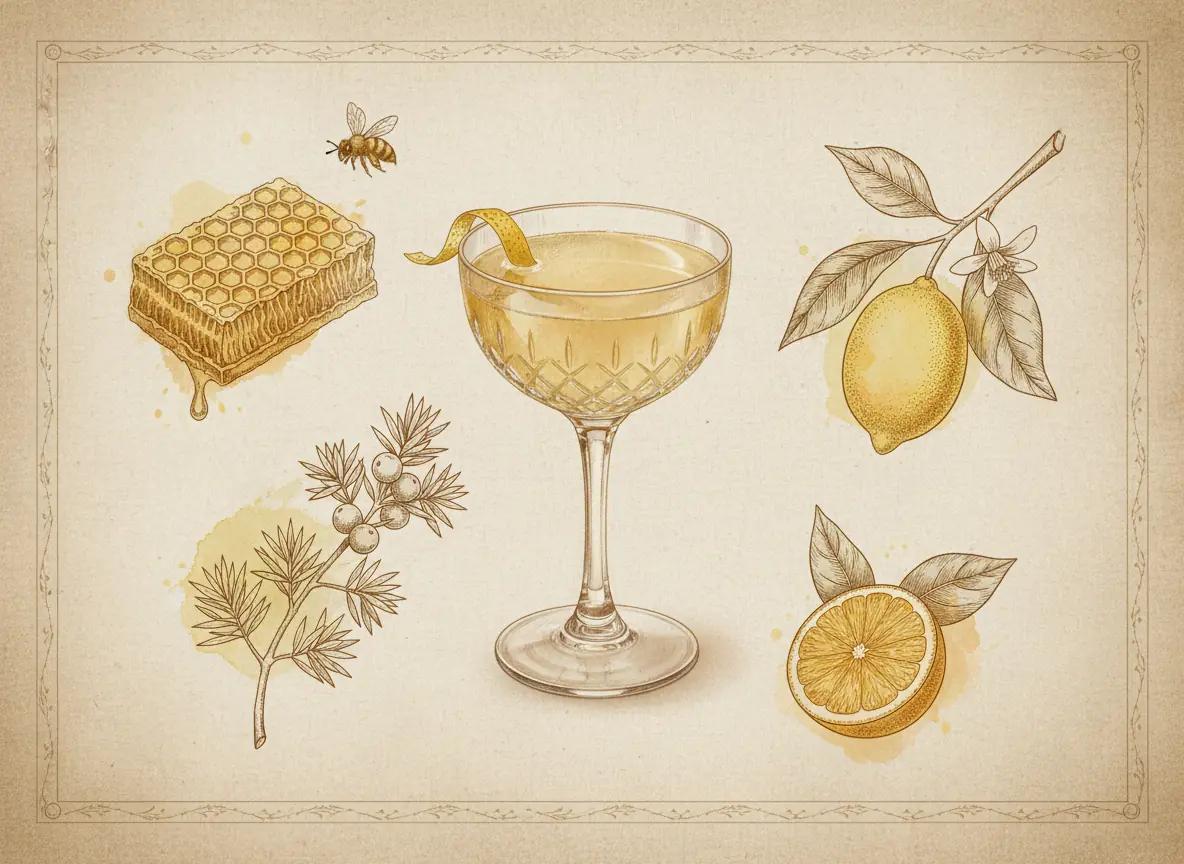
The Bee's Knees is a gin sour built on honey syrup instead of sugar, documented in the early 1920s and born of a practical problem. Prohibition gin was frequently terrible, and honey and lemon are both strongly flavoured enough to cover for a spirit that needed covering for. What makes it worth making now is the inversion. The combination chosen to hide a bad gin turns out to be exceptionally good at showing off a good one, because honey and gin occupy overlapping territory. Gin is defined by botanicals; honey is itself a botanical product, its character set by whatever the bees visited. The honey does not simply sweeten the gin, it extends it in a register the gin already occupies. Three ingredients, no egg, nothing complicated. Built with a proper London Dry and a properly made honey syrup it is brighter and more layered than the ingredient list has any right to suggest.
Berry Sour
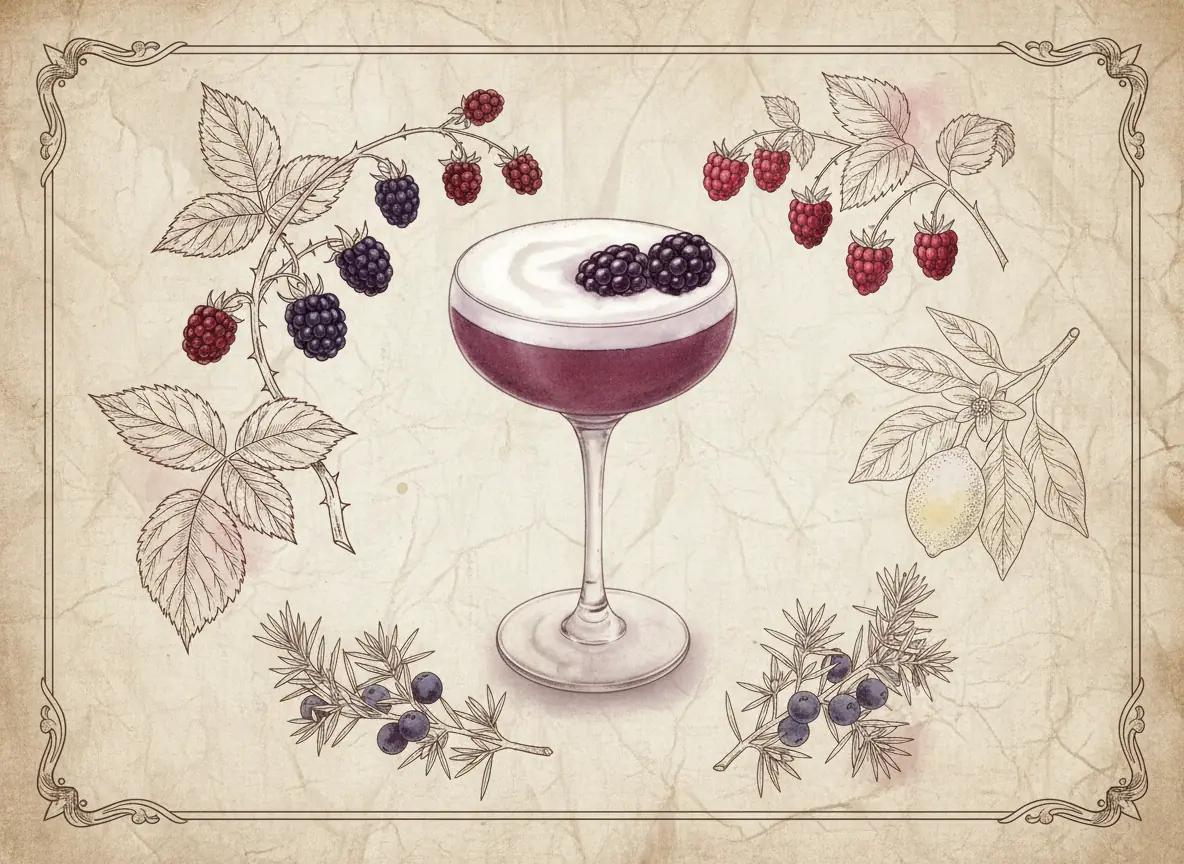
The Berry Sour takes the bones of Dick Bradsell's legendary Bramble and gives it the full sour treatment. Bradsell created the Bramble in 1984 at Fred's Club in London's Soho, inspired by childhood memories of picking blackberries on the Isle of Wight. His original is built over crushed ice with crème de mûre drizzled dramatically over the top, bleeding through the ice like a sunset. This version integrates the berry liqueur fully into the shake, producing a drink that is more unified in flavour and crowned with the pillowy foam that defines the sour family. The result is fruity without being sweet, tart without being sharp, and impossibly smooth on the palate. Use crème de mûre for the most authentic Bramble lineage, though Chambord or a mixed berry liqueur both work beautifully. The gin's juniper should still be present beneath the fruit. This is a gin drink, not a berry one.
Bijou
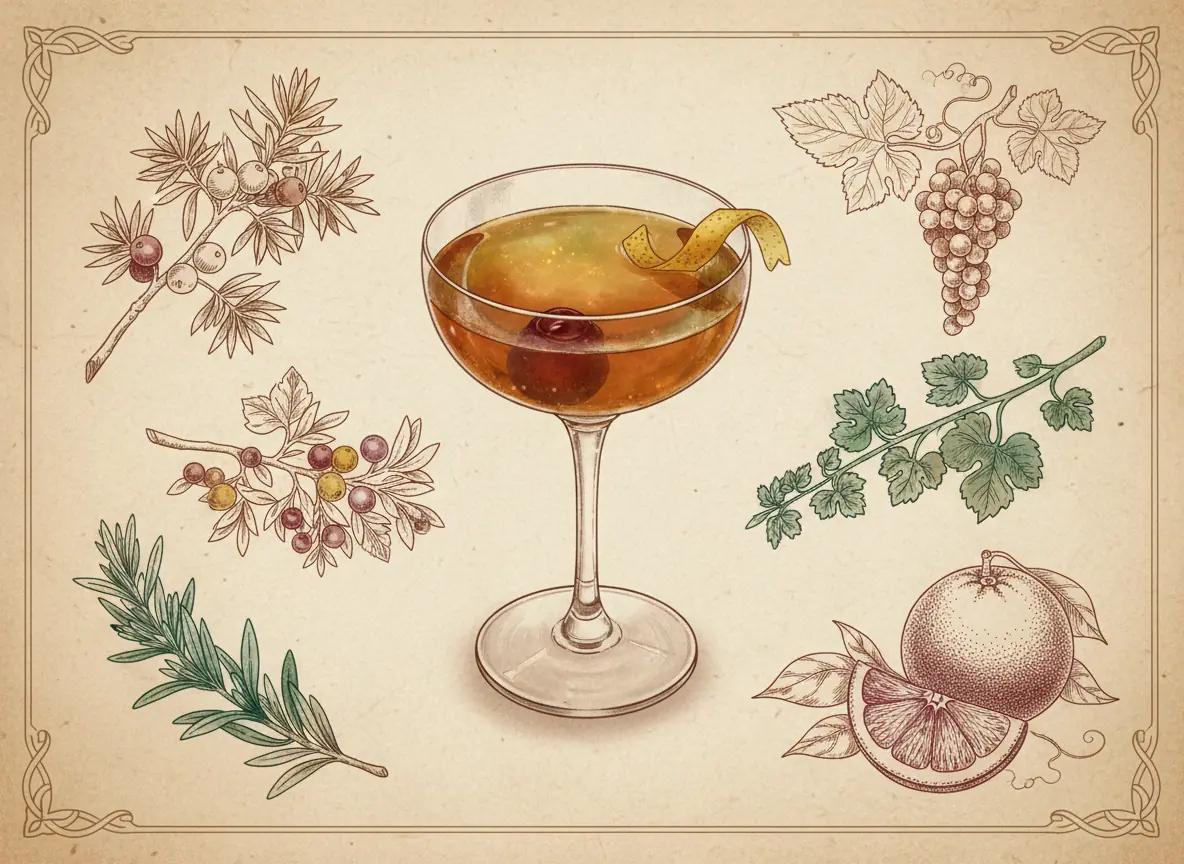
The Bijou was created by Harry Johnson and published in his 1900 Bartenders' Manual, the name taken from the French word for jewel. The three base ingredients each represent a precious stone: gin for diamond, sweet vermouth for ruby, green Chartreuse for emerald. It is one of the most demanding drinks in the classic canon to balance correctly. Green Chartreuse is a 130-botanical French liqueur made by Carthusian monks since 1737, and it does not share space quietly. It brings herbal complexity, sweetness and considerable alcoholic weight to the glass. The gin must be assertive enough to hold its own, the sweet vermouth must be fresh, and the orange bitters tie the three together. The proportions are not equal parts, whatever the jewel conceit suggests: forty millilitres of gin against twenty each of Chartreuse and vermouth is what keeps the drink standing upright rather than collapsing into herbal sweetness. The result is rich, complex and entirely spirit-forward. This is not a drink for the uninitiated and it does not pretend to be.
Bradford
The Bradford is a shaken martini with nineteenth-century paperwork. Harry Johnson's Bartenders' Manual and its contemporaries record the Bradford à la Martini: the same gin, vermouth and orange bitters, given the shaker instead of the mixing glass. That matters because it proves the shaken-versus-stirred argument is older than anybody currently having it. Both camps existed in the 1880s and both had a name for what they were pouring, which is a more civilised arrangement than the modern one, where shaking a martini is generally treated as a mistake rather than a preference. Shaking changes real things. The drink lands colder and slightly more dilute, aerated into a brief cloud with a scatter of ice shards on the surface, brighter and less silky than its stirred twin. The texture fades within a minute, which is why it is served the moment the strainer stops moving, and why its partisans call it livelier while its critics call it bruised.
Bramble
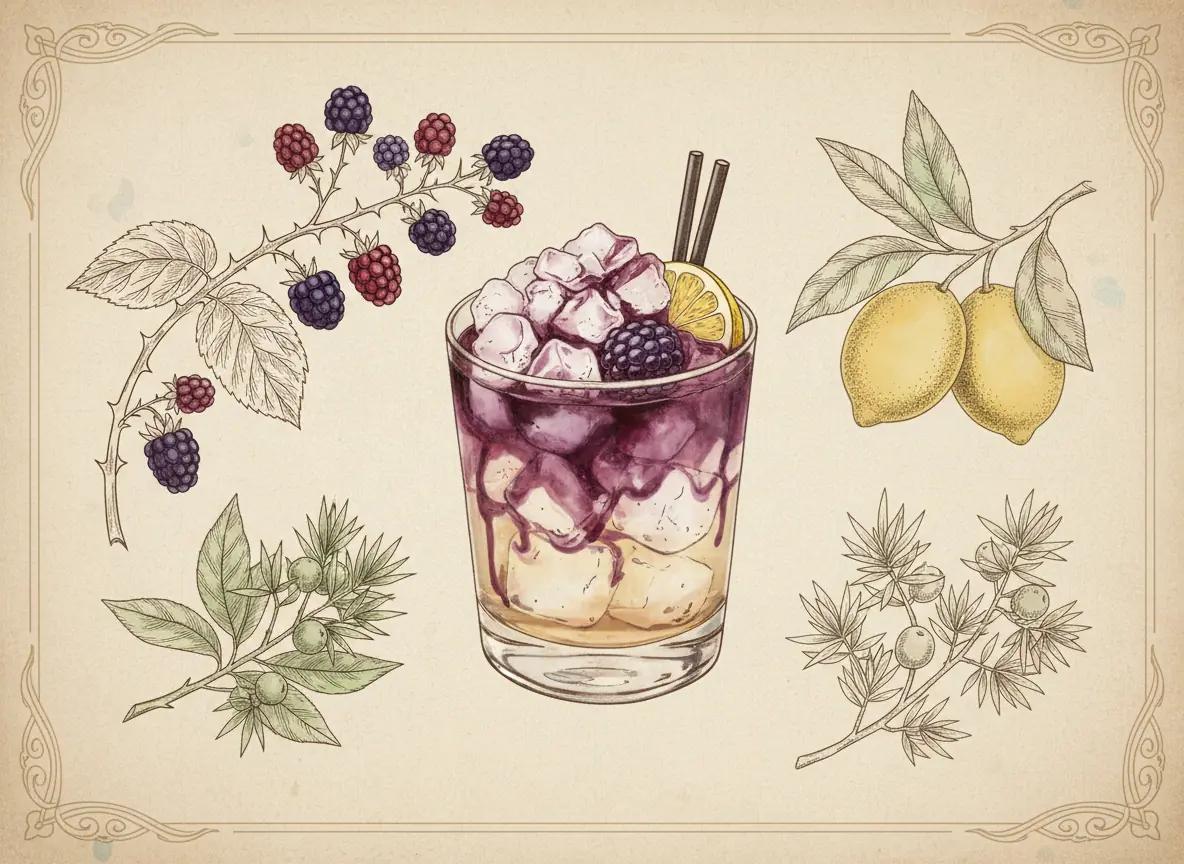
The Bramble was created by Dick Bradsell at Fred's Club in London in 1984, making it one of the few genuinely modern cocktails to hold a permanent place in the classical canon. Bradsell was the defining figure of the London cocktail revival, and the Bramble was his most enduring contribution to it. He described the inspiration as the blackberry bushes he picked from as a child on the Isle of Wight. The foundation is a simple gin sour: gin, fresh lemon juice and sugar syrup, shaken and served over crushed ice. The crème de mûre is not shaken in. It is drizzled slowly over the surface of the finished drink, bleeding down through the ice as it settles, and that is not theatre: the liqueur integrates gradually as the drink is consumed, shifting the balance from tart and juniper-forward at the first sip toward sweet and fruity by the last. The crème de mûre decides the quality. A cheap blackberry liqueur is artificially sweet and one-dimensional.
Breakfast Martini
The Breakfast Martini began, by its creator’s cheerful account, with a domestic scene: Salvatore Calabrese’s wife insisting he eat something before work, one spoon of orange marmalade, and a bartender’s occupational inability to taste anything without wondering what it would do in a shaker. At the Lanesborough’s Library Bar in 1996 the spoonful went into a gin sour, and the flavoured-martini era gained its most durable London entry. The marmalade is the whole machine. One barspoon sweetens, bitters and textures the drink at once, with Seville peel doing the work of a liqueur and a syrup together, while the triple sec doubles the orange from the brighter side. The result lands silky, bitter-edged and unmistakably British: a sour wearing a dressing gown. It sits beside the White Lady in the long gin-and-orange succession, the golden-age spec and the marmalade one separated by seventy years and a single spoon of preserve, which is a smaller gap than it sounds.
Bronx
The Bronx was once the third cocktail in America, behind only the Martini and the Manhattan in the pre-Prohibition order of things. It is credited to Johnnie Solon of the Waldorf-Astoria bar around 1906, who named it for the zoo after a customer’s crack about the animals people claim to see when they drink. A Perfect Martini with orange juice sounds like vandalism; for two decades it was the height of fashion. The build is exactly that: gin with both vermouths, split sweet and dry, and a short measure of fresh orange juice shaken through. The juice is the ingredient that dates the drink and the ingredient that makes it. Squeezed fresh it brightens the vermouths into something sunlit; from a carton it commits the murder the reputation never recovered from. Prohibition gin and post-war cartons did the damage between them, and the revival has been slow to forgive. Made honestly it is a genuinely lovely thing.
Cardinale
The Cardinale is a Negroni with the sweet vermouth taken out and the Campari cut back, which makes it drier, paler and considerably more austere than the drink it descends from. It is not a variation anyone stumbles into: at forty millilitres of gin to twenty of dry vermouth and ten of Campari, the bitter is a seasoning rather than an equal partner. The name points at the colour a cardinal wears, though the drink is nothing like that red — the small Campari measure leaves it closer to pale rose. The Italians have a habit of naming drinks for clergy and the connection is decorative rather than historical. What it demonstrates is how much of a Negroni's character comes from the sweet vermouth rather than the Campari. Remove it and the drink loses its weight and its fruit at once, and what is left is a dry martini with a bitter edge — recognisably related and a genuinely different proposition.
Casino
The Casino belongs to the Aviation's family tree and arrives with a named author: Jacob A. Didier printed it in his 1909 The Reminder, Old Tom gin with maraschino, orange bitters and lemon, one of the era's great sweet-gin sours. It shares three ingredients with the Aviation and predates the violet fashion entirely: this is the branch without the sky. Old Tom is the load-bearing choice: the lightly sweetened gin style rounds the maraschino's dry cherry funk and lets the spec run without added sugar, the drink balancing on the spirit itself. Orange bitters, the period's house seasoning, bridge the lemon to the liqueur, and the whole reads brighter and drier than its sweet-gin base suggests. It survives as the connoisseur's Aviation, ordered by drinkers who want the maraschino conversation without the crème de violette's cameo, and it gives the Old Tom bottle its best showcase in the sour family.
Clover Club
The Clover Club was the house drink of a Philadelphia institution: a club of journalists, lawyers and industrialists who met at the Bellevue-Stratford Hotel from the 1880s to trade toasts and abuse. Their cocktail spread through pre-Prohibition America as a byword for sophistication, a rose-pink sour under a white crown, ordered by men who ran newspapers and railways and saw nothing unmanly in a drink the colour of a debutante's corsage. The twentieth century was less secure. The drink's colour saw it dismissed for decades as something unserious, until the cocktail revival called the sneer's bluff: Julie Reiner named her Brooklyn bar after it in 2008 and put the drink back where it started, at the centre of the conversation. The lesson stands: pink was never the opposite of serious. Made properly it justifies every year of the fuss. Dry gin, sharp lemon and real raspberry syrup, with an egg white shaken into a foam like a rose-tinted cloud: tart, silky and balanced on a knife-edge between orchard and bar.
Comte de Sureau
The Comte de Sureau is a Negroni that has been rebalanced rather than merely re-flavoured. Elderflower liqueur takes sweet vermouth's place, and the Campari drops to a quarter measure, which is the change that actually matters. Equal parts would not work. Campari at a full 22ml simply erases elderflower, which is a delicate floral note with no capacity to fight back. At 7.5ml it becomes a frame instead of a flood: enough bitter orange to give the drink structure and a dry finish, not enough to bury what the drink is for. The gin leads at 45ml for the same reason. This is a blossom drink that wants a spine, not a bitter drink with a floral accent. It was adapted from a 2007 or 2008 creation by Gonçalo de Sousa Monteiro at Le Lion in Hamburg, the bar that also produced the Gin Basil Smash. Most bars that pour it call it an Elderflower Negroni. The proper name means the Count of Elderflower, which ennobles a hedgerow with an admirably straight face.
Corpse Reviver No.2
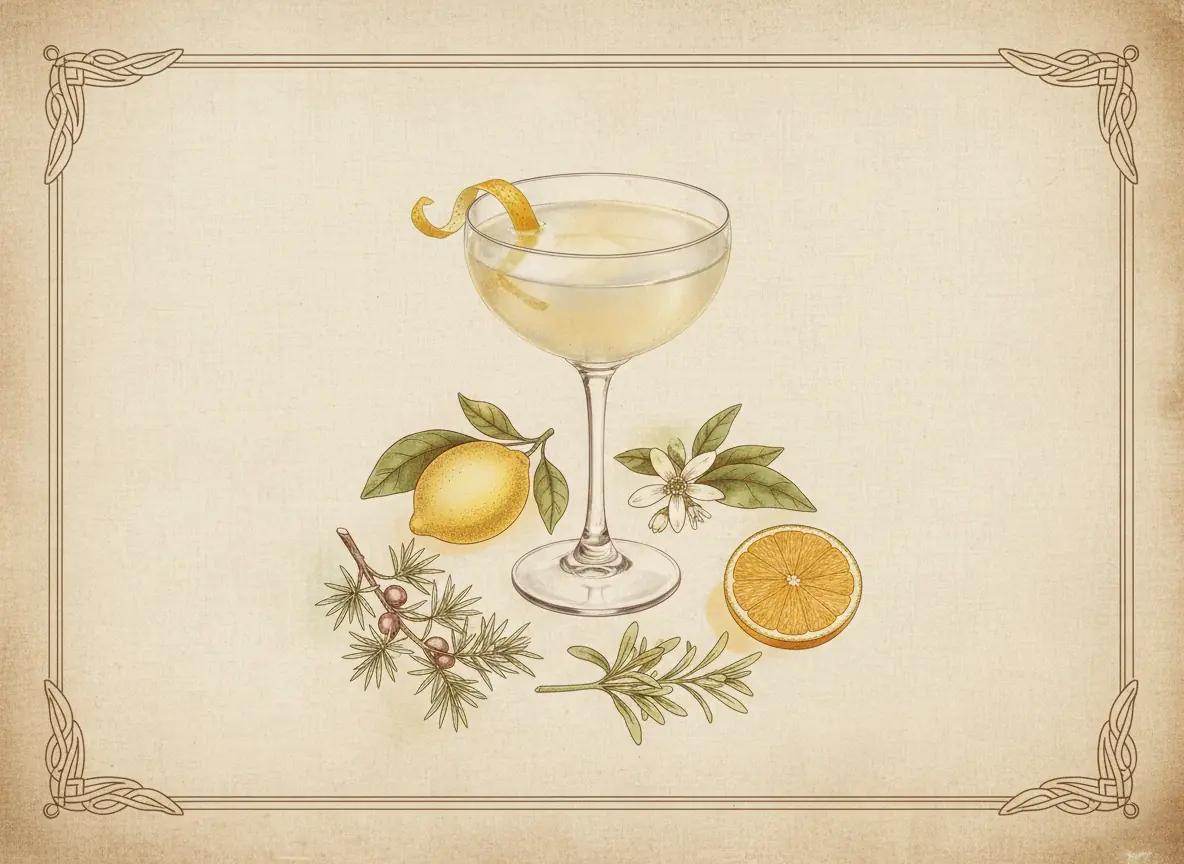
The Corpse Reviver No. 2 appeared alongside its brandy sibling in Harry Craddock's Savoy Cocktail Book in 1930, accompanied by his now-famous warning that four consumed in quick succession were sufficient to unrevive the corpse entirely. Where the No. 1 retreated into obscurity, the No. 2 became one of the most ordered classic cocktails of the contemporary revival. The warning has done nothing to discourage that. Equal parts gin, Cointreau, Lillet Blanc and fresh lemon juice, with a rinse of absinthe coating the glass before the drink arrives. The absinthe is not an ingredient in the conventional sense: it never enters the shaker, it lines the glass, and it is discarded before the drink is poured. What it leaves is an aromatic signature on every sip that no measured addition could replicate. Lillet Blanc is the modern substitution for Kina Lillet, which contained considerably more quinine and produced a more bitter, complex result. Cocchi Americano is the closer match.
Cosmonaut
The Cosmonaut is a gin sour sweetened with a spoonful of raspberry jam. Sasha Petraske built it at Milk & Honey in New York, and the name is a joke: the Eastern Bloc answer to the Cosmopolitan, which was the drink ruling the city above ground at the time. Same colour, same decade, opposite philosophy. The Cosmopolitan was branding and citrus vodka; the Cosmonaut is a jar from the kitchen, an exact ratio and no garnish at all. The preserve is doing three jobs at once, which is the point of using it. It sweetens, it fruits, and it textures: the seeds and the pectin shake into a rustic, slightly silky body that raspberry syrup cannot produce. Milk & Honey's house style demanded fresh citrus, proper ice and no decoration, and this drink is that doctrine in miniature. It drinks brighter and drier than the colour suggests, which is usually the first surprise.
Cucumber & Elderflower G&T
The Cucumber & Elderflower G&T is a gin and tonic with two English garden moves made on it: fifteen millilitres of elderflower liqueur, and a long cucumber ribbon pressed against the inside of the glass. Both do work. The elderflower answers the tonic's bitterness with a floral sweetness rather than plain sugar, which keeps the drink dry in effect while softening it in fact. The cucumber works by aroma more than by taste, perfuming every sip on the way through. It is a house serve rather than a classic, and it behaves like one: unfussy about brands and forgiving of proportions. A juniper-forward London Dry keeps it recognisably a G&T underneath the florals; a softer contemporary gin leans it further towards the garden. Either way the tonic should be good and poured gently, because quinine is doing the structural work the gin's dryness usually shares. Late April is its natural moment, when garden weather first becomes plausible.
Earl Grey MarTEAni
The Earl Grey MarTEAni is the cocktail renaissance drinking tea: gin infused with Earl Grey, shaken with lemon, sugar and egg white into a sour wearing a scented foam. Audrey Saunders built it in the early 2000s and it became a house classic at her Pegu Club, the New York bar that spent fifteen years teaching America to drink gin again. The infusion is the whole trick. Bergamot sits close to gin’s own citrus botanicals, so the tea reads as an extension of the spirit rather than a flavour bolted on, while its tannin gives the drink a dry grip that plain gin sours never have. The egg white then does what egg white does, softening that grip into silk, and the lemon oil expressed over the foam finishes the work before the first sip starts. The name’s pun has dated better than most: beneath it is a serious drink, precise about its ratios and unbothered by fashion, that turned a thousand bars on to tea as an ingredient. Twenty years on, it remains the standard the copies are measured against.
Eastern Standard
The Eastern Standard is a cucumber and mint gin sour served over ice, and it is the house cocktail of Soho House, poured to the same specification in every club the group runs. The name is a time-zone joke that doubles as the point: the drink is meant to taste identical in London and New York. It is an Eastside with the serve changed. Where the Eastside goes up in a coupe, this comes over fresh ice in a rocks glass, with a slightly fuller pour of spirit and vodka written into the recipe as a standing alternative rather than a concession. That sounds like a small set of differences and is not. Up and short, the Eastside is a cocktail you finish with attention. Over ice, at this length, the same flavours become something you can hold for an hour, which is exactly what a members' club needs and exactly why the drink turns up on terraces everywhere in summer.
Eastside
The Eastside is the modern classic that tastes like a garden: gin, lime, mint and cucumber, shaken cold and strained silky, out of the early-2000s New York revival and most often credited to George Delgado at Libation on the Lower East Side. It reads as a gimlet that walked through a greenhouse. The mint and cucumber are muddled fresh into the sour frame, the cucumber cooling exactly where the lime sharpens, and the drink lands green, cold and improbably refreshing at full cocktail strength. Names shift by neighbourhood between Eastside, East Side and Eastside Gimlet; the drink underneath is constant. It is also the modern bar’s great gin ambassador, the drink bartenders reach for when a guest says they do not like gin, and the one that most reliably proves them wrong. The botanicals do not vanish. They simply get a garden to stand in, and the glass tastes green before it tastes of juniper.
Elderflower Collins
The Elderflower Collins is a Tom Collins with the sugar upgraded to blossom. Gin, lemon and soda are unchanged; twenty millilitres of elderflower liqueur stands where the syrup would, and the whole drink reorganises around it. That is the same single move the Gold Rush makes with honey and the Army & Navy makes with orgeat: replace the neutral sweetener with one that brings character. Elderflower's lychee-and-blossom perfume threads through the gin's botanicals and the lemon's bite, and the soda lifts all three. Nobody owns it. It condensed out of the elderflower boom that followed the launch of the best-known liqueur in 2007: bartenders reached for the Collins template as the obvious frame, and the pairing was standard within about five years before anyone thought to claim it. That is folk repertoire of the modern era, which is a real pedigree even without a name attached to it, and it is how most long drinks were arrived at before anybody kept records.